Triumphal Arch of the Sergii, Pula
Attraction, Historic Site and Monument in Pula
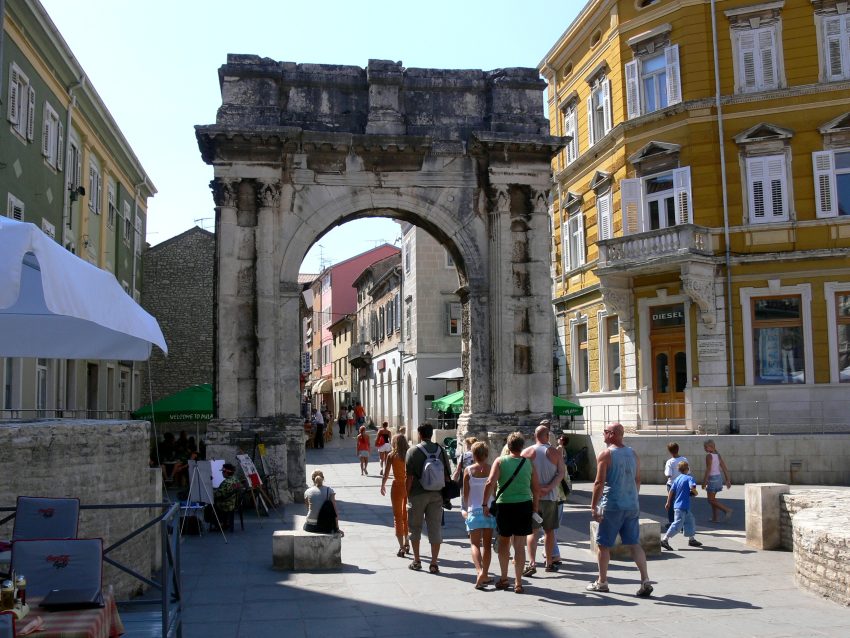
The Triumphal Arch of the Sergii (often called the Golden Gate) is one of Pula's most recognizable Roman-era landmarks, standing right at the edge of the old town pedestrian zone. You'll spot it easily as you wander between Pula's central streets, cafés, and evening buzz—an ideal “pause point” for photos and a quick dose of ancient history.
It's also a natural stop on a walking tour of Pula's Roman core: many guides thread it into an easy route that links the arch with the Forum, the Temple of Augustus, and the Arena. If you're exploring independently, the best way to experience it is simply to approach from multiple angles—daylight for detail, and evening for atmosphere when the surrounding streets come alive.
Table of Contents
- History and Significance of the Triumphal Arch of the Sergii
- Things to See and Do in the Triumphal Arch of the Sergii
- How to Get to the Triumphal Arch of the Sergii
- Practical Tips on Visiting the Triumphal Arch of the Sergii
- Where to Stay Close to the Triumphal Arch of the Sergii
- Is the Triumphal Arch of the Sergii Worth Visiting?
- For Different Travelers
- FAQs for Visiting Triumphal Arch of the Sergii
- Nearby Attractions to the Triumphal Arch of the Sergii
History and Significance of the Triumphal Arch of the Sergii
Built in the late 1st century BC, the Triumphal Arch of the Sergii is a Roman triumphal arch commissioned by the influential Sergii family. It's closely tied to the Augustan era, when Pula (then a Roman colony) was being reshaped with monumental architecture that projected status, loyalty, and civic pride.
What makes the arch especially interesting is that it isn’t just a “big Roman object” to tick off—it’s a piece of political messaging carved in stone. Look closely and you’ll notice refined decorative elements and relief work that reflect the artistic tastes of the period, with a level of craftsmanship that rewards a slower look.
Over the centuries, the arch has remained a fixed point in Pula’s urban life, even as the city’s walls and gates changed around it. Today it functions less like a standalone attraction and more like a living landmark—part monument, part meeting point, part gateway into the old town.
Things to See and Do in the Triumphal Arch of the Sergii
Start by circling the arch to appreciate how it sits within the streetscape. From one side it feels like a ceremonial entrance; from the other it blends into the everyday flow of shoppers, café-goers, and evening strollers—one of the reasons it photographs so well.
Spend a few minutes on the stonework. The carvings and architectural details are the main “activity” here, and they’re easiest to appreciate in softer light (morning or late afternoon). If you’re visiting in summer, the area can feel especially lively at night, when nearby bars and restaurants create a festive backdrop.
For context, consider joining a guided walking tour that includes the arch. A good guide will connect it to Pula's wider Roman story—why the Sergii mattered, how the city developed, and how to read the monument beyond the obvious photo stop.
How to Get to the Triumphal Arch of the Sergii
The nearest airport is Pula Airport (PUY), a short drive from the city; for more flight options, some travelers also route via Rijeka Airport (RJK) or Trieste Airport (TRS) in Italy, then continue overland. For the best deals and a seamless booking experience, check out these flights to Pula on Booking.com.
By train, Pula is connected to other Istrian and Croatian rail points (often with transfers), and from Pula's station you can reach the old town on foot or by local bus/taxi depending on luggage and heat. Train schedules and bookings can be found on Omio.
If you’re traveling by car, aim for public parking on the edge of the center and walk in, since the old town core is largely pedestrian and can be tight for driving.
Practical Tips on Visiting the Triumphal Arch of the Sergii
- Entrance fee: Free.
- Opening hours: 24 Hours.
- Best time to visit: Go early morning for quieter photos and easier viewing of the carvings, or after sunset for a lively old-town atmosphere.
- How long to spend: Plan 10–20 minutes for the arch itself, or 45–90 minutes if you’re pairing it with a self-guided loop through the Forum and nearby Roman sights.
- Accessibility: The arch is at street level, but the surrounding old-town streets can be uneven and busy; a step-free route is usually possible with a little detouring.
- Facilities: There are no on-site facilities, but you’re surrounded by cafés, bakeries, and public amenities in the city center.
Where to Stay Close to the Triumphal Arch of the Sergii
Base yourself in or right next to Pula’s old town if you want to see the arch at its best—both in the calm of morning and the energy of evening.
If you want to walk everywhere, choose a central boutique-style stay near the pedestrian zone; you’ll be steps from the arch, the Forum, and a dense cluster of restaurants. For a quieter night’s sleep, look just outside the core where you can still walk in quickly but avoid late-night street noise.
Hotel Amfiteatar A smart pick for travelers who want a comfortable, central base with an easy walk to both the Arena and the old town sights.
Boutique Hotel Oasi A good option if you prefer a calmer, coastal feel while still being a short ride from the arch and the historic center.
Park Plaza Histria Pula Ideal for a resort-style stay with pools and sea views—great if you’re mixing city sightseeing with downtime.
Hotel Galija A practical, walkable choice near the center that suits travelers who want convenience and a straightforward city stay.
Ribarska Koliba Resort A scenic, slightly upscale stay by the marina area—nice for couples and anyone who wants a more relaxed, waterside vibe after sightseeing.
Is the Triumphal Arch of the Sergii Worth Visiting?
Yes—absolutely. It’s one of those rare landmarks that’s both historically meaningful and effortlessly easy to visit: no planning, no ticket lines, and it sits right on the route you’ll likely walk anyway. The arch also “anchors” your mental map of Pula’s old town, making it a useful waypoint as you explore.
Honest Pivot: if you’re short on time and you’re not interested in Roman history or architecture, you can treat it as a quick photo stop and move on. Travelers who dislike busy pedestrian areas (especially in peak summer evenings) may prefer to see it early in the day and skip the nightlife crowd.
What Other Travellers Say...

Reviews are overwhelmingly positive, with many travelers calling it a must-see landmark and an easy stop while walking through central Pula. Visitors consistently praise the well-preserved Roman architecture, detailed stonework, and how photo-friendly it is, especially when paired with an old-town stroll or a guided walking tour. The most common downside is that it can feel busy and more like a quick pass-by than a destination in itself, particularly during lively evening hours in the surrounding streets.


For Different Travelers
The arch works well as a flexible stop: it can be a 5-minute look on the way to dinner or a deeper, more meaningful moment when paired with a guided walk through Pula’s Roman layers.
Families with Kids
Kids often enjoy it most as a “gateway” moment—walking under a real Roman arch and imagining who passed through it long ago. Keep it short and combine it with a bigger, more interactive sight like the Arena to maintain momentum.
If you’re visiting in hot weather, plan a shaded break nearby (gelato or a cold drink) right after. The surrounding streets can be busy, so hold hands with younger children when crowds pick up.
Couples & Romantic Getaways
For couples, the arch is best in the golden hour and after dark, when the stone takes on warmer tones and the old town feels atmospheric. It’s an easy pre-dinner stroll that sets the tone for an evening out.
Pair it with a slow wander toward the Forum and a relaxed terrace meal nearby. If you like photography, take a few minutes to frame shots that include the surrounding street life for a more “Pula at night” feel.
Budget Travelers
This is a perfect budget-friendly highlight: it's central, free, and doesn't require any logistics. You can build a full self-guided walking loop around it using other nearby outdoor Roman sights.
To keep costs down, visit early, then grab bakery snacks and picnic-style drinks rather than sitting for a full restaurant meal in the busiest streets. The arch is also a great meeting point if you’re traveling with friends and splitting up during the day.
History Buffs
History lovers should treat the arch as a clue to how Pula’s elite families presented themselves in the Augustan period. The details matter here—look for the decorative program and consider what it communicated to ancient passersby.
For deeper context, link it with the Forum area and the Temple of Augustus, then finish at the Arena to see how different Roman building types (monument, temple, amphitheatre) shaped the city. A guided walking tour can add the “why” behind what you're seeing.
FAQs for Visiting Triumphal Arch of the Sergii
Getting There
Tickets & Entry
Visiting Experience
Tours, Context & Itineraries
Photography
Accessibility & Facilities
Food & Breaks Nearby
Safety & Timing
Nearby Attractions to the Triumphal Arch of the Sergii
- Pula Forum: The city's main Roman-era square and a natural place to continue your old-town walk.
- Temple of Augustus: A beautifully preserved Roman temple on the Forum that adds strong context to the arch.
- Pula Arena (Amphitheatre): Pula's headline Roman monument and one of the best-preserved amphitheatres in the world.
- Hercules' Gate: Another Roman gateway in the center, great for a quick comparison with the Sergii arch.
- Pula Cathedral: A historic church complex near the old town core, easy to add as a short detour.
The Triumphal Arch of the Sergii appears in our Complete Guide to Visiting Pula!

Moira & Andy
Hey! We're Moira & Andy. From hiking the Camino to trips around Europe in Bert our campervan — we've been traveling together since retirement in 2020!
This website uses affiliate links which may earn a commission at no additional cost to you!
Planning Your Visit
24 Hours.
Free.
Nearby Attractions
- Small Roman Theatre (0.2) km
Arts Venue, Roman Site and Theatre - Gate of Hercules (0.2) km
City Gate, Historic Site and Monument - Archaeological Museum of Istria (0.2) km
Historic Site, Museum and Viewing Point - City Farmers' Market (0.2) km
Market - Floor Mosaic The Punishment of Dirce (0.3) km
Attraction, Historic Site and Roman Site - Pula Castle (0.3) km
Castle, Museum and Viewing Point - Twin Gates (0.3) km
Attraction, City Gate and Historic Site - Chapel of Saint Maria Formose (0.3) km
Church, Historic Site and Religious Building - Franciscan Church and Monastery (0.3) km
Church, Monastery and Religious Building - Forum Square and Communal Palace (0.4) km
Palace, Square and Town Hall