Small Roman Theatre, Pula
Arts Venue, Roman Site and Theatre in Pula
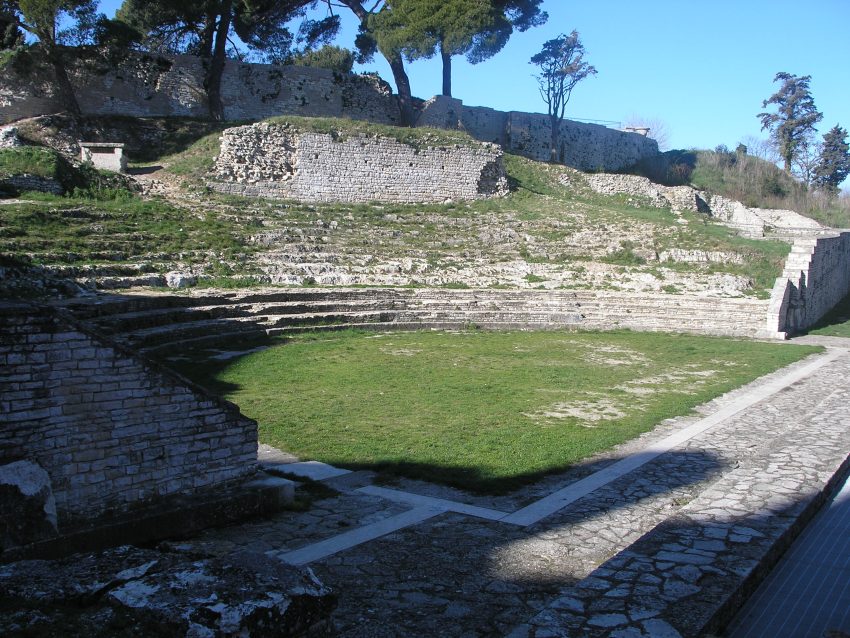
Tucked into the eastern slope below Pula's hilltop Citadel, the Small Roman Theatre is one of the city's most atmospheric Roman-era remnants-compact, central, and easy to pair with other Old Town sights. It's not as monumental as the Pula Arena, but its intimate scale makes it feel surprisingly personal, especially when you imagine the audience and performers in a space built for spoken drama and music.
It's an ideal stop on a self-guided walking tour of Roman Pula: combine it with the Arch of the Sergii, the Forum, and the Temple of Augustus, then finish with sunset views from the Kastel/Citadel area. If you're lucky, you'll also catch the theatre in its modern role as a cultural venue, when concerts and performances bring the stones back to life.
Table of Contents
- History and Significance of the Small Roman Theatre
- Things to See and Do in the Small Roman Theatre
- How to Get to the Small Roman Theatre
- Practical Tips on Visiting the Small Roman Theatre
- Where to Stay Close to the Small Roman Theatre
- Is the Small Roman Theatre Worth Visiting?
- For Different Travelers
- FAQs for Visiting Small Roman Theatre
History and Significance of the Small Roman Theatre
The Small Roman Theatre dates to the early Roman Imperial era and reflects Pula's importance as a thriving Roman town with a full set of public amenities for entertainment and civic life. Unlike the nearby Arena (built for spectacles), this theatre was designed for performances where acoustics and sightlines mattered-plays, recitations, and music.
Its setting is part of the story: built into the natural slope beneath today’s Citadel hill, the theatre uses the terrain to shape the seating and the overall semicircular form. Over centuries, much of it was buried and only later rediscovered through archaeological work.
In the 21st century, major conservation and reconstruction work helped the site become legible again to visitors, while also preparing it to function as a modern open-air venue. That dual identity-ruin and stage-is what makes it especially interesting to see in Pula.
Things to See and Do in the Small Roman Theatre
Start by taking in the overall layout: the curved seating area carved into the hillside and the flatter performance zone below. Even if you only spend 15-30 minutes here, it’s worth pausing to visualize how a Roman audience would have experienced sound, movement, and spectacle in a smaller, more refined setting than the Arena.
Look for surviving stonework and reconstructed sections that help you understand the theatre’s original height and structure. The site is also photogenic from multiple angles-especially in quieter hours when you can frame the curve of the cavea (seating) against the surrounding city.
If your timing aligns with an event, consider returning at night for a concert or performance. Reviews often highlight how the intimate scale and historic setting create a memorable atmosphere, even compared with larger venues.
How to Get to the Small Roman Theatre
The nearest airports are Pula Airport (PUY) for the quickest arrival, with additional options via Rijeka Airport (RJK) or Trieste Airport (TRS) if you're combining Istria with a wider regional trip. For the best deals and a seamless booking experience, check out these flights to Pula on Booking.com.
Pula has rail connections within Croatia (often via transfers), and the train station is walkable or a short taxi ride from the Old Town area where the theatre sits. Train schedules and bookings can be found on Omio.
If you're driving, Pula is straightforward to reach via Istria's main roads, and parking is easiest in paid city lots/garages outside the tight Old Town streets before walking up toward the Citadel slope.
Practical Tips on Visiting the Small Roman Theatre
- Official website: https://www.ami-pula.hr/en/locations/small-roman-theater/
- Entrance fee: Check official website.
- Opening hours: Check official website.
- Best time to visit: Go in the morning for softer light and fewer people, or in the early evening to combine it with a Citadel viewpoint stop.
- How long to spend: Plan 20-40 minutes for a relaxed look, longer if you’re photographing or pairing it with nearby Roman landmarks.
- Accessibility: Expect uneven surfaces and steps; some areas are difficult for reduced mobility, though limited access to flatter sections may be possible.
- Facilities: Facilities can be limited on non-event days; during summer events, temporary toilets may be provided.
Where to Stay Close to the Small Roman Theatre
Base yourself in Pula Old Town if you want to walk everywhere-Roman sights, cafés, the waterfront, and evening events-without relying on transport.
For a stylish, central stay close to the historic core, consider boutique options and well-located city hotels that make it easy to pop back for a nighttime performance. These picks are chosen for walkability to the theatre, comfort after sightseeing, and access to Pula’s best evening atmosphere.
Hotel Amfiteatar A reliable, central choice with an easy walk to both Roman landmarks and the harbour area-great for travelers who want convenience without fuss.
Boutique Hotel Oasi A quieter boutique feel for travelers who want a calmer base while still being a short ride from Old Town and evening events.
Park Plaza Histria Pula A resort-style option with pools and sea views-ideal if you’re mixing Roman sightseeing with downtime on the coast.
Hotel Galija A practical Old Town-adjacent stay that works well for short trips where you’ll be out exploring most of the day.
Ribarska Koliba Resort A waterfront stay with a more “holiday” vibe and on-site dining-nice if you want evenings by the marina after a day in the historic center.
Is the Small Roman Theatre Worth Visiting?
Yes-especially if you enjoy Roman history and want a quick, meaningful stop that feels less crowded than Pula's headline attractions. It's compact, central, and adds context to how Roman Pula entertained itself beyond gladiators and grand spectacles.
Honest Pivot: if you're short on time and only want one Roman site, prioritize the Pula Arena and the Forum/Temple area, since the Small Roman Theatre can feel partly reconstructed and may be less impressive if you're expecting a fully intact monument. It shines most for travelers who appreciate layered history or who can pair the visit with a performance.
What Other Travellers Say...
Reviews are strongly positive overall, with many travelers describing the theatre as a memorable, intimate historic venue—especially for concerts and evening performances. Visitors appreciate the sense of Roman history, the central location beneath the Citadel, and the chance to take photos more calmly in off-peak moments. Common downsides mention comfort and authenticity during events, including temporary metal seating/stands that can feel uncomfortable and reduce the “original” atmosphere.





For Different Travelers
The Small Roman Theatre is a flexible stop: it can be a fast photo-and-context visit on a walking tour, or a highlight if you attend an evening event. How much you'll love it depends on whether you're here for big “wow” monuments or for smaller places that deepen your sense of the city.
Families with Kids
For families, the theatre works best as a short, curiosity-driven stop rather than a long museum-style visit. Kids often enjoy the idea of an ancient stage and imagining performers and crowds.
Plan to keep it brief and pair it with a nearby treat (gelato in the Old Town) or a bigger “wow” site like the Arena. If there’s a family-friendly performance, that’s when the venue becomes truly memorable.
Couples & Romantic Getaways
Couples tend to appreciate the theatre’s tucked-away setting and the way it feels woven into the city rather than separated from it. It’s a great place for quiet photos and a slower pace between busier landmarks.
If you can time your trip around a concert or cultural event, the Small Roman Theatre can become a standout date-night experience-historic stones, night air, and close-up performances.
Budget Travelers
Budget travelers will like that it's a quick stop that fits neatly into a self-guided walking route through central Pula. You can build a full Roman-themed day on foot without paying for multiple big-ticket entries.
Spend your money strategically: save for one paid highlight (often the Arena or a museum) and use the theatre as a scenic, low-cost add-on that still delivers strong atmosphere.
History Buffs
History lovers will appreciate seeing a different type of Roman entertainment architecture than the Arena. The smaller scale helps you understand how varied Roman public life was-grand spectacles in amphitheatres, and more intimate performances in theatres.
It’s also a good “before and after” site for thinking about archaeology and conservation: what survives, what gets reconstructed, and how modern cities reuse ancient spaces for contemporary culture.
FAQs for Visiting Small Roman Theatre
Getting There
Tickets & Entry
Visiting Experience
Tours, Context & Itineraries
Photography
Accessibility & Facilities
Food & Breaks Nearby
Safety & Timing
The Small Roman Theatre appears in our Complete Guide to Visiting Pula!

Moira & Andy
Hey! We're Moira & Andy. From hiking the Camino to trips around Europe in Bert our campervan — we've been traveling together since retirement in 2020!
This website uses affiliate links which may earn a commission at no additional cost to you!
Planning Your Visit
Check official website.
Check official website.
Nearby Attractions
- Archaeological Museum of Istria (0.1) km
Historic Site, Museum and Viewing Point - Gate of Hercules (0.1) km
City Gate, Historic Site and Monument - Twin Gates (0.1) km
Attraction, City Gate and Historic Site - Pula Castle (0.2) km
Castle, Museum and Viewing Point - Triumphal Arch of the Sergii (0.2) km
Attraction, Historic Site and Monument - Pula Cathedral (0.3) km
Cathedral, Church and Historic Building - Floor Mosaic The Punishment of Dirce (0.3) km
Attraction, Historic Site and Roman Site - Franciscan Church and Monastery (0.3) km
Church, Monastery and Religious Building - Roman Amphitheater (0.4) km
Amphitheatre, Attraction and Roman Site - City Farmers' Market (0.4) km
Market