Tour du Roy, Saint-Émilion
Castle and Tower in Saint-Émilion
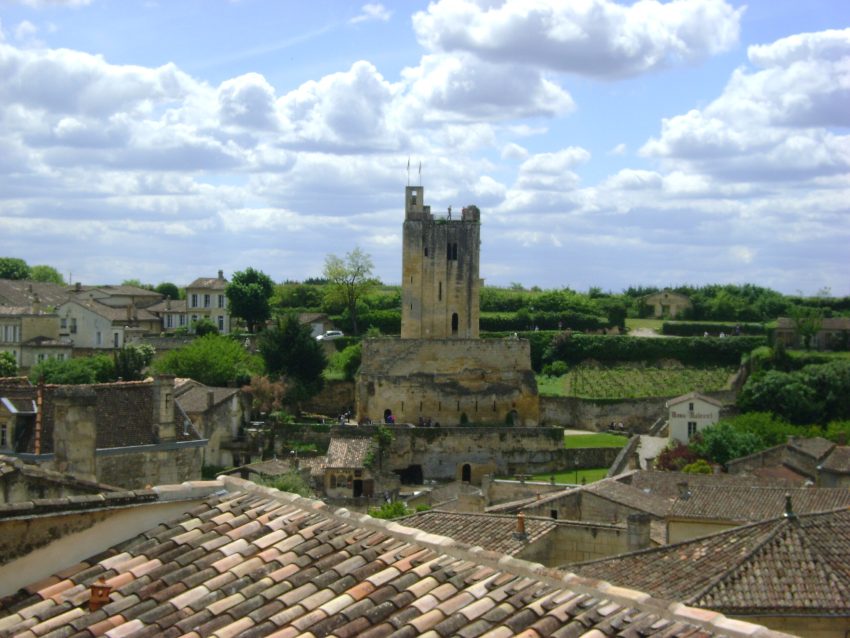
In a town already packed with postcard streets and wine lore, the Tour du Roy stands out as the vertical “wow” moment-an austere Romanesque keep rising from Saint-Émilion's rocky heart. Set within the old walls, this square medieval tower feels like a leftover piece of serious fortification, with thick masonry and buttresses built for a time when power was displayed in stone. Even if you've come primarily for tasting rooms and terraces, this spot is one of the top sights in Saint-Émilion, and it's the quickest way to understand the town's layout from above.
The visit is refreshingly simple: a short ticket, a tight spiral climb, and a rooftop panorama that pulls the whole landscape into view-vineyard rows, honey-coloured roofs, and the folds of countryside beyond. It also pairs naturally with a walking tour of Saint-Émilion because you can climb up, orient yourself, then drop back into the lanes with a clear sense of where the big landmarks sit. If you time it well, the light over the vines makes the view feel cinematic, especially when the town quiets down between tour groups.
Table of Contents
- History and Significance of the Tour du Roy
- Things to See and Do in the Tour du Roy
- How to Get to the Tour du Roy
- Practical Tips on Visiting the Tour du Roy
- Where to Stay Close to the Tour du Roy
- Is the Tour du Roy Worth Visiting?
- For Different Travelers
- FAQs for Visiting Tour du Roy
- Nearby Attractions to the Tour du Roy
History and Significance of the Tour du Roy
The mystery of the Tour du Roy is part of its appeal. Historians debate whether it was commissioned in the early 13th century under French authority, tied to a period of consolidation after military campaigns, or whether it took shape when English control returned, reflecting the shifting allegiances that defined Aquitaine. There is also a compelling local angle: the possibility that Saint-Émilion's own governing body commissioned the tower as a statement of civic confidence, borrowing the visual language of a lordly keep to signal autonomy.
Whatever its precise origin, the tower's strategic role is easy to imagine. Saint-Émilion sat in a region where political borders were contested and symbolic dominance mattered-so a tall, defensible structure became both lookout and message. Across centuries of tension, including the long arcs of the Hundred Years' War, the tower's silhouette would have been a constant, even as banners and rulers changed.
Today, the story continues in a more ceremonial form. The Jurade of Saint-Émilion-now closely associated with the town's wine identity-still uses the Tour du Roy for traditional proclamations tied to the viticultural calendar. That link between civic ritual and vineyard life is one of the most “Saint-Émilion” details you can carry with you as you climb.
Things to See and Do in the Tour du Roy
The main event is the ascent. The 118 steps are steep and the staircase is narrow, so the climb feels like a genuine medieval interior experience rather than a modern museum circulation route. As you rise, small openings and changes in light make you aware of the tower’s thickness and age-this is architecture that prioritised endurance over comfort.
At the top, the rooftop panorama is the reward. You get a layered view: the medieval street grid below, church towers and stone façades nearby, then the vineyards unfurling outward in every direction. It’s an ideal spot for travellers who like to anchor a day with a big viewpoint before exploring details at street level.
To make the most of it, treat the tower as a “reset button” in your itinerary. Climb early to plan your route, or climb later to watch the town soften into evening tones. Either way, it’s an experience that adds context to everything you’ll see underground, in cellars, and along the ramparts.
How to Get to the Tour du Roy
If you're arriving from abroad, the most convenient gateway is Bordeaux-Mérignac Airport (BOD). For the best deals and a seamless booking experience, check out these flights to Saint-Émilion on Booking.com. From Bordeaux, you can reach the Saint-Émilion area quickly and then focus on the town on foot, which is often the easiest way to handle its steep lanes and limited central access.
By rail, the simplest route is typically via Bordeaux Saint-Jean to Saint-Émilion station, then a short taxi ride or brisk walk uphill into the historic centre.You can use SNCF Connect to check schedules, compare routes, and purchase tickets for National (SNCF ) and regional trains (TER). For a more streamlined experience, we recommend using Omio, which allows you to easily compare prices, schedules, and book tickets for both National and Regional travel across all of Europe, all in one place. If you’re staying in nearby Libourne, local connections and taxis can also make the final leg straightforward, especially if you want to avoid hauling luggage up the slopes.
Driving can work well if you're combining Saint-Émilion with château visits across the Right Bank, but plan to park outside the tight medieval core and walk in.If you are looking to rent a car in France I recommend having a look at Discover Cars, first, as they compare prices and review multiple car rental agencies for you. The streets in the centre are narrow and pedestrian-oriented, so even confident drivers usually find it more relaxing to treat the town as a walking destination once you arrive.
Practical Tips on Visiting the Tour du Roy
- Entrance fee: €2 per person (free for children under 6)
- Opening hours: Closed Jan & Feb. March: Sat & Sun: 14:00–17:00 April - Aug: Daily 14:00–17:00
- Official website: https://www.saint-emilion-tourisme.com/en/explorer/les-incontournables/les-12-monuments/la-tour-du-roy
- Best time to visit: Late afternoon often gives softer light over the vineyards, while early afternoon can be quieter if you arrive before peak tasting traffic builds.
- How long to spend: Budget 30-45 minutes for the climb, photos, and a slow rooftop loop; add time if you prefer to wait for fewer people on the stairs.
- Accessibility: Expect steep steps and a narrow spiral staircase, making this challenging for limited mobility, vertigo, or bulky strollers.
- Facilities: Facilities are minimal inside a medieval keep, so use cafés and public conveniences in the town before or after your climb.
Where to Stay Close to the Tour du Roy
For a culture-heavy itinerary where you want to walk everywhere, base yourself inside Saint-Émilion’s medieval centre; if your main focus is vineyard time and spa-style downtime, staying just outside the core gives you more space and easier access to châteaux.
If you want a high-end stay right in the historic heart, Hôtel de Pavie puts you steps from the town's iconic viewpoints and evening dining, making it easy to enjoy Saint-Émilion after the day-trippers leave. For a château-hotel atmosphere among the vines, Château Hôtel Grand Barrail is a strong pick when you want a pool, spa mood, and a quieter setting while remaining close to town. For a central, comfortable base with a more classic hotel feel, Au Logis des Remparts is well placed for early starts, easy walks, and a practical, unfussy routine.
Is the Tour du Roy Worth Visiting?
Yes-especially because it's a low-commitment, high-reward stop. The ticket is modest, the visit is self-contained, and the rooftop view delivers the kind of “I get this place now” perspective that makes the rest of Saint-Émilion more enjoyable.
It’s also worth it even if you’re not deeply into medieval history. The tower functions like a viewpoint and an orientation tool, and it gives you a tangible connection to the town’s fortified past without requiring a long museum-style visit.
What Other Travellers Say...

King's Tower in Saint-Émilion sits on Passage de la Tour du Roy and is a well-known local monument; visitors note its medieval atmosphere and views over surrounding vineyards, though several mention it is closed to interior visits at times and opinions on its value vary.


For Different Travelers
Families with Kids
For families, the Tour du Roy can be a fun “mini-adventure” because the climb feels like exploring a real fortress, not a staged attraction. It works best with older kids who enjoy stairs and viewpoints, and it's a great way to burn energy between slower visits.
With little ones, plan carefully: the staircase is narrow and steep, so strollers are impractical and carrying very small children can be tiring. If you go, aim for a quieter time so you’re not negotiating passing traffic on the steps.
Couples & Romantic Getaways
For couples, the tower is a simple way to add a memorable shared moment to a day of tasting and wandering. The rooftop view feels especially romantic when the town quiets down and the vineyards glow in late light.
Pair it with a slow route through the lanes afterwards-pick a terrace, order something local, and let the viewpoint linger as your “scene setter” for the evening. It's a small effort that makes Saint-Émilion feel expansive.
Budget Travelers
This is a strong value stop: a small entry fee gets you one of the best panoramas in town without needing a guided tour or a long time commitment. It also helps you build a great day on foot, which is often the cheapest and most enjoyable way to experience Saint-Émilion.
To keep costs down, combine the tower with free street wandering, viewpoints from public areas, and a simple picnic or bakery lunch. Use the climb as your highlight, then spend your budget where it matters most to you-wine, a special meal, or a château visit.
History Buffs
History-focused travellers will appreciate how the Tour du Roy embodies the contested medieval politics of the region, with plausible links to both French and English authority. The structure's form-square, buttressed, and defensive-communicates its intent even before you read a single plaque.
To deepen the visit, treat the tower as part of a broader “above and below” story: climb here for the strategic view, then explore the town's religious and subterranean sites to understand how faith, defence, and daily life layered together in medieval Saint-Émilion.
FAQs for Visiting Tour du Roy
Getting There
Tickets & Entry
Visiting Experience
Tours, Context & Itineraries
Photography
Accessibility & Facilities
Food & Breaks Nearby
Safety & Timing
Nearby Attractions to the Tour du Roy
- Monolithic Church of Saint-Émilion: A dramatic rock-carved church that reveals the town's “underground” identity as much as its medieval skyline.
- Cloître des Cordeliers: A photogenic cloister where you can stroll, learn about local sparkling wine, and enjoy a calm break from the busiest lanes.
- Collegiate Church and Cloister: A quieter religious complex that rewards slow wandering and a closer look at Saint-Émilion’s stonework details.
- Les Grandes Murailles viewpoint: A scenic edge-of-town walk with open views that complement the tower panorama from a different angle.
- Château Villemaurine and its underground quarries: A vineyard visit with a distinctive subterranean twist, linking Saint-Émilion’s geology to its wine story.
The Tour du Roy appears in our Complete Guide to Visiting Saint-Émilion!

Moira & Andy
Hey! We're Moira & Andy. From hiking the Camino to trips around Europe in Bert our campervan — we've been traveling together since retirement in 2020!
This website uses affiliate links which may earn a commission at no additional cost to you!
Planning Your Visit
Closed Jan & Feb.
March: Sat & Sun: 14:00-17:00
April – Aug: Daily 14:00-17:00
€2 per person (free for children under 6)
Nearby Attractions
- Washhouses of Saint-Émilion (0) km
Historic Site - Chapelle de la Trinité (0.1) km
Church - Hermitage of Saint Emilion (0.1) km
Religious Building - Monolithic Church of Saint-Émilion (0.1) km
Church - Place de l’Église Monolithe (0.2) km
Square - Bell Tower of the Monolithic Church (0.2) km
Tower - Logis de Malet (0.2) km
Historic Building - Cloître des Cordeliers (0.2) km
Convent - Porte de la Cadène (0.2) km
City Gate - Collegiate Church of Saint-Émilion (0.2) km
Church