The Royal Grand Palace in Bangkok is a former royal residence and ceremonial complex in the city's historic center. It brings together palace halls, courtyards, and the Temple of the Emerald Buddha inside one enclosed site.
The complex was built in 1782, when King Rama I moved the capital from Thonburi to Bangkok. Over time, it was expanded into a set of distinct courts that once handled administration, royal residence, and private palace life. Today it is still used for official ceremonies, including royal funerals, marriages, and state functions.
King Rama I ordered the palace when Bangkok became the new capital in 1782. The site originally held a group of wooden buildings surrounded by a defensive wall, and the king also directed construction of the Temple of the Emerald Buddha as his royal temple and personal place of worship.
The palace follows a court-based layout with the Outer Court, Middle Court, and Inner Court. The Outer Court held government departments tied closely to the king, the Middle Court contained the royal residence and state halls, and the Inner Court was reserved for royal consorts and daughters.
By the early 20th century, Thai kings had stopped living here, but the complex kept its ceremonial role. It remains an important setting for royal events and a central reference point for Thai state and religious tradition.
Things to See and Do
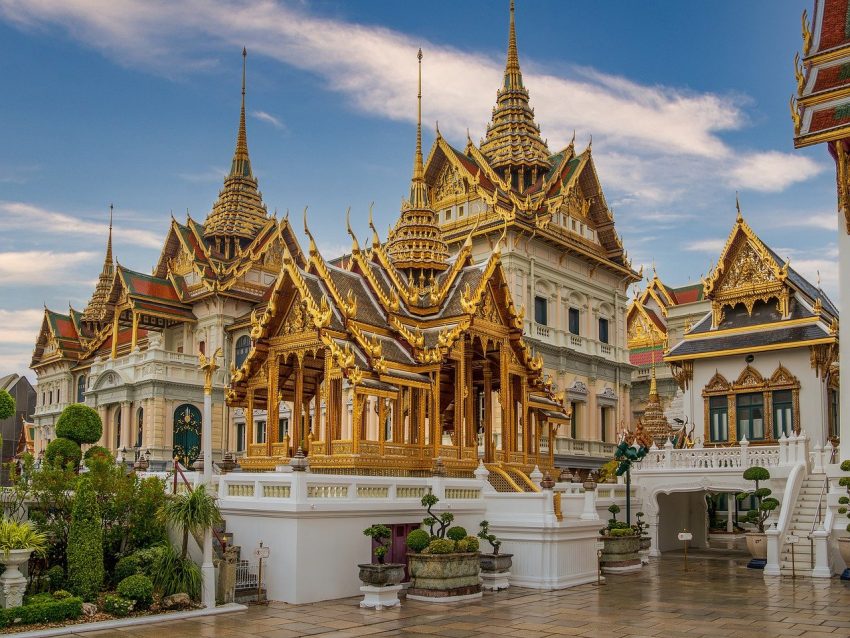
The main draw is walking through the palace grounds and the Temple of the Emerald Buddha. I would focus first on the temple complex, then move through the larger courtyards to take in the scale of the buildings, rooflines, and decorative surfaces.
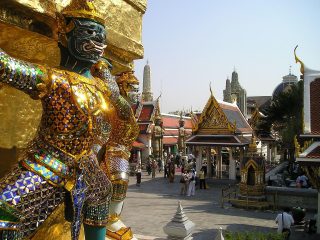
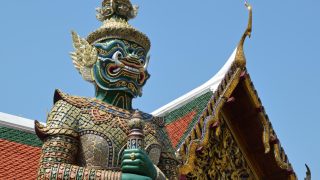
Look closely at the painted murals, gilded details, and carved elements that frame the halls and pavilions. The layout itself is part of the visit: as you move from one court to another, the shift from public ceremonial spaces to more restricted royal areas becomes clear.
If you have time, slow down around the edges of the complex rather than rushing straight through. The best moments are often the quieter ones, when the crowds thin and the contrast between the formal architecture and the temple details is easier to see.
How to Get to the The Royal Grand Palace
Bangkok’s main airport is Suvarnabhumi Airport, and from there you can continue into the city by rail, taxi, or transfer before heading to the old quarter. For the best deals and a seamless booking experience, check out these flights to Bangkok on Booking.com.
Train travelers usually arrive first at Bangkok’s central rail stations and then continue by taxi, boat, or city transport into the historic Rattanakosin area. Train schedules and bookings can be found on Omio.
Driving is possible, but traffic and limited convenient parking make it less practical than using public transport or a boat for this stop.
Is the The Royal Grand Palace Worth Visiting?
It is worth a short stop if you want one place in Bangkok that brings together royal history, temple architecture, and formal ceremonial spaces. Skip it if you dislike crowds, strict dress rules, or carefully managed visitor routes, because the experience is more structured than relaxed.
The Grand Palace in Phra Nakhon is an ornate royal complex open to visitors and housing a museum; its gleaming gold, mosaics and intricate architecture draw crowds for both sightseeing and worship, with the Temple of the Emerald Buddha singled out for its reverent atmosphere. Visitors praise the exceptional craftsmanship and vivid colours throughout the grounds, note the site is well maintained with helpful staff and multilingual brochures, and advise dressing modestly (shoulders and knees covered), arriving early to avoid heat and crowds, and allowing a few hours to explore the galleries, murals and courtyards.
VIEW BUILDER
2 weeks ago
"Visiting the Grand Palace in Bangkok was absolutely amazing. The level of detail in the buildings is incredible, from the materials used to thecraftsmanship of every structure. The gold, tiles, and decorations are stu ing, and the selection of colors is beautiful and perfectly balanced. Everywhere you look, there is something impressive to admire. The place feels grand, rich in history, and very well maintained. It can be busy with visitors, but once inside, it’s easy to understand why so many people come. I was truly amazed by the beauty, the architecture, and the care put into every detail. It’s a must-see in Bangkok and one of the most impressive places I’ve visited...."
"The biggest draw of tourists and also of locals who come to pray to emrald Buddha and 2 iconic figures one of goddess of Mercy Guan Yin.This is apopular spot for the public to light incense and make flower offerings. The Male Figure Behind the Ubosot is a bronze image of the hermit Jivaka Komarabhacca (also spelled Cheewok Komataphat). He is revered as the founder of Thai traditional medicine and was the personal doctor to the Buddha. Gold in Thai culture as in Indian too is the colour of enlightenment as Gold is often embellished on Buddha figures. All the world comes to enjoy the the Thai art and architecture here. Plenty of employees help with typical Thai politeness and humility any problem a tourist has. There is facility for medical emergencies too. It appears like an international festival with Europeans, Chinese, Malaysians, Indians etc with fervour photographing the edifices and taking group pictures for memories sake. There are brochures and maps in many languages Chinese, English, Thai, French, German and more. The entrance verandahs have a complete pictorial narrative of Thai Ramayana. Excellent art work! Piece de resistance of Thailand Grand Palace...."
"One of the most beautiful places to visit in Bangkok. The paintings, temple structures, and intricate designs are absolutely superb. The entry feewas 500 THB per person during our visit to the Grand Palace. This place is rich in history and cultural significance and was once the official residence of the Kings of Thailand. Visitors should note that there is a strict dress code—shoulders and knees must be covered, otherwise entry may be denied or clothing must be rented outside. It can get very crowded and hot, so it’s best to visit early in the morning. Allow at least 2–3 hours to explore the complex properly. Comfortable footwear and water are recommended. A must-visit landmark in Bangkok for first-time travellers...."
"Visiting the Grand Palace in Bangkok is an experience that transcends mere tourism; it is a profound journey into the soul of Thai culture, history,and spiritual artistry. From the moment its majestic spires come into view, you know you are approaching something truly extraordinary. The intricate details that adorn every surface, from the gleaming gold leaf to the vibrant, mosaic-laden facades, are simply breathtaking and surpass all imagination. The undisputed highlight, and a sight that will remain etched in my memory forever, is the Temple of the Emerald Buddha (Wat Phra Kaew). The reverence and serenity within this temple are palpable. To witness the sacred Emerald Buddha, meticulously dressed for the season, is a humbling and deeply spiritual moment, even for visitors. The surrounding galleries featuring the epic Ramakien murals are not just decorations; they are a colossal and captivating storybook, depicting tales of good versus evil with stu ing artistry. While the grounds can be crowded, its vastness allows you to find moments of quiet reflection in smaller courtyards. It is essential to dress respectfully, as this is a sacred site, but the effort is a small price to pay for the privilege of entering. Yes, this is one of Bangkok's most famous landmarks, but it completely earns its status. It is more than a collection of buildings; it is the living, breathing symbol of a nation. The sheer scale of craftsmanship and the palpable sense of history in every corner is awe-inspiring. Allocate at least three to four hours to fully appreciate its grandeur. A visit to the Grand Palace isn't just a check on a bucket list; it is an essential, unforgettable, and profoundly moving encounter with the heart of Thailand...."
"The Grand Palace is truly breathtaking. Every corner of the complex reflects exceptional craftsmanship, intricate details, and deep culturalsignificance. The grounds are very well maintained, with a smooth visitor flow and helpful staff throughout the area. Despite the crowds, the experience remains organized and comfortable. The architecture, colors, and atmosphere make it one of Bangkok’s most iconic and unforgettable landmarks. A must-visit for anyone traveling to the city...."
Practical Tips on Visiting the The Royal Grand Palace
Best time to visit: Early morning is the easiest time to arrive before the heat builds and the site gets busier.
How long to spend: Plan on 2-3 hours for a proper visit, longer if you want to move through the temple and palace areas slowly.
Accessibility: Some parts are manageable, but steps and uneven surfaces mean the complex is only partly suitable for visitors with limited mobility.
Facilities: Restrooms, souvenir shops, and water stations are available inside the complex.
Where to Stay Close
For visiting the Grand Palace, the most practical bases are Bangkok Old Town / Rattanakosin and the nearby riverside areas, since they keep you close to the palace, temples, and river boats; Sukhumvit is usually less convenient for sightseeing here.
The Kite Hotel Bangkok suits travelers who need old Town location gives straightforward access to the Grand Palace area and nearby sights; a compact base for walking and short rides. Riva Surya Bangkok suits travelers who need riverside/Old Town location is useful for boat access and getting to the Grand Palace and Wat Pho; good for sightseeing and a quieter stay than the busiest streets. Prince Palace Hotel Bangkok suits travelers who need large, established hotel in central historic Bangkok with family-friendly facilities and easy taxi/ride-hail access to the Grand Palace and Old Town attractions.
FAQs for Visiting the The Royal Grand Palace
Getting There
The Royal Grand Palace is in Bangkok’s historic Rattanakosin area, near the river and next to the Temple of the Emerald Buddha.
If you are already in the old city, the easiest approach is to walk toward the Rattanakosin riverfront and follow the signs to the main entrance on Na Phra Lan Road.
From Bangkok’s main train stations, the simplest option is usually a taxi or ride-hailing car. Public transport is possible, but the final leg often takes more time than the palace visit itself.
Parking is limited in the immediate area, and traffic around the historic center can be slow. Driving is usually not the best choice unless you are combining the palace with other stops by car.
Tickets & Entry
The palace complex itself is a ticketed attraction, and entry is required for the main grounds and temple areas.
A standard ticket covers entry to the Grand Palace complex and the Temple of the Emerald Buddha. Some visitor packages may also include access to a traditional performance, depending on the ticket type sold on the day.
Advance booking is usually not necessary for a standard visit. Most travelers buy tickets on arrival unless they are visiting with a group or on a tight schedule.
The palace is generally open daily, though opening times and access can change for royal events or special closures. Check the day’s status before you go if your schedule is tight.
Visiting Experience
Allow at least two hours if you want to see the main temple and the most important palace buildings without rushing.
Yes, if your one day is focused on the historic core and royal temples. If your time is better spent on markets, food, or river activities, treat it as optional.
A compact route in the old city works well with nearby temple stops and a river crossing or boat ride. Keep the plan light, because the palace itself already takes time and energy.
It is still possible in bad weather, but the experience is better on a dry day when you can move around the courtyards comfortably and see the details more clearly.
Tours, Context & Itineraries
Yes, it is commonly part of old-city walking routes and temple-focused itineraries.
A guided tour helps if you want context for the courts, murals, and royal symbolism. If you mainly want to see the architecture, an independent visit is fine.
Early morning gives softer light and fewer people in the frame, which makes the palace easier to photograph.
Yes, especially for detailed roofs, gilded surfaces, and wide courtyard views. The best shots usually come from waiting for a clear angle rather than trying to photograph everything at once.
Photography
Some indoor or sacred areas may limit photography, so follow posted signs and staff instructions.
Dress modestly with shoulders and knees covered. Clothing that is too revealing may prevent entry.
Accessibility & Facilities
Access is partial rather than fully step-free, and some areas have uneven surfaces or stairs. Visitors who need easier access should expect a limited route.
Yes, visitor facilities are available inside the complex, including restrooms and places to buy water or souvenirs.
Families can visit, but the crowds, heat, and strict entry rules make it easier for older children than for toddlers or stroller-heavy trips.
Food & Breaks Nearby
Look around the old city and riverfront for simple cafés and local food stalls rather than expecting a large dining cluster right at the entrance.
Yes, a nearby café or shaded riverside stop works well after the palace, especially if you want to cool down before your next sight.
Safety & Timing
The palace itself is a daytime visit, and the surrounding area is usually quieter after dark. It is better to plan your stop earlier in the day rather than treating the area as an evening destination.
Arriving early is the best way to reduce waiting and avoid the busiest part of the day, which usually builds toward midday.