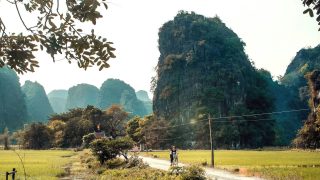
Thai Vi Temple, Ninh Binh (Tam Coc)
Hindu Temple in Ninh Binh (Tam Coc)
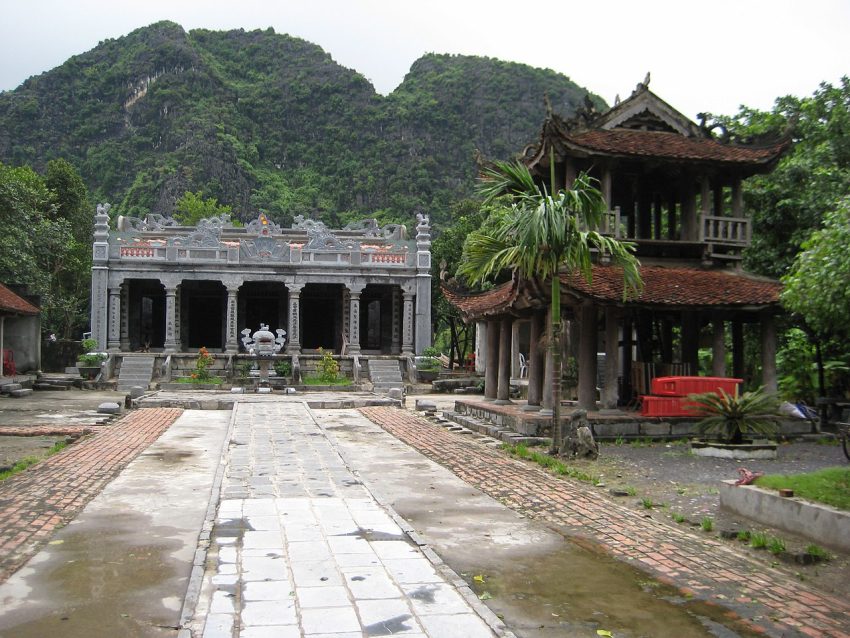
Discover the cultural and spiritual charm of Vietnam at Thai Vi Temple, an ancient gem tucked among rice paddies and limestone peaks just outside Ninh Binh. Built by King Tran Thai Tong after his victory over the Mongol Yuan forces in 1258, this temple honours Tran kings, queens and generals in a landscape chosen for its powerful feng shui, where mountains gather around a wide, open sky. The setting is peaceful and dramatic at the same time, making Thai Vi one of the top attractions in Ninh Binh for travellers who want more than just views.
Walking through the triple-arch gate, past stone horses and elephants, you step into a world where stone, wood and water all carry symbolic meaning. Incense smoke curls in front of altars to kings and Buddhist figures; carp glide in green ponds; dragons, phoenixes and swords are carved into pillars and pedestals. Surrounded by rice fields and karst cliffs, and often visited on tours from Ninh Binh and Tam Coc, Thai Vi Temple is an ideal place to pause, reflect and connect with Vietnam's martial and spiritual heritage.
Table of Contents
History and Significance of Thai Vi Temple
Thai Vi Temple was built and consecrated by King Tran Thai Tong, the first ruler of the Tran Dynasty, after his victory over the Yuan (Mongol) invaders in 1258. According to legend, the king sought a site with perfect feng shui to give thanks for this victory, rejecting two locations before choosing the valley that matched his vision of “Quần Sơn Hội Tụ” - a place encircled by mountains under a clear blue sky. Even today, on a bright day, the phrase still feels accurate as limestone ridges ring the temple and rice fields stretch away below.
Modern feng shui masters often describe the approach to Thai Vi Temple in symbolic terms: the path from Cua Quan Temple is likened to the body of a dragon, with Thai Vi as the dragon's head. At the entrance, stone elephants stand guard, recalling the war elephants used in battles against the Mongols and symbolising strength and royal power. This blend of strategic location, mythic imagery and spiritual purpose gives the temple a unique presence in the Tam Coc landscape.
Inside, Thai Vi honours not only King Tran Thai Tong but also his descendants and key Tran generals, including Prince Tran Quang Khai and Trần Hưng Đạo, later venerated as Saint Tran. Altars, stone pedestals and carvings feature the four great Vietnamese mascots - dragon, unicorn, turtle and phoenix - representing power, wisdom, longevity and immortality. Over centuries, the temple has been repaired and renewed, with major renovations recorded in 1589, 1601, 1881, 1893, 1925 and most recently between 2006 and 2018, ensuring that it remains both a living place of worship and a carefully preserved national historical site.
Things to See and Do in Thai Vi Temple
The approach to Thai Vi is part of its charm. Many visitors arrive by bicycle or on foot from Tam Coc, travelling along quiet lanes between rice fields with karst peaks rising on all sides. Others come by boat along the Ngo Dong River, gliding past cliffs and caves before walking the short distance to the temple. However you arrive, the transition from open countryside into the temple grounds feels smooth and natural.
At the entrance, the traditional Vietnamese triple-arch gate symbolises the “three ways of seeing” in Buddhism. Moss-covered stone horses guard either side, echoing the protective elephants and reminding visitors of their importance in transport and warfare. Passing through the gate, you step into a green-stone courtyard of around forty square metres, flanked by ponds filled with koi fish that add colour and movement to the quiet space. From here, you can appreciate how the temple’s layout emphasises symmetry, reverence and a direct axis from the outside world to the main sanctuary.
The main structures of Thai Vi are built from local stone and wood, deeply carved with floral motifs, dragons, clouds and traditional symbols. Two bell towers stand within the complex: one houses a bronze bell cast in the 1600s, the other a traditional drum. Historically, bell and drum were used to calm the mind, mark ceremonies and signal danger, and today they still contribute to the temple’s tranquil soundscape. Nearby small houses are used to prepare votive papers - colourful offerings burned for ancestors and deities - giving a glimpse into everyday ritual practice.
Inside the stone main hall, an incense burner stands before a series of altars. One prominent altar is dedicated to King Tran Nhan Tong, the Buddhist king and grandson of Tran Thai Tong, revered as one of Vietnam’s most important spiritual monarchs. Above the altar, a lacquered board with Chinese characters hangs among rafters decorated with flying dragons, while wooden representations of swords, spears and hammers recall the weapons used against the Yuan invaders. At the back of the temple, statues of King Tran Thai Tong, his queen and their son are flanked by tablets honouring Tran ancestors and statues of senior generals such as Tran Quang Khai and Tran Hung Dao.
At the rear of the complex, the small Mahayana-style tower offers a quiet resting spot. Stone tables and chairs invite you to sit, look out at the tiled courtyard and surrounding mountains and read the carved turtles bearing the names of those who helped preserve and restore the temple. Taken together, these spaces make Thai Vi Temple one of the best places to visit in Ninh Binh if you want a blend of architecture, history, legend and gentle countryside scenery rather than just a quick photo stop.
How to Get to Thai Vi Temple
Most visitors start their journey in Hanoi, whose Noi Bai International Airport is the main international gateway to northern Vietnam and offers easy access to the capital city before you continue south to Ninh Binh. For the best deals and a seamless booking experience, check out these flights to Ninh Binh (Tam Coc) on Booking.com. From Hanoi, you then travel to Tam Coc or Ninh Binh city and on to Thai Vi Temple.
By train, regular services on the north-south Reunification Line run from Hanoi to Ninh Binh Railway Station in about 2-2.5 hours.Train schedules and bookings can be found on Omio. From the station, you can take a taxi or pre-arranged transfer (around 20-30 minutes) to Tam Coc and then either walk, cycle or take a short local ride to Thai Vi Temple.
Buses and minivans run frequently from Hanoi's main stations, such as Giap Bat and My Dinh, to Ninh Binh and Tam Coc. Many travellers book through their accommodation or a trusted agency, and journey times are similar to the train. Once in Tam Coc, Thai Vi is only a short distance away by bicycle, on foot or by local taxi, and some visitors arrive via scenic boat trips along the Ngo Dong River.
If you prefer maximum flexibility, travelling by private car or motorbike from Hanoi is straightforward: follow the Phap Van - Cau Gie Expressway south towards Ninh Binh and then continue to Tam Coc, from where local roads and signposts lead to Thai Vi Temple. This option makes it easy to combine the temple with other nearby sites such as Bich Dong Pagoda, Tam Coc boat tours and the viewpoints at Hang Mua.
Practical Tips on Visiting Thai Vi Temple
- Suggested tips: Move slowly and take time to notice the carvings, statues and small details; Thai Vi rewards quiet observation more than rushing from one photo spot to another.
- Best time to visit: The dry season from November to April offers more comfortable temperatures; if you visit from the 14th to 17th of the third lunar month, you can experience the lively annual festival with dragon-lion dances, wrestling and boat races.
- Entrance fee: Free
- Opening hours: Typically open daily during daylight hours; visiting in the early morning or late afternoon is especially atmospheric and less hot.
- How long to spend: Plan 1-2 hours at the temple itself, more if you combine your visit with a bike ride, boat trip or gentle walk through the surrounding rice fields and villages.
- Accessibility: The paths around the temple are mostly flat but stone-paved; there may be some uneven steps and thresholds, so visitors with limited mobility should take care.
- Facilities: Expect only modest facilities nearby, such as small shops and simple eateries; more services, cafés and restaurants are available back in Tam Coc and Ninh Binh.
- Photography tip: Aim for softer light in the early morning or late afternoon; look for compositions that frame the temple with mountains and rice fields, and capture the contrast between carved stone guardians and living greenery.
- Guided tours: A local guide or Tam Coc-based tour can add context about the Tran Dynasty, feng shui concepts and symbolic carvings, especially if you are interested in Vietnam's military and Buddhist history.
- Nearby food options: Simple local eateries around Tam Coc and along the access roads offer rice dishes, noodles and regional specialties, making it easy to combine temple time with a relaxed meal.
Where to Stay close to Thai Vi Temple
Staying in Tam Coc or nearby countryside homestays makes visiting Thai Vi Temple particularly easy, as you can simply hop on a bicycle or stroll through the fields to reach it. For a peaceful, nature-focused stay among rice paddies and karst peaks, Tam Coc Garden Resort offers boutique-style bungalows and lush gardens. Closer to the main village and boat pier, Ninh Binh Hidden Charm Hotel & Resort provides resort comforts with quick access to boat tours, cycling routes and taxi rides to Thai Vi. If you prefer a quieter countryside setting still within easy cycling distance of the temple and Tam Coc, Tam Coc Rice Fields Resort is a good choice, surrounded by fields and limestone hills.
Is Thai Vi Temple Worth Visiting
If you are interested in Vietnamese history, Buddhist culture or simply enjoy quiet, atmospheric places in beautiful landscapes, Thai Vi Temple is absolutely worth visiting. It offers a more intimate experience than some of the larger sites in Ninh Binh, yet its connections to the Tran Dynasty and the Mongol wars give it real historical weight. The combination of feng shui-inspired setting, stone and wood architecture, detailed carvings and living ritual makes the temple feel both grounded and spiritual. Paired with a Tam Coc boat ride or a bike loop through the countryside, a visit here adds depth and meaning to your time in Ninh Binh, beyond just admiring the scenery.
What Other Travellers Say...

Thai Vi Temple in Ninh Bình is a 13th-century complex set among limestone hills, featuring a courtyard, ornately carved stone entrance arches, a lotus pond and detailed stone carvings including dragon staircases; visitors describe a calm, spiritual atmosphere with incense and frangipani, easy access by bike or a short walk from the Tam Coc boat pier, free entry with donations welcome, limited English signage, and mixed notes about the need for maintenance though it's often quiet and uncrowded.


FAQs for Visiting Thai Vi Temple
Nearby Attractions to Thai Vi Temple
- Tam Coc Boat Tour: A scenic sampan journey along the Ngo Dong River through caves and rice fields, often described as “Ha Long Bay on land.”
- Bich Dong Pagoda: A three-level cave pagoda complex set into a limestone cliff, reached via a stone bridge and offering views over paddies and karst peaks.
- Mua Caves Viewpoint (Hang Mua): A steep climb of about 500 steps to dragon and pagoda viewpoints with some of the best panoramas in Ninh Binh.
- Hoa Lu Ancient Capital: Vietnam's first royal capital, with temples dedicated to Kings Dinh and Le in a setting of ponds and limestone hills.
- Trang An Scenic Landscape: UNESCO-listed boat routes through caves, temples and karst valleys, showcasing the wider “Ha Long Bay on land” scenery around Ninh Binh.
The Thai Vi Temple appears in our Complete Guide to Visiting Ninh Binh (Tam Coc)!

Moira & Andy
Hey! We're Moira & Andy. From hiking the Camino to trips around Europe in Bert our campervan — we've been traveling together since retirement in 2020!
This website uses affiliate links which may earn a commission at no additional cost to you!
Planning Your Visit
Typically open daily during daylight hours; visiting in the early morning or late afternoon is especially atmospheric and less hot.
Free
Nearby Attractions
- Mua Caves Viewpoint (1.0) km
Cave and Viewing Point - Tam Coc (1.2) km
Cave and River - Bich Dong Pagoda (1.7) km
Buddhist Temple - Trang An Caves (3.4) km
River - Am Tien Pagoda Cave (6.3) km
Lake and Pagoda - Hoa Lu Ancient Capital (7.1) km
Historic Building - Bai Dinh Pagoda (8.8) km
Buddhist Temple - Cuc Phuong National Park (35.0) km
National Park - Perfume Pagoda (47.8) km
Buddhist Temple - Museum of Vietnamese Women (89.3) km
Museum