Hanoi, Vietnam: The Ultimate Travel Guide 2026
Hanoi
Hanoi

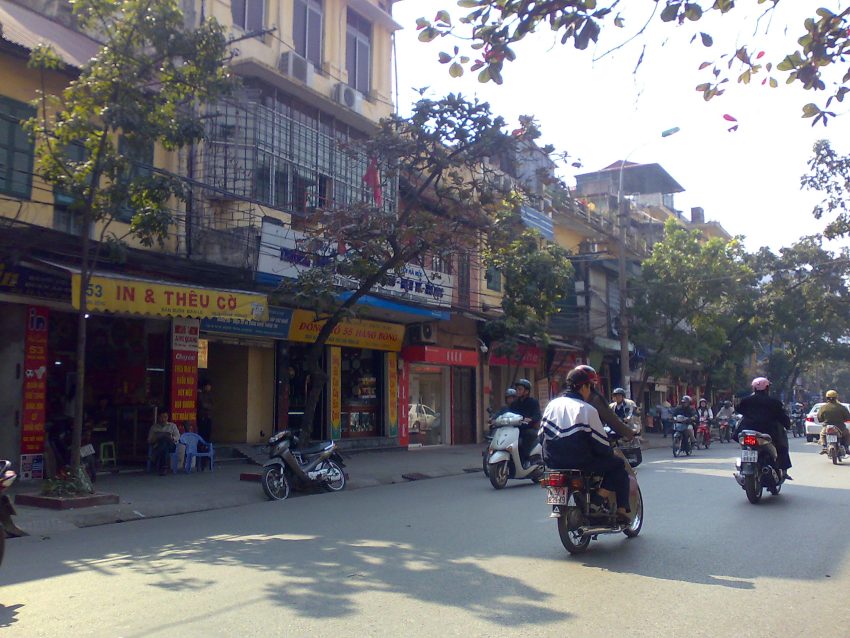
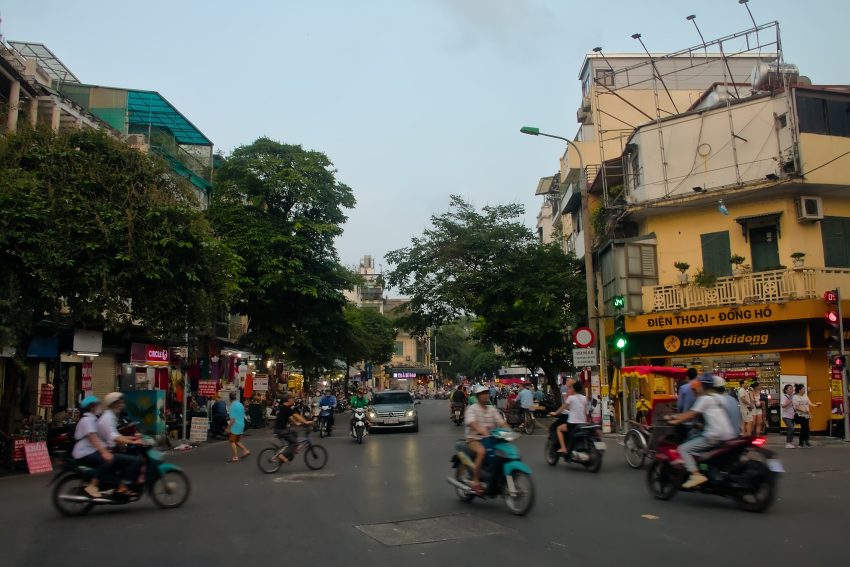
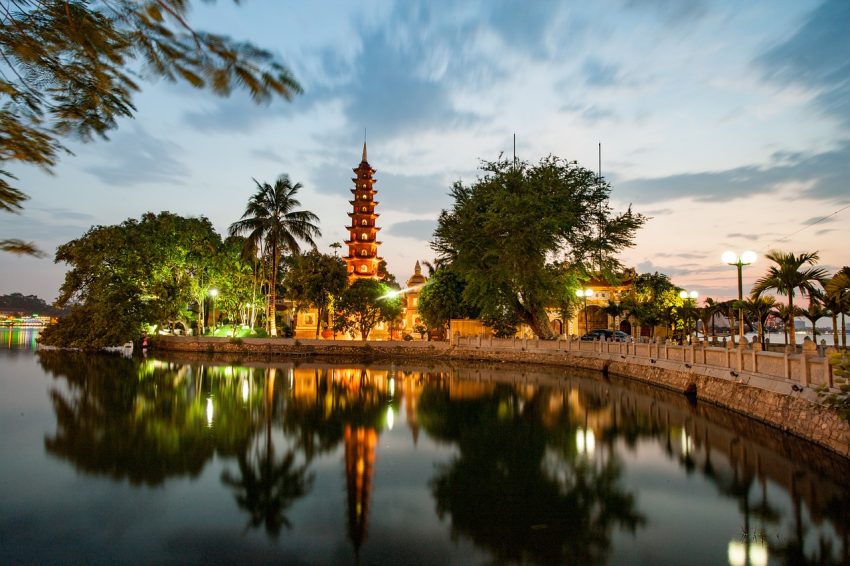
Founded over 1000 years ago, Vietnam's capital city, Hanoi, is steeped in history, with the streets of its winding Old Quarter dating back to the 14th century. Strolling through these tree-lined lanes and past weathered colonial facades feels like stepping back in time. Yet, modern-day Hanoi is far more than its historical roots. The ancient city is alive with modern cafes, world-class restaurants, and vibrant art galleries. As night falls, the city offers a variety of nightlife options, from sophisticated rooftop bars to lively bia hơi joints. For first-time visitors, these experiences are a must. From ancient temples to bustling markets, Hanoi is the cultural heartbeat of Vietnam, offering a blend of the old and the new.

History of Hanoi

Early History of Hanoi

Hanoi’s history dates back over 1000 years. Originally known as Thang Long, meaning “Ascending Dragon,” it was founded in 1010 by Emperor Ly Thai To of the Ly Dynasty. The city quickly became the political and cultural center of Vietnam.

Hanoi Under the Le Dynasty

During the Le Dynasty, Hanoi continued to flourish. It was during this period that many of the city’s iconic temples and pagodas were constructed, contributing to its rich architectural heritage.

Hanoi During the French Colonial Period

In the late 19th century, Hanoi fell under French colonial rule. The French significantly influenced the city’s architecture, infrastructure, and culture, evident in the grand colonial buildings and tree-lined boulevards that still exist today.

Hanoi in the 20th Century

The 20th century was a tumultuous time for Hanoi. It was the center of revolutionary activities against French rule, leading to the establishment of the Democratic Republic of Vietnam in 1945 by Ho Chi Minh. The city endured significant hardship during the Vietnam War but emerged as the capital of reunified Vietnam in 1976.

Modern Hanoi

In recent decades, Hanoi has experienced rapid development and modernization. The city has managed to preserve its historical charm while embracing economic growth and cultural evolution. Today, Hanoi is a vibrant metropolis that serves as the political, cultural, and economic heart of Vietnam.

Moira & Andy
Moira & Andy

Hey! We're Moira & Andy. From hiking the Camino to trips around Europe in Bert our campervan — we've been traveling together since retirement in 2020!

Read our full story here

Visiting Hanoi for the first time and wondering what are the top places to see in the city? In this complete guide, I share the best things to do in Hanoi on the first visit. To help you plan your trip, I have also included an interactive map and practical tips for visiting!

This website uses affiliate links which earn a small commission at no additional cost to you.
Powered by GetYourGuide

34 Best places to See in Hanoi

This complete guide to Hanoi not only tells you about the very best sights and tourist attractions for first-time visitors to the city but also provide insights into a few of our personal favorite things to do.

This is a practical guide to visiting the best places to see in Hanoi and is filled with tips and info that should answer all your questions!

1. Temple of Literature

Temple of Literature Hanoi
CC BY-SA 2.0 / thalling55
Hanoi’s Temple of Literature is a walled Confucian sanctuary founded in 1070 and later expanded into Vietnam’s first university, where generations of princes and elite scholars trained for the royal examinations. The complex unfolds through five courtyards that gradually quiet the city, from the Great Middle Gate with its Virtue and Talent side entrances to the square “Well of Heavenly Clarity.” Near the water sit the Doctoral Stelae—stone tablets balanced on turtle backs—recording successful candidates, a collection recognised by UNESCO’s Memory of the World. The Pavilion of Constellation of Literature (1805), a city emblem, frames the site with delicate wooden geometry and a ceremonial bell.
Location: Temple Of Literature, Phố Quốc Tử Giám, Văn Miếu, Đống Đa, Hanoi, Vietnam | Hours: In summer ( From April to October) : 07:30-17:30 In winter (From October to April) : 08:00-17:00 | Price: Adults: 30,000 VND (~US$ 1.3) | Website | Distance: 0.2km

Here is a complete selection of hotel options in Hanoi. Feel free to review each one and choose the stay that best suits your needs.

2. Vietnam National Museum of Fine Arts

Vietnam National Museum of Fine Arts
Public Domain / Daaé
Housed in a 1937 building that once served as a Catholic girls’ boarding school, the Vietnam National Museum of Fine Arts traces the country’s artistic life from ancient belief to modern experimentation. Galleries move from Cham sandstone carvings and Buddhist wooden sculpture to folk paintings in the Dong Ho and Hang Trong styles, vivid with festival scenes and daily routines. Mid‑20th‑century rooms turn stark and intimate, with wartime sketches, posters, and paintings shaped by resistance and solidarity. Upper floors shift again into lacquer, silk, and more abstract contemporary work, showing how personal expression emerged alongside tradition. Visitors often remember the maze-like sequence of small rooms across multiple levels and the sheer time span—around 2,500 years—covered in one visit.
Location: Vietnam National Fine Arts Museum, Phố Nguyễn Thái Học, Điện Biên, Ba Đình, Hanoi, Vietnam | Hours: 8:30 - 17:00 everyday | Price: Adults 40.000 VND | Website | Distance: 0.5km

Traveling to a country with a different currency? Avoid ATM transaction fees and pay in local currency with a Wise Card. Having used it for over 5 years, we've saved loads on fees!

3. Lenin Park

Lenin Park Hanoi
Lenin Park Hanoi
CC BY-SA 3.0 / Rungbachduong
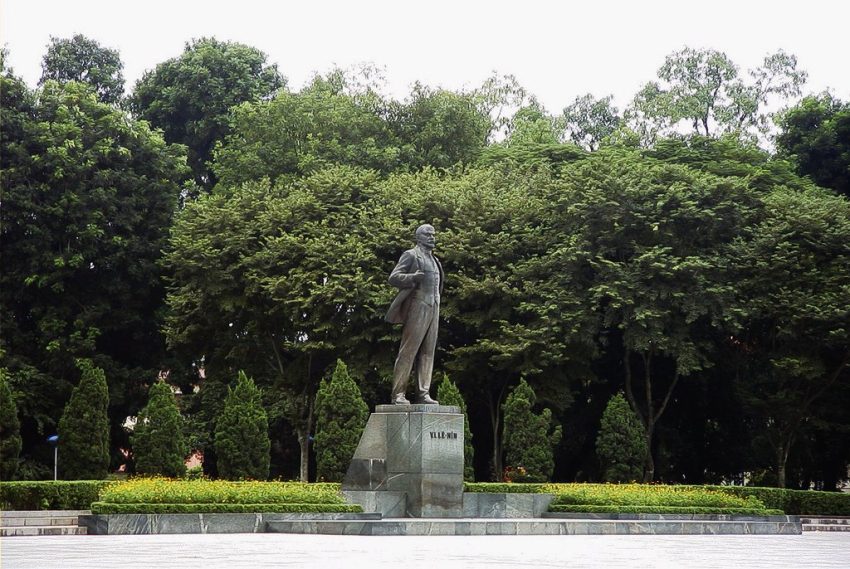
Lenin Park is a leafy public square and green space centered on a large bronze statue of Vladimir Lenin, a remnant of the socialist-era symbolism that still anchors local life today. The broad plaza in front of the monument is often busy with skateboarders and groups doing morning exercises, while shaded paths behind it feel calmer under tall, mature trees. Set opposite the Vietnam Military History Museum, it’s an easy place to pause and watch everyday routines unfold rather than queue for another indoor sight. Visitors tend to remember the contrast between the quiet lawns and the traffic at the edge, plus small details like the portable toilets (a small fee per use) and drink sellers lingering near the pavilion.
Location: 28A Điện Biên Phủ, Điện Biên, Ba Đình, Hà Nội, Vietnam | Distance: 0.7km

Explore Hanoi at your own pace with our self-guided walking tour! Follow our curated route to discover must-see sights and local secrets that makes Hanoi one of the best places to visit in Vietnam.

4. Vietnam Military History Museum

Vietnam Military History Museum
Public Domain / Сергей Белый
The Vietnam Military History Museum traces the country’s defense story from early dynasties to the 20th century, anchored by the 1812 Flag Tower on its grounds. Opened in 1956, it combines indoor galleries with a large outdoor yard where visitors linger over tanks, aircraft, and other captured or decommissioned hardware, including American helicopters and a B-52 sculpture assembled from wreckage. Inside, photographs, propaganda posters, uniforms, and weapons map the Indochina and Vietnam War years alongside older campaigns against Mongol and Ming forces. Reviews often note the modern scale of the complex and that some areas may be limited or still being completed, so the open-air displays become the most memorable first impression.
Location: Vietnam Military History Museum, Điện Biên Phủ, Điện Biên, Ba Đình, Hanoi, Vietnam | Distance: 0.8km

Explore Hanoi at your own pace with our self-guided walking tour! Follow our curated route to discover must-see sights and local secrets that makes Hanoi one of the best places to visit in Vietnam.

Powered by GetYourGuide

5. Ho Chi Minh Museum

Ho Chi Minh Museum   Hanoi   Vietnam
Ho Chi Minh Museum Hanoi Vietnam
CC BY-SA 3.0 / Adam Jones Adam63
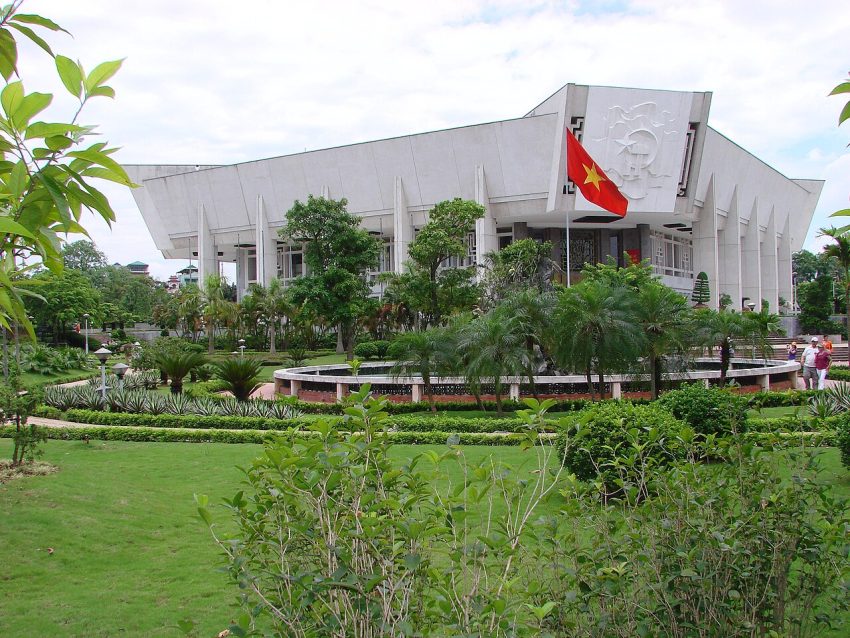
Set within the Ho Chi Minh Complex in Ba Dinh District, the Ho Chi Minh Museum traces the leader’s life and the revolutionary movement that shaped modern Vietnam. The 1990s building is designed to evoke a white lotus, and its bold, symbolic interior leads you through eight chronological galleries—from his childhood in Nghe An to decades of travel abroad and the years of national leadership. Displays mix personal belongings, documents, film, and gifts from international allies, drawn from a collection of more than 170,000 items, with labels in Vietnamese, English, and French. Visitors often remember the calm, orderly atmosphere and the long approach from the entrance, even when crowds are heavy.
Location: Ho Chi Minh Museum, Phố Ngọc Hà, Đội Cấn, Ba Đình, Hanoi, Vietnam | Hours: 8 am to 11:30 am Daily (closed on Mondays and Fridays) | Price: 40,000 VND/person | Website | Distance: 0.9km

Explore Hanoi at your own pace with our self-guided walking tour! Follow our curated route to discover must-see sights and local secrets that makes Hanoi one of the best places to visit in Vietnam.

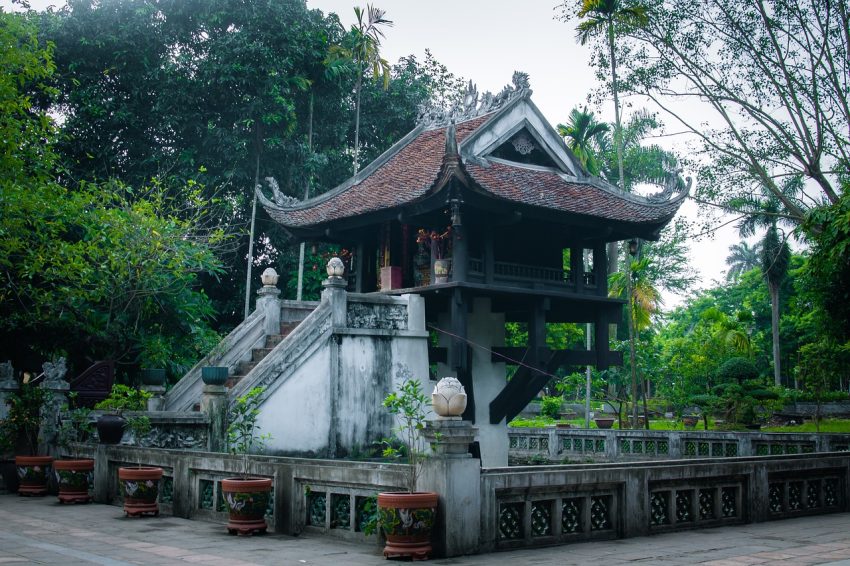
6. One Pillar Pagoda

one pillar pagoda
one pillar pagoda
Raised on a single stone pillar above a lotus pond, the One Pillar Pagoda is a compact Buddhist shrine designed to resemble a lotus bloom—an image tied to purity and enlightenment. It was commissioned in 1049 by King Lý Thái Tông after a dream of Quan Âm (Avalokitesvara) seated on a lotus and offering him a child, and later expanded with a surrounding lake in 1105. The square wooden sanctuary (Liên Hoa Đài) is reached by a short flight of steps; inside, worshippers leave incense and offerings before the Quan Âm statue. Though destroyed in 1954 and rebuilt in 1955, the tranquil gardens and the pagoda’s reflection in the water remain what visitors remember most.
Location: One Pillar Pagoda, Phố Chùa Một Cột, Đội Cấn, Ba Đình, Hanoi, Vietnam | Hours: 08:00 - 17:00 (every day) | Price: Free | Distance: 0.9km
Powered by GetYourGuide

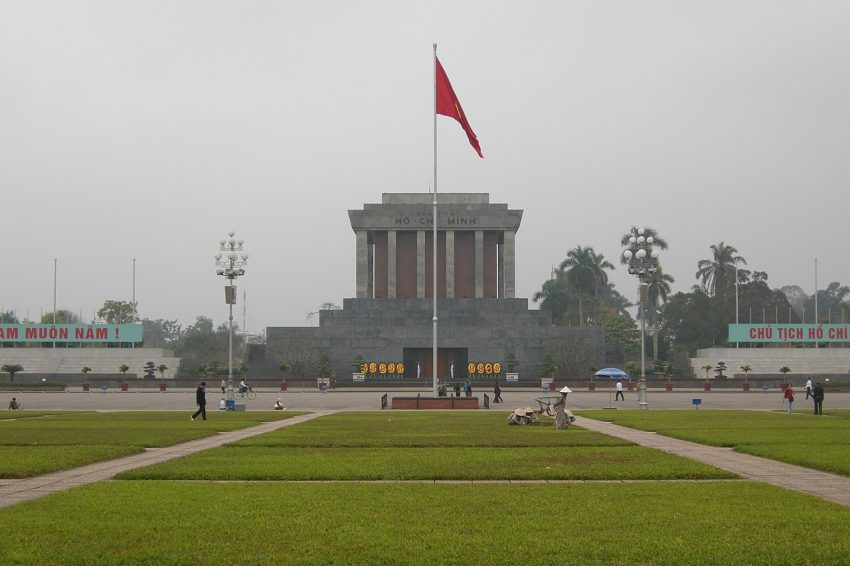
7. Ba Dinh Square

Hanoi Vietnam Ho Chi Minh Mausoleum on Ba Dinh Square
CC BY-SA 4.0 / Vyacheslav Argenberg
Ba Đình Square is a vast, formal civic plaza where Vietnam’s modern state was publicly born: on September 2, 1945, Ho Chi Minh read the Declaration of Independence here to a huge crowd. The experience today is defined by scale and symmetry—broad lawns and straight paths leading to the granite Ho Chi Minh Mausoleum, with guard presence and a notably solemn mood. Grand government buildings, including the National Assembly, frame the open space, making it feel more like a ceremonial ground than a park. Many visitors find it best for a short, reflective walk and photos, unless a parade or official event is underway.
Location: Quảng trường Ba Đình, Hùng Vương, Điện Biên, Ba Đình, Hanoi, Vietnam | Distance: 1km

8. Ho Chi Minh’s Mausoleum

ho chi minh mausoleum
A severe, granite mausoleum built to hold the embalmed body of Ho Chi Minh, this is a place of ritual and national memory rather than sightseeing. Visitors enter through security and a carefully managed queue, then file past the glass case in near-silence under watchful guards. The building was completed in 1975, with preservation expertise from the Soviet Union, and its materials and plantings were chosen to signal unity across the country. The approach across Ba Dinh Square—where independence was declared in 1945—adds weight to the experience. Dress rules are enforced, and the atmosphere is calm, orderly, and unmistakably solemn.
Location: Ho Chi Minh's Mausoleum, Hùng Vương, Điện Biên, Ba Đình, Hanoi, Vietnam | Hours: Morning: from 08:00 to 12:00 Afternoon: from 14:00 to 16:30 Closed Monday & Friday | Price: 25.000 VND (~$1) | Distance: 1km
Powered by GetYourGuide

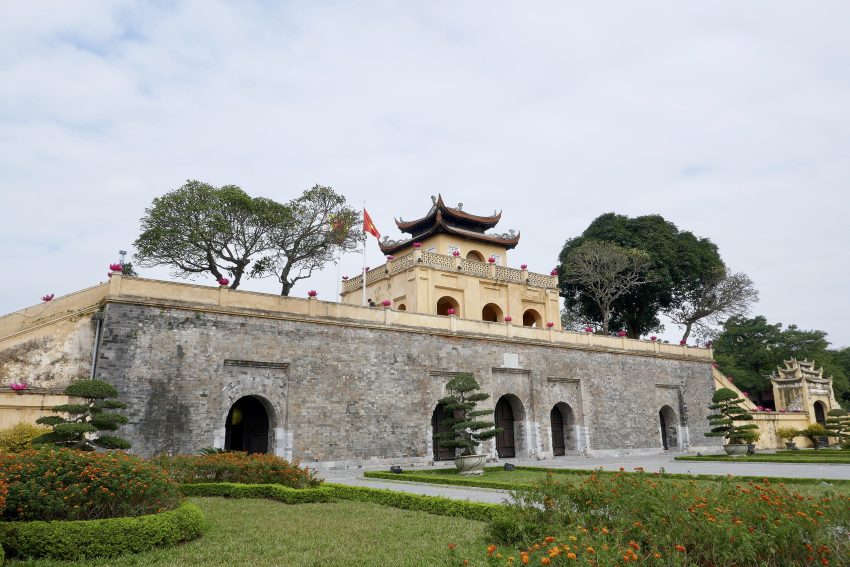
9. Imperial Citadel of Thang Long

Thang Long Imperial Citadel
CC BY-SA 2.0 / Isabell Schulz
The Imperial Citadel of Thang Long is a UNESCO-listed royal and military complex that traces more than 1,300 years of state power, built over a 7th-century Chinese fortress and reshaped after Lý Thái Tổ established Thang Long in 1010. Visitors move between surviving gates and foundations that hint at vanished palaces, including the five-arched Doan Mon and the stone dragon steps of Kinh Thien Palace. The 1812 Flag Tower still rises above the grounds, while open excavation areas reveal layers of roads, wells, and artefacts spanning the 6th to 20th centuries. A striking contrast comes at D67 House and its tunnels, where wartime meeting rooms sit beneath the imperial ruins.
Location: Imperial Citadel of Thang Long, Hoàng Diệu, Quán Thánh, Ba Đình, Hanoi, Vietnam | Price: 100,000 | Website | Distance: 1km

10. Train Street

vietnam train street
Train Street (Ngõ 224 Lê Duẩn) is a working railway squeezed between tightly packed homes, where daily life sits inches from the tracks. Built as part of the French-era line in 1902, it became famous for the surreal moment a full-size train threads the narrow corridor, typically around 3 pm and 7 pm. Since authorities restricted access in 2019 over safety and crowding, most visitors now watch from licensed cafés with trackside seating, where staff pull chairs back as the horn nears. Between trains, you’ll notice residents chatting, kids playing, and laundry and stools tucked away in practiced routines. Reviews often describe it as a one-time coffee-or-beer experience centered on the pass-by.
Location: Train Street, Phố Trần Phú, Hoàn Kiếm, Hanoi, Vietnam | Hours: The train times for Train Street Hanoi is as follows: Monday to Friday: 7.00pm, 7.45pm, 8.30pm, 9.30pm 10.00pm Saturday and Sunday: 8.30am, 9.30am, 11.30am, 3.30pm, 5.30pm, 6.00pm, 7.00pm, 7.45pm, 8.30pm, 9.00pm, 11.00pm | Distance: 1.1km
Powered by GetYourGuide

11. Ho Chi Minh's Stilt House

Ho Chi Minhs Stilt House
CC BY-SA 3.0 / Grossbildjaeger
Tucked behind the Presidential Palace within the Ho Chi Minh Mausoleum Complex, this modest wooden stilt house (built in 1958) shows the deliberately simple life Ho Chi Minh chose over the grand residence nearby. The open ground level is set with plain wooden chairs and a small table where he held informal meetings, while upstairs you’ll glimpse a compact study with books and papers and a spare bedroom with a narrow bed and mosquito net. Outside, a quiet carp pond and shady gardens create a calm, reflective atmosphere. Entry is controlled through a security point, and visitors typically view the rooms from the doorways rather than stepping inside.
Location: Ho Chi Minh’s Stilt House, Đường Hoàng Hoa Thám, Ngọc Hà, Ba Đình, Hanoi, Vietnam | Hours: It is open every day except on Monday and Friday, from 7.30 am to 11 am and 1 pm to 4 pm. | Price: 25,000 VND. | Distance: 1.2km

12. Quán Sứ Pagoda
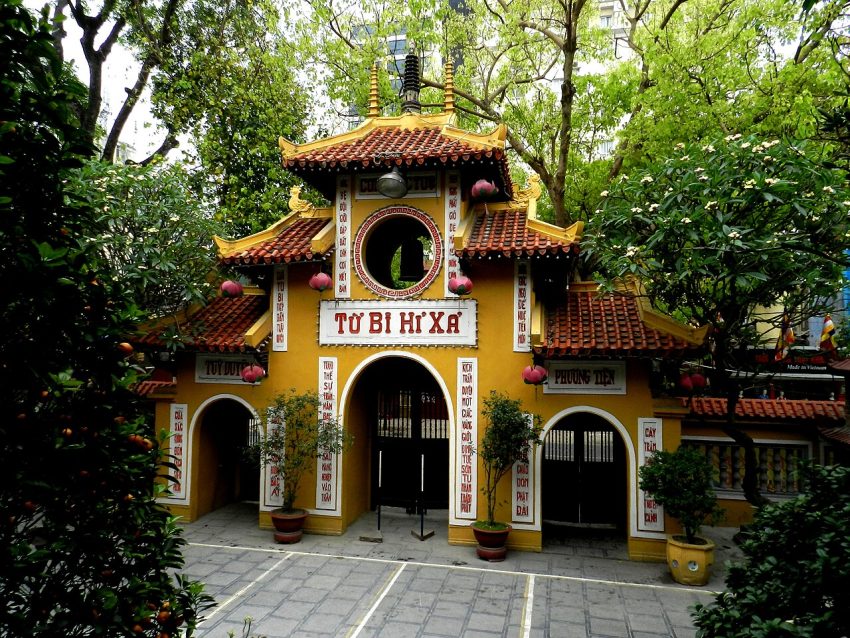
Pagode Quan Su
Pagode Quan Su
CC BY-SA 4.0 / Guerinf
Quán Sứ Pagoda is a working Buddhist temple and the national headquarters of the Buddhist Sangha of Vietnam, valued for its quiet, lived-in sacred atmosphere. Founded in the 15th century under the Lê dynasty, it began as an embassy compound built to host Buddhist envoys from Champa and Laos, with the temple surviving after the guesthouse disappeared. Visitors pass from busy Quan Su Street into shaded courtyards where incense hangs in the air and bells punctuate the calm. Inside, lacquered statues and carved woodwork fill the front hall dedicated to the Buddha, while the rear sanctuary honours the healer-saint Master Minh Không. Even when the streets are loud, the grounds feel like an oasis.
Location: Quan Su Pagoda, Phố Quán Sứ, Tran Hung Dao, Hoàn Kiếm, Hanoi, Vietnam | Hours: Daily: 7:00 AM – 6:00 PM | Distance: 1.2km

13. Presidential Palace
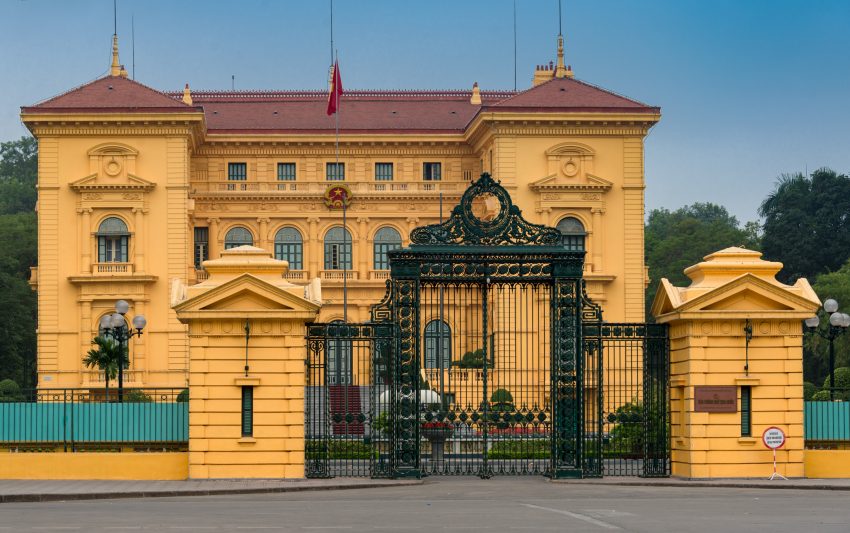
Presidential Palace of Vietnam
CC BY-SA 2.0 / xiquinhosilva
The Presidential Palace is a mustard-yellow, Italian Renaissance–style former French Governor-General’s residence (built 1900–1906) set behind wrought-iron gates and leafy gardens in the Ba Dinh political district. The main building isn’t open, so the experience is all about strolling shaded paths, peering at the bright façade, and noticing how colonial grandeur sits uneasily beside modern state power. On the grounds, Ho Chi Minh’s modest stilt house and the nearby carp pond are the most memorable stops, underscoring his refusal to live in the lavish palace while still receiving diplomatic guests there. It remains an active government site, and visitors often remark on shifting photo rules between the gate and the garden.
Location: Presidential Palace, Hùng Vương, Ngọc Hà, Ba Đình, Hanoi, Vietnam | Distance: 1.3km

14. Hoa Lo Prison
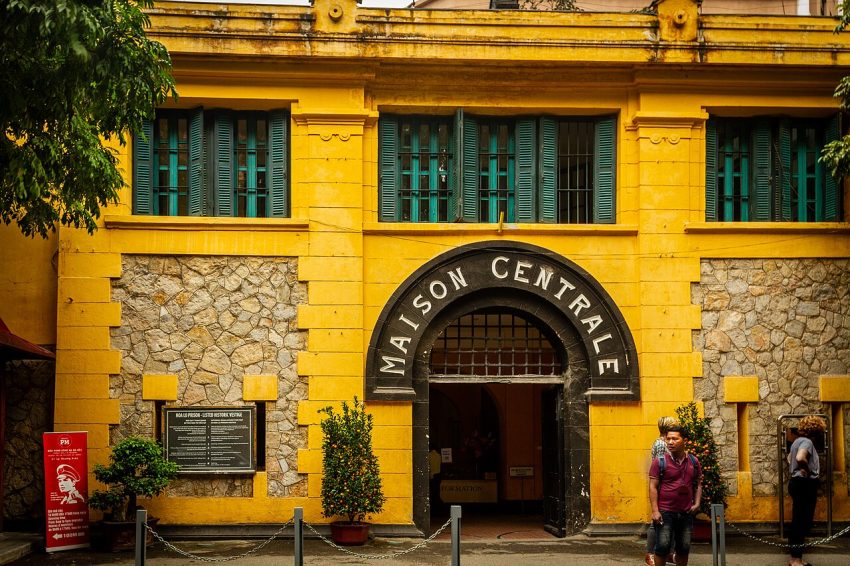
Hanoi Hilton
Hanoi Hilton
CC BY-SA 2.0 / rhjpage
Set in a surviving block of a much larger colonial-era complex, Hoa Lo Prison is a museum that confronts visitors with the mechanics of political imprisonment and wartime captivity. Built by the French between 1886 and 1901 in the severe Maison Centrale style, it quickly became overcrowded, with Vietnamese revolutionaries held in cramped communal rooms and solitary cells. Inside, you’ll see original leg irons, shackles, and stark reconstructions with mannequins that make the confinement feel immediate. The most chilling object is the preserved French guillotine used to execute early independence fighters. Later galleries shift to the “Hanoi Hilton” years (1964–1973), with photographs and personal items from American POWs such as John McCain.
Location: Hoa Lo Prison Relic, Phố Hoả Lò, Tran Hung Dao, Hoàn Kiếm, Hanoi, Vietnam | Hours: Daily 08:00 until 17:00 | Price: 30,000vnd (~$1.5) | Website | Distance: 1.3km
Powered by GetYourGuide

15. Hang Bong Street

PhoHangBong
PhoHangBong
Public Domain / Newone (talk)
Hang Bong Street is a nearly kilometre-long Old Quarter artery running toward Cửa Nam, where old guild-era trade names still echo beneath today’s fashion storefronts. It began as a patchwork of craft lanes—cotton and blanket sellers, silk dyers, even fish vendors—before becoming a French-era strip of print houses, bookstores, and journalists. Walking it now, you’ll pass art galleries and textile shops alongside traces of older temples and colonial-era façades. After dark, the mood shifts to street snacks, with students clustering near Tam Thuong Alley for fried and grilled spring rolls, and a popular pastry stop closer to the Cửa Nam end.
Location: Hang Bong, Old Quarter, Hang Gai, Hoàn Kiếm, Hanoi, Vietnam | Distance: 1.4km

16. St. Joseph’s Cathedral

St. Joseph Cathedral Ha Noi Vietnam
CC BY-SA 3.0 / trungydang
Saint Joseph’s Cathedral (the “Big Church”) is a French-built neo-Gothic landmark consecrated on Christmas Day in 1886, rising with twin spires and a clock over Nha Chung Street near Hoan Kiem Lake. Its grey stone façade and small forecourt feel calm despite the bustle, with the Regina Pacis statue of the Virgin Mary often framed in photos. Step inside when doors are open and you’ll notice ribbed vaults, pointed arches, and stained-glass windows imported from France that wash the nave in soft reds and blues. The site carries deeper layers too: the cathedral replaced the 12th-century Bao Thien Pagoda, and it remains the seat of the Roman Catholic Archdiocese.
Location: St. Joseph Cathedral, Phố Nhà Chung, Hang Trong, Hoàn Kiếm, Hanoi, Vietnam | Distance: 1.5km
Powered by GetYourGuide

17. Hang Gai Street

Hanoi   Hang Gai
Hanoi Hang Gai
CC BY-SA 2.0 / Benjamin Smith
Hang Gai (“Silk Street”) is a short, busy shopping lane on the Old Quarter’s edge near Hoan Kiem Lake, where textiles and tailoring dominate the street scene. In roughly 300 metres you’ll pass well over a hundred storefronts selling silk scarves, ao dai, accessories, and small handmade crafts, with both ready-to-wear racks and made-to-measure counters. The street’s trade roots run deep: it was once “Hemp Street,” supplying rope and hammocks along a key Le Dynasty route, and later carried the French name Rue de Chanvre. Today the mix of family workshops, established boutiques, and a few art galleries makes it feel both commercial and distinctly local, with lively browsing and bargaining.
Location: Phố Hàng Gai, Hang Gai, Hoàn Kiếm, Hanoi, Vietnam | Hours: 9:00 am to 8:00 pm | Distance: 1.8km

18. Ngoc Son Temple
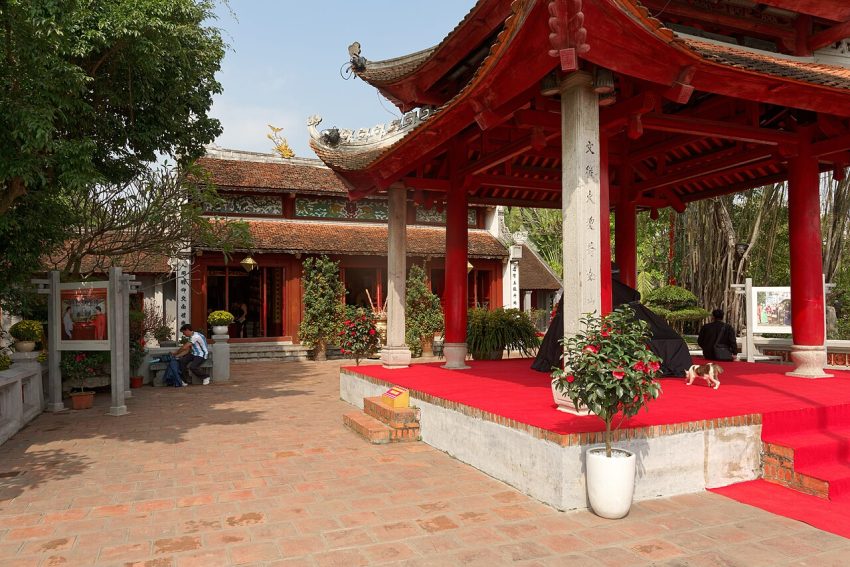
Temple of the Jade Mountain Hanoi Vietnam
CC BY-SA 4.0 / Jakub Hałun
Set on a small island in Hoan Kiem Lake, Ngoc Son Temple feels like a pause button from the traffic and chatter nearby. You reach the 19th-century complex by crossing the lacquer-red The Huc Bridge, whose curve and reflections are as memorable as the shrines beyond. The site honours national hero Tran Hung Dao alongside Van Xuong De Quan, linking patriotism with scholarship, and its layout is packed with symbolic monuments such as the Pen Tower and the Ink Slab. Inside, quiet worship halls and a mix of Taoist, Confucian, and Buddhist elements invite slow looking—though you may also notice mosquitoes and plenty of photo-taking visitors.
Location: Ngoc Son Temple, Phố Đinh Tiên Hoàng, Ly Thai To, Hoàn Kiếm, Hanoi, Vietnam | Hours: Open 8-6pm daily | Price: Free | Distance: 1.9km

19. Dong Xuan Market
Dong Xuan Market
Dong Xuan Market
CC BY-SA 4.0 / NKSTTSSHNVN
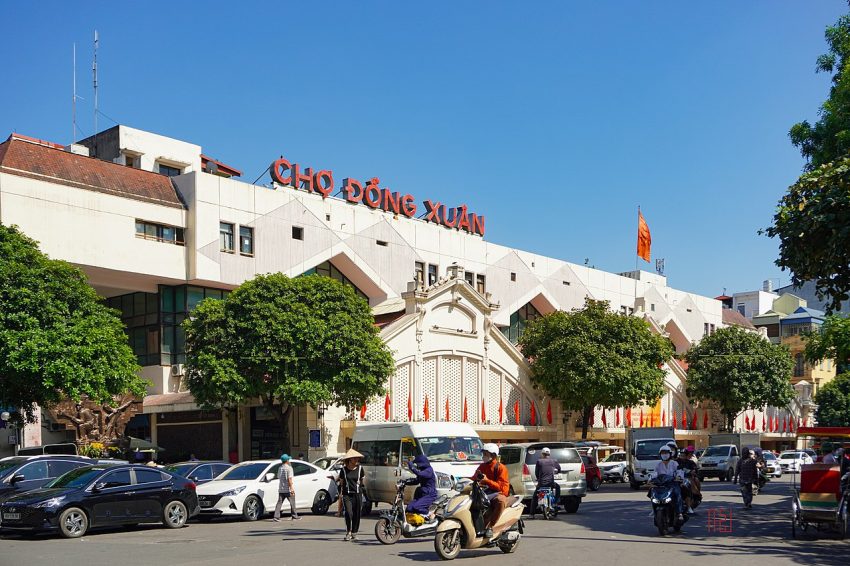
Dong Xuan Market is Hanoi’s largest covered market, a three-level warren of stalls that anchors everyday trade in the Old Quarter. Built in 1889 under French administration, it was once a 6,500-square-metre hall with a distinctive five-arch front crowned by five domes, and it has been rebuilt after a major fire in 1994. Inside, you’ll notice the ground floor’s produce, dried goods, and snack vendors before climbing to fabrics, clothing, and accessories where bulk buying and bargaining are part of the rhythm. A memorial near the entrance marks fierce fighting here on February 14, 1947. On weekend evenings, the surrounding streets swell into a night market of food, crafts, and performances.
Location: Dong Xuan Market, Old Quarter, Dong Xuan, Hoàn Kiếm, Hanoi, Vietnam | Hours: Open 7-6pm Mon-Thur; 7-12noon (sometimes later) Fri-Sun. | Distance: 1.9km

20. Hoan Kiem Lake
turtle tower hanoi
turtle tower hanoi
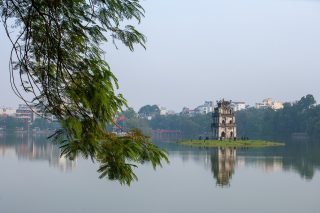
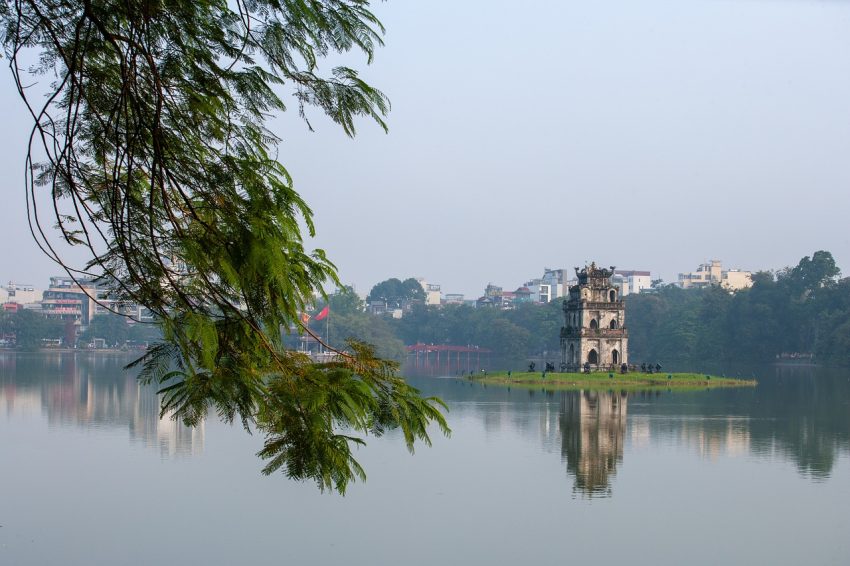
Hoan Kiem Lake is a 12-hectare freshwater lake at the heart of the Old Quarter, where shaded paths circle calm green water while street life hums just beyond the trees. Its name, “Lake of the Returned Sword,” comes from the legend of Emperor Le Loi handing back a magical blade to the Golden Turtle God, a story echoed by Turtle Tower rising from a small central islet. The red, lacquered arches of The Huc Bridge lead to Jade Islet and Ngoc Son Temple, where incense, altars, and exhibits tied to the lake’s famed soft-shell turtles deepen the sense of place. Mornings feel hushed with tai chi; nights turn lively with reflections and strolling crowds.
Location: Hoàn Kiếm Lake, Hang Trong, Hoàn Kiếm, Hanoi, Vietnam | Hours: 24 Hours | Price: Free | Distance: 1.9km
Powered by GetYourGuide

21. Museum of Vietnamese Women

Vietnamese Womens Museum Building
CC BY-SA 3.0 / Aumusee
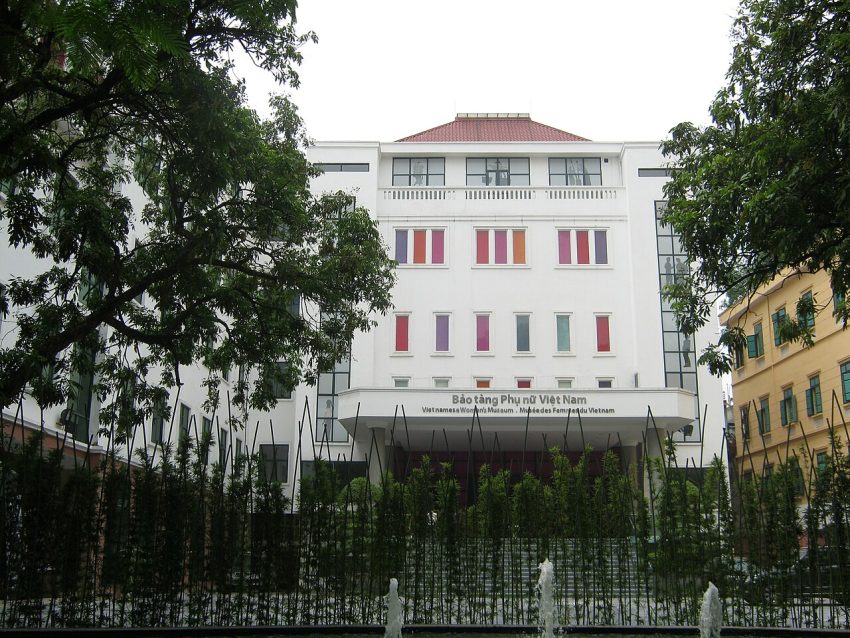
The Vietnamese Women’s Museum is a thoughtfully designed cultural museum on Ly Thuong Kiet Street, dedicated to women’s lives and contributions across Vietnam’s history. A serene courtyard sets a reflective tone before you enter galleries that pair modern presentation with intimate personal stories. Inside, a 3.6-metre golden sculpture honoring the Vietnamese mother anchors the visit, followed by sections on family life, wartime roles, and social change. Many visitors linger over the vivid display of traditional dress from Vietnam’s 54 ethnic groups, alongside photographs and objects that make everyday work and sacrifice feel tangible. Clear multilingual labels and well-organized rooms make it easy to absorb the details without rushing.
Location: Vietnamese Women's Museum, Phố Lý Thường Kiệt, Hàng Bài, Hoàn Kiếm, Hanoi, Vietnam | Hours: 08:00 – 17:00 Monday to Sunday. | Price: 40,000 VND/adult | Website | Distance: 1.9km

22. Hanoi Post Office
Hanoi Post Office
Hanoi Post Office
CC BY-SA 4.0 / Nguyenmy2302
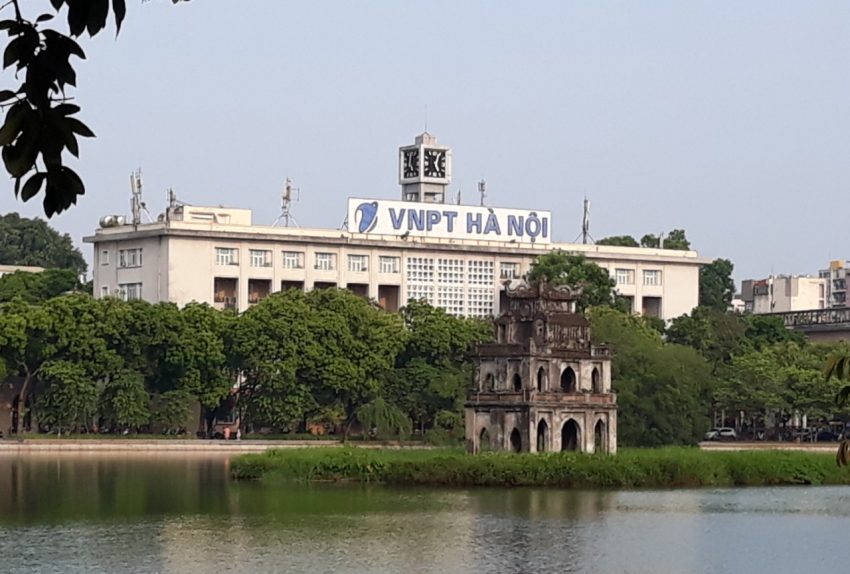
Hanoi Post Office is a working postal complex on the edge of Hoan Kiem Lake, known locally as the Bờ Hồ Post Office, and it doubles as a snapshot of the city’s changing eras of communication. First established in 1883, its main block was finished in 1901 on ground cleared from the former Bảo An Pagoda, with another building added in the early 1940s along Đinh Lễ Street. The connected trio stretches along Đinh Tiên Hoàng, Lê Thạch, and Đinh Lễ, blending neoclassical fronts with Art Deco lines and later 1970s alterations. Inside, you’ll see high ceilings and colonial-era detailing alongside busy counters, stamps, and postcard displays; reviews often mention crowds and occasional confusion over stamp prices at the entrance versus official desks.
Location: Hanoi Post Office, Phố Đinh Tiên Hoàng, French Quarter, Trang Tien, Hoàn Kiếm, Hanoi, Vietnam | Distance: 2km

23. Hoa Phong Tower
Thap Hoa Phong
Thap Hoa Phong
CC BY-SA 4.0 / The Hanoian
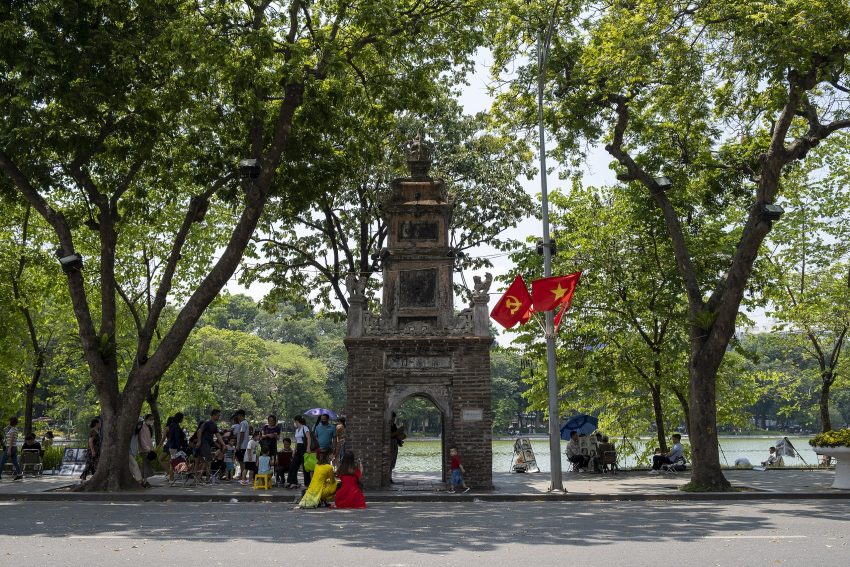
Hoa Phong Tower stands beside Hoan Kiem Lake as the lone surviving fragment of the Bao An Pagoda complex built in 1846 and largely demolished by French authorities in 1888. The compact, three-tier stone structure is easy to linger over: the lowest level has arched doorways on all four sides with moral inscriptions naming gates of gratitude, righteousness, virtue, and blessing. Above, corner pillars support guardian lions facing east, and the top tier bears the “Hoa Phong Thap” name beneath a gourd-shaped finial. Its lakeside setting makes it a favorite photo backdrop—especially with traditional ao dai—yet it still feels like a quiet relic amid the footpath bustle.
Location: Hoa Phong Tower, Phố Đinh Tiên Hoàng, French Quarter, Trang Tien, Hoàn Kiếm, Hanoi, Vietnam | Distance: 2km

24. Ba Kieu Temple
Den Ba Kieu
Den Ba Kieu
CC BY-SA 3.0 / Codobai
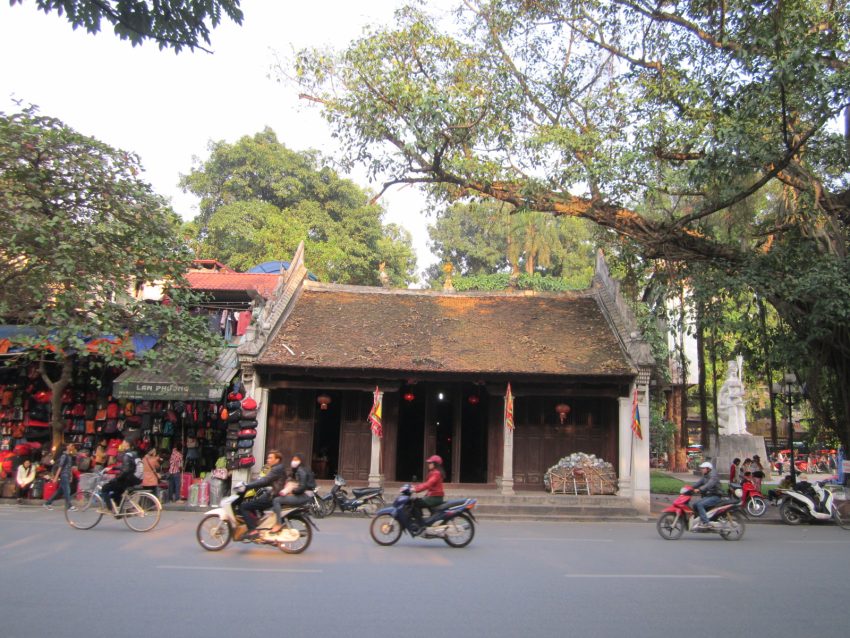
Ba Kieu Temple (Thien Tien Pavilion) is a compact lakeside shrine on the eastern edge of Hoan Kiem Lake, facing Ngoc Son, and it is one of the few Hanoi temples devoted to the Mother Goddess tradition. Inside, the worship centers on Lieu Hanh—one of Vietnam’s Four Immortals—along with her two attendant princesses, Quynh Hoa and Que Hoa. The building follows a three-part, 工-shaped plan, moving from the ceremonial hall through a pavilion to the back sanctuary, with dark, polished timber and intricate carvings. Look for rare relics spanning the Le to Nguyen eras, including a bronze bell cast in 1800 and stone steles and royal conferment papers. It’s still an active place of worship, so the atmosphere shifts from quiet daytime reverence to busier, noisier weekends.
Location: Đền Bà Kiệu, Phố Đinh Tiên Hoàng, French Quarter, Ly Thai To, Hoàn Kiếm, Hanoi, Vietnam | Hours: Open daily 08:30am – 04:30pm, midday break 11:30am-01:30pm. | Distance: 2km

25. Bach Ma Temple
Bac Ma Temple
Bac Ma Temple
CC BY-SA 2.0 / Greg Willis
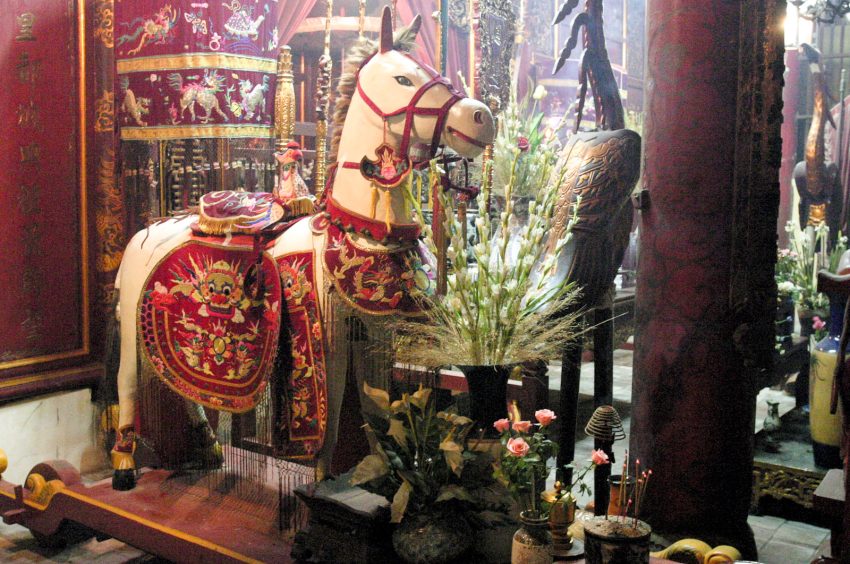
Tucked into the Old Quarter on Hàng Buồm Street, Bach Ma Temple is the city’s oldest shrine and a cornerstone of the ancient Thăng Long citadel’s spiritual defenses. Legend says a white horse appeared here in 1010 and traced the line for the new capital’s walls, earning the temple its name and lasting reverence. Visitors step through a compact, atmospheric sequence of courtyards into halls framed by ironwood pillars, carved beams, and layered altars, with relics such as stone stelae, bells, and imperial-era titles. The eight-roofed facade and “three”-shaped layout feel closer to a communal house than a grand pagoda, and many people remark on its calm, hushed mood.
Location: Bach Ma Temple, Phố Hàng Buồm, Old Quarter, Hàng Buồm, Hoàn Kiếm, Hanoi, Vietnam | Hours: 8:00 AM - 11:00 AM and 2:00 PM - 8:00 PM every day | Price: Free | Distance: 2km

26. Thang Long Water Puppet Theater
Thang Long Water Puppet Theatre
CC BY-SA 3.0 / Gryffindor
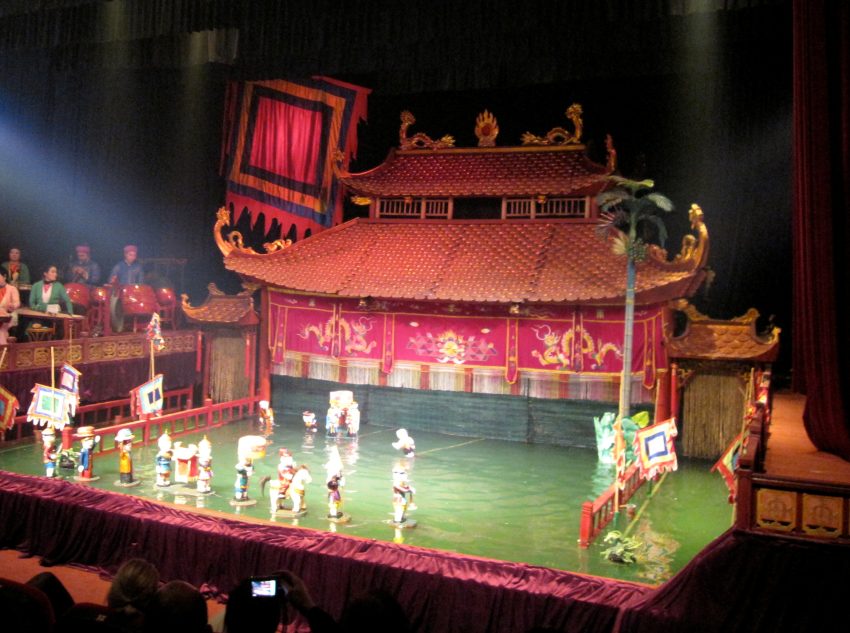
Thang Long Water Puppet Theater stages Múa rối nước, a centuries-old northern tradition where lacquered wooden puppets glide across a waist-deep pool that hides the rods and strings below. Performances run about an hour, shifting from everyday village scenes—fishing, farming, children at play—to folklore set pieces like dragons and fairies, punctuated by splashes and clever water effects. A live ensemble of drums, flutes, and the đàn bầu drives the rhythm and mood, even if the narration is in Vietnamese. The close seating makes the painted faces, rippling water, and synchronized puppet “dances” the lasting memory, and many visitors note the show’s playful humor and tight pacing.
Location: Thang Long Water Puppet Theatre, Phố Đinh Tiên Hoàng, Ly Thai To, Hoàn Kiếm, Hà Nội, Vietnam | Website | Distance: 2km
Powered by GetYourGuide

27. Trang Tien Plaza

trang Tien Plaza
trang Tien Plaza
CC BY-SA 2.0 / blue_quartz
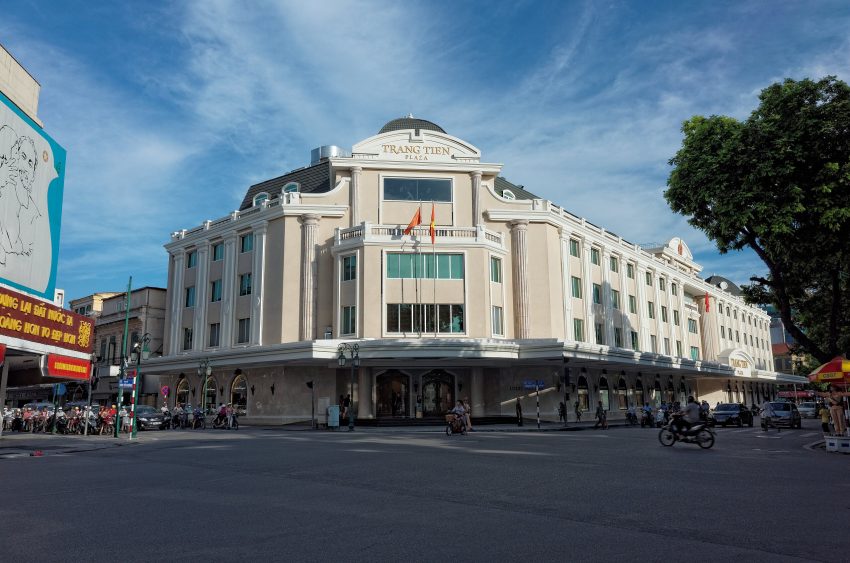
Trang Tien Plaza is a luxury shopping mall in Hanoi’s Hoan Kiem district, overlooking Hoan Kiem Lake from a refined French-style façade on the site of the former city department store. Spread across six floors and about 215,000 square feet, it concentrates more than 200 international labels, with flagship fashion and jewellery houses such as Louis Vuitton, Cartier, Dior, and Versace. Visitors tend to remember the cool, spotless, air-conditioned interiors and the hushed, polished feel—more department store than sprawling mall. Upper levels add cafés, restaurants, and a cinema, turning a browse into an easy afternoon indoors.
Location: Trang Tien Plaza, Phố Hai Bà Trưng, Trang Tien, Hoàn Kiếm, Hanoi, Vietnam | Hours: 9:30 am–9:30 pm | Website | Distance: 2km

28. Ly Thai To Statue & Park

Ly Thai To Statue Park
CC BY-SA 4.0 / The Hanoian
Ly Thai To Statue & Park is a small lakeside square on the eastern edge of Hoan Kiem Lake in central Hanoi, Vietnam, centered on a bronze monument to King Ly Thai To. The statue shows the ruler holding the decree that established Thang Long as the capital, marking the moment Hanoi’s story began to take its modern shape. Around it, you’ll find a broad paved plaza, shaded benches, and landscaped trees and flowerbeds framing clear views across the water. The open space often fills with everyday activity—locals stretching or doing light exercise, children playing, and people pausing for photos with the lake behind the king.
Location: Ly Thai To Monument Hall, Phố Lê Lai, French Quarter, Trang Tien, Hoàn Kiếm, Hanoi, Vietnam | Distance: 2.1km
Powered by GetYourGuide

29. Hanoi Ancient House

Heritage House in Hanoi
CC BY-SA 4.0 / Christophe95
Tucked behind a narrow frontage at 87 Ma May Street, this restored 19th-century “tube house” preserves the merchant-era rhythm of shopfront and home in one long, carefully planned space. Step inside to see how light and air are pulled through the building by a central courtyard paved with Bat Trang bricks, a quiet pause from the street outside. Ironwood beams, terracotta brickwork, and large framed doors show off traditional craftsmanship, while rooms upstairs include a guest area with wooden furnishings and a family worship space. Cultural displays and occasional Ca Tru folk-music evenings add a lived-in sense of tradition rather than a static museum.
Location: Old House, Phố Mã Mây, Old Quarter, Hàng Buồm, Hoàn Kiếm, Hanoi, Vietnam | Hours: 8:30AM - 4:30PM | Price: Small fee | Distance: 2.1km

30. Old East Gate
Old East Gate Hanoi
Old East Gate Hanoi
CC BY-SA 2.0 / Richard Mortel
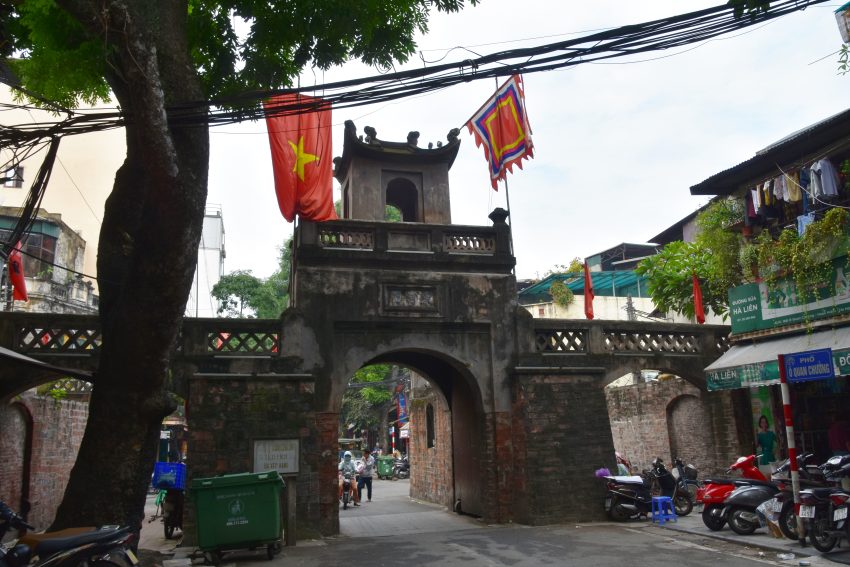
Old East Gate (Ô Quan Chưởng) is the last surviving gate of ancient Thăng Long, a rare fragment of the city’s former citadel walls. Built in the 18th century and once called Đông Hà Gate, it later took its current name to honor an army commander who died defending the city, turning the structure into a quiet symbol of resistance. Visitors notice the two-tier watchtower form, with three arched passages below—a broad central arch flanked by two smaller side doors—and a pavilion-like upper level once used for lookout. Its mossy brickwork and weathered stone sit right in the flow of Old Quarter street life, making it an atmospheric pause on a stroll.
Location: Old East Gate, Phố Hàng Chiếu, Old Quarter, Dong Xuan, Hoàn Kiếm, Hanoi, Vietnam | Hours: 24 Hours | Price: Free | Distance: 2.1km

31. Tran Quoc Pagoda
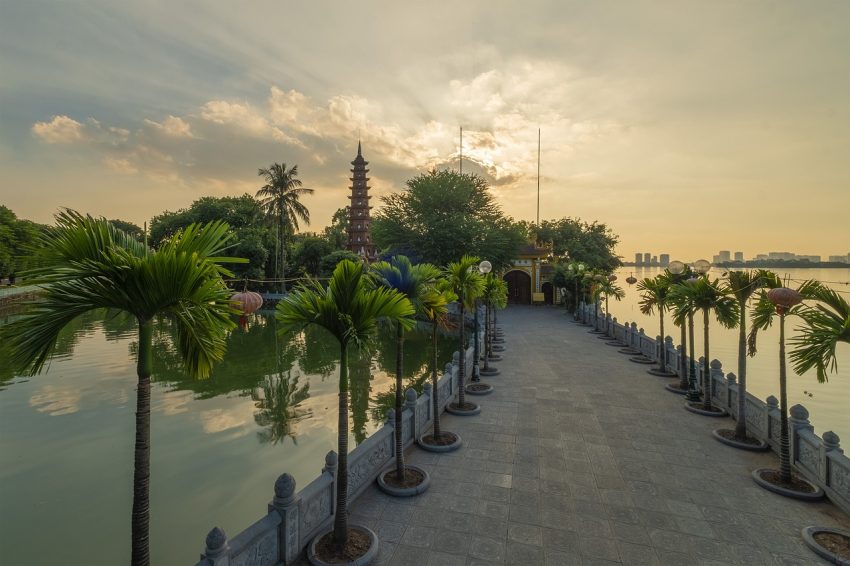
Tran Quoc Pagoda
Tran Quoc Pagoda
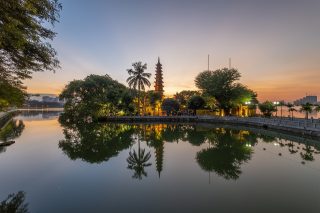
Set on a tiny islet between West Lake and Truc Bach Lake, Tran Quoc Pagoda is a working Buddhist temple whose origins reach back to 541–545 AD, making it among the country’s oldest. You approach across a short causeway to a calm courtyard of incense, bells, and layered roofs arranged in a lotus-like plan with halls such as the Front House and Stele House. Look for the sacred Bodhi tree planted in 1959, said to descend from the tree linked to the Buddha’s enlightenment, and the rare reclining Buddha statue inside. The 11-storey Bao Thap tower (1998), stacked with Amitabha figures and crowned by a lotus finial, is especially striking when reflected in the water at dawn.
Location: Tran Quoc Pagoda, Đường Thanh Niên, Yên Phụ, Tây Hồ, Hanoi, Vietnam | Hours: 8 am to 4 pm every day | Price: Free | Distance: 2.2km

32. State Guest House
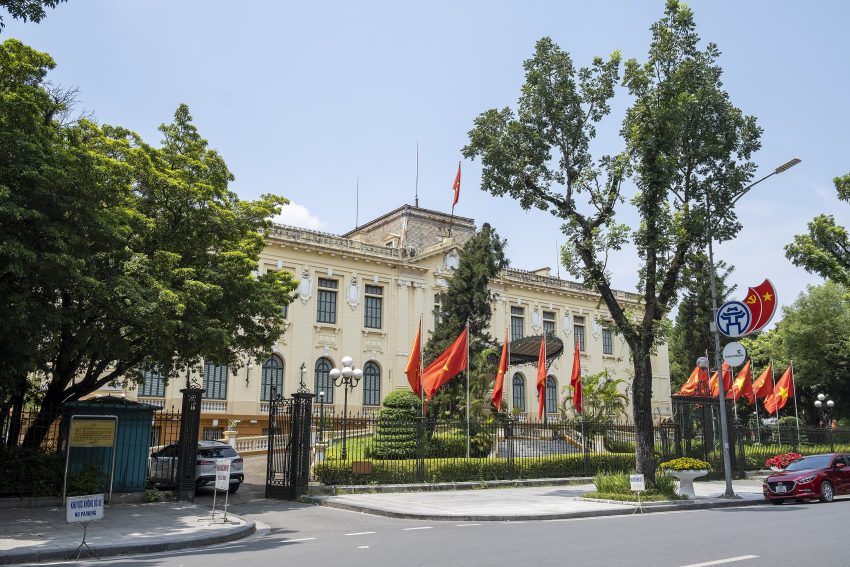
State Guest House
State Guest House
CC BY-SA 4.0 / The Hanoian
Hanoi’s State Guest House in Hoan Kiem District is a monumental French-colonial government building, originally erected in 1918–1919 as the Residential Palace of the Tonkin Governor and designed by architect Auguste Henri Vildieu. Today it hosts official state visitors, so the interior is generally closed, but the street view is memorable: a broad, symmetrical façade with arched windows, tall shutters, and sweeping balconies in a pale, colonial palette. Its walls also carry the weight of conflict—after 1945 it was seized and renamed, and in December 1946 it became the scene of repeated assaults during the early First Indochina War. Visitors tend to linger for photos and the surprisingly calm, green setting noted by locals.
Location: Government Guest House (Tonkin Palace), Phố Ngô Quyền, French Quarter, Trang Tien, Hoàn Kiếm, Hanoi, Vietnam | Distance: 2.2km

33. Hanoi Opera House
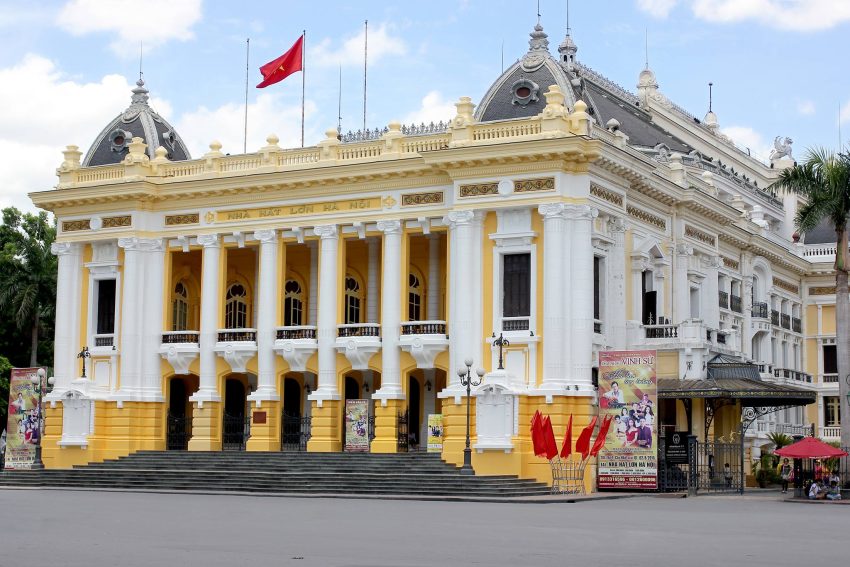
Hanoi Opera House
Hanoi Opera House
CC BY-SA 4.0 / Hieucd
The Hanoi Opera House is a French-colonial theatre completed in 1911, closely patterned on Paris’s Palais Garnier, with a sweeping façade, ornate columns, and a grand staircase that’s become a favourite photo spot. Built over a drained pond, its foundations required heavy engineering—an odd backstory for such elegant symmetry. Inside (generally only with performance tickets), the plush auditorium and tiered balconies frame programmes that can range from Vietnamese folk works to ballet and symphonies. It also carries political weight: in August 1945, Viet Minh leaders addressed crowds from its balcony during the takeover of the city. At night, the illuminated exterior is often the main event for passers-by.
Location: Hanoi Opera House, Tràng Tiền, Trang Tien, Hoàn Kiếm, Hanoi, Vietnam | Hours: 10:30 am to 12:00 pm Performances usually start at 7:30 pm | Price: Roughly 400,000 VND | Website | Distance: 2.5km
Powered by GetYourGuide

34. Vietnam National Museum of History
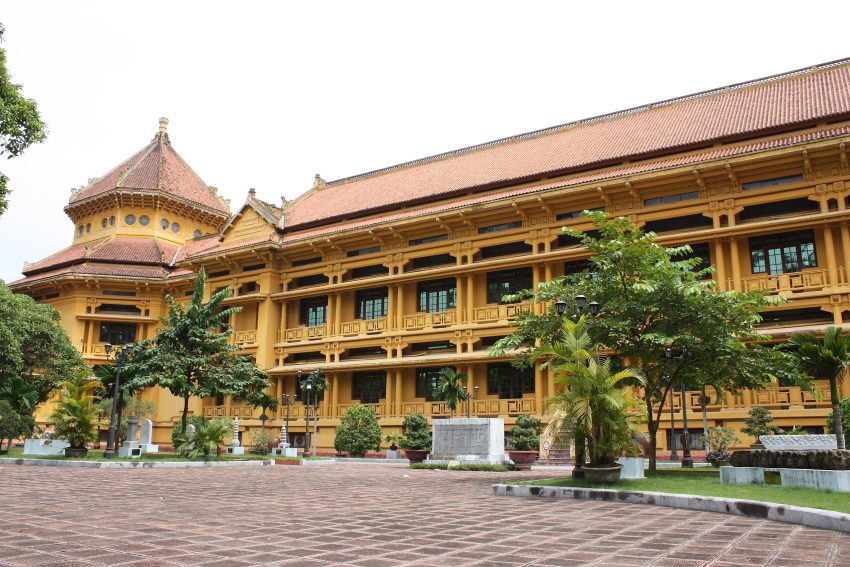
Vietnam National Museum of History Hanoi Vietnam
Public Domain / Alistair Morrenger
Housed in a 1910 French colonial building created for the École Française d’Extrême-Orient and later reshaped by Ernest Hébrard (1926–32), the Vietnam National Museum of History pairs elegant Indochinese-French architecture with a deep chronological collection. Inside, galleries move from prehistoric tools dated up to 300,000–400,000 years old to Dong Son bronze drums, Cham sculpture, Ly–Tran ceramics, and Nguyen Dynasty treasures. Later rooms shift to colonial-era material and documents from the revolutionary period leading to August 1945. Visitors often remember the original artefacts as much as the building itself—curved roofs, latticed windows, and a calm, museum-quiet atmosphere.
Location: Museo Nacional de Historia vietnamita, Tràng Tiền, Phan Chu Trinh, Hoàn Kiếm, Hanoi, Vietnam | Hours: Morning: 8:00 to 12:00 Afternoon: 1:30 p.m. to 5:00 p.m. | Price: Adults: 40,000 VND/turn/person | Website | Distance: 2.7km

Best Day Trips from Hanoi

A day trip from Hanoi offers the perfect opportunity to escape the urban rhythm and discover the surrounding region's charm. Whether you're drawn to scenic countryside, historic villages, or cultural landmarks, the area around Hanoi provides a variety of easy-to-reach destinations ideal for a one-day itinerary.

1. Co Loa Citadel
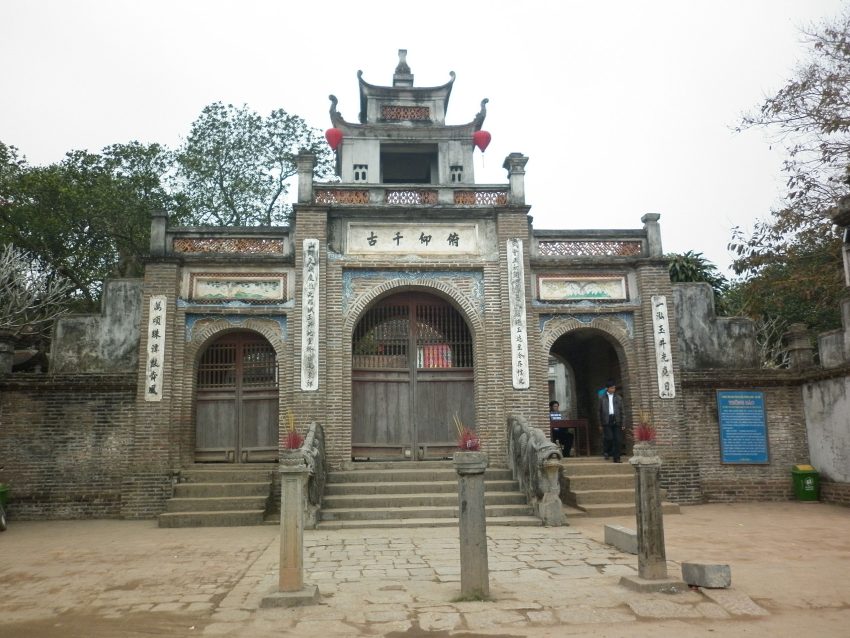
Den tho An Duong Vuong tai Co Loa
CC BY-SA 1.0 / VuThiAnh
Co Loa Citadel, located about 17 kilometres north of central Hanoi in Đông Anh District, is one of Vietnam’s most important archaeological and historical sites. Known for its distinctive spiral layout and deep connection to the Bronze Age Phùng Nguyên and Đông Sơn cultures, the citadel served as the capital of the Âu Lạc Kingdom in the 3rd century BCE.…
Location: Thành Cổ Loa, Thôn Chùa, Cổ Loa, Đông Anh, Hanoi, Vietnam | Website | Distance: 10.2km
Visiting Co Loa Citadel
Powered by GetYourGuide

2. Perfume Pagoda

Perfume Pagoda
Perfume Pagoda
CC BY-SA 4.0 / Bùi Thụy Đào Nguyên
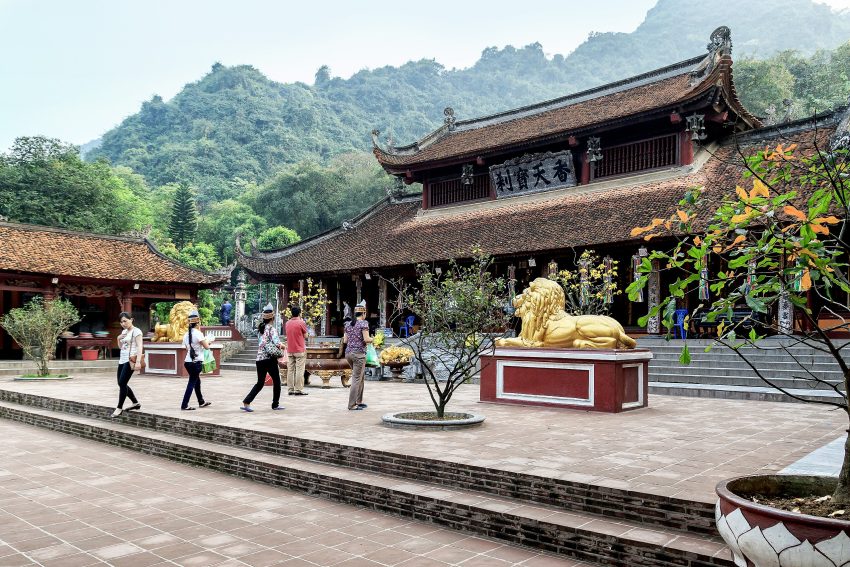
The Perfume Pagoda, or Chùa Hương, is one of Vietnam’s most revered pilgrimage destinations, set among steep limestone mountains around 60 kilometres southwest of Hanoi. This vast complex of more than 30 Buddhist temples, pagodas, and shrines is hidden within the dramatic landscape of Hương Tích Sơn, where forested cliffs rise from rice paddies and streams. With legends dating back…
Location: Huong Pagoda, Hương Sơn, Mỹ Đức, Hanoi, Vietnam | Price: 120,000 VND | Distance: 46.4km
Visiting Perfume Pagoda
Powered by GetYourGuide

3. Ninh Binh (Tam Coc)

ninh binh
ninh binh
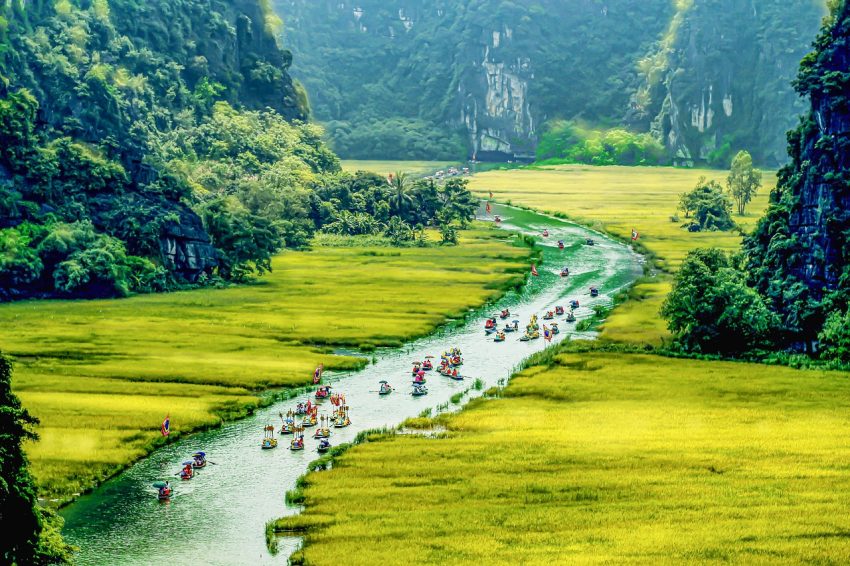
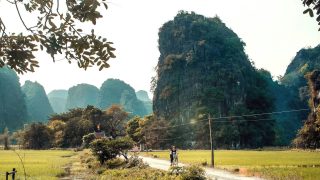
Visiting Ninh Binh in Vietnam offers travelers a unique blend of natural beauty, cultural richness, and historical significance. Often referred to as the "Ha Long Bay on land," Ninh Binh features stunning limestone karsts rising dramatically from emerald-green rice paddies and winding rivers. One of the highlights is a boat trip through the Tam Coc or Trang An landscapes, where…
Visiting Ninh Binh (Tam Coc)
Powered by GetYourGuide

4. Ha Long Bay

Halong Bay, Vietnam
Halong Bay, Vietnam
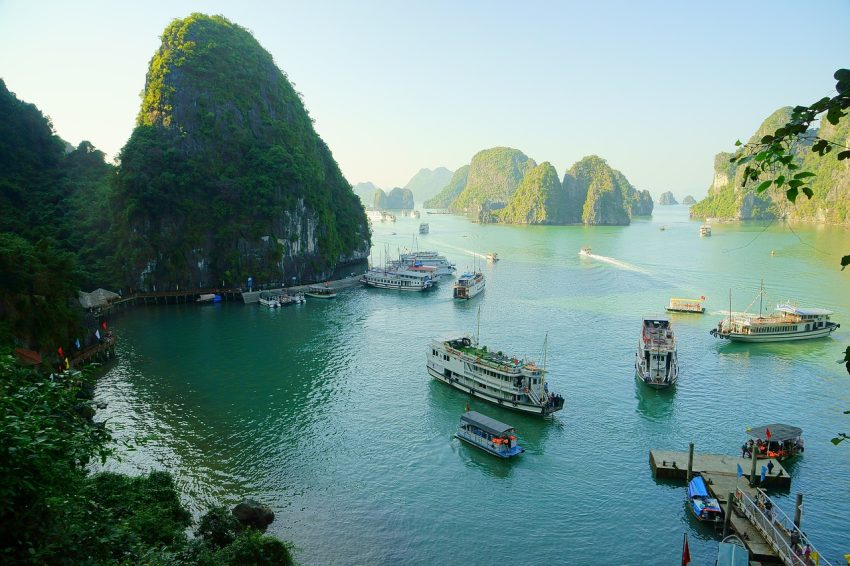
For many, the seascape of Ha Long Bay epitomizes Vietnam. Cruises navigate the emerald green waters amidst thousands of rugged islands and islets, pausing at spectacular caves where visitors can explore impressive, centuries-old formations. Ha Long Bay's enchanting beauty has made it a must-visit destination in the country, yet it's still possible to discover secluded corners to enjoy in peace.
Visiting Ha Long Bay
Powered by GetYourGuide

Where to Stay in Hanoi

The best place to stay is in the Old Quarter, where boutique hotels offer easy access to Hoan Kiem Lake, local markets, and street food. For a quieter stay, the French Quarter provides colonial-style hotels near embassies and luxury shopping.

A 3 to 4-day stay is ideal for exploring the city’s historical sites, museums, and vibrant culture. A 5-day stay allows for day trips to Ninh Binh, the Perfume Pagoda, or traditional villages in the Red River Delta.

Using the our Hotel and Accomodation map, you can compare hotels and short-term rental accommodations in Hanoi. Simply insert your travel dates and group size, and you’ll see the best deals for your stay.

Hanoi Accommodation Map

Best Time to Visit Hanoi

Visiting Hanoi in Spring

Spring, from March to April, is one of the best times to visit Hanoi. The weather is mild and pleasant, with temperatures ranging from 15°C to 25°C (59°F to 77°F). This season is ideal for exploring the city’s parks, gardens, and historical sites as they come to life with blooming flowers.

Visiting Hanoi in Summer

Summer, from May to August, brings hot and humid weather to Hanoi, with temperatures often exceeding 30°C (86°F). While it can be quite warm, this season is perfect for experiencing the vibrant street life, enjoying cool drinks at rooftop bars, and participating in local festivals.

Visiting Hanoi in Autumn

Autumn, from September to November, is arguably the best time to visit Hanoi. The weather is cooler and more comfortable, with temperatures ranging from 20°C to 25°C (68°F to 77°F). The city is particularly beautiful during this time, with clear skies and the scent of milk flowers in the air, making it ideal for sightseeing and outdoor activities.

Visiting Hanoi in Winter

Winter, from December to February, is the coolest season in Hanoi, with temperatures ranging from 10°C to 20°C (50°F to 68°F). While it can be chilly, this is a great time to experience Hanoi’s cultural attractions, enjoy warm Vietnamese cuisine, and explore the city without the large crowds of the peak tourist season.

Annual Weather Overview

  • January 21°C
  • February 27°C
  • March 27°C
  • April 30°C
  • May 31°C
  • June 31°C
  • July 31°C
  • August 29°C
  • September 30°C
  • October 29°C
  • November 27°C
  • December 22°C

How to get to Hanoi

Traveling to Hanoi by Air

You can travel to Hanoi by flying into Noi Bai International Airport, located about 45 kilometers north of the city center. The airport serves both domestic and international flights. Upon arrival, you can take a taxi, shuttle bus, or private transfer to reach the city.

Traveling to Hanoi by Train

Hanoi is accessible by train, with the main station being Hanoi Railway Station. Trains from major cities like Ho Chi Minh City, Hue, and Da Nang offer comfortable and scenic journeys. The station is centrally located, making it convenient for travelers to reach various parts of the city.

Traveling to Hanoi by Bus

Several bus companies operate services to Hanoi from various cities across Vietnam. The main bus station, My Dinh Bus Station, is well-connected to local transportation. Buses are a cost-effective and flexible option for reaching Hanoi.

Traveling to Hanoi by Car

Driving to Hanoi is an option for those who prefer flexibility and comfort. The city is well-connected by highways, with the National Highway 1A being a major route. The journey offers scenic views of Vietnam’s countryside and provides the convenience of traveling at your own pace.
Powered by GetYourGuide

More from this area