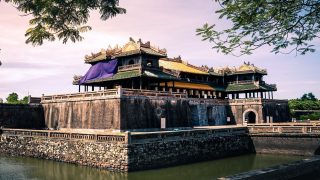
Thai Hoa Palace, Hue
Palace in Hue
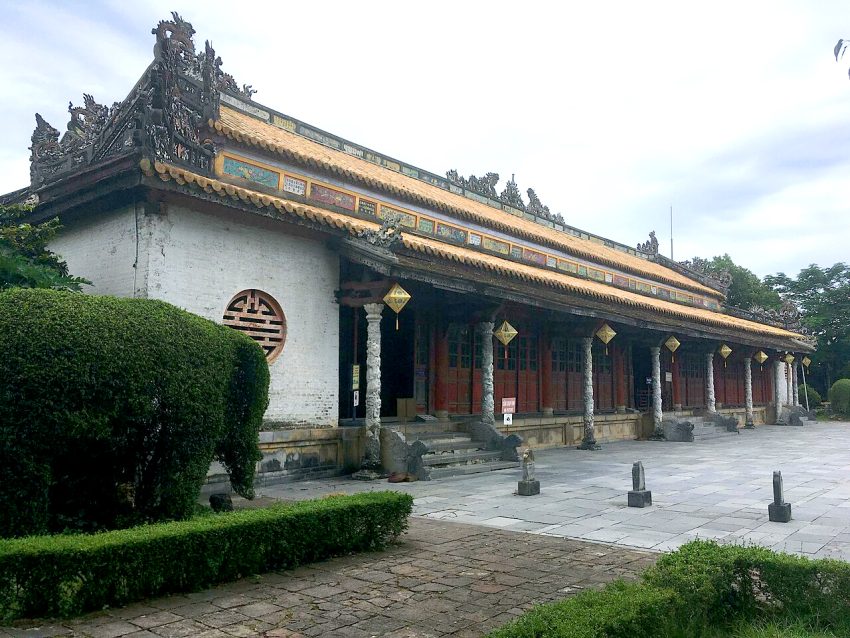
Thai Hoa Palace is one of the top attractions in Hue, serving as the ceremonial core of the ancient Imperial City. Standing just beyond the imposing Ngo Mon Gate, it's the first major building visitors encounter, radiating grandeur with its brilliant colours, graceful symmetry, and refined imperial details. This palace hosted the most important state affairs, including royal audiences, national ceremonies, and the coronations of 13 Nguyen emperors. It is a highlight of any tour around the Imperial City, especially for travellers eager to understand the power and pageantry of Vietnam's last ruling dynasty.
Stepping into Thai Hoa Palace is like walking directly into the courtly world of the 19th century. Its double-roofed wooden structure, carved pillars, symbolic motifs, and retained interior layout create an atmosphere of preserved authenticity. With its rich history, architectural beauty, and spiritual symbolism, this spot is one of the best places to see in Thai Hoa Palace for anyone intrigued by Vietnam's imperial traditions.
Table of Contents
History and Significance of Thai Hoa Palace
Completed in 1805 during the reign of Emperor Gia Long, Thai Hoa Palace embodied the Nguyen Dynasty's vision of harmony, majesty, and prosperity. Its name reflects this spiritual and philosophical ideal, blending the concepts of grandeur (Thai) and harmony (Hoa). The palace served as the main venue for royal meetings, major ceremonies, and celebrations marking important events in the kingdom.
The palace also hosted coronation ceremonies, witnessing the ascension of 13 Nguyen rulers. Here, emperors received mandarins and foreign envoys in a formalised sequence of rituals that reinforced their supreme authority. For over a century, this hall stood as the symbolic heart of the dynasty’s political power.
Although the palace has undergone numerous restorations due to weathering and war damage, the interior has retained much of its original design. Its current location is 45 metres northwest of the original site, a move made to preserve it more effectively and restore its setting within the Imperial City.
Things to See and Do in Thai Hoa Palace
Visitors can admire the palace’s impressive architecture, starting with its double-house structure and layered roofs. These overlapping roofs form an iconic silhouette that showcases traditional Nguyen aesthetics and clever craftsmanship. The connection between the two sections, marked by an arched ceiling inspired by a crab shell, highlights the ingenuity of imperial builders.
Inside, the palace is an immersive showcase of imperial symbolism. The 80 ironwood pillars are among its most captivating features, each carved with dragons, clouds, and gilded patterns that reflect the universe as envisioned in royal ideology. These pillars serve both structural and decorative purposes, creating a solemn and majestic environment.
Symbolism plays a vital role in Thai Hoa’s design, and visitors can explore the significance behind numbers like five and nine. These numerals appear repeatedly in stairs, steps, roof details, and furnishings. The repetition is more than aesthetic; in Vietnamese tradition, five represents favourable energy, while nine symbolises longevity and ultimate power.
How to Get to Thai Hoa Palace
Travellers typically reach Hue through Phu Bai International Airport, located around 30 minutes from the city centre. For the best deals and a seamless booking experience, check out these flights to Hue on Booking.com. Regular domestic flights from Hanoi, Ho Chi Minh City, and Da Nang make access convenient.
Hue Railway Station is the nearest major train hub, providing easy connections from major cities along the North-South railway. Train schedules and bookings can be found on Omio. From the station, the Imperial City is only a short taxi or bike ride.
Reaching Thai Hoa Palace by car is straightforward, as it sits just inside the Ngo Mon Gate of the Imperial City. Visitors arriving by taxi, private car, or motorbike will find designated parking areas near the Citadel's main entrances.
Practical Tips on Visiting Thai Hoa Palace
- Suggested tips: Arrive early to enjoy the palace with fewer crowds and softer morning light.
- Best time to visit: February to April or October to December for cooler weather.
- Entrance fee in Euros: Included within the Imperial City ticket (around €5-€7 equivalent).
- Opening hours: Usually 7:00-17:00, extended during peak seasons.
- Official website: Refer to the Hue Monuments Conservation Center for current details.
- How long to spend: Around 45 minutes to one hour inside the palace and courtyard.
- Accessibility: The area is generally accessible, though some steps and thresholds may be uneven.
- Facilities: Restrooms, shaded areas, and small kiosks are available within the wider Imperial City.
- Photography tip: The pillars and throne area provide stunning symmetrical compositions.
- Guided tours: Local guides offer valuable historical context about ceremonies and imperial traditions.
- Nearby food options: Plenty of cafés and restaurants lie south of the Citadel, especially along Le Loi Street.
Where to Stay close to Thai Hoa Palace
For comfortable stays near the Imperial City, consider Azerai La Residence Hue, a riverside heritage hotel with classic colonial styling. Another excellent option is Saigon Morin Hotel, offering spacious rooms and easy access to the riverfront. Travellers seeking privacy and elegance can try La Velvet Hotel Hue, conveniently located on a lively street with cafés and shops.
Is Thai Hoa Palace Worth Visiting?
Absolutely. Thai Hoa Palace is one of Hue's most iconic structures, offering visitors a rare chance to step into the ceremonial heart of the Nguyen Dynasty. Its architecture, symbolism, and well-preserved interior create a vivid connection to the royal past, making it an essential part of any visit to the Imperial City.
What Other Travellers Say...

Thái Hòa Palace in Điện Thái Hòa, part of the Hue Imperial complex, offers guided tours and exhibits focused on the citadel and the Nguyễn dynasty; visitors praise its restored throne hall, grand scale and majestic royal architecture, note that seeing everything can take two to three hours, and mention that interior photography or video is restricted.



FAQs for Visiting Thai Hoa Palace
Nearby Attractions to Thai Hoa Palace
- Ngo Mon Gate: The grand southern entrance to the Imperial City and the palace’s dramatic approach.
- Forbidden Purple City: The emperor's former private residence, filled with restored pavilions and atmospheric ruins.
- Dien Tho Residence: The elegant living quarters of the Queen Mother.
- Mieu Temple Complex: An important ancestral shrine honouring Nguyen emperors.
- Imperial City Walls: A scenic, historic area ideal for wandering and photography.
The Thai Hoa Palace appears in our Complete Guide to Visiting Hue!

Moira & Andy
Hey! We're Moira & Andy. From hiking the Camino to trips around Europe in Bert our campervan — we've been traveling together since retirement in 2020!
This website uses affiliate links which may earn a commission at no additional cost to you!
Planning Your Visit
Nearby Attractions
- Halls of the Mandarins (0.1) km
Historic Building - Meridian Gate (0.1) km
City Gate - Forbidden Purple City (0.1) km
Historic Building - The Royal Theatre (0.2) km
Historic Building - Nhat Thanh Lau (0.2) km
Historic Building - The Royal Library (0.2) km
Historic Building - Mieu Temple (0.2) km
Historic Building - Hung Mieu Temple (0.3) km
Historic Building - Hien Lam Pavilion (0.3) km
Historic Building - Nine Holy Cannons (0.3) km
Historic Site