Termas Romanas do Alto da Cividade, Braga
Historic Site in Braga
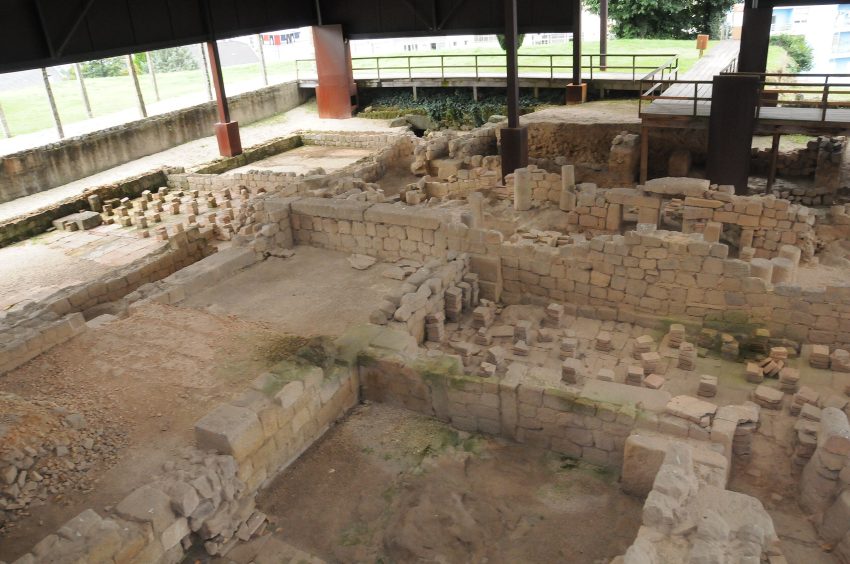
Hidden beneath modern Braga lies one of the city's most extraordinary archaeological discoveries - the Thermae of Maximinus, or Termas Romanas de Maximinos. Dating back to the 1st century BCE, these ruins once formed part of a monumental complex that included both a public bathhouse and a theater, serving as a social and cultural hub in the Roman city of Bracara Augusta. Today, this archaeological site offers visitors an evocative glimpse into Braga's Roman origins, making it one of the top attractions in Braga and a highlight of any walking tour of Braga for those fascinated by ancient history and urban archaeology.
The site preserves not only architectural remains but also the story of how Roman civilisation transformed northern Portugal - a place where daily life, leisure, and art converged in remarkable sophistication.
Table of Contents
History and Significance of the Thermae of Maximinus
The Thermae of Maximinus were constructed during the second half of the 1st century BCE, a period of rapid urban development in Bracara Augusta, the Roman capital of Gallaecia. The complex consisted of a grand bathhouse, or thermae, and an adjacent theater, both designed to reflect the Roman ideals of civic life and public well-being. These were not merely utilitarian structures but essential social centres where citizens gathered to relax, exercise, and exchange ideas.
Archaeological evidence reveals three distinct phases of construction. The earliest layer dates from the pre-thermae period under Julius Caesar and Emperor Claudius, when the area began to be urbanised. The second phase, during the reigns of Flavius and Anthony, saw the construction of the bath complex itself, complete with heated rooms, courtyards, and water channels. The final phase, in the 3rd century, involved remodelling and reducing the courtyard’s size, perhaps reflecting changing social habits or resource constraints.
By the 4th century, the complex was in decline, and by the 5th century, it was abandoned entirely as Roman authority waned in the region. Excavations between 1977 and 1986 brought these layers of history to light, revealing the scale of the baths and confirming the existence of a theater. Later digs by the University of Minho in 2005-2006 further uncovered the theater’s remains, confirming its importance within the ancient urban fabric of Bracara Augusta.
Things to See and Do at the Thermae of Maximinus
A visit to the Thermae of Maximinus offers a fascinating insight into Roman engineering and daily life. Visitors can explore the exposed remains of the bathhouse, including foundations, sections of walls, and traces of hypocaust systems - the underground heating structures that once warmed the baths. The layout of the frigidarium (cold room), tepidarium (warm room), and caldarium (hot room) can still be traced, giving a clear sense of how Romans approached both hygiene and leisure.
Interpretive panels throughout the site help bring the ruins to life, explaining the architectural features and their functions. Visitors can also view remnants of the adjoining theater, which once hosted performances and gatherings for Braga’s Roman citizens. Though only partially excavated, the theater site highlights the cultural significance of performance and public spectacle in Roman society.
The surrounding area, known as Colina de Maximinos, is now protected as an archaeological reserve. Together, the baths and theater form one of the most important archaeological zones in northern Portugal, linking directly to other Roman remains scattered across Braga - including the Fonte do Ídolo and the Roman Baths of Bracara Augusta.
How to Get There
The Thermae of Maximinus are located in the Colina de Maximinos area, near the centre of Braga. For those arriving by train, Braga Station is only a short 10-minute walk away. Train schedules and bookings can be found on Omio. If travelling by car, visitors can park at the nearby Avenida Central or Campo da Vinha car parks, which are within easy reach of the site. If you are looking to rent a car in Portugal I recommend having a look at Discover Cars, first, as they compare prices and review multiple car rental agencies for you. The site is well-signposted from the city centre and can easily be included as part of a self-guided Roman heritage walk.
Practical Tips on Visiting the Thermae of Maximinus
- Best time to visit the Thermae of Maximinus: Mid-morning or late afternoon for soft light and fewer crowds.
- Entrance fee in Euros: Around €2-€3; discounts for students and seniors.
- Opening hours: Typically Tuesday to Sunday, 10 am-12:30 pm and 2 pm-5:30 pm; closed Mondays.
- Official website: www.museusbraga.pt
- How long to spend: 45-60 minutes.
- Accessibility: Mostly level terrain; some uneven surfaces around ruins.
- Facilities: Restroom and small interpretive centre on-site.
- Photography tip: Capture the stone foundations from a low angle to highlight depth and texture.
- Guided tours: Available through Braga’s archaeological network or the University of Minho.
- Nearby food options: Cafés and restaurants along Rua dos Chãos and Avenida da Liberdade.
Is the Thermae of Maximinus Worth Visiting?
Yes - the Thermae of Maximinus are one of the must-see places in Braga for those curious about the city's ancient Roman past. The site vividly illustrates the sophistication of Roman engineering and urban planning while offering a peaceful, contemplative setting in the heart of modern Braga. For travellers interested in archaeology, architecture, or the roots of Portuguese civilisation, the Thermae provide a rewarding and authentic experience.
What Other Travellers Say...

Roman Thermae of Maximinus, at R. Dr. Rocha Peixoto 13 in Braga, presents excavated remains of a large Roman public bath complex; visitors describe a compact, quietly kept site that can be seen in a short visit and offers close-up views of the ruins and an adjacent amphitheatre excavation. Signage and interpretation are limited—some found few information panels and a nonworking display—so extra explanation or visual aids would help engage children, though the site includes a video about bath use and offers discounted admission for students, teachers and seniors; facilities noted by visitors include a nearby bike rack, limited car parking and available toilets, but no disabled path.


FAQs for Visiting the Thermae of Maximinus
Nearby Attractions to the Thermae of Maximinus
- Fonte do Ídolo - A Roman-era fountain carved into granite and dedicated to ancient deities.
- Cathedral of Braga (Sé de Braga) - Portugal's oldest cathedral, rich in art and history.
- Biscainhos Museum - A Baroque palace with period furnishings and elegant gardens.
- Palácio do Raio - A striking 18th-century Baroque palace with blue-tiled façades.
- Arco da Porta Nova - Braga's symbolic Baroque gateway into the old city.
The Termas Romanas do Alto da Cividade appears in our Complete Guide to Visiting Braga!

Moira & Andy
Hey! We're Moira & Andy. From hiking the Camino to trips around Europe in Bert our campervan — we've been traveling together since retirement in 2020!
This website uses affiliate links which may earn a commission at no additional cost to you!
Planning Your Visit
9.30am-1pm & 2-5.30pm Mon-Fri, 11am-5.30pm Sat
adult/student €1.85/0.95
Nearby Attractions
- Museu D. Diogo de Sousa (0.2) km
Museum - Pius XII & Medina Museum (0.4) km
Museum - Arco da Porta Nova (0.4) km
City Gate - Braga Cathedral (0.5) km
Cathedral - Biscainhos Museum (0.6) km
Museum - Episcopal Palace (0.6) km
Palace - Palácio do Raio (0.6) km
Historic Building and Museum - Santa Barbara Garden (0.7) km
Gardens - Fonte do Ídolo (0.7) km
Historic Site - Theatro Circo (0.7) km
Theatre