Temple of Jupiter, Split
Historic Site, Religious Building and Roman Site in Split
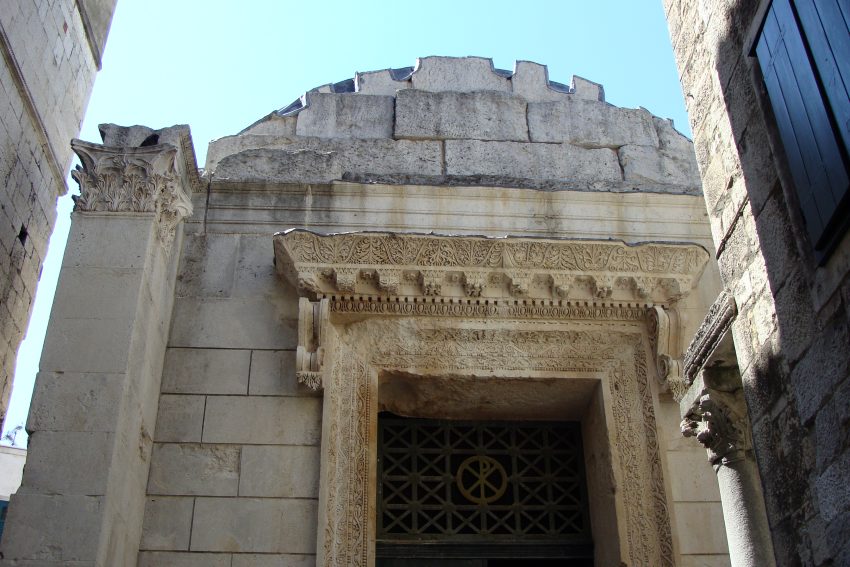
Tucked inside the living maze of Diocletian's Palace, the Temple of Jupiter is one of Split's most intriguing small interiors: a Roman sanctuary repurposed into a Christian baptistery, reached via a narrow stone lane just off the Peristyle. It's compact, dramatic, and easy to miss unless you know exactly where to look.
Most people see it as part of a walking tour through the palace core, pairing it with the Cathedral of Saint Domnius, the Peristyle, and the palace basements. If you're short on time, this is one of the best “big-history-in-a-small-room” stops in Split.
Table of Contents
- History and Significance of the Temple of Jupiter
- Things to See and Do in the Temple of Jupiter
- How to Get to the Temple of Jupiter
- Practical Tips on Visiting the Temple of Jupiter
- Where to Stay Close to the Temple of Jupiter
- Is the Temple of Jupiter Worth Visiting?
- For Different Travelers
- FAQs for Visiting Temple of Jupiter
- Nearby Attractions to the Temple of Jupiter
History and Significance of the Temple of Jupiter
Built during Emperor Diocletian's construction of the palace complex (early 4th century), the Temple of Jupiter originally served the imperial cult and the Roman state religion that underpinned Diocletian's rule. Its scale is modest compared with grand standalone temples elsewhere in the Roman world, but that's exactly what makes it special: it was designed as a high-status, private-feeling sacred space within an emperor's fortified residence.
Over the centuries, as Split evolved from imperial retirement complex into a medieval city, the building's purpose shifted with the city's faith and politics. The former temple was converted into a Christian baptistery, a transformation that captures Split's broader story: Roman structures continuously reused, reinterpreted, and folded into everyday urban life.
Today, the Temple of Jupiter is often discussed as part of the Cathedral complex experience (Cathedral, crypt, treasury, bell tower, and baptistery). Visiting it helps you understand how Diocletian's Palace isn't just “ruins,” but a layered city center where Roman, medieval, and modern Split overlap in a few steps.
Things to See and Do in the Temple of Jupiter
The main draw is the atmosphere: a tight, stone-walled interior with a sense of age you can feel immediately, especially when you step in from the bright palace courtyards. Look up and take a moment to notice the architectural details and how the space reads differently as a Roman temple versus a Christian baptistery.
Just outside, don’t rush past the surrounding lanes and thresholds. This is one of the best micro-areas in the palace for noticing how Split’s historic core works: tiny passages, sudden little courtyards, and doorways that open into centuries-old spaces still embedded in daily life.
If you're doing a self-guided visit, pair the Temple of Jupiter with the Peristyle (for the grand “stage” of the palace), then the Cathedral and bell tower (for views), and finish with a wander toward the palace basements. It's a satisfying loop that keeps walking distances short while giving you a strong sense of the palace's layout.
How to Get to the Temple of Jupiter
The nearest airports are Split Airport (SPU) for the city itself and, for some itineraries, Zadar Airport (ZAD) as an alternative entry point to the Dalmatian coast. For the best deals and a seamless booking experience, check out these flights to Split on Booking.com.
Split is connected by rail to other Croatian cities, and the main train station is close to the ferry port and an easy walk to Diocletian's Palace once you arrive. Train schedules and bookings can be found on Omio.
If you’re traveling by car, aim for a public garage outside the tight Old Town lanes and walk into the palace area rather than trying to drive close to the historic core.
Practical Tips on Visiting the Temple of Jupiter
- Entrance fee: Check official website.
- Opening hours: Check official website.
- Best time to visit: Go early in the morning for quieter lanes in the palace and a calmer experience inside the small interior spaces.
- How long to spend: Plan 10–20 minutes inside, or 45–90 minutes if you’re combining it with the Cathedral complex and nearby highlights.
- Accessibility: Expect uneven stone paving and steps in the surrounding palace lanes; the entrance and interior can be tight for strollers and mobility aids.
- Facilities: There are no dedicated facilities inside the temple itself, but you’ll find plentiful cafés, restrooms (in nearby venues), and services throughout the Old Town.
Where to Stay Close to the Temple of Jupiter
Stay inside or immediately beside Diocletian's Palace/Old Town for the easiest early-morning access and the best after-dark atmosphere.
Cornaro Hotel A polished, central pick with an easy walk to the palace lanes, great for travelers who want comfort and a strong breakfast before sightseeing.
Hotel Park Split A classic option near Bačvice Beach that balances Old Town access with a more resort-like feel, ideal if you want beach time alongside history.
Heritage Hotel 19 A boutique stay in a quieter pocket just outside the busiest lanes, good for light sleepers who still want to be close enough to walk everywhere.
Hotel Vestibul Palace A memorable “sleep inside the palace” experience with serious atmosphere, perfect if you want your hotel to feel like part of the historic site.
Radisson Blu Resort & Spa, Split Best for travelers who want a full-service spa and sea views, then plan to taxi or bus in for a concentrated Old Town sightseeing block.
Is the Temple of Jupiter Worth Visiting?
Yes, it's worth it if you enjoy places that deliver a strong sense of time and transformation in just a few minutes. The Temple of Jupiter is small, but it's one of those Split sights that makes Diocletian's Palace feel real: not a museum behind gates, but a city built directly into Roman architecture.
Honest Pivot: If you dislike cramped interiors, don't care much for religious-history transitions, or you're trying to minimize paid entries, you can skip the inside and focus on the Peristyle, palace lanes, and waterfront instead. You'll still get an excellent feel for Split without feeling like you missed a “must-do” blockbuster.
What Other Travellers Say...

Built in the 3rd century & dedicated to Jupiter, this Roman temple features an Egyptian sphinx.


For Different Travelers
The Temple of Jupiter works best as a short, high-impact stop that you weave into a broader Old Town loop. Because it's right in the palace core, it's easy to tailor the visit to your pace, attention span, and interests.
Families with Kids
For kids, the appeal is the “secret passage” feeling of the palace lanes and the quick payoff of stepping into a dramatic ancient space. Keep it short and pair it with a reward stop right after, like gelato on the Peristyle or a quick wander to the waterfront.
If you’re visiting with a stroller, plan for steps and narrow stone corridors and be ready to park the stroller briefly or swap to a carrier. Timing matters more than depth here: a calm, uncrowded moment will go better than trying to push through at peak hours.
Couples & Romantic Getaways
This is a great couples stop because it’s intimate and atmospheric, especially when the palace is quieter. The contrast between bright courtyards and the shadowy interior makes the whole area feel cinematic.
Build it into a slow wander: Temple of Jupiter, then the Peristyle, then a drink in a tucked-away wine bar nearby. It's less about “checking boxes” and more about enjoying Split's layered, lantern-lit Old Town vibe.
Budget Travelers
Budget-wise, the best strategy is to treat the Temple of Jupiter as part of a broader palace walk rather than a standalone mission. You can enjoy the palace streets, squares, and exterior viewpoints without spending anything, then choose one paid interior that matters most to you.
If you do pay for entry, try to bundle it with other nearby interiors you genuinely want to see so the value feels stronger. Either way, you can get a memorable experience here without a big-ticket museum budget.
History Buffs
History lovers will appreciate how clearly this site shows reuse: Roman imperial architecture adapted into Christian ritual space. It’s a compact case study in how late antiquity and the medieval city repurposed the Roman built environment.
To deepen the context, connect it mentally to the Cathedral complex and the Peristyle: you’re moving through an emperor’s ceremonial landscape that later became a functioning town center. Even a short visit becomes richer when you read the palace as an evolving organism rather than a frozen ruin.
FAQs for Visiting Temple of Jupiter
Getting There
Tickets & Entry
Visiting Experience
Tours, Context & Itineraries
Photography
Accessibility & Facilities
Food & Breaks Nearby
Safety & Timing
Nearby Attractions to the Temple of Jupiter
- Peristyle (Peristil): The palace’s grand central courtyard and one of Split’s best places to soak up the city’s Roman-to-modern atmosphere.
- Cathedral of Saint Domnius: A must-see complex for architecture lovers, with the option to climb the bell tower for panoramic views.
- Diocletian's Palace Basements: Impressive substructures that help you visualize the palace's original scale and layout.
- Riva Promenade: Split's iconic waterfront walkway for coffee, people-watching, and sunset strolls.
- Pjaca (People's Square): A lively historic square just outside the palace core, surrounded by cafés and elegant façades.
The Temple of Jupiter appears in our Complete Guide to Visiting Split!

Moira & Andy
Hey! We're Moira & Andy. From hiking the Camino to trips around Europe in Bert our campervan — we've been traveling together since retirement in 2020!
This website uses affiliate links which may earn a commission at no additional cost to you!
Planning Your Visit
Check official website.
Check official website.
Nearby Attractions
- Diocletian's Palace (0) km
Historic Building, Historic Site and Palace - Podrum (0) km
Historic Room, Historic Site and Roman Site - Cathedral of St. Domnius (0) km
Cathedral and Religious Building - Vestibule (0) km
Courtyard, Historic Room and Historic Site - Iron Gate and Church of Our Lady of the Bell Tower (0.1) km
Church, City Gate and Historic Site - Ethnographic Museum (0.1) km
Attraction, Historic Building and Museum - City Museum of Split (0.1) km
Historic Building, Historic Site and Museum - Bronze Gate (0.1) km
Attraction, City Gate and Historic Site - Fruit's Square (0.1) km
Historic Site, Monument and Square - Riva Harbor (0.1) km
Area, Harbour and Promenade