Teatro Romano di Trieste
Roman Site, Ruins and Theatre in Trieste
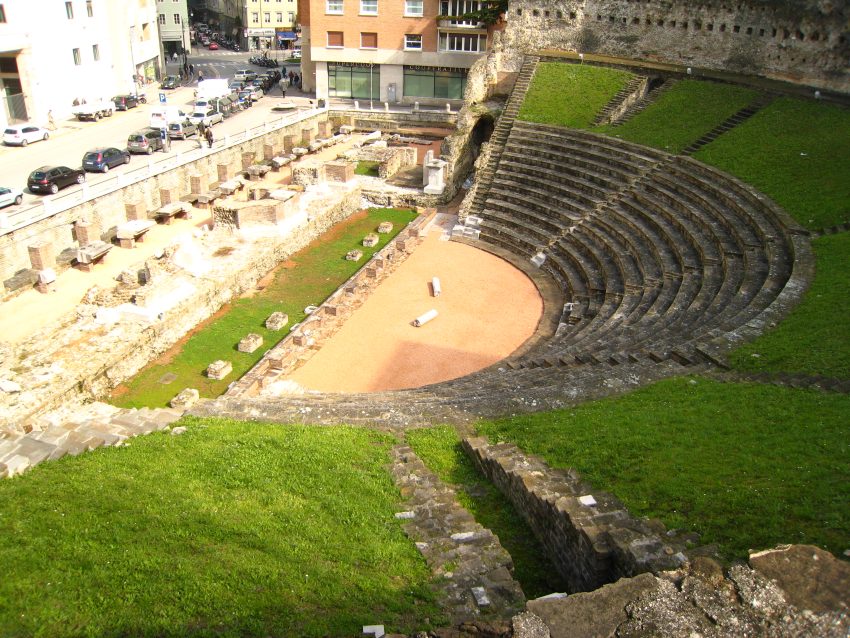
Tucked into the historic center at the foot of San Giusto hill, the Teatro Romano di Trieste is one of those rare city sights where ancient history sits right in the middle of everyday life. You'll find the semicircular seating (cavea), the orchestra area, and fragments of the stage structure framed by modern buildings—an evocative reminder of Trieste's Roman-era identity as Tergeste.
It's an ideal stop on a self-guided walking tour: pair it with the climb up to San Giusto Castle and Cathedral, then loop back down toward Piazza Unità d'Italia and the waterfront. For the best views, don't just look from street level—walk around the edges and seek slightly higher vantage points nearby to appreciate the theater's shape and scale.
Table of Contents
- History and Significance of the Teatro Romano di Trieste
- Things to See and Do in the Teatro Romano di Trieste
- How to Get to the Teatro Romano di Trieste
- Practical Tips on Visiting the Teatro Romano di Trieste
- Where to Stay Close to the Teatro Romano di Trieste
- Is the Teatro Romano di Trieste Worth Visiting?
- For Different Travelers
- FAQs for Visiting Teatro Romano di Trieste
- Nearby Attractions to the Teatro Romano di Trieste
History and Significance of the Teatro Romano di Trieste
The Roman Theatre of Trieste dates to the late 1st century BCE, with significant work and embellishment in the early 2nd century CE. Built into the natural slope of the hill, it was designed to hold thousands of spectators and would have been a major venue for public entertainment in Roman Tergeste.
One of the most fascinating context clues is its original relationship to the sea. In Roman times, the shoreline reached much closer to this area, so performances would have taken place near the water—an image that helps explain why the site feels so “embedded” in the city’s later layers.
Over centuries, the theater was gradually buried and built over by later structures. It was identified in the early 19th century, but only fully brought back into view in 1938, when demolition and excavation revealed the remains you see today.
Things to See and Do in the Teatro Romano di Trieste
Start with the cavea: the curved seating tiers are the most immediately recognizable feature, and they make it easy to imagine the crowd’s perspective toward the stage. Look for the way the structure uses the hillside—this is part of what gives the site its strong sense of place.
Next, focus on the stage area and surviving architectural fragments. Even though much of the ornate stage façade is gone, the remaining masonry and outlines help you read the “plan” of the building, especially if you pause and picture doors, columns, and statues that once framed performances.
Finally, treat this as a quick, high-impact photography stop and a great “connector” sight between Trieste’s Roman past and its later medieval and Habsburg layers. It’s especially satisfying when combined with nearby museums and the San Giusto complex for deeper context.
How to Get to the Teatro Romano di Trieste
Trieste is served by Trieste – Friuli Venezia Giulia Airport (TRS), and Venice Marco Polo Airport (VCE) is a common alternative for international routes. For the best deals and a seamless booking experience, check out these flights to Trieste on Booking.com.
Trieste Centrale is the city's main rail hub, with connections across Italy and into nearby regions; from the station, you can reach the theater on foot or by local bus/taxi depending on your luggage and pace. Use Omnio to easily compare schedules, book train tickets, and find the best prices all in one place for a hassle-free journey across Italy.
If you’re driving, aim for central parking garages and be prepared for limited street parking and ZTL-style restrictions in older areas; once parked, the theater is easiest to reach on foot. If you are looking to rent a car in Italy I recommend having a look at Discover Cars, first, as they compare prices and review multiple car rental agencies for you.
Practical Tips on Visiting the Teatro Romano di Trieste
- Entrance fee: Free.
- Opening hours: 24 Hours.
- Best time to visit: Go in the morning or late afternoon for softer light and fewer people passing through the surrounding streets.
- How long to spend: Plan 15–30 minutes for a satisfying look, or 45 minutes if you like to photograph details and read the site calmly.
- Accessibility: The area is generally walk-up and outdoors, but surfaces can be uneven and the surrounding streets include slopes and steps in places.
- Facilities: There are no dedicated visitor facilities on-site; rely on nearby cafés, public restrooms in the center, and services around the main squares.
Where to Stay Close to the Teatro Romano di Trieste
Base yourself in central Trieste so you can walk everywhere—old town sights, the waterfront, cafés, and evening dining are all within easy reach.
Savoia Excelsior Palace Trieste Chosen for its classic grand-hotel feel and prime waterfront location—perfect if you want a memorable stay within a short walk of the theater and Piazza Unità.
DoubleTree by Hilton Trieste A strong pick for comfort and reliable service in a central, well-connected spot—great for travelers who want an easy base for walking tours.
Urban Hotel Design Included for its boutique style and smart location near the center—ideal if you like modern design and being close to restaurants and bars.
Hotel Continentale A practical, well-situated option near shopping streets and cafés—good value for travelers who prioritize location and a classic city-hotel vibe.
NH Trieste Best for convenience near Trieste Centrale and transport links—handy if you're arriving by train and want a straightforward walk or short ride into the old town.
Is the Teatro Romano di Trieste Worth Visiting?
Yes—especially because it's so easy to fit into your day. The Teatro Romano di Trieste is a quick, atmospheric glimpse into Roman Trieste, and its setting (ancient stones surrounded by living city streets) makes it feel more immediate than many “isolated” ruins.
Honest Pivot: if you’re short on time and not particularly interested in Roman archaeology, you might prefer to prioritize San Giusto Castle views, the waterfront, or a museum visit. The theater is best as a high-impact stop rather than a long, content-heavy attraction.
For Different Travelers
Different travelers will enjoy the Teatro Romano di Trieste in different ways: some will treat it as a fast photo stop, while others will use it as the starting point for a deeper Roman-history walk through the city.
Families with Kids
Kids often enjoy the “real ruins in the city” factor, especially if you frame it as a place where people once watched plays and performances. Keep the visit short and interactive—count the seating rows, point out the curved shape, and imagine where actors stood.
Pair it with a simple treat break afterward, since there’s no on-site visitor center to reset attention spans. If you’re also heading up San Giusto hill, plan a few pauses so the day doesn’t become one long climb.
Couples & Romantic Getaways
For couples, this is a lovely, low-effort stop that adds texture to a day of strolling Trieste’s elegant streets. It’s particularly nice as part of a golden-hour walk that ends at the waterfront for aperitivo.
Because it’s outdoors and central, it works well between café stops without needing a big time commitment. Combine it with a scenic viewpoint nearby for a more “date-like” mini-itinerary.
Budget Travelers
Budget travelers will appreciate that it’s an easy, walkable sight that doesn’t require a big spend or a complicated plan. It’s also a great anchor point for a DIY history route: theater, San Giusto, then down to the main squares.
To keep costs low, build your day around walking and public transport, and save paid museum entries for one or two “musts.” The theater itself delivers a strong sense of place without demanding much time or money.
History Buffs
History buffs should treat the theater as the beginning, not the end, of the story. Spend time reading the structure—how the seating relates to the slope, where the orchestra sat, and how the stage area would have been organized.
Then continue to nearby collections and sites that preserve inscriptions, sculpture fragments, and broader Roman context. Trieste rewards travelers who connect the dots between ruins, museums, and the city's layered urban development.
FAQs for Visiting Teatro Romano di Trieste
Getting There
Tickets & Entry
Visiting Experience
Tours, Context & Itineraries
Photography
Accessibility & Facilities
Food & Breaks Nearby
Safety & Timing
Nearby Attractions to the Teatro Romano di Trieste
- San Giusto Castle: A hilltop fortress with sweeping views and museum spaces that add context to Trieste’s layered history.
- Cattedrale di San Giusto Martire: Trieste's landmark cathedral, known for its hilltop setting and historic atmosphere.
- Piazza Unità d’Italia: The city’s grand main square opening to the sea, perfect for photos and people-watching.
- Canal Grande di Trieste: A scenic canal lined with cafés and elegant façades, ideal for a relaxed stroll.
- Civico Museo d'Antichità J.J. Winckelmann: A key stop for Roman-era artifacts and deeper archaeological context in Trieste.
The Teatro Romano di Trieste appears in our Complete Guide to Visiting Trieste!

Moira & Andy
Hey! We're Moira & Andy. From hiking the Camino to trips around Europe in Bert our campervan — we've been traveling together since retirement in 2020!
This website uses affiliate links which may earn a commission at no additional cost to you!
Planning Your Visit
24 Hours.
Free.
Nearby Attractions
- Antiquarium di via del Seminario (0.1) km
Attraction, Historic Site and Roman Site - Palazzo del Municipio (0.2) km
Historic Building, Square and Town Hall - Teatro Lirico Giuseppe Verdi (0.3) km
Arts Venue, Opera House and Theatre - Fontana dei Quattro Continenti (0.3) km
Fountain, Sculpture and Square - Arco di Riccardo (0.3) km
City Gate, Monument and Roman Site - Propylaeum and Roman Basilica (0.3) km
Cathedral, Church and Roman Site - Castello di San Giusto (0.3) km
Castle, Museum and Viewing Point - Lapidario Tergestino (0.3) km
Attraction, Museum and Roman Site - Civico Museo d'Arte Orientale (0.3) km
Attraction and Museum - Civic Museum of Antiquities "J.J. Winkelman" (0.3) km
Gardens, Historic Site and Museum