Synagogue, Avignon
Historic Building, Religious Building and Synagogue in Avignon
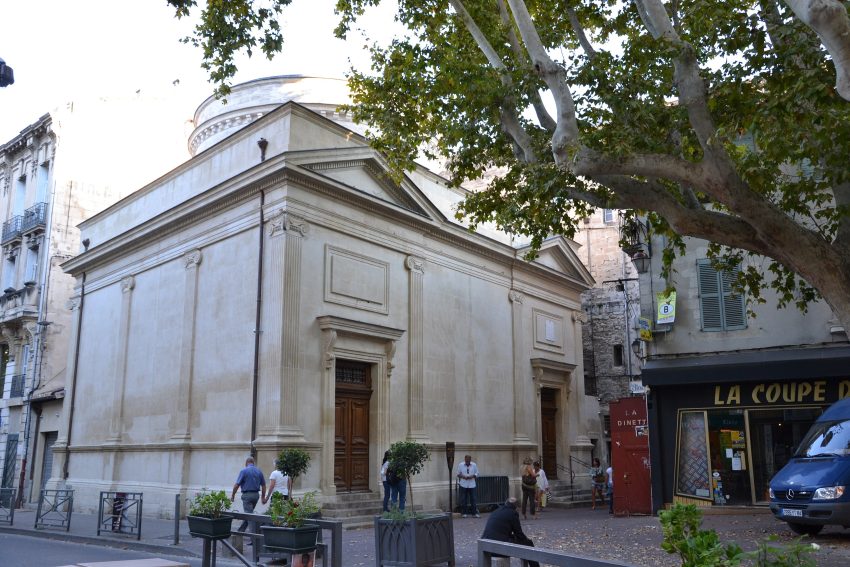
Tucked into Avignon's historic center near Place Jérusalem, the city's synagogue is a still-active place of worship and a powerful window into the story of Jewish life in the former Papal territories. It's a small-scale visit compared with Avignon's headline sights, but that's part of its appeal: intimate, atmospheric, and full of details you might otherwise walk past.
It fits beautifully into a walking tour of central Avignon, especially if you're already exploring the Palais des Papes area, the old streets of the center, and the layers of religious and civic history that shaped the city. Because entry can involve ringing a bell and passing security, it's best approached as a planned stop rather than a quick pop-in.
Table of Contents
History and Significance of the Synagogue
Avignon's Jewish community has deep roots, shaped for centuries by the unique status of the Comtat Venaissin and Papal influence in the region. The synagogue stands as a reminder of the former Jewish quarter (often referred to historically as the “carrière”), where community life was concentrated and regulated, yet resilient.
The current building dates to the mid-19th century, created after an earlier synagogue was destroyed by fire in the 1840s. Its design reflects a different era of architecture and civic identity in Avignon, and it remains significant not only as heritage but as a living religious space.
What makes the site especially meaningful for visitors is the way it connects big historical themes to a real, local place: community continuity, changing urban neighborhoods, and the everyday practices that kept traditions alive through centuries of change.
Things to See and Do in the Synagogue
Inside, the standout feature many visitors remember is the distinctive domed interior, which gives the prayer space a sense of height and calm that contrasts with the narrow streets outside. Take a moment to look upward and notice how the architecture shapes the acoustics and the feeling of the room.
If you’re able to visit when staff are available, you may also learn about the synagogue’s role in the local community today and how access is managed. Several visitors note that entry typically involves ringing a buzzer/doorbell and being admitted, which underscores that this is an active religious site rather than a museum.
Look for smaller, human-scale details that hint at daily life and tradition, including study spaces and community features. If you’re interested in food heritage, some visitors specifically mention a traditional challah oven connected to the rabbi’s study area, a memorable detail that brings history down to the level of lived practice.
How to Get to the Synagogue
The nearest major airports are Marseille Provence Airport (MRS) and, for some international routes, Nice Côte d'Azur Airport (NCE), with onward connections to Avignon by train or car. For the best deals and a seamless booking experience, check out these flights to Avignon on Booking.com.
By train, Avignon is served by Avignon TGV (high-speed) and Gare d'Avignon Centre (central station), and from either station you can continue by local transit or taxi into the historic center. You can use SNCF Connect to check schedules, compare routes, and purchase tickets for National (SNCF ) and regional trains (TER). For a more streamlined experience, we recommend using Omio, which allows you to easily compare prices, schedules, and book tickets for both National and Regional travel across all of Europe, all in one place.
If you're driving, Avignon is straightforward to reach via the regional motorway network, and you'll generally want to park outside or at the edge of the old town and walk in, since the center has narrow streets and restricted access zones. If you are looking to rent a car in France I recommend having a look at Discover Cars, first, as they compare prices and review multiple car rental agencies for you.
Practical Tips on Visiting the Synagogue
- Entrance fee: Free.
- Opening hours: Monday – Friday: 10:00–12:00. Saturday: Closed. Sunday: Closed.
- Best time to visit: Aim for a weekday morning when it’s typically open, and arrive early in the time window so you’re not rushed.
- How long to spend: Plan 20–40 minutes for a focused visit, or longer if you’ve arranged an appointment or guided context.
- Accessibility: Expect an older historic-building layout; if step-free access is important, contact ahead to confirm the easiest entry route.
- Facilities: Facilities are limited on-site; plan for restrooms, cafés, and longer breaks elsewhere in the historic center.
Where to Stay Close to the Synagogue
Stay in central Avignon (intra-muros) to be within easy walking distance of the synagogue and most major sights.
For a classic, comfortable base with a strong location for walking, consider Hôtel de l’Horloge for its central setting near key squares and easy access to restaurants.
If you want a more boutique feel and a quieter, design-forward stay, La Mirande is a standout for atmosphere and proximity to the historic heart of the city.
For travelers who prioritize convenience and a polished, modern hotel experience, Novotel Avignon Centre works well, especially if you’re arriving with luggage and want straightforward access.
If you like a contemporary boutique option with a strong sense of style, Hôtel Boquier is a good pick for couples and short stays focused on the old town.
For a reliable, well-located option that’s practical for sightseeing days, Mercure Avignon Centre Palais des Papes places you close to the city’s marquee monuments and makes it easy to build a walking itinerary.
Is the Synagogue Worth Visiting?
Yes, if you enjoy places that feel lived-in and historically specific rather than purely monumental. The synagogue offers a quieter, more personal kind of Avignon experience, with architectural character (especially the dome) and a story that adds depth to any walk through the old town.
Honest Pivot: If you prefer attractions with long open hours, self-guided museum-style interpretation, or guaranteed entry without waiting, you may find this visit less convenient. It’s also not ideal if you’re uncomfortable with security procedures or if your schedule doesn’t align with limited weekday morning access.
What Other Travellers Say...

Reviewers describe the synagogue as a lovely, worthwhile stop with a strong sense of history, especially connected to Avignon's former Jewish quarter and Papal-era Jewish heritage. Many highlight the distinctive domed interior and the feeling of visiting a living, still-active place of worship, with a few noting memorable behind-the-scenes details tied to community life. The main drawbacks mentioned are practical rather than experiential: entry can require ringing a buzzer and waiting, and the visible security measures can feel like a contrast to the more freely accessible churches nearby.


For Different Travelers
Different travelers will get different value here: for some it's a quick architectural stop, for others it's a meaningful cultural visit that rounds out Avignon beyond the headline landmarks.
Families with Kids
For families, this works best as a short, respectful visit with a clear purpose: “one special room with a big dome and a big story.” Keep expectations simple and pair it with a nearby open-air break in a square or along the Rhône afterward.
Because it’s an active religious site with controlled entry, it’s not the easiest place for spontaneous visits with very young kids. If you go, aim for a calm time of day and be ready to keep voices low.
Couples & Romantic Getaways
Couples who like slow travel will appreciate how this visit changes the tone of a day in Avignon, offering a reflective pause between bigger sights. It's especially rewarding when combined with a walking route through the old streets and a café stop nearby.
If you enjoy architecture, the interior’s proportions and dome create a memorable sense of place without needing a long visit. It’s a good “one meaningful stop” to balance a day of major monuments.
Budget Travelers
Budget travelers will like that this is typically a low-cost stop that adds cultural depth without requiring a big-ticket entry. It also pairs well with free wandering in the historic center, where the streets themselves are part of the experience.
The main budget trade-off is time: limited hours can force you to plan your morning around it. If you’re trying to pack in many sights, consider whether the schedule fits your priorities.
History Buffs
History buffs will find the synagogue especially valuable as a tangible link to Avignon's Jewish quarter and the broader story of Jewish life in the Papal territories. It complements the city's Christian landmarks by showing a parallel thread of community history.
To get the most from it, read a little about the “carrière” and the neighborhood context before you go, or try to visit when someone can share on-site explanations. The details are subtle, but they’re exactly what makes the visit rewarding.
FAQs for Visiting Synagogue
Getting There
Tickets & Entry
Visiting Experience
Tours, Context & Itineraries
Photography
Accessibility & Facilities
Food & Breaks Nearby
Safety & Timing
Nearby Attractions to the Synagogue
- Palais des Papes: Avignon's iconic papal palace and a must-see for grand-scale medieval history.
- Place de l'Horloge: A lively central square for people-watching, cafés, and an easy walking-tour waypoint.
- Avignon Cathedral (Cathédrale Notre-Dame des Doms): A major religious landmark with a commanding presence near the papal complex.
- Pont Saint-Bénézet (Pont d'Avignon): The famous bridge ruins with Rhône views and a classic Avignon photo stop.
- Rue des Teinturiers: A picturesque canal-side street known for its old waterwheels and atmospheric strolls.
The Synagogue appears in our Complete Guide to Visiting Avignon!

Moira & Andy
Hey! We're Moira & Andy. From hiking the Camino to trips around Europe in Bert our campervan — we've been traveling together since retirement in 2020!
This website uses affiliate links which may earn a commission at no additional cost to you!
Planning Your Visit
Monday - Friday: 10:00-12:00.
Saturday: Closed.
Sunday: Closed.
Free.
Nearby Attractions
- St. Peter's Basilica (0.1) km
Basilica, Church and Religious Building - Place Pie (0.1) km
Area, Market and Square - Les Halles d'Avignon (0.1) km
Market - Maison du Jean Vilar (0.2) km
Archive, Arts Venue and Museum - Eglise Saint Didier (0.2) km
Church, Historic Building and Religious Building - Hôtel de Ville (0.3) km
Attraction, Historic Building and Town Hall - Place de l'Horloge (0.3) km
Area, Attraction and Square - Rue de la Republique (0.3) km
Area, Street and Walk - Palais du Roure (0.3) km
Historic Building, Museum and Palace - Palais des Papes (0.3) km
Historic Building, Historic Site and Palace