Spreuerbrücke, Lucerne
Bridge in Lucerne
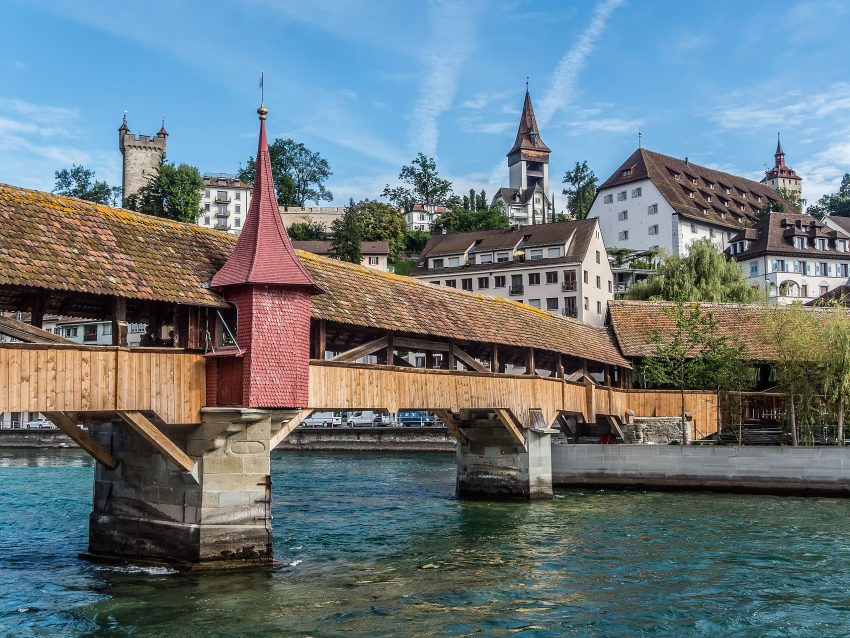
The Spreuerbrücke has a very different mood from Lucerne's more famous Chapel Bridge. Tucked slightly downstream on the River Reuss, it feels darker, quieter, and more intimate, with its low roof, creaking timbers, and striking series of Danse Macabre paintings that line the interior. For many travellers, this characterful bridge is one of the must-see places in Lucerne, especially if you like your history with a slightly macabre twist.
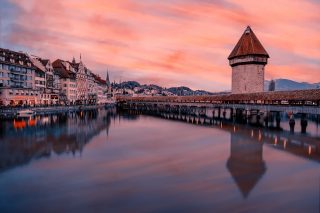
As you cross between the mills side of town and the compact Old Town streets, you walk beneath triangular painted panels that remind you, in vivid 17th-century colour, that death comes for everyone - from peasants to princes. The bridge's views upstream to the Chapel Bridge and the Musegg city walls are beautiful in any season, and it is a highlight of any walking tour of Lucerne, especially in the golden evening light when the river glows and the mountains frame the skyline.
Table of Contents
- History and Significance of the Spreuerbrücke
- Things to See and Do at the Spreuerbrücke
- How to Get to the Spreuerbrücke
- Practical Tips on Visiting the Spreuerbrücke
- Where to Stay close to the Spreuerbrücke
- Is the Spreuerbrücke Worth Visiting?
- FAQs for Visiting Spreuerbrücke
- Nearby Attractions to the Spreuerbrücke
History and Significance of the Spreuerbrücke
The Spreuerbrücke began life in the 13th century as a practical connection between Mühlenplatz on the right bank of the Reuss and the central river mills. Its later extension to the left bank, completed around 1408, stitched the bridge into Lucerne's defensive and commercial network, turning it into an integral part of the city's fortifications. Because it sat at the lowest point on this stretch of the river, it became the designated spot where millers and townspeople could throw chaff and leaves into the water, giving it the name “Spreuerbrücke” - chaff bridge.
Floods were a constant threat to medieval riverside structures, and in 1566 the bridge was destroyed by a severe inundation. It was promptly rebuilt, this time with a granary - the Herrenkeller - integrated into the bridgehead, underscoring its role not only as an urban thoroughfare but as a node in Lucerne’s food storage and trading system. The reconstructed bridge retained its covered design, which helped protect both pedestrians and the timber structure itself from the elements.
The feature that truly sets the Spreuerbrücke apart is its extraordinary cycle of Danse Macabre (Totentanz) paintings, installed between 1616 and 1637 under the direction of Lucerne painter Kaspar Meglinger. This cycle originally comprised 67 panels, of which 45 survive today, making it the most extensive known Danse Macabre series. Each triangular panel pairs vivid imagery with explanatory verses and the coats of arms of donors and their spouses, while portraits of prominent citizens and dignitaries weave Lucerne's social fabric into the universal message: death is ever-present, and no station in life offers escape. Although Lucerne's artists were familiar with Hans Holbein the Younger's woodcuts, they developed a richer, more painterly approach, producing a unique fusion of moralising art and local identity that still fascinates visitors centuries later.
Things to See and Do at the Spreuerbrücke
The simplest pleasure here is to stroll slowly across the bridge, pausing under each painted panel to study the details. The Danse Macabre scenes are surprisingly theatrical: skeletal figures beckon emperors, clergy, peasants, and sailors into their final dance, while the verses beneath spell out the moral lesson. Even without reading German, you can sense the social hierarchy and symbolism - and with a basic translation app or printed guide, the panels become an atmospheric narrative of Baroque-era fears and beliefs.
Make sure to look back and outwards as well as up. From mid-bridge, you enjoy classic views upriver towards the Kapellbrücke and its water tower, the sloping rooftops of the Old Town, and the line of the Museggmauer on the hillside. Downstream, the Reuss rushes through the Nadelwehr (needle dam), and on a clear day the mountains beyond Lake Lucerne provide a dramatic backdrop. It is a lovely spot for photography, especially in the soft morning light or at dusk when the city begins to glow.
If you are interested in going deeper, consider joining a guided Old Town or themed art tour that explains the iconography of the Totentanz cycle and the broader story of Lucerne's fortifications. Pairing the Spreuerbrücke with the Kapellbrücke, the city walls, and the nearby churches makes it one of the things to do in Lucerne that ties together engineering, religion, and civic pride in a compact, walkable circuit. Even a short visit can be surprisingly reflective as you move from lively squares to this more contemplative, slightly sombre bridge.
How to Get to the Spreuerbrücke
Most international visitors arrive via Zurich Airport (ZRH), the main gateway to central Switzerland and the most convenient hub for reaching Lucerne. For the best deals and a seamless booking experience, check out these flights to Lucerne on Booking.com. From the airport, frequent trains run into Zurich HB (the main station), where you change onto a direct Swiss Federal Railways (SBB) service to Lucerne; total journey times are typically between about one hour and one hour ten minutes. Basel Airport (EuroAirport Basel-Mulhouse-Freiburg) is another option, with onward trains via Basel SBB to Lucerne, though travel times are usually a bit longer than from Zurich.
Switzerland's rail network makes reaching Lucerne straightforward. Trains between Zurich HB and Lucerne run roughly every 30 minutes, with journeys taking about 40 to 50 minutes, and you simply walk or take a short bus ride from Lucerne station into the Old Town. From the station, it is around a 10-15 minute walk: head across the Seebrücke or Kapellbrücke into the Old Town, then follow the riverbank upstream on the left or right bank until you reach the Spreuerbrücke. Local buses also stop near the Old Town squares if you prefer not to walk with luggage. Train schedules and bookings can be found on Omio.
If you are driving, Lucerne sits just off the A2 motorway, with several multi-storey car parks such as those near the station and the Old Town where you can leave your car before exploring on foot. Much of the historic centre is pedestrianised or restricted to local traffic, so it is best to park once and then walk to the bridge in five to ten minutes along the riverfront.
Long-distance buses occasionally connect Lucerne with other Swiss and European cities, but for most travellers the train remains more comfortable and reliable. Within Lucerne itself, you will find a compact, highly walkable centre; the bridge is signposted and easy to incorporate into any Old Town stroll.
Practical Tips on Visiting the Spreuerbrücke
- Suggested tips: Visit early in the morning or later in the evening to enjoy the paintings and river views with fewer crowds, and bring a light jacket as the covered bridge can feel cooler than the surrounding streets on breezy days.
- Best time to visit: Spring and autumn offer a lovely balance of comfortable temperatures, manageable visitor numbers, and clear views towards the mountains, while winter gives the bridge an especially moody, atmospheric character.
- Entrance fee: Free (public footbridge, no entrance charge)
- Opening hours: Accessible at all times, though guided tours and nearby museums follow their own schedules.
- Official website: https://www.luzern.com
- How long to spend: Allow at least 20-30 minutes to walk the bridge slowly, read a few of the Totentanz panels, and enjoy the views; art and history enthusiasts may easily linger for an hour.
- Accessibility: The wooden deck and slight ramps at the ends can pose challenges for some wheelchair users and those with very limited mobility; if that is a concern, check local accessibility information in advance and consider viewing the bridge from the riverbank paths.
- Facilities: There are no toilets or cafés on the bridge itself, but plenty of restaurants, bakeries, and public facilities are available within a few minutes’ walk in the Old Town.
- Photography tip: Bring a fast lens or be comfortable increasing ISO, as the interior can be dim; try framing the paintings with glimpses of the river or Old Town beyond for more dynamic shots.
- Guided tours: Consider joining an Old Town or themed “Death and the City” tour to gain deeper insight into the Danse Macabre cycle and Lucerne's religious and social history; many tours include the Spreuerbrücke as a key stop.
- Nearby food options: The surrounding streets are lined with traditional Swiss inns, riverside terraces, and casual cafés, making it easy to combine your visit with a coffee, cake, or hearty local lunch before or after crossing the bridge.
Where to Stay close to the Spreuerbrücke
Staying in or near Lucerne's Old Town makes it very easy to visit the Spreuerbrücke, often several times at different times of day. A stylish, central choice is Ameron Luzern Hotel Flora, a contemporary design hotel just a short walk from the station and the Kapellbrücke, and around ten minutes on foot from the Spreuerbrücke. Its location between the lake and the Old Town is ideal if you want to combine sightseeing with lakeside strolls and easy public transport connections.
If you prefer to be right in the medieval heart of the city, Altstadt Hotel Krone Luzern places you on one of Lucerne's most atmospheric squares, surrounded by frescoed façades and narrow lanes. From here, you can wander down to the river and reach the Spreuerbrücke in just a few minutes, making it easy to pop over at sunrise or after dinner when the bridge is quieter.
For a slightly different vibe, Hotel Anker Luzern sits on Pilatusplatz, a lively square just outside the most touristy streets but still within a comfortable walk of the Old Town and the bridge. With its characterful interiors and on-site restaurant, it works well if you like having a buzzing neighbourhood base while still being close to Lucerne’s historic sights and lakefront.
Is the Spreuerbrücke Worth Visiting?
Yes - the Spreuerbrücke is absolutely worth adding to your Lucerne itinerary, especially if you are drawn to places where beauty and history mix with a slightly darker edge. The combination of medieval timber engineering, the powerful Danse Macabre paintings, and the sweeping views along the Reuss gives the bridge a personality very different from the more photographed Kapellbrücke. It is also compact and easy to reach, so even if you only have a day in Lucerne, a detour to this evocative bridge will leave a lasting impression and deepen your sense of the city's past.
What Other Travellers Say...

Spreuerbrücke is a covered 15th-century pedestrian wooden bridge in Lucerne notable for its atmospheric, quieter feel compared with the nearby Chapel Bridge and for a rare series of 17th-century painted panels depicting a Danse Macabre; visitors praise its well-preserved interior artwork, the views over the Reuss River and old town, and the chance to watch river activity from a solid wooden structure well worth the short walk from the train station.


FAQs for Visiting Spreuerbrücke
Nearby Attractions to the Spreuerbrücke
- Kapellbrücke and Water Tower - Lucerne's iconic covered wooden bridge upstream, famous for its flower boxes and historic tower.
- Museggmauer (Musegg Wall) - A well-preserved section of the medieval city walls with towers you can climb for panoramic views over Lucerne and the lake.
- Jesuit Church of Lucerne - A beautiful Baroque church on the riverbank, known for its elegant twin towers and richly decorated interior.
- Lion Monument (Löwendenkmal) - A moving rock relief commemorating the Swiss Guards who died during the French Revolution, set in a peaceful park.
- Lucerne Old Town Squares - Weinmarkt, Kornmarkt, and other charming squares with frescoed houses, fountains, shops, and cafés perfect for exploring before or after your bridge visit.
The Spreuerbrücke appears in our Complete Guide to Visiting Lucerne!

Moira & Andy
Hey! We're Moira & Andy. From hiking the Camino to trips around Europe in Bert our campervan — we've been traveling together since retirement in 2020!
This website uses affiliate links which may earn a commission at no additional cost to you!
Planning Your Visit
Accessible at all times, though guided tours and nearby museums follow their own schedules.
Free (public footbridge, no entrance charge)
Nearby Attractions
- History Museum (0.1) km
Museum - Natur-Museum (0.1) km
Museum - Weinmarkt (0.2) km
Square - Ritterscher Palace (0.3) km
Palace - Hirschenplatz (0.3) km
Square - Jesuitenkirche (0.3) km
Church - Kornmarkt (0.3) km
Square - Lucerne Town Hall (0.3) km
Town Hall - Museggmauer (Musegg Wall) (0.4) km
City Gate and City Walls - Chapel Bridge and Water Tower (0.4) km
Bridge