Solway Junction Railway, Bowness-on-Solway
Historic Site in Bowness-on-Solway
The Solway Junction Railway is one of the top sights in Bowness-on-Solway for travellers fascinated by forgotten engineering marvels and borderland history. Built in 1869, this ambitious route was designed to create a faster link between the ironstone mines of Cumberland and the booming steelworks of Lanarkshire and Ayrshire. What made it extraordinary was its vast iron girder viaduct-stretching more than a mile across the treacherous Solway Firth, one of the longest iron bridges of its time.
Today, nothing of the structure remains above the waves, but the story of the railway lives on in local memory and in the atmospheric views across the estuary where the viaduct once stood. The legacy of this long-vanished bridge makes it a great place to visit on a walking tour of Bowness-on-Solway, especially for those tracing the history of the Solway coast or finishing the Hadrian's Wall Path.
Table of Contents
- History and Significance of the Solway Junction Railway
- Things to See and Do at the Solway Junction Railway Site
- How to Get There
- Practical Tips on Visiting the Solway Junction Railway
- Where to Stay close to the Solway Junction Railway
- Is the Solway Junction Railway Worth Visiting?
- FAQs for Visiting the Solway Junction Railway
- Nearby Attractions to the Solway Junction Railway
History and Significance of the Solway Junction Railway
The railway emerged at a time of industrial expansion. By the 1860s, more than 100,000 tons of West Cumberland iron ore were shipped yearly to Scotland. To streamline transport, an independent company built the Solway Junction Railway, completed in 1869 with its spectacular 1 mile and 176 yard viaduct connecting Bowness-on-Solway to Annan.
The bridge soon faced its greatest enemy: the Solway Firth’s brutal ice floes. Severe winters in 1875 and again in 1881 saw massive sheets of ice batter the ironwork, bending girders and dislodging piles. Despite costly repairs, the railway never fully recovered its reliability. Passenger services were withdrawn in 1914, freight survived until 1921, and finally, after years of decay, the viaduct was demolished in 1934.
Local lore adds a more colourful explanation for its demise. With strict Scottish Sunday alcohol laws at the time, Scots were known to walk across the bridge to the more permissive English pubs-and, on occasion, fall into the Solway on the return journey. Whether entirely true or not, the story has become part of the railway’s enduring mythology.
Things to See and Do at the Solway Junction Railway Site
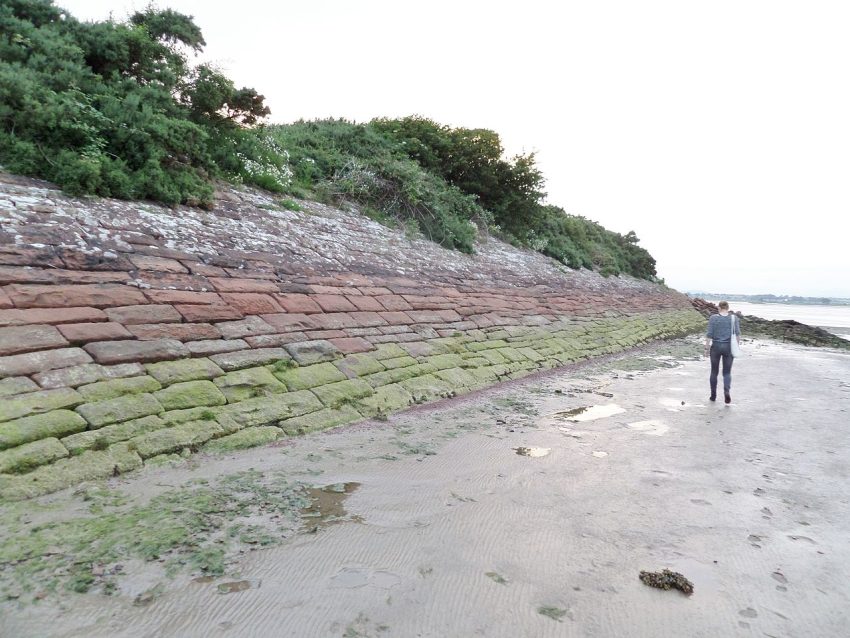
While the viaduct no longer stands, visitors can walk along the shoreline and see the remnants of its earthworks and approach embankments. The site offers sweeping views across the tidal flats, providing a sense of the immense scale of the former structure.
Interpretive signs in the area help explain the bridge’s original route and construction. Birdwatchers will appreciate the estuary’s rich wildlife, especially during migration seasons. The site’s quiet isolation also makes it ideal for photographers seeking dramatic Solway skies and tidal landscapes.
How to Get There
The site is accessible from Bowness-on-Solway by road, with parking available in the village. Public transport is limited, so walking or driving are the main options. Those visiting as part of the Hadrian's Wall Path can make a short detour to the shoreline.
Practical Tips on Visiting the Solway Junction Railway
- Best time to visit the Solway Junction Railway: Low tide for the broadest views across the flats.
- Entrance fee in Euros: Free.
- Opening hours: Open access shoreline.
- Official website: Local council or heritage information sites.
- How long to spend: 30-60 minutes.
- Accessibility: Paths can be uneven, muddy, and tidal-check conditions.
- Facilities: Limited in the immediate area; amenities available in Bowness.
- Photography tip: Visit at sunset for dramatic skies over the estuary.
- Guided tours: Occasionally offered by local heritage groups.
- Nearby food options: Small cafés and inns in Bowness-on-Solway or nearby villages.
Where to Stay close to the Solway Junction Railway
Stay nearby at The Kings Arms Inn, a traditional village inn with easy access to the shoreline. Another excellent choice is Wallsend Guest House & Glamping Pods, ideal for walkers and nature lovers. For more urban comforts, consider Crown & Mitre Hotel in Carlisle.
Is the Solway Junction Railway Worth Visiting?
Yes-especially for history lovers, walkers, and anyone intrigued by lost industrial landmarks. The site may be quiet today, but its story, scenery, and sense of place make it one of the things to do in Bowness-on-Solway for those exploring the Solway's layered past.
FAQs for Visiting the Solway Junction Railway
Nearby Attractions to the Solway Junction Railway
- St Michael's Church: A Norman church built atop a Roman fort granary.
- Hadrian’s Wall Path: The official start/end of the famous long-distance trail.
- Solway Firth AONB: A haven for wildlife and coastal scenery.
- Drumburgh Castle: A fortified tower along Hadrian’s Wall.
- Annan Museum: Exhibits on local history, including Solway heritage.
The Solway Junction Railway appears in our Complete Guide to Visiting Bowness-on-Solway!

Moira & Andy
Hey! We're Moira & Andy. From hiking the Camino to trips around Europe in Bert our campervan — we've been traveling together since retirement in 2020!
This website uses affiliate links which may earn a commission at no additional cost to you!
Planning Your Visit
24 Hours
Free
Nearby Attractions
- St Michael's Church (1.2) km
Church - Port Carlisle (3.2) km
Village - Drumburgh Castle (6.1) km
Castle - Burgh by Sands (12.0) km
Village - Cumbria Museum of Military Life (19.5) km
Museum - Carlisle Castle (19.6) km
Castle - Tullie House (19.7) km
Gallery and Museum - Carlisle Cathedral (19.8) km
Cathedral - Guildhall Museum (20.0) km
Historic Building - Rickerby Park Tower (20.9) km
Tower