Schloss Heidegg, Lucerne
Castle near Lucerne
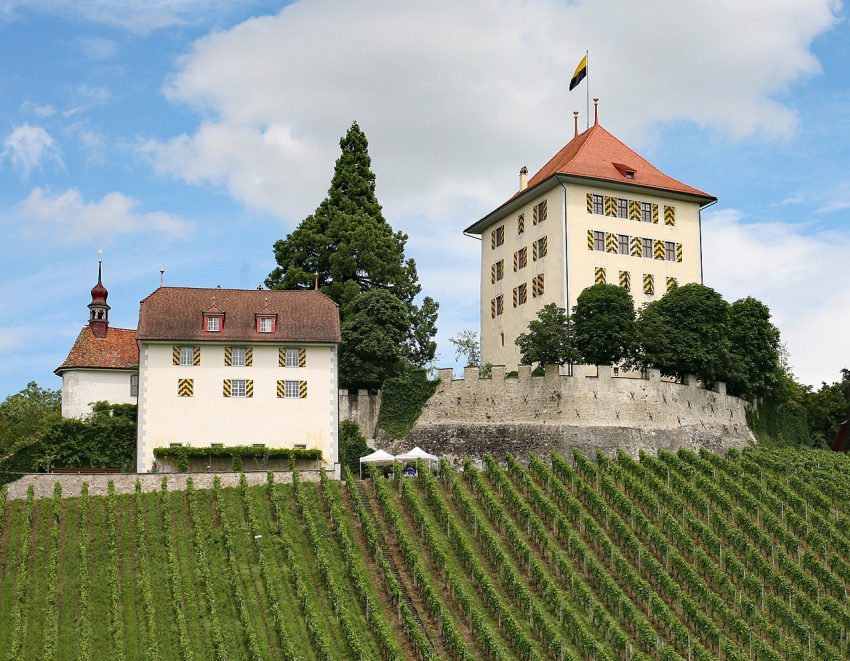
Perched on a hill above Lake Baldegg, Schloss Heidegg feels like the kind of castle you sketch as a child: tower, vineyard slopes, chestnut avenue and a sweeping view over the valley. For centuries it was the residence of the Heidegg family, but today it opens its doors as the Seetal valley's centre for history and culture. Inside its thick walls you step into furnished rooms, creaking corridors and exhibitions that bring 800 years of aristocratic life into focus. Outside, a park of vines, lawns and an exquisite rose garden invites you to slow down and wander. It is easy to combine with a day in Lucerne, and it quietly ranks as one of the best places to visit in Lucerne if you want a real castle with local character rather than a busy blockbuster sight.
What makes Schloss Heidegg special is how “lived in” it feels. This isn't just a static display of portraits and antiques; it's a living museum where you see how noble families organised their everyday routines, hosted guests and worked the surrounding land. Regular events link the castle to the wider Seetal valley, and families quickly discover that the attic has been turned into a fantasy play space where children can dress up as princes and princesses, build stories around a wooden “castle” and disappear into imaginative games for hours. Between the house, the park and the café, it's a place where you can happily linger, and a highlight of any walking tour of Lucerne and its countryside if you're exploring beyond the city itself.
Table of Contents
- History and Significance of Schloss Heidegg
- Things to See and Do in Schloss Heidegg
- How to Get to Schloss Heidegg
- Practical Tips on Visiting Schloss Heidegg
- Where to Stay close to Schloss Heidegg
- Add a Is Schloss Heidegg Worth Visiting?
- FAQs for Visiting Schloss Heidegg
- Nearby Attractions to Schloss Heidegg
History and Significance of Schloss Heidegg
Schloss Heidegg’s story stretches back more than 800 years, when a fortified manor rose on this strategic spur above the Seetal. For generations the Heidegg family and later patrician owners shaped the surrounding lands, managing vineyards, woods and villages from their hillside seat. Walking through the interiors today, you can still feel that layered history in the mix of medieval core, later expansions and baroque and 19th-century touches that reflect changing tastes and fortunes. The castle has moved from feudal stronghold to gentleman’s residence and, finally, to museum without ever losing its connection to the surrounding landscape.
As the Seetal developed, Schloss Heidegg remained a reference point: a place visible from farms, lakeside paths and roads, and a symbol of continuity in a valley shaped by agriculture and quiet trade rather than heavy industry. Turning it into a history and culture centre for the region was a natural evolution. Exhibitions inside the castle explain not only its own story but also that of the valley around it-how people lived off wine, crops and forests, how the local nobility and later landowners organised their estates, and how everyday life changed over the centuries.
Today, Schloss Heidegg is cherished as a site of cultural and landscape importance. Its vineyards, chestnut avenue, rose garden and orchards form part of a carefully maintained park, while the castle itself offers a human-scale look at noble life that feels neither intimidating nor overly polished. Children playing in the attic, locals attending concerts in the courtyard and visitors sipping coffee under the trees all keep the site alive, making it one of the must-see places in Lucerne's wider countryside for travellers who enjoy slow, story-rich places.
Things to See and Do in Schloss Heidegg
Start your visit with a slow approach through the park: walk up the chestnut-lined avenue, glance back at the views over Lake Baldegg and the Seetal valley, and then step into the courtyard to take in the castle from different angles. Inside, follow the signed route through historic rooms where furniture, textiles and everyday objects paint a picture of noble domestic life. Rather than endless glass cases, you’ll find carefully staged living spaces that make it easy to imagine family conversations, formal dinners and quiet evenings by the stove.
One of the most charming parts of Schloss Heidegg is its “living museum” approach to social history. Exhibits show how the castle was run, what roles different members of the household played and how daily routines shifted across the centuries. Small details-kitchens, workrooms, wardrobes-often say as much as grand halls. Make sure to head up to the attic, which has been turned into a magical children's floor: here, young visitors can pull on costumes, explore a play castle, race marbles along ingenious tracks and invent their own stories inspired by the building around them.
Outside, the grounds are as much a part of the experience as the interiors. Explore the vineyards that still cloak the slopes below the castle, wander romantic footpaths that dip into ravines and skirt the edge of woodland, and pause in the rose garden when it’s in bloom to enjoy colour and scent against the backdrop of stone walls and towers. The castle café is the natural place to end your visit, with coffee and cake or a simple drink on the terrace. It’s easy to linger here, letting children run ahead on the paths while you soak up the atmosphere and understand why this feels like one of the top sights in Lucerne’s lake and castle country.
How to Get to Schloss Heidegg
From abroad, the easiest gateway is Zurich Airport, which has extensive international connections and sits roughly an hour to ninety minutes from the Seetal valley by road or rail via Lucerne. For the best deals and a seamless booking experience, check out these flights to Lucerne on Booking.com. Basel or Bern airports are also possible entry points if you are touring several Swiss regions and adding Lucerne and Seetal as part of a wider loop. For the best deals and a seamless booking experience, check out these flights to Lucerne on Booking.com.
From Lucerne, Schloss Heidegg is well connected by public transport. Trains on the Seetal line run regularly towards Lenzburg, stopping at Gelfingen or nearby stations from which you can walk up to the castle in around 15-20 minutes through village streets and gentle countryside. Train schedules and bookings can be found on Omio. Regional buses also serve the area, often connecting smaller communities and making it easy to combine a castle visit with other Seetal stops.
If you are travelling by car, follow routes from Lucerne or Lenzburg into the Seetal valley and watch for local signs to Schloss Heidegg and Gelfingen; there is usually parking available near the castle, though spaces can be busier on sunny weekends and event days. Driving gives you flexibility to explore other lakes, castles and viewpoints in the valley before or after your visit.
Practical Tips on Visiting Schloss Heidegg
- Suggested tips: Wear comfortable shoes-between the castle interiors, attic, stairs and garden paths, you will be on your feet a fair bit, and you will want to explore both indoors and outdoors at a relaxed pace.
- Best time to visit: Late spring to early autumn is ideal for enjoying the rose garden, vineyards and park at their best; weekdays or early mornings tend to be quieter than sunny weekend afternoons.
- Entrance fee: Adult CHF 10
- Opening hours: The Castle Museum is open in 2023 from April 1st to October 31st. Tuesday to Friday 1:30 p.m. to 5:00 p.m Saturday, Sunday and Easter Monday, Ascension Day and Whit Monday 10 a.m. to 5 p.m closed on Mondays Last admission 4.30 p.m
- Official website: http://www.heidegg.ch/
- How long to spend: Allow 2-3 hours to explore the castle rooms, attic, exhibitions and park, and to linger over coffee and cake in the café without rushing.
- Accessibility: Historic stairs and uneven paths mean access can be challenging for visitors with reduced mobility; the park offers some gentler walking, but not all interior spaces will be step-free.
- Facilities: On site you will find toilets, a small castle café with drinks and cakes, seating areas indoors and out, and a shop corner for local products and castle-themed souvenirs.
- Photography tip: Capture the castle from below, framed by vineyards or the chestnut avenue, then head up to the upper paths for views back towards Lake Baldegg and across the Seetal valley.
- Guided tours: Look out for guided tours and themed events, which often focus on particular eras, noble families or aspects of daily life and can add extra depth to your visit.
- Nearby food options: Beyond the castle café itself, nearby villages in the Seetal valley offer traditional inns and restaurants, making it easy to turn your outing into a full day of exploring and eating locally.
Where to Stay close to Schloss Heidegg
For a particularly atmospheric stay, consider the holiday apartment within the castle grounds at Schloss Heidegg Apartment, where historic interiors and vineyard views make you feel like you are living in your own small wing of the estate. Down by Lake Baldegg, B&B Oase im Seetal offers modern studios with balconies overlooking the castle and easy access to lakeside walks and the Seetal railway. If you prefer to base yourself in Lucerne and visit Schloss Heidegg as a day trip, Hotel Wilden Mann combines historic charm in the city centre with straightforward train connections into the valley.
Add a Is Schloss Heidegg Worth Visiting?
Schloss Heidegg is absolutely worth visiting if you enjoy authentic historic places that still feel alive. Instead of polished, roped-off rooms, you get a lived-in sense of noble life, a playful attic that delights children and a park that invites slow wandering among vines and roses. Combined with the views over Lake Baldegg, the gentle Seetal landscape and the welcoming café, it offers a relaxed, story-rich contrast to Lucerne's busier city sights and makes a rewarding half-day or full-day excursion from the lake.
What Other Travellers Say...

Schloss Heidegg, at Heidegg 3 in Gelfingen, is a centuries‑old castle with a local history museum, period rooms and a renowned rose garden; visitors praise its tranquil park and sunset views, family‑friendly interactive displays and costume room for children, a short cartoon film in the cellar (in German), and helpful staff; there's also a rental apartment overlooking the vineyard and lake, offering spacious accommodation with original features and easy access to cycling and local wines.


FAQs for Visiting Schloss Heidegg
Nearby Attractions to Schloss Heidegg
- Lake Baldegg - A tranquil lake below the castle with walking and cycling paths along the shore and views back up to Schloss Heidegg on its hill.
- Hallwyl Castle - A romantic moated castle on nearby Lake Hallwil, ideal for combining with a Seetal castle-themed day out.
- Lake Hallwil - Another serene lake in the valley, with bathing spots, boat trips and shoreline paths linking villages and viewpoints.
- Lenzburg Castle - A prominent hilltop fortress and museum further down the line, offering broad views and exhibitions on regional history.
- Lucerne Old Town - Within easy reach by train, with its famous Chapel Bridge, waterfront squares and museums providing a lively contrast to the quiet Seetal countryside.
The Schloss Heidegg appears in our Complete Guide to Visiting Lucerne!

Moira & Andy
Hey! We're Moira & Andy. From hiking the Camino to trips around Europe in Bert our campervan — we've been traveling together since retirement in 2020!
This website uses affiliate links which may earn a commission at no additional cost to you!
Planning Your Visit
The Castle Museum is open in 2023 from April 1st to October 31st.
Tuesday to Friday
1:30 p.m. to 5:00 p.m
Saturday, Sunday and Easter Monday, Ascension Day and Whit Monday
10 a.m. to 5 p.m
closed on Mondays
Last admission 4.30 p.m
Adult CHF 10
Nearby Attractions
- Glacier Garden (17.8) km
Museum - Lion Monument (17.8) km
Statue - Bourbaki Panorama (18.0) km
Arts Venue and Museum - Museggmauer (Musegg Wall) (18.2) km
City Gate and City Walls - Hofkirche St. Leodegar (18.2) km
Church - Fritschi Fountain (18.4) km
Fountain - Hirschenplatz (18.4) km
Square - Peter's Chapel (18.4) km
Church - Spreuerbrücke (18.5) km
Bridge - Weinmarkt (18.5) km
Square