Roman Walls of Grenoble
Roman Site in Grenoble
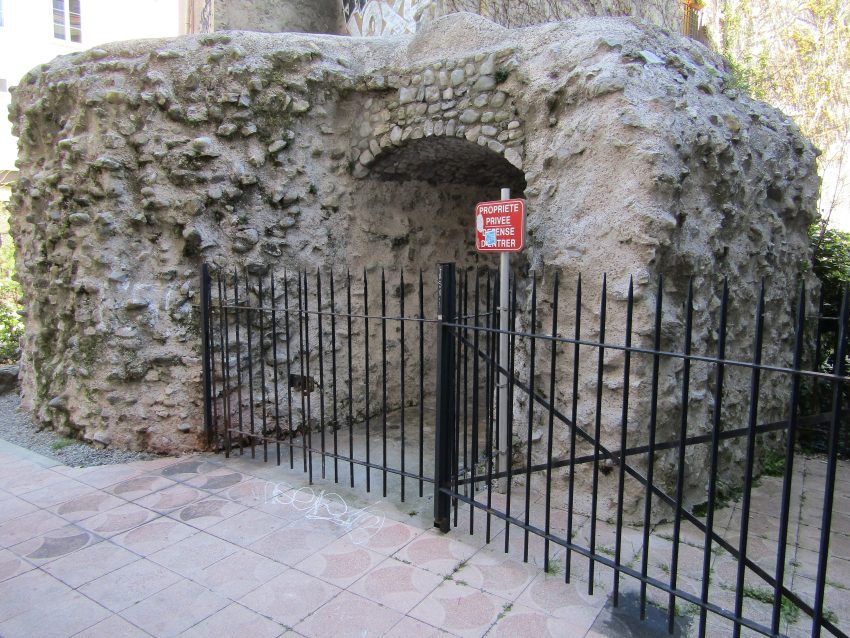
The Roman Walls of Grenoble are one of those places you could easily walk past without realising how old they are. Tucked into Grenoble's historic centre near Rue Lafayette and close to Halle Sainte-Claire, these remains are part of the former Roman enclosure of ancient Cularo, and they offer a rare glimpse of the city's late Roman past right in the middle of today's pedestrian streets.
What makes this stop especially appealing is how well it fits into a self-guided walk through central Grenoble. It is not a large archaeological site or a ticketed museum experience, but rather a discreet, atmospheric fragment of the city's story that pairs beautifully with nearby squares, markets, and old-town streets if you are exploring the best places to visit in Grenoble on foot.
Table of Contents
- History and Significance of the Roman Walls of Grenoble
- Things to See and Do in the Roman Walls of Grenoble
- How to Get to the Roman Walls of Grenoble
- Practical Tips on Visiting the Roman Walls of Grenoble
- Where to Stay Close to the Roman Walls of Grenoble
- Is the Roman Walls of Grenoble Worth Visiting?
- For Different Travelers
- FAQs for Visiting Roman Walls of Grenoble
- Nearby Attractions to the Roman Walls of Grenoble
History and Significance of the Roman Walls of Grenoble
The Roman Walls of Grenoble are the surviving remains of the ancient fortifications of Cularo, the Roman settlement that later became Grenoble. In the late 3rd century, at a time of growing insecurity across the Roman world, the town was fortified with a defensive wall and towers, transforming what had been an open settlement into a protected urban enclosure. This was a major moment in the city's development, and it marked Cularo's rise in administrative importance.
The visible remains near Rue Lafayette are only a small portion of what once formed a much larger circuit, but they carry real historical weight. These fragments help trace the footprint of Roman Grenoble in the modern city, and they connect directly to the old line of the ramparts that shaped the medieval and early modern urban core for centuries. Even when the masonry seems modest, the site is important because it anchors the story of Grenoble's continuity from Roman antiquity into the present day.
Part of the appeal today is that the Roman enclosure is still legible in subtle ways across the city, including markers embedded in the streets that indicate the former line of the walls. Seeing the preserved section in person gives context to those clues and makes the old city feel deeper and more layered than it first appears.
Things to See and Do in the Roman Walls of Grenoble
The main thing to see is the preserved section of Roman masonry itself: a surviving stretch of curtain wall and a small tower element, standing between buildings in the pedestrian centre. The remains are compact, so this is a short stop, but the reward is the sense of stumbling onto something genuinely ancient in an otherwise everyday urban setting.
Take time to look closely at the stonework and the way the ruins sit within the modern block. This is not a polished open-air archaeological park, and that is part of its character. The contrast between Roman remains, surrounding façades, and nearby shopping and market streets makes it a memorable stop for travelers who enjoy cities with visible layers of history.
This is also a great place to pause during a walking route through Grenoble's old centre. You can combine it with Halle Sainte-Claire, Place Grenette, Grenoble Cathedral, and other nearby historic stops, creating an easy cultural loop without needing much extra travel time.
How to Get to the Roman Walls of Grenoble
The Roman Walls of Grenoble are in the pedestrianised historic centre, near Rue Lafayette and close to Rue de la République, so they are easiest to reach on foot if you are already exploring central Grenoble. From Place Grenette or the cathedral area, it is only a short walk through the old town streets.
If you are arriving in Grenoble by train, travel to Grenoble station (Gare de Grenoble), then continue on foot (around 15-20 minutes depending on your route) or use the tram toward the city centre and get off near Hubert Dubedout - Maison du Tourisme, which is a convenient stop for the site. You can use SNCF Connect to check schedules, compare routes, and purchase tickets for National (SNCF ) and regional trains (TER). For a more streamlined experience, we recommend using Omio, which allows you to easily compare prices, schedules, and book tickets for both National and Regional travel across all of Europe, all in one place.
For air arrivals, the most practical gateways are Grenoble Alpes-Isère Airport (limited services, often seasonal) and Lyon Saint-Exupéry Airport, which has much stronger connections and onward transport to Grenoble. For the best deals and a seamless booking experience, check out these flights to Grenoble on Booking.com.
If you are driving, it is usually better to park in a central car park on the edge of the pedestrian zone and continue on foot, since the Roman walls themselves sit within a walkable old-town area with limited direct vehicle access. If you are looking to rent a car in France I recommend having a look at Discover Cars, first, as they compare prices and review multiple car rental agencies for you.
Practical Tips on Visiting the Roman Walls of Grenoble
- Entrance fee: Free access.
- Opening hours: Daily: Open access (all year round).
- Official website: https://www.grenoble-tourisme.com/en/catalog/detail/enceinte-gallo-romaine-5126330/
- Best time to visit: Early morning or late afternoon is best if you want a quieter feel and better photos without as many people passing through the pedestrian streets.
- How long to spend: Plan 10-20 minutes for the ruins themselves, or longer if you are folding the stop into a broader old-town walking route.
- Accessibility: The site is in a central pedestrian area and easy to approach on foot, but viewing conditions depend on the exact pavement layout and the fact that the remains sit within/along private property boundaries.
- Facilities: There are no dedicated visitor facilities at the ruins, but cafés, shops, and public amenities are available nearby in the city centre.
Where to Stay Close to the Roman Walls of Grenoble
For most travelers, the best base is Grenoble's hyper-centre around Place Grenette, Place Victor Hugo, and the pedestrian old town, where you can walk to major sights and easily use trams for the rest of the city.
A strong option for a culture-focused stay is Le Grand Hôtel de Grenoble, BW Premier Collection, which sits very close to Place Grenette and works especially well if you want to explore the historic centre on foot. Another central choice is Hôtel d'Angleterre Grenoble Hyper-Centre, a classic city-centre base on Place Victor Hugo with easy tram access and a convenient walk to old-town sights. For a practical mid-range stay in the pedestrian/cultural zone, Ibis Grenoble Centre Bastille is well placed for both the Roman walls and the Bastille cable car area.
Is the Roman Walls of Grenoble Worth Visiting?
Yes, if you enjoy hidden historical details and want to understand Grenoble beyond its headline attractions. The Roman Walls of Grenoble are not a grand standalone monument, but they are absolutely worth a short stop because they add depth to a walk through the old centre and connect modern Grenoble to ancient Cularo in a very direct way.
The honest pivot: if you prefer large, immersive heritage sites with interpretation panels, interiors, or dramatic ruins, this may feel too subtle on its own. In that case, treat it as a brief add-on to a wider Grenoble walking itinerary rather than the main destination.
What Other Travellers Say...

Reviews describe a small but impressive visible remnant of the 3rd‑century Roman rampart in Grenoble’s historic pedestrian center, easy to spot from the street. Visitors appreciate its historical significance and the fact it’s accessible to passersby. A recurring drawback is that the remains sit within private property behind a gate, limiting closer access, and reviewers note a lack of on-site signage or explanatory information.


For Different Travelers
Families with Kids
This is a good quick stop for families because it is short, central, and easy to combine with snacks or a break at nearby squares. Younger kids may not spend long at the ruins themselves, so it works best as part of a “history treasure hunt” through the old town.
If you are traveling with strollers, the pedestrian centre helps, and you can build a flexible route with frequent pauses. Pair it with open spaces or treats nearby so the visit feels like one stop in a varied city walk rather than a long history-focused outing.
Couples & Romantic Getaways
For couples, the Roman Walls of Grenoble are best experienced as part of a slow wander through the historic centre. The charm comes from the atmosphere: quiet lanes, old stones, nearby cafés, and the feeling of discovering something ancient almost by accident.
This stop works particularly well in the late afternoon when the old town feels more relaxed. You can combine it with Place Grenette, a café terrace, and an evening stroll toward Jardin de Ville or the river for a low-key but memorable city experience.
Budget Travelers
The Roman walls are an excellent budget-friendly stop because they are free to see and located in an area you are likely to explore anyway. If you are building a cheap day in Grenoble, this is the kind of place that adds historical value without adding cost.
Because the stop is short, it also helps you make the most of your time on foot rather than spending money on transport. Combine it with other central landmarks, markets, and public spaces to create a full self-guided itinerary at very low cost.
History Buffs
History lovers will get more out of this site than casual visitors, especially if they are interested in Roman urbanism or late antiquity in Gaul. The remains are modest, but their significance lies in what they represent: the fortified enclosure of Cularo and Grenoble’s long urban continuity.
The best way to enjoy the site is to view it not as an isolated ruin but as one piece of a wider historical map of Grenoble. Look for traces of the old city's layout nearby and use this stop as a gateway into the city's Roman and medieval layers.
FAQs for Visiting Roman Walls of Grenoble
Getting There
Tickets & Entry
Visiting Experience
Tours, Context & Itineraries
Photography
Accessibility & Facilities
Food & Breaks Nearby
Safety & Timing
Nearby Attractions to the Roman Walls of Grenoble
- Halle Sainte-Claire: A central market hall near the ruins, ideal for a quick food stop and a glimpse of everyday local life in Grenoble.
- Place Grenette: One of Grenoble's best-known squares, lined with cafés and a useful anchor point for exploring the historic centre.
- Grenoble Cathedral (Cathédrale Notre-Dame de Grenoble): A historic cathedral complex that adds medieval and religious heritage context to your old-town walk.
- Musée de l'Ancien Évêché: A strong companion stop for archaeology and regional history, including material that helps place Roman Grenoble in context.
- Jardin de Ville: A pleasant central park for a break, with historic surroundings and easy links to other old-town sights.
The Roman Walls of Grenoble appears in our Complete Guide to Visiting Grenoble!

Moira & Andy
Hey! We're Moira & Andy. From hiking the Camino to trips around Europe in Bert our campervan — we've been traveling together since retirement in 2020!
This website uses affiliate links which may earn a commission at no additional cost to you!
Planning Your Visit
Daily: Open access (all year round).
Free access.
Nearby Attractions
- Appartement Natal de Stendhal (0.1) km
Historic Building, Historic Site and Museum - Rue Lafayette (0.1) km
Area, Street and Walk - Halle Sainte-Claire (0.1) km
Market - Musee Stendhal (0.1) km
Museum - Place Grenette (0.2) km
Area, Attraction and Square - Grande Rue (0.2) km
Area, Street and Walk - Cafe La Table Ronde (0.2) km
Café and Historic Building - Rue Felix Poulat (0.2) km
Area and Street - Collegiate Church of Saint-André (0.3) km
Church, Historic Site and Religious Building - Jardin de Ville (0.3) km
Attraction, Gardens and Park