Roman Amphitheater, Pula
Amphitheatre, Attraction and Roman Site in Pula
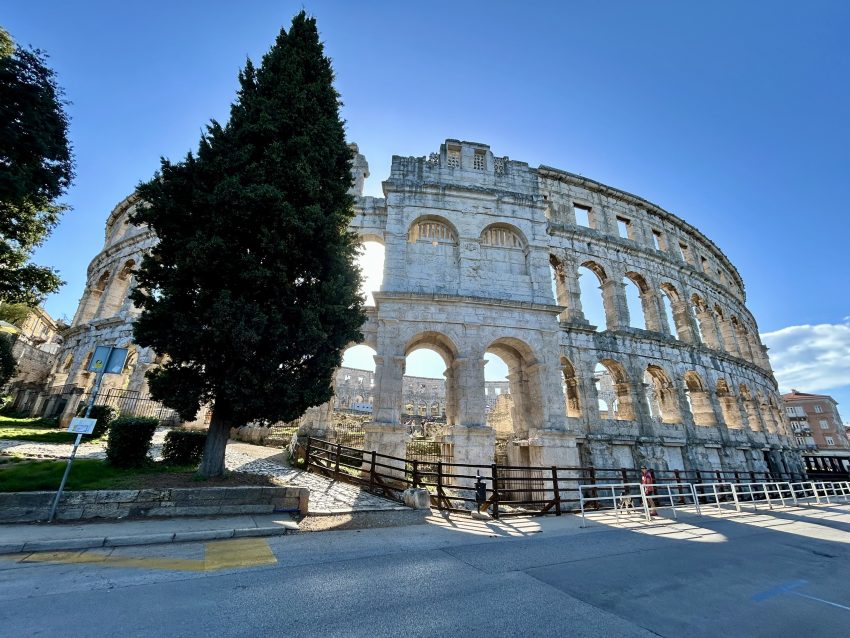
The Roman Amphitheater in Pula, Croatia (often called the Pula Arena) is one of the best-preserved Roman arenas in the world, rising dramatically right beside the city center and the harbor. Even if you only have a few hours in Pula, it's the kind of landmark you'll spot from multiple streets and keep circling back to as you explore.
It's easy to weave the Arena into a walking tour of Pula's Roman highlights: start at the amphitheater, then continue into the Old Town for the Arch of the Sergii, the Forum, and the Temple of Augustus. For the best views without committing to a full visit, do a slow loop around the exterior at golden hour, when the stone glows and the crowds thin.
Table of Contents
- History and Significance of the Roman Amphitheater
- Things to See and Do in the Roman Amphitheater
- How to Get to the Roman Amphitheater
- Practical Tips on Visiting the Roman Amphitheater
- Where to Stay Close to the Roman Amphitheater
- Is the Roman Amphitheater Worth Visiting?
- For Different Travelers
- FAQs for Visiting Roman Amphitheater
- Nearby Attractions to the Roman Amphitheater
History and Significance of the Roman Amphitheater
Built during the Roman era, the Pula Arena was designed for large public spectacles, with tiered seating, imposing outer walls, and a footprint that still feels monumental today. What makes it especially striking is how intact the structure remains: you can clearly read the shape of the arena, the entrances, and the seating levels even on a quick pass.
Over the centuries, the amphitheater has shifted from ancient entertainment venue to a defining symbol of Pula. Its survival gives the city an almost “Rome-on-the-Adriatic” feel, and it anchors a compact historic center where many major sights are walkable.
Today, the Arena’s significance is also living and modern: it continues to host events, which adds energy to the site but can occasionally affect the visitor experience. Seeing an ancient monument that still functions as a gathering place is part of what makes it memorable.
Things to See and Do in the Roman Amphitheater
Start with the exterior. Walking the full perimeter lets you appreciate the scale, the rhythm of arches, and how the Arena sits within modern Pula. If you enjoy photography, you'll find plenty of angles from the surrounding streets, especially with the harbor nearby.
Inside, the main draw is the immersive sense of space: you can stand on the arena floor, look up at the seating tiers, and imagine the roar of a full crowd. Take time to wander the different levels and viewpoints so you don’t just “pop in” and leave without feeling the structure.
If you’re lucky, you may catch the Arena during a setup for a concert or seasonal activity, which shows how the venue is still used today. Just note that event preparations can change what areas are accessible on a given day.
How to Get to the Roman Amphitheater
The nearest airports are Pula Airport (PUY) for the quickest arrival, or larger hubs like Rijeka Airport (RJK) and Trieste Airport (TRS) if you're combining regions; from any of these, you'll typically continue by taxi, shuttle, or bus to central Pula. For the best deals and a seamless booking experience, check out these flights to Pula on Booking.com.
Pula is reachable by rail, but train routes in Istria can be slower and less frequent than buses; if you're coming from elsewhere in Croatia, check whether a bus is faster, then walk or take a short taxi ride from Pula station to the Arena. Train schedules and bookings can be found on Omio.
By car, Pula is straightforward to reach via Istria's main roads, and having a vehicle is handy if you're pairing the city with coastal stops or hill towns.
Practical Tips on Visiting the Roman Amphitheater
- Official website: https://www.arenapula.hr/en/visitor-info/
- Entrance fee: Adults: €10; Children/pupils/students: €5; Children under 5: free.
- Opening hours: Daily: 08:00–20:00.
- Best time to visit: Go early in the day for cooler temperatures and calmer photos, or late afternoon for softer light on the stone. If you’re visiting in summer, aim to avoid the hottest midday hours.
- How long to spend: Plan for 45–90 minutes for a relaxed visit inside, plus extra time if you want to do a full exterior loop and photos. If you’re short on time, the outside walk-around still feels rewarding.
- Accessibility: The amphitheater is partially accessible, but expect uneven surfaces and steps in many areas. If mobility is a concern, prioritize the most accessible viewpoints and ask staff about the easiest route.
- Facilities: There’s a ticket office and typically a small shop area, and you’ll find plenty of cafés nearby in the city center. Bring water in warm months, especially if you plan to linger for photos.
Where to Stay Close to the Roman Amphitheater
Base yourself in central Pula (Old Town/Arena area) if you want to walk everywhere, pop back to your room between sightseeing stops, and enjoy evenings without needing a car.
Hotel Amfiteatar A classic pick for location: it’s close enough to the Arena for sunrise or late-evening strolls, and it’s ideal if you want a simple, sightseeing-first stay.
Park Plaza Histria Pula A strong resort-style option near the sea, great if you want to mix Roman history with beach time and on-site amenities.
Boutique Hotel Valsabbion A more intimate, design-forward stay for travelers who want a quieter base and a polished boutique feel while still being a short ride from the Arena.
Hotel Galija Convenient for an Old Town-focused itinerary, with an easy walk to restaurants, evening promenades, and the Arena.
Ribarska Koliba Resort A great choice if you prefer a marina/coastal setting and a slightly removed, relaxed atmosphere after busy sightseeing days.
Is the Roman Amphitheater Worth Visiting?
Yes, it's absolutely worth visiting. The Pula Arena delivers that rare combination of “iconic” and “easy”: it's central, visually stunning from the outside, and genuinely impressive once you step onto the arena floor and look up at the preserved tiers.
Honest Pivot: if you’re already doing multiple Roman amphitheaters on the same trip and you’re trying to cut ticket costs, you could skip the interior and just enjoy the exterior loop and nearby Roman sights. Also consider skipping a paid entry if the Arena is clearly in event-setup mode and you’re mainly looking for an uncluttered, atmospheric visit.
What Other Travellers Say...

Google reviewers rate the Roman Amphitheater in Pula very highly overall, frequently calling it a must-see and praising how remarkably well preserved it is for its age. Common highlights include the dramatic exterior views from surrounding streets, the impressive scale once you step inside, and the fact that it often feels less crowded than more famous Roman arenas. Several visitors also enjoy the sense that the venue is still “alive,” noting seasonal or special uses of the arena floor. The most common downsides mentioned are that some travelers feel the interior ticket isn't essential if you're happy with an exterior walk-around, and that event setups can affect the atmosphere or what you can access.


For Different Travelers
The Roman Amphitheater works well for most itineraries because it's both a headline sight and a natural waypoint while exploring Pula on foot. How you experience it best depends on your pace, your budget, and whether you want context or just the wow-factor.
Families with Kids
Kids tend to love the sheer scale of the Arena and the “gladiator” imagination factor. Keep the visit interactive by letting them choose viewpoints and “discover” entrances and arches as you move around.
To keep energy high, pair the Arena with a short Old Town walk and a gelato stop rather than stacking too many museums in one day. If it’s hot, prioritize shade breaks and a shorter interior loop.
Couples & Romantic Getaways
For couples, the Arena is at its best in late afternoon when the light turns warm and the stone looks almost golden. A slow exterior walk followed by dinner in the Old Town makes for a simple, memorable evening plan.
If you enjoy culture, check whether there's a concert or event during your dates. Seeing a modern performance in an ancient venue can feel uniquely “Pula” and adds a special shared memory.
Budget Travelers
Budget travelers can get a lot of value just by appreciating the Arena from outside, especially if you’re happy with photos and atmosphere rather than a full interior exploration. The surrounding streets offer plenty of viewpoints without spending anything.
If you do go inside, make it count by taking your time and combining it with a self-guided Roman walk through the Old Town afterward. That way, one ticket anchors a full half-day of sightseeing.
History Buffs
History lovers should absolutely go inside, because the structure is readable: you can trace how crowds moved, where the spectacle happened, and how the building was engineered. Spend time looking at the layers of stonework and the overall geometry rather than rushing for a single photo.
To deepen the context, connect the Arena with other Roman-era landmarks nearby (like the Forum area and major arches/temples). Pula's compact center makes it easy to build a coherent “Roman Pula” route in one day.
FAQs for Visiting Roman Amphitheater
Getting There
Tickets & Entry
Visiting Experience
Tours, Context & Itineraries
Photography
Accessibility & Facilities
Food & Breaks Nearby
Safety & Timing
Nearby Attractions to the Roman Amphitheater
- Temple of Augustus: A compact Roman temple on the Forum that pairs perfectly with an Arena-focused walk.
- Arch of the Sergii: A photogenic Roman triumphal arch that marks a natural gateway into the Old Town.
- Pula Fortress (Kaštel): A hilltop fort with city views, great for understanding Pula's layout after seeing the Arena.
- Forum (Pula): The city's historic main square, ideal for a slow stroll and a café stop.
- Zerostrasse Tunnels: Underground passages that add a different perspective to Pula’s layered history.
The Roman Amphitheater appears in our Complete Guide to Visiting Pula!

Moira & Andy
Hey! We're Moira & Andy. From hiking the Camino to trips around Europe in Bert our campervan — we've been traveling together since retirement in 2020!
This website uses affiliate links which may earn a commission at no additional cost to you!
Planning Your Visit
Daily: 08:00-20:00.
Adults: €10; Children/pupils/students: €5; Children under 5: free.
Nearby Attractions
- Twin Gates (0.3) km
Attraction, City Gate and Historic Site - Archaeological Museum of Istria (0.3) km
Historic Site, Museum and Viewing Point - Gate of Hercules (0.3) km
City Gate, Historic Site and Monument - Small Roman Theatre (0.4) km
Arts Venue, Roman Site and Theatre - Pula Cathedral (0.5) km
Cathedral, Church and Historic Building - Pula Castle (0.5) km
Castle, Museum and Viewing Point - Triumphal Arch of the Sergii (0.5) km
Attraction, Historic Site and Monument - Franciscan Church and Monastery (0.6) km
Church, Monastery and Religious Building - Floor Mosaic The Punishment of Dirce (0.6) km
Attraction, Historic Site and Roman Site - Forum Square and Communal Palace (0.6) km
Palace, Square and Town Hall