Ravenna Cathedral
Cathedral in Ravenna
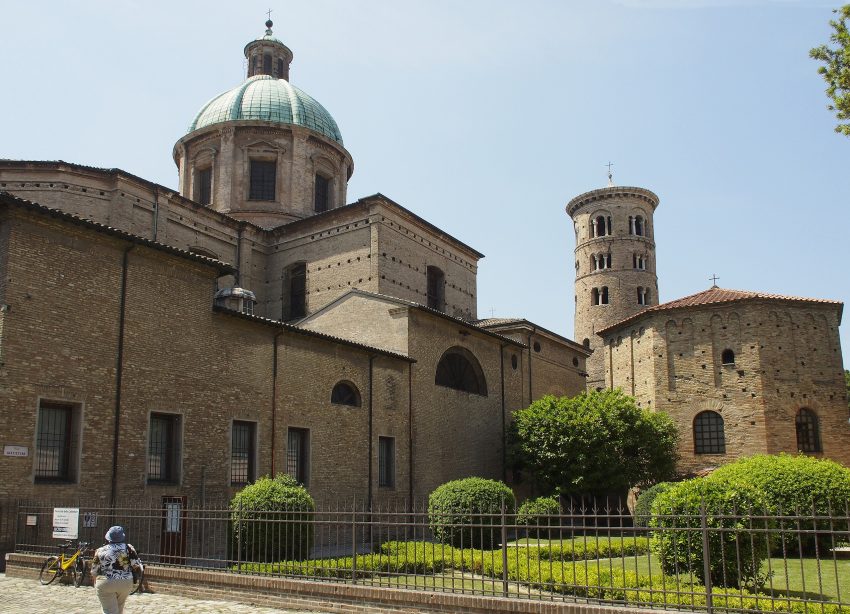
Ravenna Cathedral is the city's principal church and the anchor of the cathedral quarter, sitting right beside the Neonian Baptistery and close to the Archbishop's Museum. From the outside it reads as a calm, dignified duomo rather than a showpiece, but that understated presence is part of its appeal: it's a living place of worship that connects Ravenna's daily rhythms to a much older early Christian past.
It's one of the best places to visit in Ravenna when you want a break from ticketed monuments and a sense of the city as it actually functions today. It's also a great place to visit on a walking tour of Ravenna because the cathedral area forms a natural hub where you can pause, reset your route, and then continue toward the mosaics of San Vitale or the quiet lanes leading to Dante's memorial district.
Table of Contents
- History and Significance of the Ravenna Cathedral
- Things to See and Do in the Ravenna Cathedral
- Practical Tips on Visiting the Ravenna Cathedral
- Where to Stay close to the Ravenna Cathedral
- Is the Ravenna Cathedral Worth Visiting?
- FAQs for Visiting Ravenna Cathedral
- For Different Travelers
- Nearby Attractions to the Ravenna Cathedral
History and Significance of the Ravenna Cathedral
Ravenna's cathedral story is layered, and that's the key to appreciating it. The site is tied to the city's early Christian period, when Ravenna stood at the centre of imperial and ecclesiastical power, but what you see today reflects later rebuilding and changing tastes over many centuries. Like much of Ravenna, the cathedral is best understood as an evolving complex rather than a single “frozen” moment in time.
What makes the cathedral significant for visitors is how it frames the surrounding monuments. The Neonian Baptistery next door is often the headline stop for mosaics, but the cathedral provides the liturgical and civic context that baptisteries and chapels only hint at. Standing here helps you understand why this part of the city became a dense cluster of religious architecture, administration, and ceremonial space.
It also plays an important role in a practical travel sense: it's a central orientation point. Once you've visited the cathedral area, Ravenna's historic centre feels easier to navigate, and the city's most important sights begin to connect into a coherent walking route rather than separate stops.
Things to See and Do in the Ravenna Cathedral
Start by walking slowly down the main axis and letting your eyes adjust to the interior’s scale and atmosphere. Cathedrals are designed to change your pace: the space encourages a quieter step, a longer look, and a moment of calm even when you only have a short window to visit.
Spend time with the side chapels and devotional corners rather than only aiming for the far end of the church. These are often where you feel the “living” aspect of the cathedral most strongly, because they tend to hold local devotions, candles, and the subtle signs of everyday worship that aren’t curated for visitors.
Then step back outside and treat the cathedral as part of a small triangle of experiences: cathedral, baptistery, and Archbishop's Museum. Even if you don't visit them all in one go, seeing how closely they sit together helps you read this quarter as the ecclesiastical heart of Ravenna, where art, ritual, and authority historically overlapped.
Practical Tips on Visiting the Ravenna Cathedral
- Suggested tips: Combine the cathedral with the Neonian Baptistery and Archbishop's Museum while you're in the same area, then use the nearby streets for a café break before continuing to the UNESCO basilicas.
- Best time to visit: Early morning for a quieter interior, or late afternoon when the cathedral often feels calmer again.
- Entrance fee: Free admission.
- Opening hours: Winter: Weekdays: 7.30 am – 5 pm; Sundays and public holidays: 7.30 am – 7.30 pm Summer: Weekdays: 7.30 am – 6 pm; Sundays and public holidays: 7.30 am – 7.30 pm
- Official website: https://www.duomoravenna.it/
- How long to spend: 20-40 minutes for a relaxed visit, longer if you enjoy lingering in chapels and taking in the atmosphere.
- Accessibility: Generally straightforward at ground level, though historic thresholds and paving in the surrounding area may require care.
- Facilities: Limited inside the cathedral itself; cafés, toilets, and services are nearby in the historic centre.
- Photography tip: If photography is permitted, avoid flash and focus on wide interior views that capture the cathedral’s sense of space rather than close-up shots.
- Guided tours: A guided walk is useful here because it helps connect the cathedral to the baptistery and the wider story of Ravenna’s early Christian landscape.
- Nearby food options: The cathedral quarter is close to central cafés and casual lunch spots, making it easy to plan a short break immediately after your visit.
Where to Stay close to the Ravenna Cathedral
Staying in central Ravenna keeps the cathedral area and the main monument cluster comfortably walkable, which is ideal if you want to visit early and return later when the streets are quieter. Albergo Cappello is a characterful option close to the cathedral quarter and the city’s evening dining streets. Hotel Centrale Byron is a practical central base that makes it easy to reach the cathedral, baptistery, and museums on foot. Palazzo Bezzi Hotel is a comfortable choice if you want a polished stay while still remaining walkable to the cathedral area.
Is the Ravenna Cathedral Worth Visiting?
Yes, especially if you want your Ravenna itinerary to feel grounded in the city's real centre rather than only its headline monuments. The cathedral is not the most visually overwhelming stop in Ravenna, but it offers something equally valuable: atmosphere, orientation, and a sense of continuity with local life.
It's also an excellent “connector” visit. Even a brief stop improves how you experience the Neonian Baptistery and the Archbishop's collections nearby, because it helps you see them as parts of one cathedral complex rather than unrelated highlights.
FAQs for Visiting Ravenna Cathedral
What Other Travellers Say...

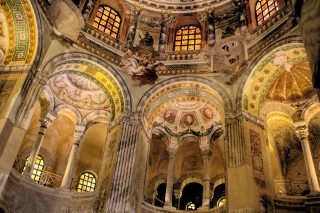
Basilica of San Vitale, on Via San Vitale in Ravenna, is an octagonal domed church famed for its richly colored Byzantine mosaics; inside a compact, austere exterior gives way to a dazzling interior of book-matched marble, carved capitals and extensive gold-backed tesserae that glow in low light. Visitors note the octagonal plan with a wide ambulatory and raised gallery, an overhead dome supported by eight columns, and striking mosaics in the apse and along the flanks, including large imperial procession portraits and scenes featuring Christ and biblical figures; the interior feels larger than the exterior suggests. Expect mosaic-packed galleries, a small gift shop, and that tickets may include access to additional nearby attractions.


For Different Travelers
Families with Kids
For families, the cathedral works best as a short, calming stop rather than a long visit. Keep it simple: enter, walk the main space, choose one chapel to look at together, then move on to something more visually dramatic nearby like the baptistery. The cathedral area is also convenient for breaks, so you can easily pivot to a snack stop if attention spans dip.
If your children have already seen several interiors, use this visit as a reset rather than another “big highlight.” The value here is the atmosphere and the sense of place in the heart of the city.
Couples & Romantic Getaways
For couples, Ravenna Cathedral is a quiet, grounding moment in the cathedral quarter. It's the kind of stop that encourages a slower pace and a shared sense of calm before returning to busier UNESCO interiors or café life in the centre.
It also works well early or late in the day, when the surrounding streets feel gentler. Pair it with a nearby coffee and a slow walk through the historic lanes, and it becomes part of Ravenna’s softer, more intimate side.
Budget Travelers
For budget travellers, the cathedral is a strong inclusion because it is typically free, centrally located, and easy to combine with other walkable sights. It adds depth to the cathedral quarter without requiring extra ticketing, and it helps you structure a day efficiently around clusters rather than transport.
Use it as a free cultural anchor before choosing one or two paid entries nearby, such as a baptistery or a museum, for a balanced and cost-effective itinerary.
Nearby Attractions to the Ravenna Cathedral
- Neonian Baptistery: A compact octagonal baptistery with a dazzling dome mosaic centred on Christ's baptism.
- Archbishop's Museum: A museum in the Archbishop's Palace with major treasures, including the Chair of Bishop Maximian.
- Basilica of San Vitale: Ravenna's most celebrated mosaic interior and one of the city's essential UNESCO monuments.
- Mausoleum of Galla Placidia: A small, unforgettable mosaic interior with a starry dome and intimate glow.
- Piazza del Popolo: Ravenna's main square, ideal for a café break and people-watching between monument visits.
The Ravenna Cathedral appears in our Complete Guide to Visiting Ravenna!

Moira & Andy
Hey! We're Moira & Andy. From hiking the Camino to trips around Europe in Bert our campervan — we've been traveling together since retirement in 2020!
This website uses affiliate links which may earn a commission at no additional cost to you!
Planning Your Visit
Winter: Weekdays: 7.30 am - 5 pm; Sundays and public holidays: 7.30 am - 7.30 pm
Summer: Weekdays: 7.30 am - 6 pm; Sundays and public holidays: 7.30 am - 7.30 pm
Free admission.
Nearby Attractions
- Neonian Baptistery (0.1) km
Baptistery - Archbishop's Chapel of St. Andrew (0.1) km
Church - Archbishop's Museum (0.1) km
Museum - Basilica of San Francesco (0.3) km
Basilica - Dante’s Tomb (0.4) km
Tomb - Museo Dante (0.4) km
Historic Building and Museum - Piazza del Popolo (0.4) km
Square - Domus dei Tappeti di Pietra (0.4) km
Historic Site and Museum - National Museum of Ravenna (0.5) km
Historic Building and Museum - Basilica of San Vitale (0.6) km
Basilica