Lucerne Town Hall
Town Hall in Lucerne
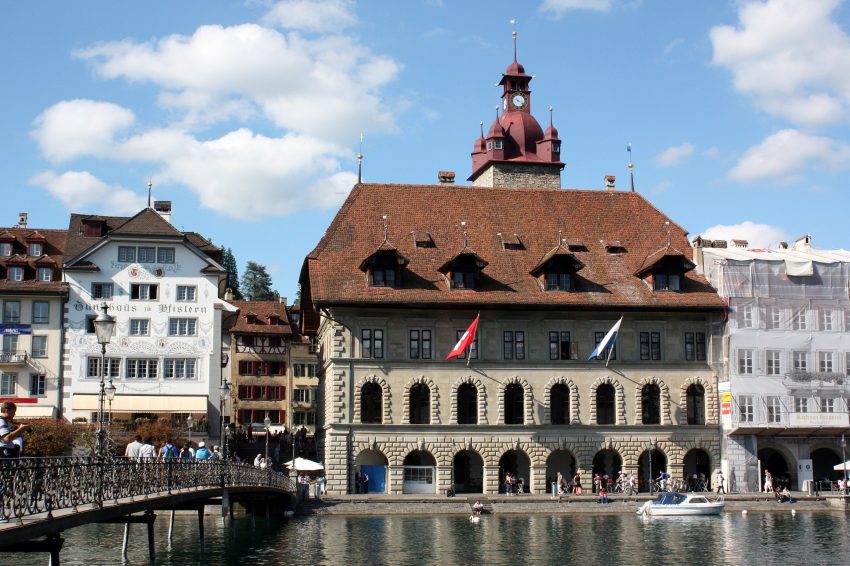
Right on the banks of the River Reuss, Lucerne Town Hall (Rathaus) is the building you keep circling back to as you wander the Old Town. Its Renaissance façade, broad, low-sloping roof and attached tower form a perfect backdrop to the arcaded Rathausquai, where cafés and restaurants spill out towards the water. Twice a week, on market mornings, stalls fill the quay and nearby streets with flowers, cheeses and produce, and the town hall becomes the elegant anchor to one of the best places to visit in Lucerne if you enjoy soaking up local life as much as architecture.
Step a little closer and you start to see how many layers of history are tucked into this one complex. Designed and built between 1602 and 1606 by Italian architect Anton Isenmann in the style of the Italian Renaissance, the Rathaus has always been both a working building and a civic showpiece. The ground-floor Kornschütte, once a grain hall, is now a welcoming exhibition and concert space, while upstairs council chambers glow with paintings, carved panelling and tile stoves. With the Old and New Chancelleries and a modern dovecote tucked into the attic, it is a great place to visit on a walking tour of Lucerne when you want to understand how the city actually runs beneath the postcard views.
Table of Contents
- History and Significance of the Lucerne Town Hall
- Things to See and Do in the Lucerne Town Hall
- How to Get to the Lucerne Town Hall
- Practical Tips on Visiting the Lucerne Town Hall
- Where to Stay close to the Lucerne Town Hall
- Is Lucerne the Town Hall
- FAQs for Visiting Lucerne Town Hall
- Nearby Attractions to Lucerne Town Hall
History and Significance of the Lucerne Town Hall (Rathaus)
Lucerne’s Rathaus reflects a moment when the city wanted a town hall that matched its growing confidence and wealth. Between 1602 and 1606, Anton Isenmann drew on Italian Renaissance models to create a dignified building beside the Reuss, with a solid arcaded ground floor, refined upper levels and a broad Bernese-style roof to shrug off Alpine weather. From the start, it combined practical spaces for administration and trade with rooms that projected authority and civic pride.
The ground-floor Kornschütte began life as a grain hall, a place where vital food supplies were stored and traded under the city’s watchful eye. Today, that same hall hosts exhibitions and concerts, but the high ceilings and open volume still hint at its original purpose as a hub of commerce. On the first floor, the council chamber wraps visitors in coffered ceilings, wall panelling, an 18th-century stove and large-scale paintings by Melchior Wyrsch and Josef Reinhart, all designed to underline the seriousness and status of the decisions taken there.
Beyond these formal rooms, the complex includes the Tagsatzung Room, designed by Josef Singer in the Empire style and now a popular venue for registry office weddings, as well as Renward Cysat’s Old Chancellery tucked into the medieval family tower and the New Chancellery bridging tower and hall in Italian Baroque style. Together they show how Lucerne’s administration evolved over centuries while remaining anchored to this riverside site. Even the dovecote added to the attic in 2003 adds a modern twist, reflecting contemporary urban wildlife management while preserving the building’s historic shell.
Things to See and Do in the Lucerne Town Hall (Rathaus)
The simplest way to start is from Rathausquai itself. Stand by the river, look up at the façade and roofline, and notice how the low-sloping Bernese-style roof and stone arcades differ from the timbered Old Town houses around it. From here you can also appreciate how the building sits right at the heart of daily life, facing Chapel Bridge and the Water Tower across the Reuss and flanked by lively terraces and market stalls.
If you have the chance to go inside, don’t miss the Kornschütte on the ground floor. When it hosts an exhibition or concert, you can step into a space that once held sacks of grain and now displays art or welcomes audiences, a vivid example of how old halls can be reused without losing their character. Upstairs, guided tours or special openings sometimes allow you to see the council chamber, with its Wyrsch and Reinhart paintings, panelled walls and ceramic stove, as well as the Tagsatzung Room, whose Empire-style décor makes it a favourite setting for weddings.
Outside of formal interiors, there is plenty to experience simply by being here at the right time. On Tuesdays and Saturdays, from early morning until early afternoon, the weekly market spills along Rathausquai, Jesuitenplatz and parts of Bahnhofstrasse, turning the area into a colourful corridor of produce and chatter. It is the perfect time to browse local food, flowers and crafts, then sit at a riverside café under the arcades to watch boats on the Reuss and people crossing Chapel Bridge. On quieter evenings, the same arcades offer a more relaxed atmosphere, with reflections of the Rathaus and bridge shimmering on the water.
How to Get to the Lucerne Town Hall (Rathaus)
From abroad, most visitors arrive via Zurich Airport, which offers frequent international connections and sits about an hour from Lucerne by direct train or via the A2 motorway if you are driving. For the best deals and a seamless booking experience, check out these flights to Lucerne on Booking.com. Basel and Bern airports are also useful gateways if you are touring several Swiss cities and plan to include Lucerne's Old Town as part of a wider itinerary. For the best deals and a seamless booking experience, check out these flights to Lucerne on Booking.com.
Once you reach Lucerne’s main railway station, the town hall is just a short walk away. Train schedules and bookings can be found on Omio. Cross the Reuss via the station bridge or Chapel Bridge, follow the riverfront towards Rathausquai, and you will quickly see the distinctive Renaissance building with its broad roof and tower right beside the water. The walk is flat and easy, weaving through some of the city's most atmospheric streets.
If you are travelling by car, follow signs into Lucerne’s city centre and use one of the nearby multi-storey car parks; from there, it’s a brief stroll through pedestrian-friendly lanes to the Rathaus and riverside market area. Given how compact the historic core is, most visitors find it easiest to leave the car parked and explore on foot once they arrive.
Practical Tips on Visiting the Lucerne Town Hall (Rathaus)
- Suggested tips: Time your visit for a Tuesday or Saturday morning to experience the weekly market along Rathausquai, then explore the riverfront and Old Town with a coffee or snack in hand.
- Best time to visit: Market mornings are lively and colourful, while late afternoon and early evening bring softer light on the façades and reflections on the Reuss, ideal for photos and riverside strolls.
- Entrance fee: There is no fee to enjoy the exterior or weekly market; access to interior rooms may be by guided tour or special event, sometimes with a modest charge.
- Opening hours: The building functions as a working town hall; interior spaces such as the Kornschütte and council chambers are generally accessible only during exhibitions, concerts, events or guided tours.
- Official website: https://www.stadtluzern.ch
- How long to spend: Plan 30-60 minutes to enjoy the exterior, riverfront, arcades and market, longer if you attend an exhibition, concert or guided tour inside.
- Accessibility: The riverside arcades and surrounding streets are mostly level and manageable, though historic doorways and interior staircases may pose challenges; check details for specific events or tours if accessibility is important.
- Facilities: The town hall itself has limited visitor facilities, but the immediate area is full of cafés, restaurants, shops and nearby public toilets, especially around the station and Old Town.
- Photography tip: Capture the Rathaus from across the river with Chapel Bridge in the frame, then move under the arcades for more intimate shots of market stalls and architectural details.
- Guided tours: Consider joining a city history tour that includes the Rathaus if you want access to interior rooms and deeper commentary on Lucerne’s political and commercial past.
- Nearby food options: The arcades along Rathausquai and adjacent streets offer everything from bakeries and traditional inns to wine bars, making it easy to follow your visit with a riverside meal.
Where to Stay close to the Lucerne Town Hall (Rathaus)
Staying near the Rathaus puts you right in the middle of the Old Town, with markets, river views and major sights just steps away. Hotel des Balances overlooks the Reuss a short stroll from Rathausquai, combining stylish rooms with a renowned riverside terrace. For a classic, characterful base tucked slightly back from the river, Hotel Wilden Mann offers historic charm and easy access to both the town hall area and the station. If you prefer something modern and close to transport while still being within a few minutes’ walk of the Rathaus, Ameron Luzern Hotel Flora is a good option between the station and the riverfront.
Is Lucerne the Town Hall (Rathaus) Worth Visiting?
Lucerne Town Hall is absolutely worth visiting, especially if you enjoy places where everyday city life and history rub shoulders. Architecturally it is one of Switzerland's most charming Renaissance public buildings; socially it is a stage for weekly markets, riverside cafés and local events. Even if you never step inside, simply standing under the arcades, watching the Reuss flow past and Chapel Bridge glow in the changing light gives you a vivid sense of Lucerne as a working town as well as a postcard. For many visitors, it quickly becomes one of the top attractions in Lucerne to which they return more than once during their stay.
What Other Travellers Say...

Rathaus Stadt Luzern on Kornmarkt sits in the heart of Old Town by the Reuss and is a Renaissance-style town hall completed in the early 1600s; visitors praise its frescoed facades and wooden details, the adjacent clock tower with an ornate working face, and the riverside location that makes it a good photo stop and pleasant place for a stroll — some visitors also note a cozy basement restaurant and friendly staff.


FAQs for Visiting Lucerne Town Hall (Rathaus)
Nearby Attractions to Lucerne Town Hall (Rathaus)
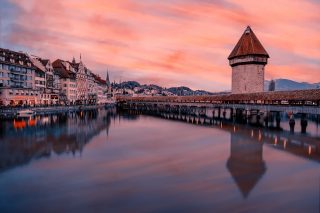
- Chapel Bridge and Water Tower - Lucerne's iconic covered wooden bridge and medieval tower, just a short walk along the Reuss from the Rathaus.
- Jesuitenkirche (Jesuit Church) - A richly decorated Baroque church on the riverfront, easily reached via the river promenade.
- Old Town Lucerne - A maze of cobbled lanes, frescoed façades and small squares spreading out directly behind the town hall.
- Museum Rosengart Collection - A nearby art museum in the former Swiss National Bank building, showcasing works by Klee, Picasso, Cézanne and other modern masters.
- Lake Lucerne promenade - Scenic lakeside paths a few minutes' walk away, perfect for extending your stroll after time at the Rathaus and market.
The Lucerne Town Hall appears in our Complete Guide to Visiting Lucerne!

Moira & Andy
Hey! We're Moira & Andy. From hiking the Camino to trips around Europe in Bert our campervan — we've been traveling together since retirement in 2020!
This website uses affiliate links which may earn a commission at no additional cost to you!
Planning Your Visit
The building functions as a working town hall; interior spaces such as the Kornschütte and council chambers are generally accessible only during exhibitions, concerts, events or guided tours.
There is no fee to enjoy the exterior or weekly market; access to interior rooms may be by guided tour or special event, sometimes with a modest charge.
Nearby Attractions
- Kornmarkt (0.0) km
Square - Hirschenplatz (0.1) km
Square - Weinmarkt (0.1) km
Square - Chapel Bridge and Water Tower (0.1) km
Bridge - Jesuitenkirche (0.1) km
Church - Fritschi Fountain (0.1) km
Fountain - Peter's Chapel (0.2) km
Church - Ritterscher Palace (0.2) km
Palace - Museum Rosengart Collection (0.3) km
Arts Venue - Museggmauer (Musegg Wall) (0.3) km
City Gate and City Walls