Puente Serrador, Santa Cruz de Tenerife
Attraction, Bridge and Historic Site in Santa Cruz de Tenerife
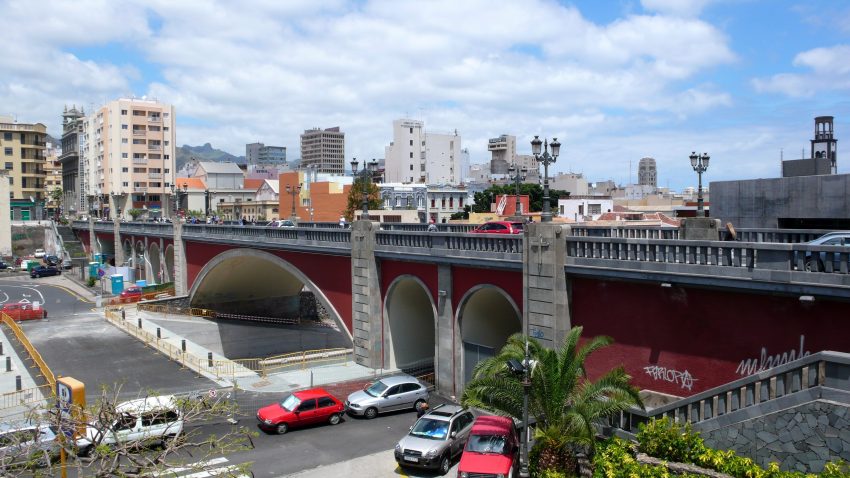
Puente Serrador (often referred to locally as Puente General Serrador) is a mid-20th-century bridge crossing the Barranco de Santos in Santa Cruz de Tenerife, linking key streets near the historic center with the area around Mercado de Nuestra Señora de África. It's a practical piece of city infrastructure, but also a surprisingly photogenic landmark thanks to its arch, vantage points over the ravine, and the distinctive lion statues at its entrances.
Most travelers experience Puente Serrador as a quick, worthwhile stop on a self-guided walking tour between the market district, the ravine viewpoints, and central Santa Cruz. For the best views, look from the sidewalks on the bridge itself, then head down toward the barranco paths to see the structure from below.
Table of Contents
- History and Significance of the Puente Serrador
- Things to See and Do in the Puente Serrador
- How to Get to the Puente Serrador
- Practical Tips on Visiting the Puente Serrador
- Where to Stay Close to the Puente Serrador
- Is the Puente Serrador Worth Visiting?
- For Different Travelers
- FAQs for Visiting Puente Serrador
- Nearby Attractions to the Puente Serrador
History and Significance of the Puente Serrador
Puente Serrador was built in the early 1940s as Santa Cruz expanded and needed stronger connections across the Barranco de Santos, a natural divide that shapes the city's layout. The bridge is associated with Captain General Ricardo Serrador Santés, after whom it was named, reflecting the civic and political context of the era.
Architecturally, it’s a solid example of functional urban engineering from the period: an arch span designed to carry road traffic while also accommodating pedestrians. Over time, the bridge has been maintained and updated, keeping it in everyday use rather than becoming a purely “monumental” site.
What makes it memorable for visitors is the way it frames the barranco landscape in the middle of the city. In a destination known for coastline and volcanic scenery, the bridge offers a different kind of Tenerife: urban, layered, and shaped by terrain.
Things to See and Do in the Puente Serrador
Start with the details: the lion statues at the entrances are the bridge’s signature feature and a great anchor point for photos. From the sidewalks, pause to look down into the Barranco de Santos—depending on light and season, the ravine can feel stark and dramatic, especially when contrasted with the city’s busy streets above.
Next, try seeing the bridge from multiple angles. Walk across it, then loop down toward the ravine level (where accessible) to appreciate the scale of the arch and the way the bridge sits within the barranco’s walls. This is also where you’ll often spot street art and changing urban textures.
Finally, pair the stop with nearby sights: the market area is ideal for a snack break, and the bridge works well as a connective “moment” in an itinerary that includes central plazas, shopping streets, and waterfront landmarks.
How to Get to the Puente Serrador
The nearest airport is Tenerife North Airport (TFN); Tenerife South Airport (TFS) is also an option if you’re staying elsewhere on the island and coming into Santa Cruz for the day. For the best deals and a seamless booking experience, check out these flights to Santa Cruz de Tenerife on Booking.com.
Tenerife doesn’t have mainland-style intercity trains; instead, you’ll typically arrive in Santa Cruz by bus (guagua) or by tram (Tranvía de Tenerife) from La Laguna and other nearby areas. Train schedules and bookings can be found on Omio.
If you’re driving, aim for central Santa Cruz parking garages and finish on foot, since streets around the barranco and market can be busy and one-way. If you are looking to rent a car in Spain I recommend having a look at Discover Cars, first, as they compare prices and review multiple car rental agencies for you.
Practical Tips on Visiting the Puente Serrador
- Entrance fee: Free.
- Opening hours: 24 Hours.
- Best time to visit: Go in the morning for softer light and fewer cars, or near sunset when the ravine shadows add drama to photos.
- How long to spend: 10–25 minutes is enough for a cross, a few viewpoints, and photos; add time if you’re also walking down toward the barranco paths.
- Accessibility: Sidewalks on the bridge are straightforward, but routes down to ravine level may involve stairs and uneven surfaces.
- Facilities: There are no dedicated visitor facilities on the bridge; plan for cafés, restrooms, and services around the market and central streets nearby.
Where to Stay Close to the Puente Serrador
Base yourself in central Santa Cruz de Tenerife so you can walk to the bridge, the market, and the city's main sights without relying on taxis.
If you want a classic, comfortable city stay with easy access to dining and shopping, choose a central hotel near Plaza de España or the main commercial streets. For design-forward travelers, Santa Cruz also has modern, well-located options that make it easy to explore on foot and return for a quick break.
Iberostar Heritage Grand Mencey Chosen for its landmark status, polished service, and a more resort-like feel while still being in the city.
Hotel Taburiente A reliable mid-range base with a convenient location for walking between parks, central streets, and the barranco area.
AC Hotel Tenerife Included for its modern style and strong location near the waterfront and central sights, ideal for a short city break.
Silken Atlántida Santa Cruz Good for travelers who want larger rooms and quick access to transport corridors while staying close to the center.
Hotel Adonis Plaza A practical pick for being right in the middle of the action, especially if you want to maximize walking time and minimize transit.
Is the Puente Serrador Worth Visiting?
Yes—Puente Serrador is worth a stop if you enjoy urban viewpoints, local texture, and small landmarks that help you understand how a city fits its landscape. It won't take long, it's easy to combine with the market and central Santa Cruz, and it adds a satisfying “connector” moment to a walking itinerary.
Honest Pivot: If you’re short on time and only want headline attractions (beaches, Teide viewpoints, or major museums), you can skip it without regret. The bridge is best for travelers who like noticing the in-between places that make a city feel real.
For Different Travelers
Puente Serrador is a flexible stop: it can be a quick photo moment, a short scenic pause on the way to lunch, or a mini detour for architecture and cityscape fans. How much you'll enjoy it depends on whether you like urban exploration and walking-based itineraries.
Families with Kids
For families, the bridge works best as a brief “lookout” stop rather than a long visit. Kids often enjoy spotting the lion statues and peering down into the ravine.
Keep a close handhold near traffic and railings, and consider pairing the stop with a treat at the market area so it feels like part of a bigger adventure.
Couples & Romantic Getaways
Couples will appreciate Puente Serrador as a low-key, local-feeling place to wander between more polished city sights. The contrast of the ravine and the city skyline can be especially atmospheric in late afternoon light.
Make it part of a slow stroll that includes a market snack, a café stop, and a walk toward the waterfront—simple, unforced, and very Santa Cruz.
Budget Travelers
This is an easy win for budget travelers: it's free, central, and fits naturally into a DIY walking route. It's also a good “filler” stop between bigger attractions without spending anything.
If you’re traveling with just a daypack, it’s a convenient place to pause, take photos, and orient yourself before continuing toward the market or the main shopping streets.
History Buffs
History-minded visitors can use the bridge as a prompt to explore Santa Cruz’s 20th-century civic development and how the barranco shaped neighborhoods. The naming and symbolism around the bridge also reflect the political context of its era.
To deepen the experience, connect it with nearby historic streets and public buildings, and pay attention to how infrastructure projects influenced the city’s growth patterns.
FAQs for Visiting Puente Serrador
Getting There
Tickets & Entry
Visiting Experience
Tours, Context & Itineraries
Photography
Accessibility & Facilities
Food & Breaks Nearby
Safety & Timing
Nearby Attractions to the Puente Serrador
- Mercado de Nuestra Señora de África (La Recova): A lively municipal market that's ideal for local produce, snacks, and a quick cultural immersion.
- Barranco de Santos: The ravine itself offers a dramatic urban landscape and occasional walking paths and viewpoints.
- Plaza de España: The city's main square, great for a central stroll and easy orientation.
- Auditorio de Tenerife: A landmark modern building by the waterfront that's one of Santa Cruz's most iconic sights.
- Parque García Sanabria: A leafy city park perfect for a relaxed walk, sculptures, and a break from the streets.
The Puente Serrador appears in our Complete Guide to Visiting Santa Cruz de Tenerife!

Moira & Andy
Hey! We're Moira & Andy. From hiking the Camino to trips around Europe in Bert our campervan — we've been traveling together since retirement in 2020!
This website uses affiliate links which may earn a commission at no additional cost to you!
Planning Your Visit
24 Hours.
Free.
Nearby Attractions
- Centro de Arte la Recova (0.0) km
Arts Venue, Gallery and Museum - Teatro Guimerá (0.1) km
Arts Venue, Historic Building and Theatre - TEA Tenerife Espacio de las Artes (0.2) km
Arts Venue, Gallery and Museum - Calle del Castillo (0.2) km
Shop, Street and Walk - Mercado Nuestra Señora de Africa (0.2) km
Market - Museum of Nature and Archaeology (0.3) km
Attraction and Museum - Iglesia Matriz de Nuestra Señora de la Concepción (0.3) km
Church, Historic Building and Religious Building - Oficina de Turismo del Palacio de Carta (0.3) km
Historic Building, Tourist Office and Visitor Centre - Plaza del Príncipe de Asturias (0.3) km
Attraction, Park and Square - Museo de Bellas Artes (0.4) km
Arts Venue, Gallery and Museum