Propylaeum and Roman Basilica, Trieste
Cathedral, Church and Roman Site in Trieste
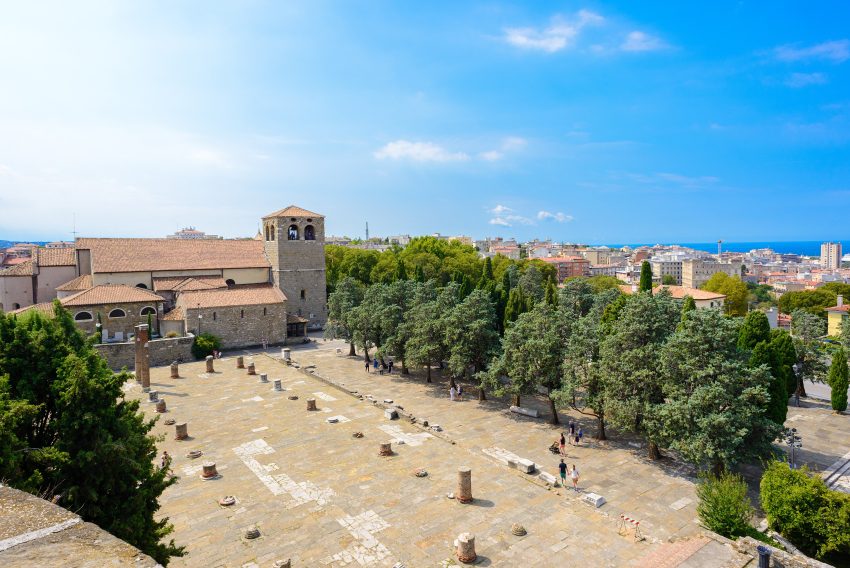
Perched on San Giusto Hill, the Propylaeum and Roman Basilica are some of Trieste's most intriguing ancient remains: fragments of monumental Roman architecture sitting right beside (and partly within) the city's cathedral complex. Even if you're not usually a “ruins person,” the setting is hard to beat—stone, history, and panoramic views over Trieste and the Gulf.
Most travelers see the Propylaeum and Roman Basilica as part of a broader stroll: pair it with the Cathedral of San Giusto, the castle next door, and a walking tour that climbs from the waterfront through the old town. It's one of the best places in Trieste to understand how the city's Roman roots still shape the skyline today.
Table of Contents
- History and Significance of the Propylaeum and Roman Basilica
- Things to See and Do in the Propylaeum and Roman Basilica
- How to Get to the Propylaeum and Roman Basilica
- Practical Tips on Visiting the Propylaeum and Roman Basilica
- Where to Stay Close to the Propylaeum and Roman Basilica
- Is the Propylaeum and Roman Basilica Worth Visiting?
- For Different Travelers
- FAQs for Visiting Propylaeum and Roman Basilica
- Nearby Attractions to the Propylaeum and Roman Basilica
History and Significance of the Propylaeum and Roman Basilica
The Propylaeum was a monumental Roman entrance structure, built to frame and elevate the approach to an important sacred or civic area on the hilltop. In Trieste’s Roman era (Tergeste), San Giusto Hill was the city’s power center, and the surviving architectural elements hint at just how grand the complex once was.
Nearby, the remains of the Roman Basilica refer to a civil basilica—an administrative and public building used for legal and commercial life rather than worship. Seeing a “basilica” in this Roman sense can be a fun mental reset for visitors who associate the word only with churches.
What makes this site especially compelling is the layering: Roman structures, later medieval building phases, and the cathedral precinct all share the same footprint. It’s a compact lesson in Trieste’s long timeline, visible in stone.
Things to See and Do in the Propylaeum and Roman Basilica
Start by orienting yourself in the cathedral square on San Giusto Hill, then look for the Roman fragments integrated into the broader complex. The Propylaeum's surviving elements are a reminder that Roman Trieste built in big, ceremonial gestures—stairs, columns, and processional approaches.
Next, spend time with the Roman Basilica remains and imagine the building as a civic hall rather than a religious space. If you enjoy archaeology, this is a great spot to slow down and notice details like reused stonework and how later construction adapted earlier foundations.
Finally, treat the visit as a “two-for-one”: step into the Cathedral of San Giusto for its famous mosaics and calm interior, then return outside for photos and views. Many travelers find this hilltop cluster to be one of the most rewarding stops on a self-guided walking tour of Trieste.
How to Get to the Propylaeum and Roman Basilica
The nearest airports are Trieste – Friuli Venezia Giulia Airport (TRS) and Ljubljana Jože Pučnik Airport (LJU), with Venice Marco Polo (VCE) also a common option for international arrivals. For the best deals and a seamless booking experience, check out these flights to Trieste on Booking.com.
Trieste is well-connected by rail, and arriving at Trieste Centrale makes it easy to continue by bus, taxi, or a walk through the city center toward San Giusto Hill. Use Omnio to easily compare schedules, book train tickets, and find the best prices all in one place for a hassle-free journey across Italy.
If you’re driving, aim for central parking and then continue on foot or by local transport up to the cathedral area to avoid narrow hill streets. If you are looking to rent a car in Italy I recommend having a look at Discover Cars, first, as they compare prices and review multiple car rental agencies for you.
Practical Tips on Visiting the Propylaeum and Roman Basilica
- Official website: http://www.sangiustomartire.it/
- Entrance fee: Free; donations appreciated.
- Opening hours: (Summer) 08:00–13:00 & 15:30–19:30. (Winter) 08:00–12:00 & 14:30–18:30.
- Best time to visit: Go in the morning for softer light and a quieter cathedral square, then linger for views before midday crowds.
- How long to spend: Plan 30–60 minutes for the ruins area, or 1.5–2 hours if you’re combining it with the cathedral and nearby castle.
- Accessibility: The hill is steep, but there are options that reduce climbing; once at the top, surfaces can be uneven around the ruins.
- Facilities: Facilities are limited right at the ruins, so plan a café stop in the city center before or after your visit.
Where to Stay Close to the Propylaeum and Roman Basilica
Base yourself in central Trieste near Piazza Unità d'Italia for the easiest mix of walkability, dining, and quick access up to San Giusto Hill.
Savoia Excelsior Palace Trieste Chosen for its waterfront location and classic grand-hotel feel—ideal if you want a memorable stay with easy walks into the old town.
DoubleTree by Hilton Trieste A strong all-rounder with reliable comfort and a central position that makes it simple to reach both the hilltop sights and the train station area.
Urban Hotel Design A stylish boutique pick for travelers who want modern design and a location that’s convenient for evening dining and morning sightseeing.
Hotel Continentale Included for its long-standing reputation and prime placement for exploring on foot, especially if you like being near shops and cafés.
NH Trieste A practical choice close to Trieste Centrale—great if you're arriving by train or planning day trips while still staying near the historic core.
Is the Propylaeum and Roman Basilica Worth Visiting?
Yes—especially if you enjoy places where multiple eras overlap in a single glance. The ruins are not a huge standalone “archaeological park,” but as part of the San Giusto Hill cluster (cathedral, square, views, and nearby fortifications), they add real depth to a Trieste itinerary.
Honest Pivot: If you’re short on time and not interested in Roman history, you might prefer to focus on Trieste’s waterfront, cafés, and Miramare-style scenery instead. The hill climb (even with easier options) can feel like extra effort if ruins aren’t your thing.
What Other Travellers Say...

Travelers rate the experience very highly, praising the hilltop setting, the strong sense of history, and the impressive interior details of the adjacent cathedral—especially the mosaics and overall atmosphere. Many mention that it’s worth the climb for the panoramic views and that the area pairs well with nearby sights like the castle. A few visitors note practical downsides such as the steep approach (though there are easier access options) and that opening times can feel inconsistent around services or special events.


For Different Travelers
Trieste's San Giusto Hill works well because it's flexible: you can keep it quick for a scenic stop or go deeper if you like history. The Propylaeum and Roman Basilica are best approached as a meaningful add-on rather than a long, ticketed attraction.
Families with Kids
Kids often enjoy the “treasure hunt” feel of spotting Roman stones and imagining what used to stand there. Pair the ruins with a short, snack-fueled walk and a viewpoint stop so the visit doesn’t become a lecture.
If your family likes castles, combining the hilltop sights into one loop keeps momentum high. The open-air setting also makes it easier to take breaks compared with a long museum visit.
Couples & Romantic Getaways
For couples, this is a great slow-travel stop: climb up together, take in the views, then duck into the cathedral for a quiet, atmospheric contrast. The mix of ancient stone and sea panoramas makes for memorable photos without needing a big time commitment.
Plan it around golden hour if you can, then head back down for aperitivo in the center. It's a classic Trieste rhythm: history up high, café culture down below.
Budget Travelers
This is a strong budget-friendly stop because you can get a lot of “wow” from the setting and the surrounding hilltop area without building your day around paid admissions. It also fits neatly into a self-guided walking tour from the center.
Bring water and comfortable shoes, and treat the hill as your “free viewpoint + history” combo. If you’re watching spending, prioritize experiences like this over pricey add-ons.
History Buffs
History lovers will appreciate how the Roman Propylaeum and civil basilica remains connect directly to the later medieval cathedral precinct. It’s a compact case study in continuity: sacred space, civic space, and later Christian architecture sharing the same strategic hilltop.
To deepen the visit, look for interpretive clues in the surrounding complex and consider pairing this stop with other Roman traces around Trieste. The site rewards travelers who enjoy reading the city as a layered artifact.
FAQs for Visiting Propylaeum and Roman Basilica
Getting There
Tickets & Entry
Visiting Experience
Tours, Context & Itineraries
Photography
Accessibility & Facilities
Food & Breaks Nearby
Safety & Timing
Nearby Attractions to the Propylaeum and Roman Basilica
- Cathedral of San Giusto: Trieste’s hilltop cathedral with striking mosaics and a serene interior.
- Castello di San Giusto: A fortress complex next door with exhibits and sweeping viewpoints over the city.
- Piazza Unità d’Italia: The city’s grand main square opening directly onto the sea.
- Teatro Romano di Trieste: Compact Roman theater ruins set right in the modern city fabric.
- Canal Grande di Trieste: A photogenic canal lined with cafés and classic Trieste architecture.
The Propylaeum and Roman Basilica appears in our Complete Guide to Visiting Trieste!

Moira & Andy
Hey! We're Moira & Andy. From hiking the Camino to trips around Europe in Bert our campervan — we've been traveling together since retirement in 2020!
This website uses affiliate links which may earn a commission at no additional cost to you!
Planning Your Visit
(Summer) 08:00-13:00 & 15:30-19:30.
(Winter) 08:00-12:00 & 14:30-18:30.
Free; donations appreciated.
Nearby Attractions
- Castello di San Giusto (0.0) km
Castle, Museum and Viewing Point - Lapidario Tergestino (0.0) km
Attraction, Museum and Roman Site - Cattedrale di San Giusto (0.1) km
Cathedral, Church and Religious Building - Civic Museum of Antiquities "J.J. Winkelman" (0.1) km
Gardens, Historic Site and Museum - Antiquarium di via del Seminario (0.2) km
Attraction, Historic Site and Roman Site - Teatro Romano di Trieste (0.3) km
Roman Site, Ruins and Theatre - Arco di Riccardo (0.3) km
City Gate, Monument and Roman Site - Palazzo del Municipio (0.4) km
Historic Building, Square and Town Hall - Civico Museo d'Arte Orientale (0.5) km
Attraction and Museum - Fontana dei Quattro Continenti (0.5) km
Fountain, Sculpture and Square