Prato della Valle, Padova
Square in Padova
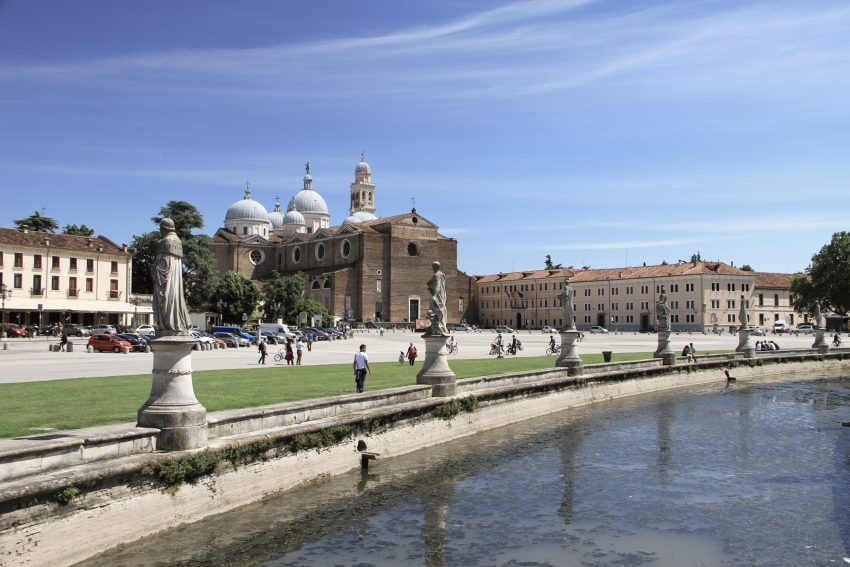
Prato della Valle is the vast, elliptical heart of Padua, a 90,000-square-metre piazza wrapped around a green island called Isola Memmia and circled by a canal and twin rings of statues. Once a swampy field just outside the medieval walls, it is now a grand civic stage where locals stroll, students sunbathe on the grass and markets fill the space with colour and chatter. With the domes of the Abbey of Santa Giustina on one side and elegant palazzi all around, it feels both monumental and welcoming, one of the best places to visit in Padua for people-watching and soaking up local life.
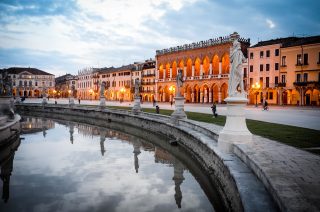
Walk the perimeter and you pass 78 statues of scholars, nobles and cultural figures, all reflected in the encircling water, while the avenues of trees and lawns invite you to find a quiet bench and simply sit. Markets selling fresh produce, clothes and antiques draw crowds through the week and especially on Saturdays, when stalls almost blanket the square. On sunny evenings, the space becomes Padua's outdoor living room, a highlight of any walking tour of Padua and a place where the city's past and present mingle in a very easy, very Italian way.
Table of Contents
- History and Significance of Prato della Valle
- Things to See and Do in Prato della Valle
- How to Get to Prato della Valle
- Practical Tips on Visiting Prato della Valle
- Where to Stay close to Prato della Valle
- Is Prato della Valle Worth Visiting
- FAQs for Visiting Prato della Valle
- Nearby Attractions to Prato della Valle
History and Significance of Prato della Valle
Before it became Padua's showpiece piazza, Prato della Valle was a low, marshy area south of the old city walls, known more for mud than for monuments. In 1636 a group of Venetian and Veneto nobles financed a lavish temporary theatre here for mock battles on horseback, complete with musical performances that are considered precursors to Venice's first public opera shows. This early experiment hinted at the site's potential as a place for spectacle, but it would remain largely neglected for more than a century.
In 1767 the land, previously owned by the monks of Santa Giustina, passed to the city of Padua. A few years later, Venetian patrician Andrea Memmo launched an ambitious reclamation and redesign project, working with architect Domenico Cerato. They transformed the malarial swamp into an elegant urban landscape: an elliptical island in the centre, ringed by a canal, crossed by four bridges and framed by statues of illustrious figures. Copper engravings by Francesco Piranesi helped Memmo attract sponsors for the statues, turning the square into both a civic and commemorative project.
Excavations for the new drainage and canal system uncovered remains of a Roman theatre, adding archaeological weight to the redevelopment and reinforcing Prato della Valle's role as a bridge between ancient and modern Padua. Around the piazza rose notable buildings, including Palazzo Angeli (now home to the Museum of Precinema) and the Benedictine Abbey of Santa Giustina, while the neoclassical Loggia Amulea completed one side of the composition. Today, after 20th-century restoration, Prato della Valle functions exactly as Memmo intended: a monumental public space for markets, festivals and everyday life, and one of the city's defining landmarks.
Things to See and Do in Prato della Valle
The best way to experience Prato della Valle is simply to walk it. Start on the outer ring and follow the arc of palazzi that line the square, each with its own mix of Gothic, Renaissance and later façades. From here you can appreciate the sheer scale of the piazza and how the central island, canal and statues are framed by the surrounding city. The view towards the domes and towers of Santa Giustina is particularly striking, especially in late afternoon light.
Cross one of the bridges onto Isola Memmia and stroll under the trees that criss-cross the grassy interior. The central fountain and radial paths create a calm, park-like feel, while the statues around the canal edge provide endless details to discover. Each figure represents a notable person linked to Padua or the wider Veneto, from scholars and doctors to nobles and military leaders, effectively turning the square into an open-air gallery of local history. Kids can run around safely on the island while adults enjoy the space as a green refuge in the middle of the city.
If you visit on a Saturday, you will see the square at its liveliest, with hundreds of market stalls selling everything from fresh fruit and vegetables to clothes, plants and household goods. On certain Sundays, an antiques or second-hand market takes over, filling the piazza with vintage treasures, collectibles and curios. Markets are part of Prato della Valle’s identity, continuing a tradition of fairs and gatherings that goes back centuries and giving visitors a real taste of everyday Paduan life.
Beyond the square itself, take time to step inside the nearby Abbey of Santa Giustina, a vast basilica with important artworks and relics, or explore Palazzo Angeli and the Museum of Precinema if it is open during your visit. Together with cafés and gelaterie around the perimeter, these sites make Prato della Valle an easy place to linger for several hours, drifting between sightseeing, people-watching and simple relaxation.
How to Get to Prato della Valle
Padua is well connected by rail and road and makes an easy day trip from Venice, Verona or Bologna. The nearest major airport is Venice Marco Polo, with extensive European and some intercontinental flights, while Treviso Airport also serves low-cost carriers heading for Venice and the Veneto region. From either airport you can take a shuttle or train into Venice or Mestre, then continue by train or bus to Padua. For the best deals and a seamless booking experience, check out these flights to Padova on Booking.com.
Once in Padua, Prato della Valle is about a 20-25 minute walk from Padova railway station, passing through the historic centre, or a short ride on the city tram or local buses that serve stops near the square. Trains to Padua run frequently from Venice, Mestre, Verona, Vicenza and Bologna, making it straightforward to visit the square as part of a wider northern Italy itinerary. Use Omnio to easily compare schedules, book train tickets, and find the best prices all in one place for a hassle-free journey across Italy.
If you are driving, Padua sits just off the A4 and A13 motorways, with clear signposting into the city and towards key landmarks. Several car parks lie within walking distance of Prato della Valle, and from there it is an easy stroll along broad avenues and past the city walls to reach the square. Once parked, you will not need your car again to explore the centre on foot. If you are looking to rent a car in Italy I recommend having a look at Discover Cars, first, as they compare prices and review multiple car rental agencies for you.
Practical Tips on Visiting Prato della Valle
- Suggested tips: Combine your visit with nearby sights such as the Basilica of Saint Anthony and Santa Giustina, and plan to sit for a while on Isola Memmia to enjoy the local atmosphere rather than just passing through.
- Best time to visit: Saturday mornings are ideal if you want to experience the full weekly market; for quieter walks and softer light, choose early morning or late afternoon on weekdays.
- Entrance fee: Free public square with no entrance fee.
- Opening hours: Open at all hours; markets usually run from around 7:30 to early afternoon on weekdays and into the early evening on Saturdays.
- How long to spend: Allow at least 1-2 hours to walk the square, wander the island, browse a few stalls and perhaps visit Santa Giustina; linger longer if you plan to picnic or sit in a café.
- Accessibility: The piazza is mostly flat and paved, with ramps at many crossings and bridges; it is generally accessible for wheelchairs and strollers, though some paths on the island can be slightly uneven.
- Facilities: Public benches, nearby cafés, bars and gelato shops ring the square; toilets are available in surrounding establishments and occasionally in temporary facilities during major events.
- Photography tip: For classic shots, stand at one end of the square to capture the full ellipse with canal, statues and Santa Giustina beyond; sunset and blue hour bring especially dramatic reflections and sky colours.
- Guided tours: Consider joining a walking tour of Padua that includes Prato della Valle, as guides often add context about the statues, palazzi and the square's role in local life.
- Nearby food options: The streets around the square offer plenty of places for coffee, aperitivo or a full meal; you can also pick up picnic supplies at the markets and eat on the grass of Isola Memmia on a fine day.
Where to Stay close to Prato della Valle
Staying near Prato della Valle lets you enjoy the square early in the morning and in the evening, when the light is beautiful and the atmosphere turns relaxed and local. Look for accommodation in the southern part of Padua's historic centre or around Santa Giustina to be within an easy walk. A comfortable, central option is Hotel Al Prato, which sits right by the square and is perfect if you want to step outside and be immediately in the heart of the action on market days. For a slightly more tucked-away feel but still close to the piazza, Hotel M14 offers a contemporary style within walking distance of Prato della Valle, the Basilica of Saint Anthony and the old town. If you prefer something with classic Italian character, Hotel Giotto places you near the Basilica and just a short stroll from the square, making it easy to combine sightseeing with quiet evening walks around the neighbourhood.
Is Prato della Valle Worth Visiting
Prato della Valle is absolutely worth visiting, whether you are staying in Padua or visiting on a day trip. Its sheer size, unique design and combination of greenery, water and statuary make it unlike any other square in Italy, and it offers a memorable contrast to the tighter, stone-paved piazze in the historic centre. You are not just looking at a monument, but stepping into a living space where markets, festivals, student life and quiet afternoon strolls all coexist.
For many travellers, it quickly becomes their favourite place in the city: somewhere to return to at different times of day, watching the light change on the statues and domes and seeing how Paduans use the space in their everyday routines. Whether you love urban photography, people-watching, history or simply relaxing outdoors, Prato della Valle earns its reputation as one of the must-see places in Padua.
What Other Travellers Say...

Prato della Valle in Padova is an enormous elliptical piazza centered on an island surrounded by a canal and a ring of dozens of statues, offering a mix of water, bridges, trees and open space that feels both monumental and peaceful; visitors recommend strolling the perimeter like an open‑air museum, enjoying markets and events on busy days, and taking in views of nearby churches and palaces, while noting it can be very sunny in summer so early morning or evening visits are more comfortable.


FAQs for Visiting Prato della Valle
Nearby Attractions to Prato della Valle
- Basilica of Santa Giustina: A vast Benedictine abbey at one end of the square, housing important artworks, relics and an impressive library.
- Basilica of Saint Anthony of Padua: One of Italy's major pilgrimage churches, with richly decorated chapels and cloisters, a short walk from Prato della Valle.
- Orto Botanico di Padova: The world's oldest university botanical garden still in its original location, offering tranquil paths and themed plant collections.
- Palazzo Angeli and Museum of Precinema: A 15th-century palazzo on the square housing a niche museum dedicated to early visual entertainment and pre-cinematic devices.
- Historic city centre of Padua: The nearby network of piazzas (Piazza delle Erbe, Piazza dei Frutti, Piazza dei Signori), arcades and medieval streets, perfect for shopping, aperitivo and further exploring Padua's heritage.
The Prato della Valle appears in our Complete Guide to Visiting Padova!

Moira & Andy
Hey! We're Moira & Andy. From hiking the Camino to trips around Europe in Bert our campervan — we've been traveling together since retirement in 2020!
This website uses affiliate links which may earn a commission at no additional cost to you!
Planning Your Visit
Open at all hours; markets usually run from around 7:30 to early afternoon on weekdays and into the early evening on Saturdays.
Free public square with no entrance fee.
Nearby Attractions
- Orto Botanico (0.3) km
Gardens - Piazza del Santo (0.4) km
Square - Basilica di Sant'Antonio (0.5) km
Basilica - La Specola (0.8) km
Historic Building and Museum - MUSME - Museum of the History of Medicine (0.8) km
Museum - Palazzo Bo (1.0) km
Historic Building and Palace - Duomo di Padova (1.0) km
Cathedral - Palazzo della Ragione (1.0) km
Historic Building and Market - Cafe Pedrocchi (1.0) km
Historic Building - Piazza dei Signori (1.1) km
Square