Porte Saint-Pierre, Nantes
City Gate in Nantes
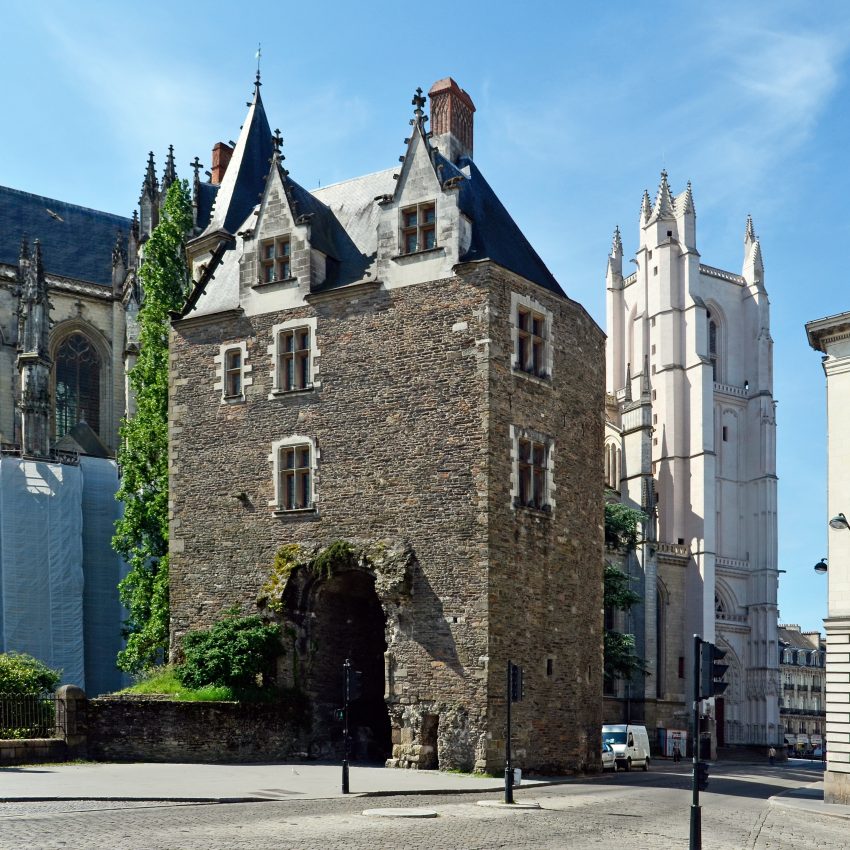
Tucked on the eastern edge of the Bouffay district, Porte Saint-Pierre is one of the must-see places in Nantes for anyone intrigued by medieval city walls and old trade routes. Dating back to the 15th century, this solid stone gate once formed part of the fortifications that encircled the historic centre, guarding an important entrance from the direction of the Loire and the surrounding countryside. Today, it stands quietly between modern buildings and busy pedestrian streets, a compact but powerful reminder that Nantes was once a walled stronghold.
Walking through the arched passageway, you literally step from one era to another: on one side lies the atmospheric Bouffay quarter, with its narrow lanes and lively bars, and on the other, broader streets leading toward the cathedral, the Château des Ducs de Bretagne, and newer parts of the city. Porte Saint-Pierre is often visited on walking tours of Nantes as a moment to pause and imagine travellers, merchants, and even royal processions passing under the same arch centuries ago.
Table of Contents
- History and Significance of the Porte Saint-Pierre
- Things to See and Do at the Porte Saint-Pierre
- How to Get to the Porte Saint-Pierre
- Practical Tips on Visiting the Porte Saint-Pierre
- Where to Stay close to the Porte Saint-Pierre
- Is the Porte Saint-Pierre Worth Visiting?
- FAQs for Visiting Porte Saint-Pierre
- Nearby Attractions to the Porte Saint-Pierre
History and Significance of the Porte Saint-Pierre
Porte Saint-Pierre dates from the 15th century, a time when fortified walls were essential to protecting Nantes from military threats, controlling taxation, and regulating movement in and out of the city. As one of the main eastern gateways, it allowed access from routes following the Loire River and from nearby rural areas that supplied the town with food and goods. The gate took its name from the Saint-Pierre Cathedral standing nearby, underlining how closely intertwined civic and religious life were in medieval Nantes.
Originally, the gate formed part of a much larger defensive system: curtain walls, towers, and additional gates that completely encircled the old town. Over the centuries, especially from the 18th and 19th centuries onward, most of these fortifications were demolished to make way for urban expansion and modernised traffic routes. Against that backdrop, the survival of Porte Saint-Pierre feels particularly significant, as it offers one of the last tangible, walkable fragments of the medieval walls.
Today, the gate is valued as both architectural heritage and an urban storytelling device. Interpretive signage in the area explains its role within the historic defences and helps visitors visualise a time when entry into the city was tightly controlled. As Nantes has transformed into a dynamic, creative city with trams, public art, and waterfront promenades, Porte Saint-Pierre anchors that modern identity in centuries of history.
Things to See and Do at the Porte Saint-Pierre
The main experience at Porte Saint-Pierre is simple but evocative: stand back, look at the stonework, and then walk slowly through the arch. Notice the thickness of the walls, the curve of the passage, and how the opening frames your view of the street ahead. These details reflect late medieval military architecture, when gates needed to be both practical and defensible, allowing guards to monitor all who passed through.
On one side of the gate, you step into the Bouffay quarter, with its cobbled lanes, half-timbered façades, and buzzing café terraces. On the other side, the streets open out toward the cathedral, the castle, and more modern stretches of the city. This transition makes Porte Saint-Pierre an excellent orientation point: it helps you understand how the old core relates to newer neighbourhoods, while also giving you a sense of how compact and walkable central Nantes really is.
Take a moment to read any interpretive panels nearby, which typically explain the history of the walls and how the gate fitted into the broader defensive line. If you enjoy photography, try capturing people moving through the arch to emphasise its role as a living gateway rather than a frozen relic. Combining a stop here with visits to the cathedral and Château des Ducs de Bretagne creates a coherent historical route through the heart of Nantes.
How to Get to the Porte Saint-Pierre
Porte Saint-Pierre is located on the eastern side of the Bouffay district, close to Nantes Cathedral and within a short walk of the Château des Ducs de Bretagne, making it easy to include on any central walking route. Nantes Atlantique Airport lies just southwest of the city, with shuttle buses and other public transport options connecting the terminal to the city centre in about 20-30 minutes. For the best deals and a seamless booking experience, check out these flights to Nantes on Booking.com.
If you are arriving by train, Nantes station is one of the main rail hubs in western France, served by TGV and regional lines. From the station, it is around a 10-15 minute walk to the cathedral area, from where you can easily find Porte Saint-Pierre by following signs into the Bouffay quarter or using a city map; trams and buses also run frequently between the station and the historic centre.You can use SNCF Connect to check schedules, compare routes, and purchase tickets for National (SNCF ) and regional trains (TER). For a more streamlined experience, we recommend using Omio, which allows you to easily compare prices, schedules, and book tickets for both National and Regional travel across all of Europe, all in one place.
For those travelling by car, follow signs for Nantes centre and use one of the nearby underground or multi-storey car parks, such as those around the château or along the Cours des 50 Otages; from there, it is only a few minutes on foot through the pedestrian streets to reach the gate.If you are looking to rent a car in France I recommend having a look at Discover Cars, first, as they compare prices and review multiple car rental agencies for you. Once parked or off the tram, exploring the area on foot is by far the best way to experience how Porte Saint-Pierre fits into the historic fabric of the city.
Practical Tips on Visiting the Porte Saint-Pierre
- Suggested tips: Incorporate Porte Saint-Pierre into a loop that also includes the cathedral, Château des Ducs de Bretagne, and the Bouffay quarter for a well-rounded snapshot of historic Nantes.
- Best time to visit: Daytime and early evening are ideal; come earlier in the morning for quieter photos, or later in the day to feel the lively atmosphere of nearby bars and restaurants.
- Entrance fee: Free; Porte Saint-Pierre is a public city gate that forms part of the streetscape.
- Opening hours: Accessible at all times as an open thoroughfare, though it is most enjoyable during daylight and early evening.
- How long to spend: Around 10-20 minutes is enough to appreciate the gate, read the signage, and take photos, though you may stay longer if you linger in the surrounding streets.
- Accessibility: Approaches to the gate are generally level and suitable for most visitors, though some cobblestones and slightly uneven paving may be present in the Bouffay area.
- Facilities: There are no dedicated facilities at the gate itself, but plenty of cafés, shops, and public services can be found within a short walk in the Bouffay district and around the cathedral.
- Photography tip: Frame the archway with people walking through to capture its continuing role as a gateway; try different angles from both sides to show the contrast between medieval and modern streetscapes.
- Guided tours: Many city walking-tours pass through or near Porte Saint-Pierre, using it to explain Nantes' former walls and how the city expanded beyond them.
- Nearby food options: The Bouffay quarter is full of crêperies, bistros, and bars, making it easy to follow your visit with a relaxed meal or drink just a few steps away.
Where to Stay close to the Porte Saint-Pierre
Staying near Porte Saint-Pierre puts you right at the junction of the Bouffay quarter, the cathedral, and the château, making it easy to explore Nantes on foot. A great central option is L'Hôtel - Face au Château, which offers comfortable rooms directly opposite the Château des Ducs de Bretagne and only a short stroll from the gate and cathedral. For a more contemporary feel, Hôtel La Pérouse Nantes pairs modern design with a prime location near tram lines and the historic core. If you prefer a quieter, residential vibe while staying close to the centre, Hôtel Chateaubriand provides a cosy, good-value base within walking distance of Porte Saint-Pierre and other major sights.
Is the Porte Saint-Pierre Worth Visiting?
Porte Saint-Pierre is definitely worth visiting, especially if you enjoy spotting the small but meaningful remnants that reveal a city's deeper history. Although it is modest in size compared to the château or cathedral, it offers a direct, physical connection to Nantes' medieval fortifications and the rhythms of life when the city was tightly walled. Standing under the arch and watching people flow through-just as travellers and merchants did centuries ago-brings the past into the present in a simple but powerful way, making this gate one of the things to do in Nantes for historically minded travellers.
What Other Travellers Say...
Reviews Summary
Porte Saint-Pierre is a city gate located in central Nantes at Porte Saint-Pierre, 44000 Nantes, France; visitors can expect an urban landmark in the heart of the city and a convenient point for exploring nearby streets and attractions.
FAQs for Visiting Porte Saint-Pierre
Nearby Attractions to the Porte Saint-Pierre
- Cathédrale Saint-Pierre-et-Saint-Paul de Nantes: The city's impressive Gothic cathedral, just a short walk away, with a soaring nave and historic ducal tomb.
- Château des Ducs de Bretagne: A former ducal fortress turned city history museum, offering rampart walks and immersive exhibits on Nantes' past.
- Quartier Bouffay: The atmospheric medieval quarter filled with narrow lanes, half-timbered houses, and lively restaurants and bars.
- Musée d'Arts de Nantes: A major art museum between the cathedral and Jardin des Plantes, showcasing works from the 13th to the 21st century.
- Jardin des Plantes: A beautiful botanical garden near the station, ideal for a peaceful stroll among themed plantings and playful installations.
The Porte Saint-Pierre appears in our Complete Guide to Visiting Nantes!

Moira & Andy
Hey! We're Moira & Andy. From hiking the Camino to trips around Europe in Bert our campervan — we've been traveling together since retirement in 2020!
This website uses affiliate links which may earn a commission at no additional cost to you!
Planning Your Visit
Accessible at all times as an open thoroughfare, though it is most enjoyable during daylight and early evening.
Free; Porte Saint-Pierre is a public city gate that forms part of the streetscape.
Nearby Attractions
- Cathédrale Saint-Pierre-et-Saint-Paul de Nantes (0.1) km
Cathedral - Musée d'Arts de Nantes (0.2) km
Museum - Château des Ducs de Bretagne (0.3) km
Castle - Nantes History Museum (0.4) km
Museum - Jungle Intérieure (0.4) km
Gardens - Eglise Sainte-Croix (0.5) km
Church - Jardin des Plantes (0.6) km
Gardens - Place Royale (0.8) km
Historic Building - Passage Pommeraye (0.9) km
Historic Building - Place Graslin (1.1) km
Square