Porte du Peyrou, Montpellier
Historic Building, Monument and Viewing Point in Montpellier
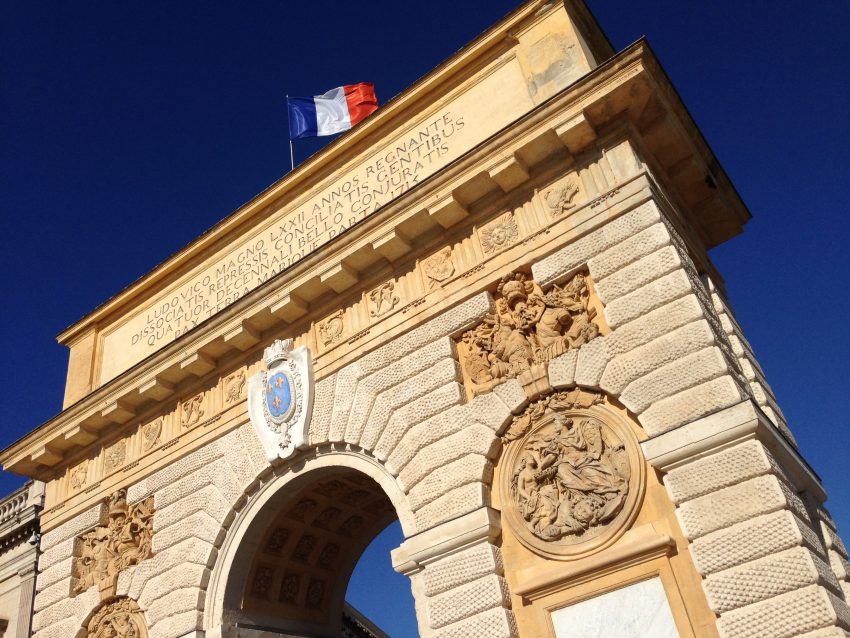
Porte du Peyrou, often called Montpellier's Arc de Triomphe, is a monumental stone gateway at the western edge of the historic center, marking the entrance to the Promenade du Peyrou. It's one of those landmarks you naturally pass on a walking tour of the Écusson (Old Town), especially if you're heading toward the Peyrou esplanade, the aqueduct, or the Jardin des Plantes.
Even if you don't climb it, the arch is worth a stop for its sculpted details and the way it frames Rue Foch and the grand approach to the Peyrou. For the best views and a more “inside the monument” experience, time your visit with a guided climb to the top when tours are running.
Table of Contents
- History and Significance of the Porte du Peyrou
- Things to See and Do in the Porte du Peyrou
- How to Get to the Porte du Peyrou
- Practical Tips on Visiting the Porte du Peyrou
- Where to Stay Close to the Porte du Peyrou
- Is the Porte du Peyrou Worth Visiting?
- For Different Travelers
- FAQs for Visiting Porte du Peyrou
- Nearby Attractions to the Porte du Peyrou
History and Significance of the Porte du Peyrou
Built in the late 17th century, Porte du Peyrou replaced an older medieval gate and was designed to celebrate royal power during the reign of Louis XIV. Its formal, classical style and carved medallions were meant to project prestige at a key entrance to the city.
Beyond symbolism, the arch also works as a literal threshold: on one side you have the tight streets of the historic center, and on the other you step into the open, airy Promenade du Peyrou. That contrast is part of what makes it such a satisfying stop on a walking route.
Today, it’s protected as a historic monument and remains one of Montpellier’s most recognizable icons, especially for travelers who want a quick, high-impact sight without committing to a full museum visit.
Things to See and Do in the Porte du Peyrou
Start by circling the arch to appreciate the stonework, inscriptions, and sculpted reliefs. The best “classic” angle is usually from Rue Foch looking toward the arch, then turning around to see how it opens onto the Peyrou esplanade.
If you can, book a guided ascent to the terrace. The climb is via stairs, but the payoff is a panoramic sweep over rooftops, the Peyrou, and on clear days the wider landscape beyond Montpellier.
Pair the arch with an easy mini-itinerary: walk through to the Promenade du Peyrou, continue to the Château d'Eau, and follow the line of the Aqueduc Saint-Clément. It's one of the most rewarding short walks in the city for photos and atmosphere.
How to Get to the Porte du Peyrou
The nearest airport is Montpellier–Méditerranée Airport (MPL), with Marseille Provence Airport (MRS) as a larger alternative for more flight options. For the best deals and a seamless booking experience, check out these flights to Montpellier on Booking.com.
Montpellier is well-connected by rail, and Montpellier Saint-Roch station is the most convenient arrival point for the city center. You can use SNCF Connect to check schedules, compare routes, and purchase tickets for National (SNCF ) and regional trains (TER). For a more streamlined experience, we recommend using Omio, which allows you to easily compare prices, schedules, and book tickets for both National and Regional travel across all of Europe, all in one place.
If you’re driving, aim for parking on the edge of the historic center and walk or take the tram in, since streets near the arch can be busy and access can be restricted. If you are looking to rent a car in France I recommend having a look at Discover Cars, first, as they compare prices and review multiple car rental agencies for you.
Practical Tips on Visiting the Porte du Peyrou
- Official website: https://www.montpellier-tourisme.fr/decouvrir/millenaire/les-incontournables/l-arc-de-triomphe/
- Entrance fee: Free (street-level). Terrace visits: from €6 (guided tour; dates/times vary).
- Opening hours: 24 Hours.
- Best time to visit: Go early morning for quieter photos on Rue Foch, or near sunset for warmer light on the stone and a more dramatic skyline.
- How long to spend: 10–20 minutes for photos and a quick look; 45–75 minutes if you add a guided climb and a stroll across the Peyrou.
- Accessibility: The monument area is easy to view from street level, but the terrace visit involves stairs and is not suitable for visitors who can’t manage steps.
- Facilities: There are no major facilities at the arch itself; plan on using cafés and restrooms around the Écusson/Place de la Canourgue area or closer to Place de la Comédie.
Where to Stay Close to the Porte du Peyrou
Base yourself in the Écusson (Montpellier's historic center) for the easiest walking access to Porte du Peyrou, restaurants, and most major sights.
Hôtel des Arceaux A calm, characterful option near the Peyrou and the aqueduct, great if you want a quieter feel while staying walkable to the center.
Hôtel Oceania Le Métropole A comfortable, full-service stay close to Place de la Comédie and transit connections, ideal for travelers who want convenience plus amenities.
Hôtel Royal A classic, central pick near the main squares and shopping streets, making it easy to combine sightseeing with evenings out.
Hôtel Ulysse Montpellier Centre A practical, good-value base with straightforward access into the center, useful if you want a simpler stay without sacrificing location.
Pullman La Pléiade Montpellier Centre A polished, upscale option near the heart of town, a strong choice for travelers who want a more premium experience and easy access to top dining.
Is the Porte du Peyrou Worth Visiting?
Yes. It's one of Montpellier's most photogenic landmarks, it sits perfectly on a natural walking route, and it delivers a “big monument” moment without needing much time. If you add the guided climb, it becomes more than a pass-by sight and turns into a memorable viewpoint.
Honest Pivot: If you’re short on time and not interested in architecture, you can simply admire it in passing and prioritize the Peyrou esplanade, the aqueduct walk, or museums in the Écusson. Also skip the climb if stairs are a dealbreaker or if you prefer viewpoints with elevator access.
What Other Travellers Say...

Google reviewers are overwhelmingly positive, highlighting the arch's elegant historic architecture and its role as a must-see landmark on a walk through central Montpellier. Many mention that the terrace climb (typically via a booked visit) is excellent value and rewards you with standout panoramic views, while others enjoy simply passing under the arch for photos and atmosphere. The most common downsides are practical rather than aesthetic: access to the top is limited to specific tours/times, and the climb involves stairs, which may not suit everyone.


For Different Travelers
Porte du Peyrou works well as a flexible stop: it can be a quick photo break, a history-focused pause, or the start of a longer walk across the Peyrou and toward the aqueduct.
Families with Kids
Kids usually enjoy the “gateway” feel and the sense of walking from the old city into a big open promenade. It’s also an easy win for parents because it doesn’t require a long attention span to appreciate.
If you’re considering the terrace visit, think about stamina and comfort with staircases. Pairing the arch with time on the open Peyrou esplanade makes the outing feel more like a break than a lesson.
Couples & Romantic Getaways
The arch is a strong backdrop for couple photos, especially in softer morning or evening light. The walk from the Écusson through the arch and onto the Peyrou feels cinematic and unhurried.
For a more memorable date-style plan, combine it with a guided climb (when available) and then linger on the Peyrou for views, street music, and a relaxed stroll back into the old town for dinner.
Budget Travelers
From the outside, Porte du Peyrou is a high-impact sight that costs nothing to enjoy, making it perfect for a budget itinerary. It also links naturally to other free or low-cost experiences like wandering the Écusson and walking the aqueduct.
If you want to spend a little, the guided terrace climb can be a good-value upgrade for the views and context. Otherwise, you’ll still get excellent photos and atmosphere just by walking the route.
History Buffs
This is a satisfying stop for anyone interested in royal symbolism and city planning, especially how monuments were used to project power and shape urban entrances. The decorative program and inscriptions reward a slower look.
History lovers should also connect it to nearby heritage sites: the Promenade du Peyrou, the Château d'Eau, and the Aqueduc Saint-Clément together tell a broader story about Montpellier's civic ambition and infrastructure.
FAQs for Visiting Porte du Peyrou
Getting There
Tickets & Entry
Visiting Experience
Tours, Context & Itineraries
Photography
Accessibility & Facilities
Food & Breaks Nearby
Safety & Timing
Nearby Attractions to the Porte du Peyrou
- Promenade du Peyrou: A grand esplanade just beyond the arch, ideal for strolling, views, and people-watching.
- Château d’Eau du Peyrou: The striking water tower structure anchoring the Peyrou, great for photos and city panoramas.
- Aqueduc Saint-Clément (Les Arceaux): A scenic aqueduct walk that extends the Peyrou visit into a longer, memorable route.
- Jardin des Plantes de Montpellier: One of France's oldest botanical gardens, a peaceful green escape close to the old town.
- Cathédrale Saint-Pierre de Montpellier: A dramatic Gothic cathedral with a fortress-like presence, a short walk away in the historic center.
The Porte du Peyrou appears in our Complete Guide to Visiting Montpellier!

Moira & Andy
Hey! We're Moira & Andy. From hiking the Camino to trips around Europe in Bert our campervan — we've been traveling together since retirement in 2020!
This website uses affiliate links which may earn a commission at no additional cost to you!
Planning Your Visit
24 Hours.
Free (street-level). Terrace visits: from €6 (guided tour; dates/times vary).
Nearby Attractions
- Promenade du Peyrou (0.0) km
Promenade, Square and Viewing Point - Palace of Justice (0.1) km
Attraction, Historic Building and Historic Site - Plant Garden (0.2) km
Gardens and Park - Church of Saint Anne & Carre Saint Anne Gallery (0.2) km
Arts Venue, Church and Gallery - Place de la Canourgue (0.2) km
Area, Historic Site and Square - Atger Museum (0.2) km
Historic Building, Historic Room and Museum - Montpellier Cathedral (0.2) km
Cathedral, Historic Building and Religious Building - Rue Foch (0.3) km
Area, Street and Walk - Montpellier Aqueduct (0.3) km
Aqueduct, Historic Building and Historic Site - Prefecture of Hérault (0.4) km
Attraction, Historic Building and Notable Building