Porte de France, Nimes
Attraction, City Gate and Historic Site in Nimes
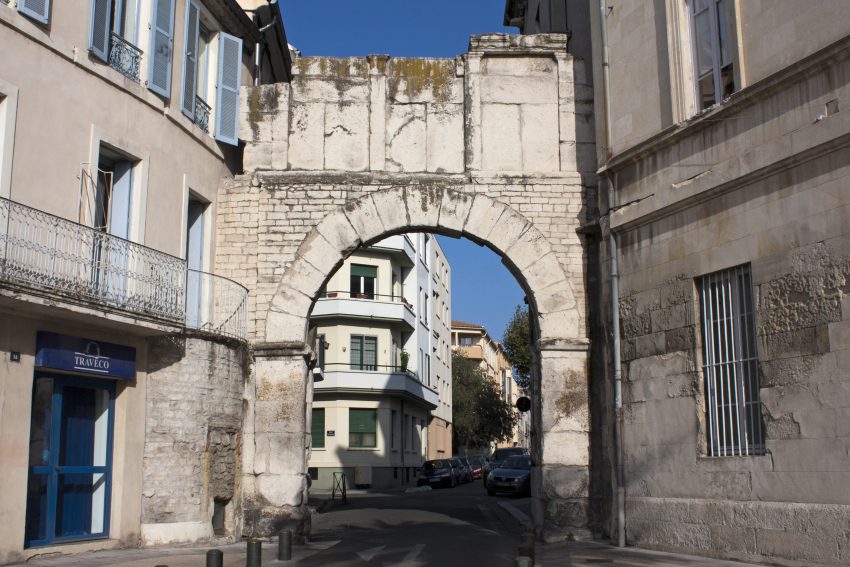
The Porte de France is one of Nimes' surviving Roman-era gateways, a modest but evocative remnant of the ancient city walls that once wrapped around the settlement. Today it sits quietly along Rue Porte de France, wedged into the everyday fabric of the neighborhood, which makes it feel less like a “site” and more like a discovery.
It's best visited as part of a walking tour of Roman Nimes: pair it with the bigger-ticket highlights like the Arena, Maison Carrée, and the Jardins de la Fontaine, then swing by the gate for a quick look and a few photos. The best views are from street level as you approach the arch, where you can appreciate how the old stonework contrasts with the surrounding houses.
Table of Contents
- History and Significance of the Porte de France
- Things to See and Do in the Porte de France
- How to Get to the Porte de France
- Practical Tips on Visiting the Porte de France
- Where to Stay Close to the Porte de France
- Is the Porte de France Worth Visiting?
- For Different Travelers
- FAQs for Visiting Porte de France
- Nearby Attractions to the Porte de France
History and Significance of the Porte de France
The Porte de France is linked to the Roman fortifications of Nimes, part of an ambitious defensive wall system built when the city was flourishing under Roman rule. While much of the enclosure has disappeared over time, this gate remains as a tangible marker of the city's ancient footprint.
Architecturally, it's a single-arch gate, and even in its weathered state it still communicates the Roman preference for strong, clean geometry and durable masonry. Seeing it in situ, embedded in a living neighborhood, helps you imagine how the ancient city's boundaries once shaped daily movement in and out of Nimes.
It's also significant in a “compare and contrast” way: Nimes has several Roman monuments that are grand and highly curated, but the Porte de France is more raw and incidental. That contrast is part of what makes it worth a stop on a broader Roman-heritage itinerary.
Things to See and Do in the Porte de France
Start by walking toward the gate from both directions along Rue Porte de France to get a sense of how it reveals itself gradually. The approach is part of the experience: you're not entering a museum complex, you're encountering a piece of antiquity in the middle of ordinary streets.
Spend a few minutes studying the arch and the surviving upper elements, then step through the opening to appreciate the original purpose of the structure as a threshold. If you enjoy photography, look for angles that frame the arch with the surrounding buildings to capture the “history stuck in the present” feeling.
Because it’s a small stop, it’s ideal as a breather between bigger monuments. Use it as a waypoint on a self-guided Roman walk, or as a quick detour if you’re exploring the old town on foot and want something that feels a bit more off-the-beaten-path.
How to Get to the Porte de France
The nearest major airports are Montpellier–Méditerranée Airport (MPL) and Marseille Provence Airport (MRS), with additional options via Nîmes-Alès-Camargue-Cévennes Airport for limited routes. For the best deals and a seamless booking experience, check out these flights to Nimes on Booking.com.
Nimes is well-connected by rail, and from Nîmes station you can reach the old town on foot or by local transit, making it easy to build the gate into a day of sightseeing without a car. You can use SNCF Connect to check schedules, compare routes, and purchase tickets for National (SNCF ) and regional trains (TER). For a more streamlined experience, we recommend using Omio, which allows you to easily compare prices, schedules, and book tickets for both National and Regional travel across all of Europe, all in one place.
If you’re driving, aim for public parking on the edge of the center and finish on foot, since the streets around the old town can be narrow and traffic patterns may be restrictive. If you are looking to rent a car in France I recommend having a look at Discover Cars, first, as they compare prices and review multiple car rental agencies for you.
Practical Tips on Visiting the Porte de France
- Entrance fee: Free.
- Opening hours: 24 Hours.
- Best time to visit: Go in the morning for softer light and fewer people, or near golden hour when the stone texture stands out in photos.
- How long to spend: Plan 10–20 minutes on site, or longer if you’re photographing details and trying a few angles from both approaches.
- Accessibility: It’s at street level and generally easy to view, but expect typical old-town paving and occasional uneven surfaces nearby.
- Facilities: There are no dedicated visitor facilities at the gate itself; use cafés, restrooms, and services in central Nimes before or after.
Where to Stay Close to the Porte de France
Base yourself in central Nimes so you can walk to the city's Roman monuments, restaurants, and evening atmosphere without relying on transport.
Maison Albar Hotels L’Imperator A splurge-worthy choice with a strong sense of place and an easy walk to major sights, ideal if you want a stay that feels like part of the trip.
Best Western Le Marquis de La Baume Set in the historic center, it’s a practical pick for travelers who want classic old-town charm and quick access to walking routes.
Appart’City Collection Nîmes Arènes A convenient, modern base near the Arena area, great if you like apartment-style comfort and a straightforward walk into the old town.
Hôtel Jardins Secrets A boutique option known for a quieter, more intimate feel, well-suited to couples or anyone who values atmosphere over size.
Ibis Nîmes Ouest A budget-friendly, no-fuss choice if you’re arriving by car and prefer simpler logistics, while still being a short drive from the center.
Is the Porte de France Worth Visiting?
Yes, if you like small, authentic fragments of history that you can encounter without crowds, tickets, or a big time commitment. It's not the most dramatic Roman monument in Nimes, but it's a satisfying “found object” of antiquity that adds texture to a walking tour.
Honest Pivot: if you have very limited time and only want the biggest, most impressive Roman sights, prioritize the Arena, Maison Carrée, and the Jardins de la Fontaine. The Porte de France is best for travelers who enjoy quieter stops and don't mind that it's more modest and weathered.
What Other Travellers Say...

Reviews suggest a mixed-but-positive quick stop: travelers like the sense of Roman history embedded in everyday streets and enjoy being able to walk through the arch. Several mention it as a memorable “hidden” find and appreciate the surviving upper details. The main drawbacks are that it feels less impressive than Nimes’ bigger Roman monuments and that parts are not in the best condition, so expectations should be set for a modest, weathered landmark.


For Different Travelers
The Porte de France works best as a flexible add-on rather than a standalone destination. Think of it as a short, atmospheric pause that rounds out your sense of Roman Nimes beyond the headline monuments.
Families with Kids
Kids who enjoy “spot the ancient thing” moments may like the idea of walking through a real Roman gate, especially because it’s quick and doesn’t require long attention spans. It also works well as a reset stop between larger attractions.
That said, there’s limited on-site interpretation, so families may want to bring a simple story: this was once part of a wall around the city, and gates controlled who and what came in and out.
Couples & Romantic Getaways
For couples, the appeal is the quiet, tucked-away feel and the chance to wander side streets together while still seeing something historically meaningful. It’s a good stop for a low-key photo that feels more personal than the main tourist viewpoints.
Pair it with a slow old-town stroll and a café stop afterward, using the gate as a small “checkpoint” on a self-guided walk.
Budget Travelers
This is an easy win for budget travelers because it’s a worthwhile sight that doesn’t cost anything and doesn’t require booking. It also fits neatly into a day of walking, which keeps transport costs down.
Use it as part of a DIY Roman route: connect free or low-cost viewpoints and streets with one or two paid monuments you care about most.
History Buffs
History lovers will appreciate seeing how Roman infrastructure survives in fragments, especially when it’s integrated into a modern neighborhood rather than isolated behind barriers. It’s a reminder that ancient cities were lived-in systems, not just standalone monuments.
To get more from the visit, treat it as context: compare its scale and function to Nimes’ more monumental Roman sites, and think about how walls, gates, and movement shaped the city.
FAQs for Visiting Porte de France
Getting There
Tickets & Entry
Visiting Experience
Tours, Context & Itineraries
Photography
Accessibility & Facilities
Food & Breaks Nearby
Safety & Timing
Nearby Attractions to the Porte de France
- Nîmes Arena (Arènes de Nîmes): A remarkably preserved Roman amphitheatre and one of the city’s must-see monuments.
- Maison Carrée: A beautifully preserved Roman temple that anchors many self-guided walking routes through the center.
- Jardins de la Fontaine: A scenic garden complex with Roman-era elements and excellent strolling paths.
- Tour Magne: A Roman tower with panoramic views that rewards the climb with a strong sense of the city's ancient scale.
- Musée de la Romanité: A modern museum that adds context to Nimes’ Roman sites with well-curated exhibits.
The Porte de France appears in our Complete Guide to Visiting Nimes!

Moira & Andy
Hey! We're Moira & Andy. From hiking the Camino to trips around Europe in Bert our campervan — we've been traveling together since retirement in 2020!
This website uses affiliate links which may earn a commission at no additional cost to you!
Planning Your Visit
24 Hours.
Free.
Nearby Attractions
- Musee de la Romanite (0.2) km
Attraction, Historic Site and Museum - Arenes de Nimes (0.2) km
Amphitheatre, Attraction and Roman Site - Musee des Beaux-Arts (0.3) km
Arts Venue, Gallery and Museum - Place du Marche (0.4) km
Area, Attraction and Square - Esplanade Charles-de-Gaulle (0.4) km
Park, Promenade and Square - Rue de l'Aspic (0.5) km
Area and Street - Maison Carree (0.6) km
Historic Building, Monument and Roman Site - Place de l'Horloge (0.6) km
Area, Attraction and Square - Musee du Vieux Nimes (0.6) km
Museum - Carre d'Art (0.6) km
Museum