Pont de l'Iroise, Brest
Bridge in Brest
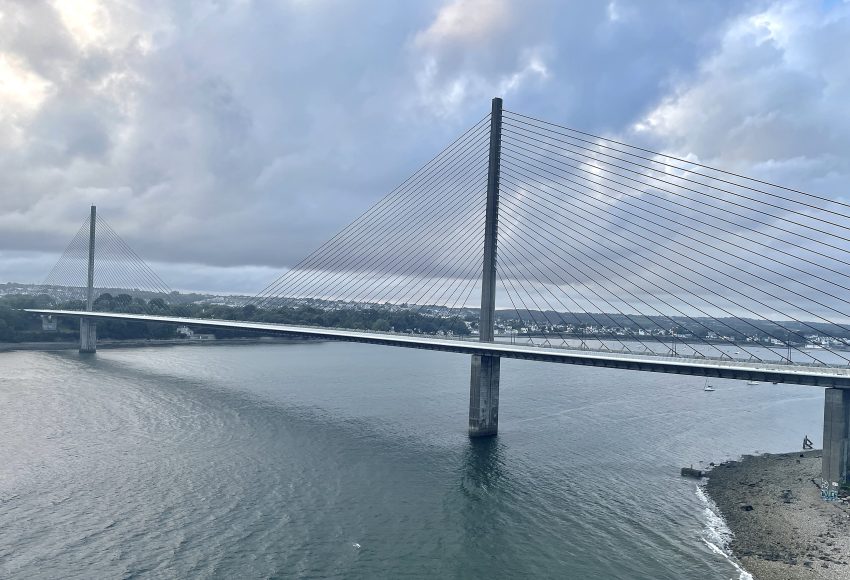
The Pont de l'Iroise is one of the top sights in Brest, admired for its graceful silhouette, striking engineering, and beautiful river setting. Spanning the Élorn at the gateway to the Brest roadstead, it carries the N165 between Le Relecq-Kerhuon and Plougastel-Daoulas, making it essential to regional travel while offering one of the most scenic crossings in western Brittany. Its impressive 400-meter main span and soaring pylons create an unforgettable view against the coastal backdrop.
But the experience isn't only about driving across. The nearby Pont Albert-Louppe, running parallel to the Pont de l'Iroise, gives pedestrians and cyclists a safe vantage point to admire the cable-stayed structure from up close. This spot is a great place to visit on a walking tour of Brest if you enjoy scenic photography, sweeping water views, and architecture that blends seamlessly into the natural landscape.
Table of Contents
- History and Significance of the Pont de l’Iroise
- Things to See and Do in the Pont de l’Iroise
- How to Get There
- Practical Tips on Visiting the Pont de l’Iroise
- Where to Stay close to the Pont de l’Iroise
- Is the Pont de l’Iroise Worth Visiting?
- FAQs for Visiting the Pont de l’Iroise
- Nearby Attractions to the Pont de l’Iroise
History and Significance of the Pont de l’Iroise
The Pont de l'Iroise was completed in 1994 as part of a major effort to modernize transportation links in Finistère. Designed by Michel Placidi and engineered by Alain Chauvin, the bridge replaced older river-crossing routes that could no longer support growing regional traffic. Its cable-stayed design represented cutting-edge engineering at the time, using reinforced concrete, steel, and aerodynamic modeling to ensure stability in coastal winds.
Its name pays homage to the Iroise Sea, the stretch of the Atlantic that begins just beyond the Brest roadstead. By linking the mainland more efficiently, the bridge helped strengthen economic and social ties across Brittany. Today, it continues to serve as a lifeline for travel between Brest and Quimper, carrying thousands of vehicles daily.
The Pont de l'Iroise also holds cultural significance. Its sleek profile has become a recognizable image of modern Brest, appearing in local photography, tourism materials, and regional events. Standing beside the historic Pont Albert-Louppe, it creates a visual contrast between old and new engineering eras.
Things to See and Do in the Pont de l’Iroise
The best way to appreciate the Pont de l'Iroise is from the Pont Albert-Louppe, which offers wide pedestrian paths and unobstructed views of the Élorn River. From here, you can photograph the elegant lines of the modern bridge while enjoying the calm waters of the estuary below.
Visitors also enjoy capturing sunrise or sunset shots, when low light reflects off the water and highlights the geometric symmetry of the cables. For cyclists, the older bridge provides a scenic ride along the river, with benches and viewpoints scattered along the route.
If you're exploring the wider peninsula, the bridge makes a natural stop on your journey between Brest and Plougastel-Daoulas. Those heading onward toward Quimper will cross it as part of the N165, experiencing one of Brittany's most scenic stretches of highway.
How to Get There
The Pont de l'Iroise lies on the N165 road, a major route connecting Brest to Quimper. Travelers arriving by air can reach the area from Brest Bretagne Airport, around a 20-minute drive away. For the best deals and a seamless booking experience, check out these flights to Brest on Booking.com.
If you’re traveling by car, the bridge is easy to access from both sides of the Élorn, with parking available near the Pont Albert-Louppe if you want to stop for photos and walks. If you are looking to rent a car in France I recommend having a look at Discover Cars, first, as they compare prices and review multiple car rental agencies for you.
Visitors arriving by train can reach Brest station, which connects to bus and taxi services leading toward the bridge area. You can use SNCF Connect to check schedules, compare routes, and purchase tickets for National (SNCF ) and regional trains (TER). For a more streamlined experience, we recommend using Omio, which allows you to easily compare prices, schedules, and book tickets for both National and Regional travel across all of Europe, all in one place.
Practical Tips on Visiting the Pont de l’Iroise
- Best time to visit the Pont de l'Iroise: Early morning or late evening for the best light and calm views.
- Entrance fee in Euros: Free to access pedestrian viewpoints on the Pont Albert-Louppe.
- Opening hours: Open at all times; lighting at night varies seasonally.
- Official website: Refer to Brest tourism resources for current information.
- How long to spend: 30 minutes to one hour for viewpoints and photography.
- Accessibility: The Pont Albert-Louppe has accessible paths suitable for walkers and cyclists.
- Facilities: Benches and scenic viewpoints are available on the older bridge.
- Photography tip: Capture both bridges together for a striking contrast of architectural styles.
- Guided-tours: Some local tours include the bridges as part of coastal sightseeing.
- Nearby food options: Cafés and restaurants can be found in both Le Relecq-Kerhuon and Plougastel-Daoulas.
Where to Stay close to the Pont de l’Iroise
If you want to stay close to the bridge and enjoy easy access to Brest’s coastal scenery, consider Hôtel Center Brest, a comfortable base with good road links. Another convenient option is Oceania Brest Centre, placing you near central attractions while still within reach of the river. Travelers seeking a quieter setting might prefer Ibis Brest Kergaradec, ideal for exploring the surrounding towns and viewpoints.
Is the Pont de l’Iroise Worth Visiting?
Yes, the Pont de l'Iroise is worth visiting, especially if you appreciate architecture, engineering, or scenic photography. Its striking silhouette, sweeping views, and accessible vantage points make it one of Brittany's most beautiful modern landmarks, and a memorable stop on any coastal drive or walk near Brest.
What Other Travellers Say...

Pont Albert Louppe in Plougastel-Daoulas offers pedestrians and cyclists traffic-free access with wide views over Brest; visitors praise it for scenic walks, morning runs and sports, note it can be windy, and some mention recent bike barriers at each end that can be annoying.


FAQs for Visiting the Pont de l’Iroise
Nearby Attractions to the Pont de l’Iroise
- Océanopolis: A major marine science center with immersive exhibits.
- Conservatoire Botanique du Vallon du Stang-Alar: A lush botanical valley with rare plant species.
- Moulin Blanc Beach: A sandy beach ideal for coastal walks and sea views.
- Port of Brest: A bustling harbor combining maritime heritage and modern industry.
- Plougastel-Daoulas: A charming town known for its strawberries and historic parish close.
The Pont de l'Iroise appears in our Complete Guide to Visiting Brest!

Moira & Andy
Hey! We're Moira & Andy. From hiking the Camino to trips around Europe in Bert our campervan — we've been traveling together since retirement in 2020!
This website uses affiliate links which may earn a commission at no additional cost to you!
Planning Your Visit
Nearby Attractions
- Oratoire du Rocher de la Sentinelle (1.2) km
Historic Site - Océanopolis (2.8) km
Aquarium - Conservatoire Botanique du Vallon du Stang-Alar (4.2) km
Gardens - Port of Brest (6.4) km
Port - Cours Dajot (6.6) km
Walk - Rue de Siam (6.8) km
Street - Musée des Beaux-Arts de Brest (6.8) km
Gallery - Capucins Cable Car (7.0) km
Cable Car - Musée National de la Marine (7.1) km
Museum - Château de Brest (7.1) km
Castle