Pons Aelius, Newcastle upon Tyne
Roman Site in Newcastle upon Tyne
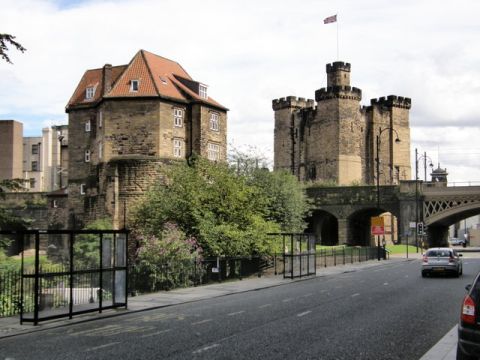
Beneath the streets and landmarks of central Newcastle lies Pons Aelius, the Roman auxiliary fort and settlement that once anchored the eastern end of Hadrian's Wall. Occupied from the 2nd to 4th centuries AD, this small but strategically vital castrum guarded a major bridge across the River Tyne and formed the second link in the Wall's chain of forts. Today there are no standing Roman walls to admire, but by exploring the area around Newcastle Castle and the Swing Bridge, you can piece together how this frontier stronghold once controlled traffic and trade at the “Bridge of Aelius”, making it one of the best places to visit in Newcastle upon Tyne if you enjoy imagining the layers beneath a modern city.
The fort stood on a hill above the north bank of the river, roughly where the Norman castle and its keep now rise, while the Roman bridge crossed the Tyne at the site of today's Swing Bridge. Here, detachments from three legions and later auxiliary cohorts such as the Cohors Ulpia Traiana Cugernorum and Cohors Primae Cornoviorum guarded the crossing, worshipped powerful water deities like Neptune and Oceanus and looked east and west along the Wall. Walking between the castle, the riverfront and the bridges, you are tracing the outline of a lost Roman landscape, and this spot is a highlight of any walking tour of Newcastle upon Tyne that focuses on the city's deeper past.
Table of Contents
History and Significance of the Pons Aelius
Pons Aelius takes its name from the Latin pons, meaning “bridge”, and Aelius, the family name of Emperor Hadrian, whose decision created the frontier we now know as Hadrian's Wall. Recorded in the late Roman administrative document the Notitia Dignitatum, the name effectively means “Bridge of Aelius”, and would have applied not only to the bridge itself but also to the fort and the associated civilian settlement. The fort's position made it the eastern anchor of the early Wall system, before the line was extended to Segedunum at Wallsend, securing the river crossing and tying together roads leading south towards York (Eboracum) and Brough-on-Humber and west along the Wall to forts such as Condercum (Benwell) and Corbridge.
The fort was built around AD 122 and remained in military use until roughly AD 400, seeing almost three centuries of occupation. It sat on a hill above the north bank of the Tyne, where the later Norman castle and an Anglo-Saxon church would be built, and commanded views over a landscape threaded with small tributary burns such as the Pandon Burn, Ouse Bourne, Skinner Burn and Lort Burn. Some of these streams passed beneath the Wall through culverts, a reminder of the engineering needed to adapt the frontier to local geography. The praetorium and principia of the Hadrianic fort have been identified in the castle grounds, confirming that the medieval stronghold was built directly over the Roman encampment.
Pons Aelius was part of the Wall's per lineam valli chain of 16 forts, and inscriptions reveal a succession of builders and garrisons. Vexillations from three legions - Legio II Augusta, Legio VI Victrix and Legio XX Valeria Victrix - probably undertook the initial construction, with the Neptune Altar inscription recording their work under Governor Julius Verus in the mid-2nd century. Later, auxiliary units such as the Cohors Ulpia Traiana Cugernorum (Trajan's Own Cugerni, from the Lower Rhine) and the First Cohort of Cornovii from Cheshire and Shropshire held the fort in the 3rd and 4th centuries. Dedications to deities including Neptune, Oceanus and imperial family members, along with the long period of occupation, mark Pons Aelius as a key node in the military and symbolic architecture of Roman Britain.
Things to See and Do in the Pons Aelius
Although no Roman walls stand at Pons Aelius today, exploring the area around Newcastle Castle and the riverfront gives you a strong sense of how the fort and bridge once shaped the landscape. Start at the Castle Keep and Castle Garth: this hilltop, now dominated by medieval stonework, once formed the heart of the Roman fort, with the principia (headquarters) and praetorium (commander's house) beneath what you see today. As you move around the castle grounds and viewpoints overlooking the Tyne, imagine the compact fort perched here, its ramparts looking down over the bridge and the confluence of local streams.
From the castle, walk downhill towards the river and the Swing Bridge, which stands almost exactly where the Roman Aelian Bridge once crossed the Tyne. The Roman structure had substantial stone abutments and caisson-built piers with iron-shod oak piles and rubble infill, and is estimated to have stretched around 735 feet from bank to bank. Two piers have been located archaeologically, but the rest lie buried beneath water and modern works. Standing on the current bridge, it is easy to picture legionaries and auxiliaries heading back and forth across the river, with the Roman road continuing south-southeast under what is now modern Gateshead rather than following today's Bottle Bank.
As you explore, keep in mind the complex web of waterways that met the Tyne near the fort: the Pandon Burn, Ouse Bourne, Skinner Bourne and Lort Burn all once cut across what are now streets and quays. They would have fed into the river near the Roman bridge, some passing beneath the Wall via culverts. Thinking about these hidden streams, along with the vanished fort and bridge, adds another layer to the experience of walking Newcastle's central streets. For a fuller picture, combine your on-the-ground exploration with visits to local museums and heritage centres where altar stones, inscriptions and artefacts from Pons Aelius and its garrisons are displayed.
How to Get to the Pons Aelius
If you are travelling from further afield, Newcastle International Airport is your main point of arrival, with regular domestic and European flights and a direct Metro line into the city centre in around 25 minutes. For the best deals and a seamless booking experience, check out these flights to Newcastle upon Tyne on Booking.com. From the airport, take the Metro to Central Station or Monument, both of which place you within a short walk of the castle and riverfront.
Arriving by train is especially convenient, as Newcastle Central Station lies just a few minutes' walk from the site of Pons Aelius.Train schedules and bookings can be found on Omio. From the station concourse, head towards the castle and Quayside: within ten minutes you can be standing on the hill where the fort once stood, or looking across the Tyne from the Swing Bridge where the Roman bridge crossed.
If you prefer to drive, follow signs into Newcastle city centre and aim for car parks near the Quayside or around the castle and Central Station. Once parked, everything related to Pons Aelius is easily reached on foot, and walking is by far the best way to appreciate how the fort, bridge, burns and modern streets fit together.
Practical Tips on Visiting the Pons Aelius
- Suggested tips: Bring a simple plan of the Roman fort and bridge, or a guide to Roman Newcastle, so you can orient yourself as you move between the castle, bridge and riverfront.
- Best time to visit: Daytime visits in clear weather are ideal, as you will be relying on views and urban exploration rather than standing ruins; early mornings and evenings can be especially atmospheric around the castle and river.
- Entrance fee: There is no fee to walk the streets and bridges where Pons Aelius once stood; standard admission applies if you choose to visit Newcastle Castle or museums displaying Roman finds.
- Opening hours: The streets, castle surroundings and riverfront are accessible daily; check individual opening times for Newcastle Castle and any museums you plan to visit.
- How long to spend: Allow 1-2 hours to walk between the castle hill, Swing Bridge and surrounding streets, longer if you add a castle visit or museum stop to see inscriptions and artefacts.
- Accessibility: The area around the castle involves some slopes and cobbles, but pavements and roads are generally accessible; the Swing Bridge and Quayside are relatively level, though some viewpoints require short climbs.
- Facilities: Being in the city centre, you are close to cafés, pubs, toilets and shops, particularly around Central Station, the Quayside and the main shopping streets.
- Photography tip: Capture the castle from the Swing Bridge to show how the fort once commanded the crossing, and look for angles that frame the modern bridges and skyline while you imagine the Roman Aelian Bridge below.
- Guided tours: Consider joining a Roman- or castle-themed walking tour of Newcastle, which often includes Pons Aelius as a key stop and can help decode where the Wall, burns and fort once ran.
- Nearby food options: There is no shortage of places to eat nearby, from casual cafés around the station and castle to bars and restaurants along the Quayside, making it easy to build a full day around your visit.
Where to Stay close to the Pons Aelius
Staying near the site of Pons Aelius means basing yourself around the castle, Central Station or the Quayside, all of which put you within minutes of where the fort and bridge once stood. For a historic feel right beside the castle itself, The Vermont Hotel offers classic rooms and views over the Tyne, with the Norman keep and Roman fort site just outside the door. If easy rail access is a priority, Royal Station Hotel opposite Central Station provides Victorian character and a short walk up to the castle and river. For a modern option on the Quayside with quick access to both the bridges and the city centre, INNSiDE by Meliá Newcastle offers contemporary comfort and river views within easy reach of the Pons Aelius site.
Is the Pons Aelius Worth Visiting
If you need standing walls and reconstructed gates to bring Roman history alive, Pons Aelius may feel subtle compared to the big Hadrian's Wall forts in the countryside. But if you enjoy reading a city's layers and using imagination to link inscriptions, place-names and modern landmarks to their ancient counterparts, it is absolutely worth seeking out. Standing on the castle hill, crossing the Swing Bridge and tracing the routes of vanished burns and roads, you begin to see Newcastle as a frontier town whose Roman, medieval and industrial phases all cluster around the same strategic crossing. For many visitors with an interest in history, that realisation makes Pons Aelius one of the must-see places in Newcastle upon Tyne, even if its stones now lie buried.
FAQs for Visiting Pons Aelius
Nearby Attractions to the Pons Aelius
- Newcastle Castle: The Norman castle and keep built directly over the Roman fort site, with atmospheric interiors and commanding views of the Tyne and city.
- Cathedral Church of St Nicholas: The medieval cathedral with its distinctive lantern spire, just a short walk from the castle and another layer in the city’s historic core.
- The Quayside and Tyne Bridges: Stroll along the riverfront for views of the Swing Bridge, Tyne Bridge and Millennium Bridge, and to appreciate why this crossing has always mattered.
- The Literary and Philosophical Society: Step into a historic independent library near Central Station for a quieter dose of Newcastle’s intellectual heritage.
- Discovery Museum: Learn more about the region's wider history, from maritime and engineering achievements to social change, in a large, family-friendly museum west of the city centre.
The Pons Aelius appears in our Complete Guide to Visiting Newcastle upon Tyne!

Moira & Andy
Hey! We're Moira & Andy. From hiking the Camino to trips around Europe in Bert our campervan — we've been traveling together since retirement in 2020!
This website uses affiliate links which may earn a commission at no additional cost to you!
Planning Your Visit
The streets, castle surroundings and riverfront are accessible daily; check individual opening times for Newcastle Castle and any museums you plan to visit.
There is no fee to walk the streets and bridges where Pons Aelius once stood; standard admission applies if you choose to visit Newcastle Castle or museums displaying Roman finds.
Nearby Attractions
- Newcastle Castle (0.0) km
Castle - Bessie Surtees House (0.1) km
Historic Building - St Nicholas Cathedral (0.1) km
Cathedral - The Quayside (0.2) km
Area - Literary and Philosophical Society of Newcastle upon Tyne (0.2) km
Historic Building - The Tyne Bridges (0.3) km
Bridge - Theatre Royal (0.4) km
Theatre - Edwardian Central Arcade (0.5) km
Historic Site - Grainger Market (0.5) km
Market - Sage Gateshead (0.5) km
Arts Venue