Podrum, Split
Historic Room, Historic Site and Roman Site in Split
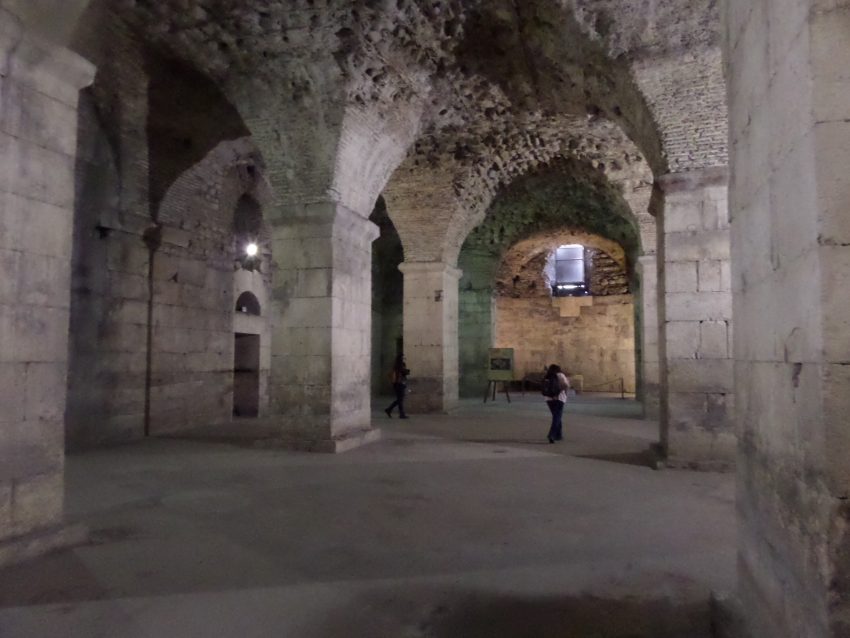
Podrum in Split, Croatia refers to the famous substructures (cellars) beneath Diocletian's Palace, a vast network of stone halls and corridors that sits right under the palace's southern apartments. It's one of the most memorable places to step “inside” Split's Roman past, with cool air, echoing vaults, and a layout that mirrors what once stood above.
Because the cellars connect naturally to the palace core and the Riva waterfront, they're easy to include on a self-guided wander or as a key stop on a walking tour of Diocletian's Palace. Many visitors pair Podrum with the Peristyle, the palace gates, and a stroll along the promenade for a compact, high-impact itinerary.
History and Significance of the Podrum
Podrum is more than a basement: these substructures were built as a massive engineering solution to support and level the emperor's residential quarters above. Their sturdy vaults helped create a stable platform for the grand rooms that once overlooked the sea, while also protecting the upper levels from moisture and shifting ground.
Over centuries, the spaces gradually filled with debris as medieval Split grew within and around the palace walls. Modern conservation and restoration reopened the cellars to visitors, turning them into one of the clearest, most tangible ways to understand how the palace was designed and how the city evolved directly on top of Roman foundations.
Today, Podrum is closely tied to the UNESCO-listed Diocletian's Palace complex and is often considered the most atmospheric “time capsule” in the old town. Even if you're not usually a museum-goer, the scale and preservation here make the history feel immediate.
Things to See and Do in the Podrum
The main draw is the architecture itself: long barrel-vaulted corridors, broad stone chambers, and repeating arches that create dramatic perspective lines for photos. Move slowly and look for the way the spaces change from narrow passageways into surprisingly large halls, each with its own acoustics and mood.
Interpretive panels and the overall layout help you connect what you're seeing below with what once existed above, which is why a short guided walking tour can be especially rewarding. If you prefer to explore independently, it still works well: the route is straightforward, and you can wander at your own pace.
Podrum also sits in the heart of Split's old town, so it's easy to combine with nearby palace highlights and a waterfront break. Many travelers like visiting earlier or later in the day when the light outside is softer and the crowds thin out, making the underground spaces feel even more cinematic.
How to Get to the Podrum
The nearest major airports are Split Airport (SPU) for the city itself, plus Dubrovnik Airport (DBV) and Zadar Airport (ZAD) as alternatives if you're building a broader Dalmatian itinerary. For the best deals and a seamless booking experience, check out these flights to Split on Booking.com.
Split is connected by intercity rail services within Croatia, and arriving by train can be a relaxed option if you're already traveling through the region; from the station, the old town is an easy walk or short taxi ride. Train schedules and bookings can be found on Omio.
If you’re traveling by car, aim to park outside the tight old-town core and walk in, since the palace area is pedestrian-heavy and parking is limited.
Practical Tips on Visiting the Podrum
- Official website: https://mgs.hr/hr/posjetite-nas/muzejske-lokacije/podrumi-dioklecijanove-palace/
- Entrance fee: Adults: €10; Concessions: €8; Family ticket: €18.
- Opening hours: Daily: 08:30–20:00.
- Best time to visit: Go early in the morning for cooler temperatures and fewer tour groups, or later in the afternoon to avoid the midday rush in the old town.
- How long to spend: Plan 30–60 minutes for a satisfying visit, or up to 90 minutes if you like reading displays and taking photos.
- Accessibility: Expect uneven stone surfaces and a historic layout; some sections may be challenging for wheelchairs or anyone with limited mobility.
- Facilities: You’re surrounded by old-town amenities, so it’s easy to find cafés, restrooms, and quick snacks nearby before or after your visit.
Where to Stay Close to the Podrum
Base yourself in Split Old Town (within or right beside Diocletian's Palace) for the easiest access to Podrum and the best early-morning and late-evening atmosphere.
If you want a classic, polished stay right in the historic core, choose a heritage-style property that puts you steps from the palace lanes and the waterfront. For a quieter night’s sleep, look for boutique hotels just outside the busiest alleys while still staying walkable to everything.
Cornaro Hotel A top pick for comfort and service near the old town edge, with an easy walk to Podrum and a more “hotel-like” feel after a day in the crowds.
Heritage Hotel 19 A small, stylish boutique option close to the center, great if you want design-forward rooms and a calmer base while staying walkable.
Hotel Park Split A classic choice near Bačvice Beach, ideal if you want palace sightseeing plus beach time, with a straightforward walk or quick ride to Podrum.
Radisson Blu Resort & Spa, Split Best for travelers who want resort amenities and a spa after sightseeing, while still being a short trip from the old town.
Hotel Luxe A practical, comfortable option between the ferry port area and the palace, convenient for early departures and day trips.
Is the Podrum Worth Visiting?
Yes, Podrum is worth visiting because it delivers something rare: a genuinely immersive Roman-era space that's easy to reach, easy to understand, and memorable even on a short Split itinerary. The scale of the stone halls and the “under-the-city” feeling make it one of the most distinctive stops in the old town.
Honest Pivot: If you dislike enclosed, dim spaces or you're trying to minimize paid attractions, you can skip the ticketed cellars and still enjoy plenty of Diocletian's Palace above ground. It's also less compelling if you're rushing through Split in under an hour and prefer viewpoints or beaches over historic interiors.
What Other Travellers Say...

Reviews are strongly positive overall, with visitors praising the dramatic underground atmosphere, impressive Roman engineering, and how well preserved and restored the spaces feel. Many people like that you can explore at your own pace and that the information panels add helpful context, with family tickets noted as good value. Common downsides mentioned include that entry is ticketed (so you need to plan for it) and that it can feel busier at popular times.


For Different Travelers
Podrum works well for most visitors because it's central, compact, and visually striking, but the experience changes depending on your pace and priorities. Think of it as a high-impact stop you can keep short, or deepen with context through a tour.
Families with Kids
Kids often enjoy Podrum because it feels like an underground “maze” with big echoey rooms and dramatic arches. It's a good rainy-day or hot-day option since it's cooler than the streets above.
To keep it fun, treat it as a short adventure rather than a long museum visit. Pair it with gelato on the Riva afterward and a quick look at the Peristyle to round out the palace story.
Couples & Romantic Getaways
For couples, Podrum is a moody, atmospheric stop that looks especially good in photos and feels a bit cinematic. It's easy to combine with a sunset walk along the waterfront and a dinner reservation in the old town.
If you want a calmer vibe, aim for the first entry window of the day or a later visit when day-trippers thin out. The contrast between the bright stone courtyards above and the cool vaults below is part of the romance.
Budget Travelers
Podrum can be a smart paid add-on because it's concentrated: you get a lot of “wow” in a short time. If you're watching costs, balance it with free palace wandering above ground and viewpoints around the old town.
Consider doing Podrum as your one ticketed palace experience, then spend the rest of the day on free highlights like the Riva promenade and scenic streets. Bringing a refillable water bottle helps on hot days when café stops add up.
History Buffs
History lovers will appreciate how Podrum explains the palace's original structure and the way Split grew directly within Roman walls. The substructures make the palace's engineering logic easier to grasp than many above-ground ruins.
To get the most out of it, pair your visit with a guided palace walking tour so you can connect the underground plan to the emperor's former apartments and the city's medieval layers. It's one of the best places in Split to “read” the city as a living archaeological site.
FAQs for Visiting Podrum
Getting There
Tickets & Entry
Visiting Experience
Tours, Context & Itineraries
Photography
Accessibility & Facilities
Food & Breaks Nearby
Safety & Timing
Nearby Attractions to the Podrum
- Peristyle (Peristil): The palace’s iconic central courtyard and one of the best places to feel Split’s Roman-meets-modern atmosphere.
- Cathedral of Saint Domnius: A landmark complex inside the palace with striking architecture and a strong sense of layered history.
- Golden Gate (Porta Aurea): The grand northern gate of the palace, a classic photo stop and an easy navigation point.
- Riva Promenade: Split's waterfront “living room,” perfect for a post-Podrum coffee and people-watching.
- Split Old Town alleys: A dense web of stone lanes where everyday life unfolds inside ancient walls, ideal for slow wandering.
The Podrum appears in our Complete Guide to Visiting Split!

Moira & Andy
Hey! We're Moira & Andy. From hiking the Camino to trips around Europe in Bert our campervan — we've been traveling together since retirement in 2020!
This website uses affiliate links which may earn a commission at no additional cost to you!
Planning Your Visit
Daily: 08:30-20:00.
Adults: €10; Concessions: €8; Family ticket: €18.
Nearby Attractions
- Diocletian's Palace (0) km
Historic Building, Historic Site and Palace - Vestibule (0) km
Courtyard, Historic Room and Historic Site - Cathedral of St. Domnius (0) km
Cathedral and Religious Building - Ethnographic Museum (0) km
Attraction, Historic Building and Museum - Temple of Jupiter (0) km
Historic Site, Religious Building and Roman Site - Bronze Gate (0.1) km
Attraction, City Gate and Historic Site - City Museum of Split (0.1) km
Historic Building, Historic Site and Museum - Silver Gate (0.1) km
City Gate, City Walls and Historic Site - Iron Gate and Church of Our Lady of the Bell Tower (0.1) km
Church, City Gate and Historic Site - Riva Harbor (0.1) km
Area, Harbour and Promenade