Pincé Museum, Angers
Museum in Angers
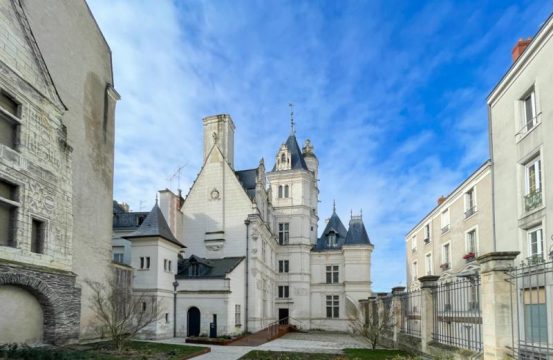
The Pincé Museum in Angers is a small museum of ancient and extra-European art housed in the Hôtel Pincé, a 16th-century Renaissance mansion in the city centre. Its rooms bring together Egyptian, Greek, Roman, pre-Columbian, Chinese, and Japanese objects in a setting that is almost as interesting as the collection.
This is a good stop for visitors who like archaeology, decorative arts, and historic buildings but do not want a long museum visit. Expect a calm, compact route through ceramics, funerary pieces, masks, prints, and other objects, with the mansion’s carved façades, courtyard, and staircases adding context before and after the galleries.
History and Significance
A Renaissance mansion in central Angers
The museum occupies the Hôtel Pincé, built between 1523 and 1535 for Jean de Pincé, an alderman and diplomat of Angers. Its sculpted stonework, steep slate roofs, and refined windows make the building one of the clearest Renaissance landmarks in the city centre.
The mansion sits close to Angers’ main shopping streets and Place du Ralliement, so it feels woven into daily city life rather than isolated as a formal monument. Even a short look at the exterior gives a useful sense of Angers’ 16th-century civic wealth.
From private collections to public museum
The museum’s origins are tied to the city’s 19th-century collecting, including important donations that helped form Angers’ holdings of ancient and non-European art. The Hôtel Pincé later became the setting for objects gathered through scholarship, travel, and collecting traditions of that period.
The collections do not tell the story of one single civilization. Instead, they bring together Mediterranean antiquities, Egyptian material, pre-Columbian works, and Asian ceramics, prints, and decorative objects, making the museum more of a cross-cultural cabinet than a large chronological institution.
A restored museum space
After a long closure and restoration, the museum reopened with a cleaner, more accessible presentation of its galleries. The result is a compact visit that keeps attention on individual objects while preserving the character of the old mansion.
Things to See and Do
The main visit takes place in the permanent galleries, where I would focus first on the contrast between the refined Renaissance rooms and the wide range of objects inside them. Egyptian funerary pieces, Greek and Roman antiquities, pre-Columbian works, Chinese ceramics, and Japanese objects give the museum a wider reach than its modest size suggests.
The Japanese material is one of the most enjoyable parts for many visitors, especially when masks, lacquer objects, armour, or prints are on display. The museum also has changing thematic exhibitions, usually on the lower level, so a return visit may show a different angle on Angers’ wider museum collections.
Do not rush past the building itself. The courtyard, carved façades, stone details, and staircases are part of the experience, and they help explain why the museum remains a useful stop even for visitors who only want a brief cultural break in the centre of Angers.
How to Get to the Pincé Museum
Angers Loire Airport is the closest airport for limited services, while Nantes Atlantique is the more practical major airport for most visitors arriving by air. For the best deals and a seamless booking experience, check out these flights to Angers on Booking.com.
Trains arrive at Angers Saint-Laud, with direct high-speed services from Paris Montparnasse often taking around 1.5 hours, followed by a 15-minute walk or a short tram ride to Ralliement. You can use SNCF Connect to check schedules, compare routes, and purchase tickets for National (SNCF ) and regional trains (TER). For a more streamlined experience, we recommend using Omio, which allows you to easily compare prices, schedules, and book tickets for both National and Regional travel across all of Europe, all in one place.
If arriving by car, use a central public car park such as Ralliement or République and continue on foot, since the museum sits in a busy city-centre area with pedestrian streets nearby. If you are looking to rent a car in France I recommend having a look at Discover Cars, first, as they compare prices and review multiple car rental agencies for you.
Where to Stay Close
For a culture-heavy visit, the best base is the area around Place du Ralliement, Boulevard Foch, and the historic centre, because the Pincé Museum, cathedral quarter, galleries, shops, restaurants, and tram stops are all close together.
Hôtel Saint Julien works for travelers who want to sleep directly on the city’s central square and keep most sightseeing on foot. Hôtel le Continental is another central option, useful for visitors who want easy access to the tram, restaurants, and the main museum route without being far from the station.
If train access matters more than staying right beside the old streets, Novotel Angers Centre Gare is a practical choice near Angers Saint-Laud. For a quieter centre-city stay, Hôtel du Mail suits visitors who prefer a calmer side street while still remaining within walking distance of the main sights.
Is the Pincé Museum Worth Visiting?
The Pincé Museum is worth a short stop if you enjoy small museums, archaeology, Asian decorative arts, or historic architecture. It is less essential if you want a large art museum, a child-focused attraction, or a major headline sight, and some visitors may find the collection too compact for a dedicated trip across town. Treat it as a good one-hour addition to a central Angers itinerary rather than the main reason to visit the city.
What Other Travellers Say...

Musée Pincé at 32 Rue Lenepveu in central Angers is a compact city-centre museum housed in an attractive building with a small but varied collection—notably Egyptian and Peruvian antiquities and a mummy—that visitors typically see in about 40–60 minutes; opening hours are 10:00–18:00 Tuesday–Sunday and it has frequently offered free or low-cost entry, making it an easy, pleasant short stop if you have time.


Practical Tips on Visiting the Pincé Museum
- Best time to visit: Visit year-round, especially on a rainy day or during the warmer middle hours of summer. Late afternoon can be useful because the museum has offered free admission for the final hour of opening.
- How long to spend: Allow 45 minutes to 1.5 hours, depending on whether you read labels closely and visit the temporary exhibition. A quick look at the mansion and main galleries can be done in under an hour.
- Accessibility: The museum has improved access, but it remains a historic mansion, so some routes and thresholds may be less straightforward than in a purpose-built museum. Travelers with limited mobility should check current access arrangements before visiting.
- Facilities: Expect basic museum facilities such as restrooms and visitor information rather than a large café or extensive shop. Cafés and restaurants are easy to find around Place du Ralliement and the surrounding streets.
FAQs for Visiting the Pincé Museum
Getting There
Tickets & Entry
Visiting Experience
Tours, Context & Itineraries
Photography
Accessibility & Facilities
Food & Breaks Nearby
Safety & Timing
The Pincé Museum appears in our Complete Guide to Visiting Angers!

Moira & Andy
Hey! We're Moira & Andy. From hiking the Camino to trips around Europe in Bert our campervan — we've been traveling together since retirement in 2020!
This website uses affiliate links which may earn a commission at no additional cost to you!
Planning Your Visit
Saturday and Sunday • 10 AM – 6 PM
Closed May 1, Nov. 1 and 11, Dec. 25 and Jan. 1
€4
Nearby Attractions
- Grand Théâtre (0.1) km
Theatre - Palacio del Tau (0.2) km
Palace - Maison d’Adam (0.3) km
Historic Building - Cathédrale Saint-Maurice d'Angers (0.3) km
Cathedral - Collégiale Saint-Martin (0.3) km
Church - Hôtel de Ville d'Angers (0.3) km
Town Hall - La Maison Bleue (0.4) km
Historic Building - Tour Saint-Aubin (0.4) km
Tower - Musée des Beaux-Arts (0.4) km
Museum - Galerie David d'Angers (0.4) km
Museum