Collégiale Saint-Martin, Angers
Church in Angers
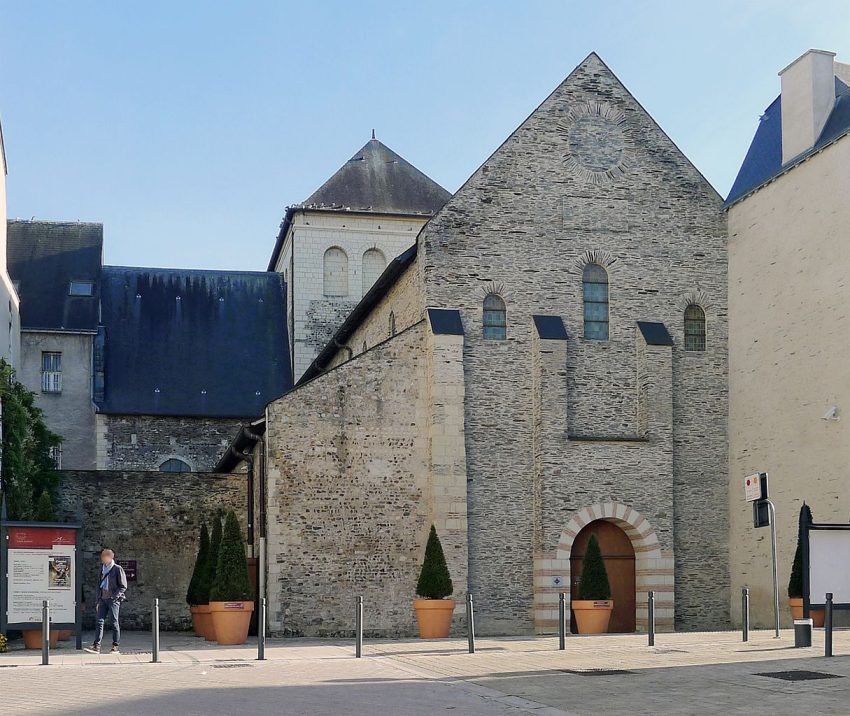
Collégiale Saint-Martin sits on Rue Saint-Martin in the centre of Angers, where it functions as both a restored medieval church and a small heritage site. It is often described as the city's oldest church, and its main interest lies in the layers of construction visible across the building: early Christian foundations, Carolingian masonry, Romanesque forms, and an Angevin Gothic choir.
The visit is compact but rewarding for travelers who like archaeology, architecture, and quiet interiors. You can look down into the crypt, study carved capitals and sculpture, and see how a former religious building now works as a space for exhibitions, concerts, and cultural events. It is best treated as a focused stop rather than a large museum.
History and Significance
Early Christian Origins
The site of the Collégiale Saint-Martin was occupied before the medieval church took shape. Archaeological remains point to earlier urban use in the Gallo-Roman town of Juliomagus, followed by a funerary area as the late Roman city contracted.
A first Christian basilica was built here in the 5th century. Later early medieval churches expanded the plan, and the foundations of these successive buildings can still be understood through the archaeological crypt.
Carolingian and Romanesque Layers
In the 9th century, a new church was built on the line of earlier structures. The crossing, masonry, and use of alternating brick and tuffeau are among the features that make the building important for the study of Carolingian architecture in western France.
At the beginning of the 11th century, Foulques Nerra, Count of Anjou, and his wife Hildegarde supported further work here. The crossing, supporting columns, and carved capitals belong to this important phase, when Saint-Martin became a collegiate church served by canons.
Gothic Additions and Later Decline
During the second half of the 12th century, the choir was enlarged in the Angevin Gothic, or Plantagenet, style. Visitors can still see the contrast between the earlier mass of the building and the more elevated, rib-vaulted choir.
The French Revolution ended the church’s religious function, and the building was reused for practical purposes, including storage. Parts of the structure deteriorated during the 19th century, before scholars and archaeologists began to recognize its architectural value.
Restoration and Reopening
The Department of Maine-et-Loire acquired the site in 1986 and began a long campaign of archaeological study, restoration, and public presentation. The restored monument reopened to visitors in 2006, with later improvements to the reception area completed in 2019.
Today the Collégiale is presented as both a monument and a cultural venue. Its importance comes from the unusual continuity of visible layers: early Christian foundations, Carolingian construction, Romanesque detail, Gothic transformation, and modern restoration all within a small central site.
Things to See and Do
The main reason to enter is to read the building in layers. I would start by looking at the crossing and its stonework, then move toward the choir to compare the heavier early structure with the lighter Gothic lines. The carved capitals, surviving masonry, and sculptural displays give the visit more substance than the modest exterior suggests.
The archaeological crypt is one of the strongest parts of the visit. It helps explain why this small church matters, because the visitor can see traces of earlier buildings rather than only read about them. If you are short on time, focus on the crypt, the crossing, and the choir.
The Collégiale also hosts temporary exhibitions, concerts, and cultural events, so the mood of the place can change from one visit to another. For a quieter experience, go for the architecture and archaeology; for a more atmospheric one, check whether an exhibition or evening event is taking place during your stay.
How to Get to the Collégiale Saint-Martin
Angers Loire Airport is the closest airport for limited services, while Nantes Atlantique is the more practical larger airport for many visitors arriving by air. For the best deals and a seamless booking experience, check out these flights to Angers on Booking.com.
Trains arrive at Angers Saint-Laud, about a 15-minute walk from the Collégiale or a short tram ride toward Foch-Maison Bleue. You can use SNCF Connect to check schedules, compare routes, and purchase tickets for National (SNCF ) and regional trains (TER). For a more streamlined experience, we recommend using Omio, which allows you to easily compare prices, schedules, and book tickets for both National and Regional travel across all of Europe, all in one place.
Driving into the historic centre is rarely needed for this stop, but paid street parking and public car parks such as Ralliement, République, Haras, and Mail are within walking distance. If you are looking to rent a car in France I recommend having a look at Discover Cars, first, as they compare prices and review multiple car rental agencies for you.
Where to Stay Close
For a culture-heavy itinerary, base yourself in the centre around Place du Ralliement, Boulevard Foch, or the streets between the cathedral, château, museums, and Rue Saint-Martin. This keeps the Collégiale, the Musée des Beaux-Arts, the cathedral, and the main shopping and café streets within easy walking distance.
Hôtel Saint Julien works well if you want to stay on the central square and walk to the Collégiale in a few minutes. Oceania Hôtel d’Anjou suits travelers who prefer a more polished central hotel close to Boulevard Foch and the historic core. If train access matters more than being directly beside the old streets, ibis Styles Angers Centre Gare is a practical choice near Angers Saint-Laud while still being walkable to the site.
Is the Collégiale Saint-Martin Worth Visiting?
The Collégiale Saint-Martin is worth a short stop if you are interested in early medieval architecture, archaeology, church interiors, or the layered history of Angers. It is less essential if you only want the city's largest sights, as the visit is compact and more interpretive than spectacular. Skip it if you are not interested in architectural detail, crypts, or small heritage sites; treat it as optional if you are moving quickly between the château, cathedral, and museums.
What Other Travellers Say...
Collégiale Saint-Martin on 23 Rue Saint-Martin in Angers is a striking Gothic church turned museum where visitors praise its beautifully restored interior, frequent exhibitions and concerts, and a compelling archaeological crypt that lets you walk through ancient foundations—past temporary shows have transformed the atmosphere with immersive mixes of material, air and music.





Practical Tips on Visiting the Collégiale Saint-Martin
- Best time to visit: Afternoon is usually the practical window, as the site tends to open later in the day. Check the current schedule if visiting around public holidays or during special events.
- How long to spend: Allow about 45 minutes for the main visit, or up to 1.5 hours if you use the audio guide, read the displays, and spend time in the crypt and sculpture areas.
- Accessibility: Most of the monument is accessible for visitors with reduced mobility, but the archaeological crypt is reached by stairs. A video presentation is available as an alternative way to understand the crypt.
- Facilities: The site has a reception area, shop, toilets, drinking water, free Wi-Fi, and basic visitor aids such as guides and audio guides. Eating inside the monument is not allowed.
FAQs for Visiting the Collégiale Saint-Martin
Getting There
Tickets & Entry
Visiting Experience
Tours, Context & Itineraries
Photography
Accessibility & Facilities
Food & Breaks Nearby
Safety & Timing
The Collégiale Saint-Martin appears in our Complete Guide to Visiting Angers!

Moira & Andy
Hey! We're Moira & Andy. From hiking the Camino to trips around Europe in Bert our campervan — we've been traveling together since retirement in 2020!
This website uses affiliate links which may earn a commission at no additional cost to you!
Nearby Attractions
- Tour Saint-Aubin (0.1) km
Tower - Musée des Beaux-Arts (0.2) km
Museum - Maison d’Adam (0.2) km
Historic Building - Grand Théâtre (0.2) km
Theatre - Cathédrale Saint-Maurice d'Angers (0.2) km
Cathedral - La Maison Bleue (0.2) km
Historic Building - Palacio del Tau (0.3) km
Palace - Galerie David d'Angers (0.3) km
Museum - Pincé Museum (0.3) km
Museum - Hôtel de Ville d'Angers (0.4) km
Town Hall