Petite France, Strasbourg
Area, Canal and Historic Site in Strasbourg
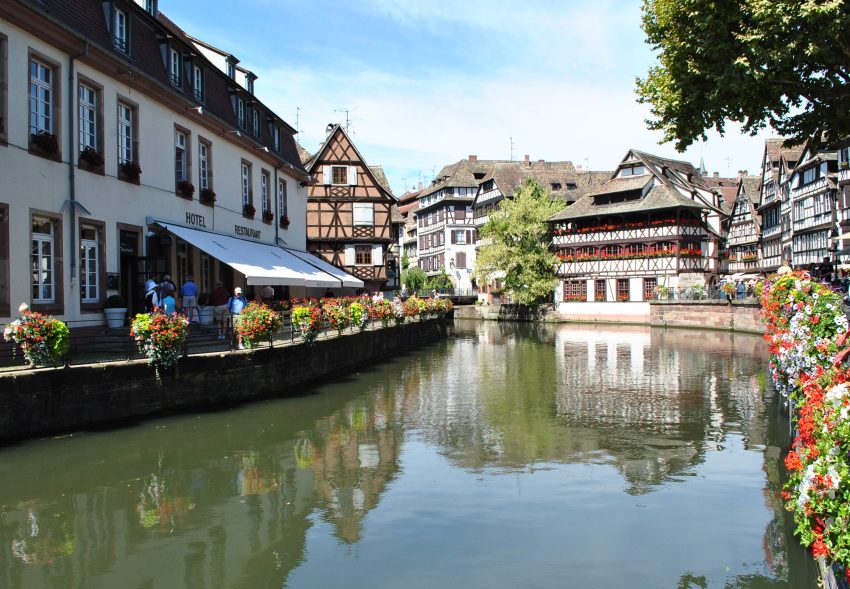
Petite France is Strasbourg's postcard-perfect canal district on the Grande Île, where half-timbered houses lean over the water and narrow lanes curve past old mills, bridges, and flower-draped balconies. It's the kind of place that feels made for slow wandering: you'll hear the Ill River moving under footbridges, spot reflections in the locks, and find little squares that seem designed for a café break.
Most visitors experience Petite France as part of a walking tour of Strasbourg's historic center, and it's a smart way to go if you want the stories behind the architecture and the old trades that shaped the neighborhood. If you're exploring independently, the best approach is to walk the canals between Place Benjamin Zix, Rue du Bain-aux-Plantes, and the Covered Bridges area, pausing often for viewpoints.
Table of Contents
- History and Significance of the Petite France
- Things to See and Do in the Petite France
- How to Get to the Petite France
- Practical Tips on Visiting the Petite France
- Where to Stay Close to the Petite France
- Is the Petite France Worth Visiting?
- For Different Travelers
- FAQs for Visiting Petite France
- Nearby Attractions to the Petite France
History and Significance of the Petite France
Petite France is historically tied to Strasbourg's working waterfront and craft trades, especially tanning and milling, which needed easy access to water. The neighborhood's canals and locks weren't just scenic; they were infrastructure that powered workshops, moved goods, and supported everyday life in a dense medieval city.
Over time, the area became one of the most recognizable parts of Strasbourg’s historic center, celebrated for its preserved timber-framed buildings and waterside streetscapes. Today, it’s both a living neighborhood and a symbol of Alsatian character, where the city’s Franco-German cultural blend is visible in architecture, street names, and local food traditions.
While it's easy to see Petite France as purely romantic, its significance is also practical: it shows how Strasbourg grew around waterways and commerce, and why the Grande Île remains the heart of the city's identity.
Things to See and Do in the Petite France
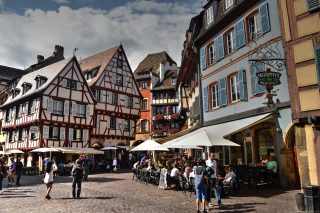
Start with a loop along the canals for the classic views: footbridges, turning locks, and rows of half-timbered houses that look especially striking in soft morning light. Place Benjamin Zix is a natural anchor point, with a compact square feel and easy access to the most photographed lanes.
Spend time simply walking without a strict plan: the joy here is in small details like carved beams, window boxes, and the way the water channels split and rejoin. If you like context, join a guided walking tour to connect the scenery to the neighborhood's past trades and the broader story of Strasbourg.
For a change of pace, build in a café stop or an early dinner in or near the quarter, then return for an evening stroll when the streets quiet down and the reflections on the water become the main event.
How to Get to the Petite France
The nearest major airports are Strasbourg Airport (SXB) for the quickest arrival, with good alternatives at EuroAirport Basel Mulhouse Freiburg (BSL/MLH) and Karlsruhe/Baden-Baden (FKB) depending on routes and prices. For the best deals and a seamless booking experience, check out these flights to Strasbourg on Booking.com.
Strasbourg is one of France's easiest cities to reach by rail, with frequent connections (including high-speed services) that bring you into Strasbourg Central Station within walking distance or a short tram hop from Petite France. You can use SNCF Connect to check schedules, compare routes, and purchase tickets for National (SNCF ) and regional trains (TER). For a more streamlined experience, we recommend using Omio, which allows you to easily compare prices, schedules, and book tickets for both National and Regional travel across all of Europe, all in one place..
From Strasbourg Central Station, you can walk to Petite France in roughly 10–15 minutes, making it a great first stop right after you arrive. If you're driving, aim for a central parking garage outside the tightest streets of the Grande Île, then continue on foot to avoid restricted access zones and congestion. If you are looking to rent a car in France I recommend having a look at Discover Cars, first, as they compare prices and review multiple car rental agencies for you.
Practical Tips on Visiting the Petite France
- Official website: https://www.visitstrasbourg.fr/decouvrir-strasbourg/les-incontournables/la-petite-france
- Entrance fee: Free.
- Opening hours: 24 Hours.
- Best time to visit: Go early morning for quieter lanes and clean canal reflections, or at golden hour for warm light on the timber frames.
- How long to spend: Plan 1–2 hours for a relaxed loop with photos; add time if you want a sit-down meal or a guided walking tour.
- Accessibility: Expect cobblestones, narrow sidewalks, and small bridges; it’s doable with care, but wheels can be bumpy and some routes are tighter than others.
- Facilities: You’ll find plenty of cafés, restaurants, and shops nearby; public restrooms are more reliable around major squares and transit hubs than deep inside the lanes.
Where to Stay Close to the Petite France
Base yourself in the Grande Île (historic center) for the easiest, most walkable access to Petite France, the Cathedral, and evening strolls without relying on transit.
Hôtel & Spa Régent Petite France A top pick for location: it sits right on the water in the heart of the quarter, ideal if you want early-morning walks before day-trippers arrive.
BOMA easy living hotel A stylish, central option that's great for travelers who want a modern vibe while staying within an easy walk of Petite France and the main shopping streets.
Hôtel Hannong Chosen for classic comfort and a strong central base; it's convenient for both Petite France and the Cathedral area, with a more traditional hotel feel.
Hôtel Kaijoo by HappyCulture A fun, social-leaning stay that works well if you like lively common spaces and want to be close to the station and the old town at once.
Ibis Strasbourg Centre Historique A practical budget-friendly choice near the edge of the center, useful if you want straightforward value and quick access to Petite France on foot.
Is the Petite France Worth Visiting?
Yes, Petite France is absolutely worth visiting if you enjoy historic neighborhoods, waterside scenery, and places that reward slow walking. It's one of those rare “famous for a reason” areas: the canals, bridges, and half-timbered houses create a compact, beautiful loop that feels distinctly Strasbourg.
Honest Pivot: if you dislike crowds, repetitive photo stops, or tourist-heavy restaurant zones, you might prefer to pass through quickly (or visit only at sunrise) and spend more time in quieter parts of the Grande Île or along the riverside paths outside the core.
For Different Travelers
Petite France is flexible: it can be a quick scenic detour, a guided history walk, or the centerpiece of a slow day in Strasbourg. The key is timing and pacing, because the experience changes a lot between early morning calm and midday bustle.
Families with Kids
Kids usually love the water, bridges, and boats, and the neighborhood’s short distances make it manageable even with little legs. Turn it into a simple “bridge hunt” walk, stopping at viewpoints where you can safely watch the locks and canal traffic.
Bring snacks and plan a warm-up stop in cooler months, since the canals can feel chilly. If you’re traveling with a stroller, choose the smoothest routes and be ready for cobblestones and occasional narrow passages.
Couples & Romantic Getaways
Petite France is one of Strasbourg's most romantic areas, especially in the evening when the day crowds thin and the lights reflect on the water. A slow loop with a café stop (or a pre-dinner stroll) is often more memorable than trying to see everything quickly.
For a special moment, pick one viewpoint and linger rather than rushing between photo spots. If you want extra context, a guided walking tour can add depth without breaking the mood.
Budget Travelers
You can get a lot out of Petite France without spending anything: the best parts are the streets, bridges, and canal views. Treat it like a self-guided photo walk and save your budget for one standout meal or a museum elsewhere.
To keep costs down, visit early, bring a refillable water bottle, and avoid the most touristy terrace menus right on the prime viewpoints. A picnic-style break on a nearby bench can be just as satisfying.
History Buffs
The neighborhood is a great entry point into Strasbourg’s broader story of trade, waterways, and the city’s shifting cultural influences. You’ll notice how the built environment reflects working life, not just grand monuments.
To go beyond the “pretty” layer, pair your walk with a guided tour that explains the old trades and the role of canals and locks in daily life. Then connect it to nearby historic sites in the Grande Île for a fuller picture.
FAQs for Visiting Petite France
Getting There
Tickets & Entry
Visiting Experience
Tours, Context & Itineraries
Photography
Accessibility & Facilities
Food & Breaks Nearby
Safety & Timing
Nearby Attractions to the Petite France
- Strasbourg Cathedral (Cathédrale Notre-Dame): A landmark Gothic cathedral with a dramatic façade and one of the city's most iconic viewpoints.
- Covered Bridges (Ponts Couverts): Historic bridges and towers that frame classic canal views at the edge of Petite France.
- Barrage Vauban: A defensive dam with a panoramic terrace that's excellent for photos over the waterways.
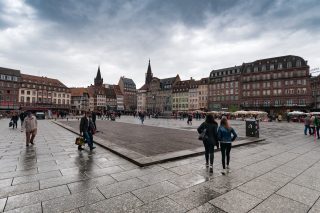
- Place Kléber: Strasbourg's central square, great for people-watching and an easy hub for exploring the rest of the city.
- Alsatian Museum (Musée Alsacien): A nearby museum that adds cultural context through regional interiors, crafts, and everyday life displays.
The Petite France appears in our Complete Guide to Visiting Strasbourg!

Moira & Andy
Hey! We're Moira & Andy. From hiking the Camino to trips around Europe in Bert our campervan — we've been traveling together since retirement in 2020!
This website uses affiliate links which may earn a commission at no additional cost to you!
Planning Your Visit
24 Hours.
Free.
Nearby Attractions
- Pont Couverts (0.2) km
Bridge, Historic Site and Viewing Point - Barrage Vauban (0.3) km
Bridge, Historic Site and Viewing Point - Saint-Jean Church (0.4) km
Church and Religious Building - Museum of Modern and Contemporary Art (0.4) km
Arts Venue, Gallery and Museum - Aubette Building (0.4) km
Historic Building, Historic Room and Museum - Place Kléber (0.4) km
Square - Rue des Grandes Arcades (0.5) km
Area, Shop and Street - Place Gutenberg (0.5) km
Attraction, Historic Site and Square - Rue Mercière (0.6) km
Area, Street and Walk - Église protestante Saint-Pierre-le-Jeune (0.6) km
Church, Historic Building and Religious Building