Palazzo San Giorgio, Genoa
Palace in Genoa
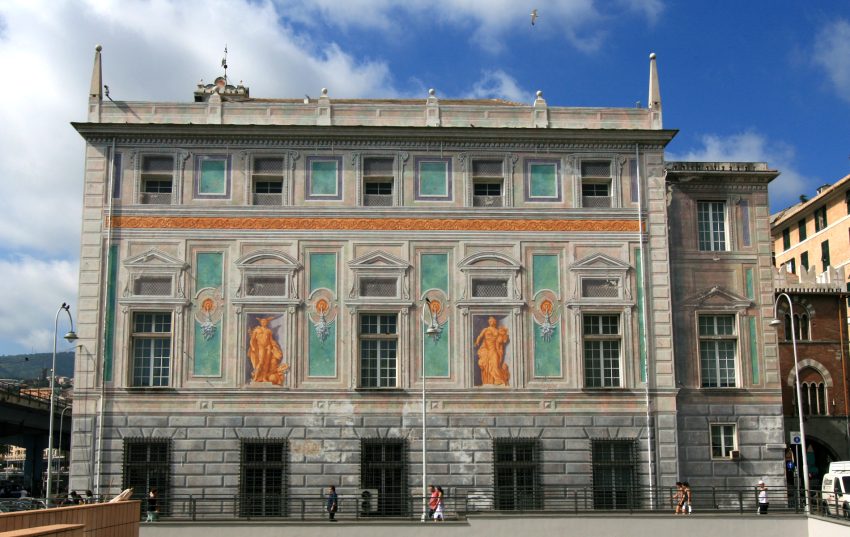
Palazzo San Giorgio is one of the must-see places in Genoa for travellers who enjoy uncovering sites where dramatic layers of history converge. While it may not be the city's most famous monument, its story spans medieval government, naval battles, legendary prisoners, and financial innovation. Standing on the edge of the old port, the palace offers an atmospheric glimpse into the city's powerful maritime era.
Its frescoed façade, Renaissance details, and location overlooking the harbour make it a great place to visit on a walking tour of Genoa. Behind its walls, Marco Polo once described his legendary adventures, and one of Europe's oldest banks guided the financial affairs of the Republic. Today, this blend of myth, memory, and maritime ambition gives the palace a special place in Genoa's heritage.
Table of Contents
- History and Significance of Palazzo San Giorgio
- Things to See and Do in Palazzo San Giorgio
- How to Get to Palazzo San Giorgio
- Practical Tips on Visiting Palazzo San Giorgio
- Where to Stay close to Palazzo San Giorgio
- Is Palazzo San Giorgio Worth Visiting?
- FAQs for Visiting Palazzo San Giorgio
- Nearby Attractions to Palazzo San Giorgio
History and Significance of Palazzo San Giorgio
The story of Palazzo San Giorgio begins in 1260, when Guglielmo Boccanegra, uncle of Genoa's first Doge, commissioned the building as a symbol of civic power. Meant to counterbalance the influence of the Church and the Cathedral of San Lorenzo, it briefly served as the centre of municipal authority. Boccanegra's political fall came swiftly, and by 1262 he was exiled to France, leaving his ambitious civic project without its patron.
By the end of the 13th century, the palace had transitioned into a prison, a role that would give it one of its most famous historical moments. In 1298, after being captured during the Battle of Curzola, Marco Polo was imprisoned here. Inside one of its cold chambers, he dictated the tales of his travels across Asia to fellow inmate Rustichello da Pisa. These accounts later formed the basis of The Travels of Marco Polo, one of the medieval world's most influential books.
The 14th century brought economic strain as Genoa's rivalry with Venice deepened and public debt soared. In response, the city founded the Bank of Saint George in 1407, establishing its headquarters within Palazzo San Giorgio. As one of the oldest chartered banks in Europe, it became a forerunner of modern financial institutions, managing state revenues, public works, and even governing overseas territories. The bank survived until the fall of the Republic in 1797, finally ceasing operations in 1805.
Things to See and Do in Palazzo San Giorgio
The palace's exterior alone is worth a visit, especially the Renaissance façade adorned with vibrant frescoes depicting Saint George and the Dragon. This colourful frontage is one of the top sights in Genoa, standing out against the port's maritime landscape. Visitors can appreciate its artwork and architectural details even if the interior is not fully accessible, as the building today serves mainly administrative functions.
Inside, selected rooms may be open during special events, conferences, or guided visits, offering a look at frescoed halls and restored spaces linked to the palace’s financial and political past. Even a brief exterior visit is enriched by the knowledge of the stories that unfolded here, from Marco Polo’s captivity to centuries of banking operations that helped shape Genoa’s fortunes.
The palace's location at the edge of Porto Antico means it pairs well with a stroll along the waterfront, where museums, plazas, and harbour views create a lively setting for a longer exploration. It's an easy stop to incorporate into a day of sightseeing or a relaxed walk through the old town.
How to Get to Palazzo San Giorgio
The nearest airport is Genoa Cristoforo Colombo Airport, located a short drive from the city centre and well connected to major European destinations. For the best deals and a seamless booking experience, check out these flights to Genoa on Booking.com.
Genoa’s main train stations, Genova Piazza Principe and Genova Brignole, both offer regular national and regional connections, making it simple to reach the palace via metro, bus, or a pleasant walk through the old town. Use Omnio to easily compare schedules, book train tickets, and find the best prices all in one place for a hassle-free journey across Italy.
Those travelling by car should be aware of restricted driving zones in the historic centre and plan to use nearby public car parks before continuing on foot. If you are looking to rent a car in Italy I recommend having a look at Discover Cars, first, as they compare prices and review multiple car rental agencies for you.
Practical Tips on Visiting Palazzo San Giorgio
- Suggested tips: Combine the palace with a visit to Porto Antico and enjoy the outdoor frescoes in soft morning or late-afternoon light.
- Best time to visit: Spring and autumn offer comfortable temperatures for exploring the area on foot.
- Entrance fee in Euros: Usually free for exterior viewing; special events or interior visits may have small fees.
- Opening hours: The exterior can be viewed at any time; interior access depends on scheduled events.
- Official website: consult Comune di Genova or Palazzo San Giorgio event listings.
- How long to spend: Around 20-40 minutes unless attending an interior event.
- Accessibility: The exterior courtyard and surrounding area are accessible; interior access varies.
- Facilities: Cafés, shops, and public areas are available nearby along the waterfront.
- Photography tip: Capture the façade from a slight angle to highlight the depth and colour of the frescoes.
- Guided tours: Occasionally available during cultural events or heritage days.
- Nearby food options: Plenty of restaurants, gelato shops, and cafés are located around Porto Antico and Via San Lorenzo.
Where to Stay close to Palazzo San Giorgio
Several hotels in Genoa offer convenient access to Palazzo San Giorgio and the port area. For a scenic stay near the waterfront, NH Collection Genova Marina provides harbour views and easy access to the old town. Travellers seeking a central location near historic landmarks can choose Hotel Bristol Palace, known for its grand interiors and classic style. A comfortable mid-range option close to both the palace and the cathedral is Best Western Porto Antico.
Is Palazzo San Giorgio Worth Visiting?
Palazzo San Giorgio is absolutely worth a stop, especially for travellers who appreciate history layered into architecture and local legends. Its connections to Marco Polo, its role in medieval finance, and its striking frescoed façade make it a memorable part of any cultural itinerary in Genoa. Even a short visit adds meaningful depth to an exploration of the old port and the historic centre.
What Other Travellers Say...

Palazzo Giorgio Doria, the yellow palace on Piazza di San Matteo, is noted for its striking portal that depicts Saint George slaying the dragon; visitors should not confuse it with the nearby church and other Doria palaces that also surround the square.

FAQs for Visiting Palazzo San Giorgio
Nearby Attractions to Palazzo San Giorgio
- Genoa Aquarium: One of Europe's largest aquariums with marine life displays for all ages.
- San Lorenzo Cathedral: The city's main cathedral with striking striped stonework and a treasury.
- Porto Antico: A lively waterfront district with museums, promenades, and restaurants.
- Via San Lorenzo: A historic street linking the palace to Genoa’s medieval heart.
- Palazzo Ducale: Genoa's former seat of government, now a major cultural centre with exhibitions.
The Palazzo San Giorgio appears in our Complete Guide to Visiting Genoa!

Moira & Andy
Hey! We're Moira & Andy. From hiking the Camino to trips around Europe in Bert our campervan — we've been traveling together since retirement in 2020!
This website uses affiliate links which may earn a commission at no additional cost to you!
Planning Your Visit
Open every day except Sundays, from 9: 00 a.m. to 12:30 p.m. and from 4:00 p.m. to 7:00 p.m. Only open from 4:00 p.m. to 7:00 pm on Mondays.
Nearby Attractions
- Aquarium (0.2) km
Aquarium - Porto Antico (0.2) km
Port - National Gallery in Palazzo Spinola (0.2) km
Gallery and Historic Building - Cathedral of San Lorenzo (0.3) km
Cathedral - Santa Maria di Castello (0.4) km
Church - Via Garibaldi Palaces (0.4) km
Palace - Piazza Matteotti (0.4) km
Square - Doge’s Palace (0.4) km
Palace - Church of Jesus and the Saints Ambrogio and Andrea (0.5) km
Church - Piazza De Ferrari (0.5) km
Square


