Palace of the Counts of Poitou, Poitiers
Palace in Poitiers
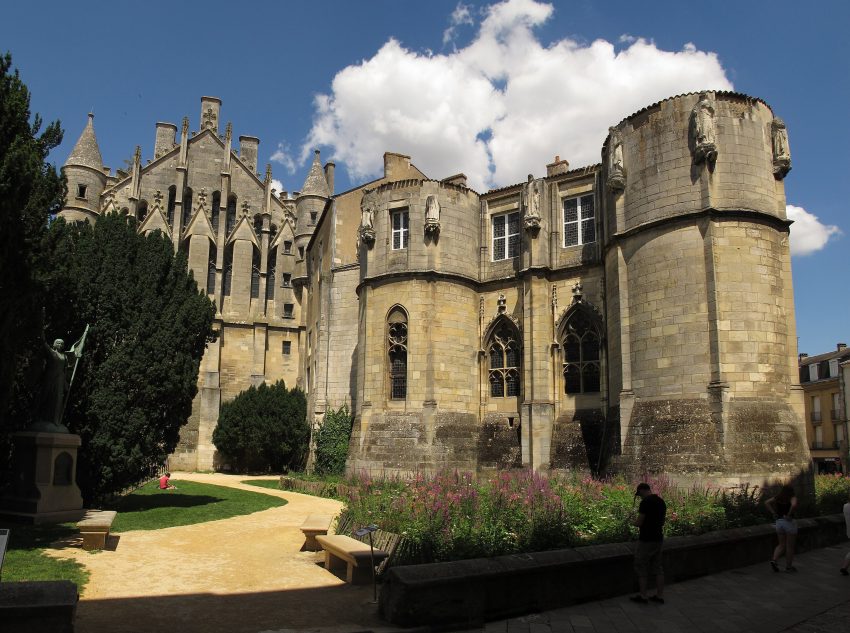
Rising above the historic heart of Poitiers, the Palace of the Counts of Poitou - also known as the Palace of Poitiers - is where political power, courtly life and dramatic episodes in French history once played out. Originally built in the 9th century under Louis the Pious and later transformed by the powerful dukes of Aquitaine, the palace still exudes the authority of its former residents, from Eleanor of Aquitaine to the Plantagenet dynasty. Today, visitors wander through its great ceremonial spaces, towered silhouettes and Gothic façades, imagining the days when pleas were heard, alliances forged and justice dispensed beneath its timbered roofs.
The star of the complex is the Salle des Pas Perdus, a vast 12th century hall commissioned by Eleanor of Aquitaine that stretches an impressive 50 metres long and 17 metres wide. Once one of the largest royal halls in medieval Europe, it feels almost like a stone ship turned upside down, with its high roof and monumental scale giving an instant sense of how formidable this residence once was. Outside, the Maubergeon Tower reminds you that this was not only a courtly setting but also a fortress, a place built for both ceremony and defence and a highlight of any walking tour of Poitiers that explores the city's political and religious core.
Table of Contents
- History and Significance of the Palace of the Counts of Poitou
- Things to See and Do in the Palace of the Counts of Poitou
- How to Get to the Palace of the Counts of Poitou
- Practical Tips on Visiting the Palace of the Counts of Poitou
- Where to Stay close to the Palace of the Counts of Poitou
- Is the Palace of the Counts of Poitou Worth Visiting
- FAQs for Visiting the Palace of the Counts of Poitou
- Nearby Attractions to the Palace of the Counts of Poitou
History and Significance of the Palace of the Counts of Poitou
The palace traces its origins to the 9th century, when Louis the Pious ordered a royal residence to be built in Poitiers, capital of the county and a key stronghold in western France. Over the following centuries, the complex grew in phases, reflecting both the changing needs of its rulers and the evolving architectural styles of their times. The arrival of Eleanor of Aquitaine in the 12th century marked a turning point: as one of the most influential figures in medieval Europe, she transformed the palace into a true Plantagenet court, commissioning the great ceremonial hall that would become the Salle des Pas Perdus.
This hall was not only architecturally ambitious but also politically symbolic. With its monumental dimensions and elegant supports, it projected the power and prestige of the counts of Poitou and dukes of Aquitaine, who were closely tied to the English crown through Eleanor’s marriages. A few decades earlier, in 1104, Count William IX had already added the Maubergeon Tower, which served as a defensive donjon and visible assertion of authority over the surrounding town. Together, the hall and tower illustrate how the palace blended fortress, residence and administrative centre in one layered ensemble.
The site also played a role in wider French history. In 1429, during the Hundred Years’ War, the young Joan of Arc was interrogated here so that theologians and officials could assess her claims before she was sent on to the royal court. By the 13th century the palace was increasingly used for governmental and judicial functions, and that administrative role slowly eclipsed its residential one. In the 19th century it was formally reshaped as a courthouse, a function it retained until 2019, which is why so much of its later history is tied to law rather than royalty. Today, restoration projects are carefully peeling back those layers, revealing the medieval fabric and returning the palace to public life as a cultural and historic landmark.
Things to See and Do in the Palace of the Counts of Poitou
Most visits begin in the courtyard, where you can appreciate the complex as a whole before stepping inside. From here, the contrast between the older, fortified sections and the later Gothic and administrative additions becomes clear. Take a moment to seek out the Maubergeon Tower, whose robust form and elevated position evoke its original defensive purpose. The tower’s presence, alongside more refined façades, neatly sums up how this place once had to be both a home for rulers and a bulwark in uncertain times.
Inside, the Salle des Pas Perdus is the undeniable centrepiece. Walking the length of this hall, with its soaring roof and generous volume, gives a physical sense of the scale at which medieval politics operated. Imagine it filled with courtiers, petitioners and envoys as Eleanor of Aquitaine or later rulers presided over ceremonies and assemblies. Architectural details such as the window placements, supporting elements and surviving decorative traces reward close inspection, especially if you enjoy comparing them with other Plantagenet or Gothic spaces you may have seen elsewhere in France.
Beyond the great hall, guided-tours and exhibitions usually lead you through other parts of the palace that showcase its Gothic Flamboyant additions and later adaptations. You may see former judicial rooms, restored chambers and interpretive displays that explain how the building evolved from royal residence to courthouse and now to cultural venue. The palace frequently hosts temporary exhibitions, concerts or events, which add a contemporary layer to your visit. Combine your time here with Notre-Dame-la-Grande and the cathedral nearby, and you will quickly see why this complex is one of the must-see places in Poitiers for anyone interested in how architecture and power intertwine.
How to Get to the Palace of the Counts of Poitou
If you are arriving by air, the closest gateway is Poitiers-Biard Airport, from which you can take a taxi or local bus into the city centre and then walk up to the historic quarter where the palace stands. For the best deals and a seamless booking experience, check out these flights to Poitiers on Booking.com.
By train, head to Poitiers' main railway station; from there it is around a 15-20 minute walk into the old town, or a short local bus ride, followed by a brief walk to reach the palace near the cathedral and other central monuments. You can use SNCF Connect to check schedules, compare routes, and purchase tickets for National (SNCF ) and regional trains (TER). For a more streamlined experience, we recommend using Omio, which allows you to easily compare prices, schedules, and book tickets for both National and Regional travel across all of Europe, all in one place.
If you are travelling by car, follow signs towards central Poitiers and look for public car parks near the historic centre; once parked, you can explore on foot, with the palace easily reached via the old streets leading off the main squares. If you are looking to rent a car in France I recommend having a look at Discover Cars, first, as they compare prices and review multiple car rental agencies for you.
Practical Tips on Visiting the Palace of the Counts of Poitou
- Suggested tips: Join a guided tour if available, as the stories of Eleanor of Aquitaine, the Plantagenets and Joan of Arc add enormous depth to what you see in the stonework.
- Best time to visit: Late morning or mid afternoon work well, giving you time to link the visit with nearby sites such as Notre-Dame-la-Grande and the cathedral without rushing.
- Entrance fee: Free
- Opening hours: Monday to Friday, 11:00 to 19:00, (closed on Tuesdays)
- How long to spend: Plan on 60-90 minutes to explore the main spaces, join a short tour if offered and linger over architectural details and viewpoints.
- Accessibility: Some areas are accessible, but historic staircases and uneven floors mean not all parts of the palace can be reached with reduced mobility; ask staff which routes are step free.
- Facilities: Expect basic visitor facilities tied to tour operations; for cafés, toilets and shops, rely on the surrounding streets and nearby squares in the old town.
- Photography tip: Wide angle shots in the Salle des Pas Perdus capture its full length and height, while exterior photos work best in softer morning or late afternoon light from the courtyard or adjacent streets.
- Guided tours: Official guided-tours are the best way to access more of the complex and hear detailed stories about the Maubergeon Tower, Joan of Arc's interrogation and the palace's Plantagenet past.
- Nearby food options: The historic centre around the palace is packed with cafés, bistros and bakeries, so it is easy to combine your visit with lunch, a coffee stop or an evening drink.
Where to Stay close to the Palace of the Counts of Poitou
Staying in Poitiers’ historic centre makes visiting the palace easy and atmospheric. A comfortable, central choice is Hôtel de l'Europe, which places you within walking distance of the palace, Notre-Dame-la-Grande and the main squares. For a more traditional hotel experience near the old town streets, Best Western Poitiers Centre Le Grand Hôtel offers convenient access to shops, restaurants and key sights. If you prefer to be closer to the station while still enjoying a short walk up to the palace and historic core, Hotel Central can work well as a practical base.
Is the Palace of the Counts of Poitou Worth Visiting
The Palace of the Counts of Poitou is very much worth visiting, especially if you are interested in medieval politics, royal courts or the life of Eleanor of Aquitaine. Few places in western France allow you to step so directly into a former ducal residence and stand in a hall that once hosted ceremonies and interrogations that shaped national history. The combination of the Salle des Pas Perdus, the Maubergeon Tower and later Gothic and administrative layers turns the complex into a living timeline, charting Poitiers' journey from medieval capital to modern city. As part of a broader circuit that includes Notre-Dame-la-Grande, the cathedral and nearby squares, it gives your time in Poitiers a strong narrative backbone rather than just a list of isolated monuments.
What Other Travellers Say...

Palace Of The Counts Of Poitiers sits on Place Alphonse Lepetit in Poitiers, France; visitors describe it as a museum and point of interest in the town center, noted for its location and role as an established local attraction.


FAQs for Visiting the Palace of the Counts of Poitou
Nearby Attractions to the Palace of the Counts of Poitou
- Church of Notre-Dame-la-Grande: A superb Romanesque church with a richly sculpted façade and peaceful interior, just a short walk away.
- Poitiers Cathedral (Cathédrale Saint-Pierre): The city's main Gothic cathedral, offering a striking contrast to the palace's Plantagenet architecture.
- Place Charles-de-Gaulle: A lively square with cafés and shops, ideal for a break before or after your palace visit.
- Baptistery of Saint-Jean: One of the oldest Christian buildings in France, adding an early medieval layer to your exploration of Poitiers.
- Historic streets of the old town: Wander the surrounding lanes lined with half timbered houses and mansions to get a fuller sense of Poitiers’ long urban history.
The Palace of the Counts of Poitou appears in our Complete Guide to Visiting Poitiers!

Moira & Andy
Hey! We're Moira & Andy. From hiking the Camino to trips around Europe in Bert our campervan — we've been traveling together since retirement in 2020!
This website uses affiliate links which may earn a commission at no additional cost to you!
Planning Your Visit
Monday to Friday, 11:00 to 19:00, (closed on Tuesdays)
Free
Nearby Attractions
- Church of Notre-Dame-la-Grande (0.1) km
Church - Place de la Liberté (0.3) km
Square - Place du Maréchal Leclerc (0.4) km
Square - Amphithéâtre de Poitiers (0.5) km
Amphitheatre and Roman Site - Musée Sainte-Croix (0.6) km
Museum - Cathédrale Saint-Pierre de Poitiers (0.6) km
Cathedral - Baptistère Saint-Jean (0.6) km
Baptistery - Poitiers Prefecture (0.6) km
Historic Building - City Walls of Poitiers (1.2) km
City Walls - Parc de Blossac (1.2) km
Park