Oratorio di San Francesco Piccolino, Assisi
Religious Building in Assisi
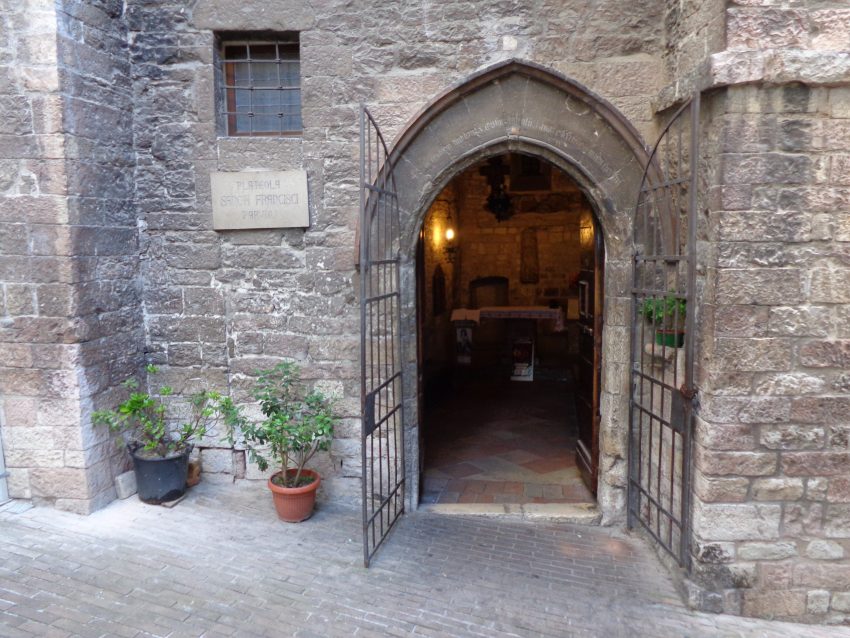
Tucked into the historic centre of Assisi, the Oratorio di San Francesco Piccolino is one of those places you can easily walk past unless you know to look for it. It is small-almost disarmingly so-but that is exactly the point. This is not a grand basilica built to impress; it is a quiet, stone-lined space that invites you to slow down and notice the details: the cool air, the hush of the alley, and the sense that you've stepped into a pocket of Assisi that still belongs to the Middle Ages.
Tradition links the oratory to the story of Saint Francis’ birth, with local memory placing a humble stable here-an echo of the Nativity motif that shaped so much medieval devotion. Whether you arrive as a pilgrim, a history-minded traveller, or someone simply collecting Assisi’s most atmospheric corners, the experience is quick but surprisingly affecting. It pairs naturally with nearby Franciscan sites, making it an ideal “small stop with big meaning” between the city’s headline monuments.
Table of Contents
- History and Significance of the Oratorio di San Francesco Piccolino
- Things to See and Do in the Oratorio di San Francesco Piccolino
- How to Get to the Oratorio di San Francesco Piccolino
- Practical Tips on Visiting the Oratorio di San Francesco Piccolino
- Where to Stay Close to the Oratorio di San Francesco Piccolino
- Is the Oratorio di San Francesco Piccolino Worth Visiting?
- For Different Travelers
- FAQs for Visiting Oratorio di San Francesco Piccolino
- Nearby Attractions to the Oratorio di San Francesco Piccolino
History and Significance of the Oratorio di San Francesco Piccolino
The significance of the Oratorio di San Francesco Piccolino is rooted in tradition: the belief that this modest space preserves the location where Francis of Assisi was born. Over time, the story became part of the city's sacred geography, turning an ordinary domestic corner into a place of pilgrimage. The oratory's importance is less about monumental scale and more about memory-how Assisi maps holiness onto everyday spaces.
The oratory was shaped into a devotional site in the later Middle Ages, with later architectural touches-most notably a Gothic doorway-marking its transition from private space to public sanctuary. Like many Franciscan-linked sites in Assisi, it sits at the boundary between documented history and living tradition, and that tension is part of what makes it compelling: you are visiting a place that matters because people have cared about it for centuries.
In practical terms, the oratory also functions as a reminder of what Francis represented to Assisi: humility, simplicity, and a faith expressed through ordinary life. In a town filled with famous churches, this small chapel helps balance the itinerary-less spectacle, more intimacy, and a stronger sense of the human-scale Assisi that shaped Francis' early story.
Things to See and Do in the Oratorio di San Francesco Piccolino
Begin outside, where the approach itself feels like part of the visit: a narrow passage, an unassuming entrance, and the sense that you’ve found something slightly hidden. Look for the inscription and the small architectural cues that signal this is not just a side street feature, but a place deliberately marked and protected by local devotion.
Inside, the space is simple and stone-dominant, with a rustic vault and an atmosphere that encourages quiet. Depending on access and the day, you may notice traces of older decoration and the way the chapel's layout is designed for brief, reflective visits rather than long touring. This is a place to spend ten focused minutes rather than an hour-long enough to absorb the mood, short enough to fit easily into a packed Assisi day.
A satisfying way to experience it is as part of a mini Franciscan loop: combine it with the nearby Chiesa Nuova, then continue toward Piazza del Comune for civic Assisi, or pivot toward the Basilica of Saint Clare for the next major Franciscan landmark. The oratory works best as a “bridge stop” that adds texture and meaning between larger, busier sites.
How to Get to the Oratorio di San Francesco Piccolino
Assisi is most commonly reached via Perugia San Francesco d'Assisi Airport or Rome's airports, then onward by rail or bus connections to Umbria. For the best deals and a seamless booking experience, check out these flights to Assisi on Booking.com.
By train, the usual approach is to arrive at Assisi railway station (in the Santa Maria degli Angeli area) and then take a local bus or taxi up to the historic centre before walking the final stretch through the old town lanes. Use Omnio to easily compare schedules, book train tickets, and find the best prices all in one place for a hassle-free journey across Italy.
If you are driving, note that Assisi’s historic centre has restricted traffic zones, so you will typically park outside the core and walk uphill or use a shuttle/bus into the centre. If you are looking to rent a car in Italy I recommend having a look at Discover Cars, first, as they compare prices and review multiple car rental agencies for you.
Practical Tips on Visiting the Oratorio di San Francesco Piccolino
- Entrance fee: Free.
- Opening hours: (Summer) Daily: 08:00–12:30 & 14:30–19:00. (Winter) Daily: 08:00–12:30 & 14:30–18:00.
- Official website: https://www.visit-assisi.it/en/monuments/religious-buildings/chiesa-nuova/
- Best time to visit: Early morning or late afternoon, when the lanes are quieter and the interior feels most contemplative.
- How long to spend: Plan for 10-20 minutes, longer only if you are visiting as part of a reflective pilgrimage walk.
- Accessibility: Expect narrow approaches and uneven historic paving; access can be challenging for wheelchairs and may require assistance.
- Facilities: No dedicated visitor facilities on-site; plan to use cafés and restrooms around Piazza del Comune or the larger basilica areas.
Where to Stay Close to the Oratorio di San Francesco Piccolino
For a culture-heavy Assisi itinerary, base yourself in the historic centre so you can walk to the major Franciscan sites early and late in the day; if you prioritise transport convenience, consider Santa Maria degli Angeli near the train station and use buses/taxis to reach the old town.
If you want to stay walkably close to the oratory and the heart of Assisi’s lanes, consider Hotel Ideale for a central position near key sights, or Hotel Il Palazzo if you want a classic old-town base between the basilica area and the main squares. For a comfortable, well-located option near the Basilica of Saint Francis with easy access into the centre, Hotel Sorella Luna is a strong choice.
Is the Oratorio di San Francesco Piccolino Worth Visiting?
Yes-if you value the “small places with strong atmosphere” that make a destination feel real, this is absolutely worth the short detour. It adds emotional and historical texture to Assisi, especially when you are tracing Franciscan themes beyond the headline basilicas.
The honest pivot is that you can skip it if your time is extremely tight and you prefer large-scale art, fresco cycles, and big interior spaces-this is not that kind of visit. It is best for travellers who enjoy intimate corners, layered local tradition, and the quieter notes of a city that can otherwise feel dominated by its major monuments.
What Other Travellers Say...
Reviews Summary
Oratorio di San Francesco Piccolino, tucked into a small lane in Assisi's historic centre (piazzetta S. Francesco piccolino), is a tiny, austere oratory traditionally linked to St Francis's birthplace and early childhood. It is small and simple by design, and reviewers consistently describe it as a peaceful pause away from Assisi's main crowds, suited to a short moment of reflection and quiet prayer. Despite its modest scale it is very highly rated (4.8 from 72 reviews), with visitors valuing the atmosphere of humility and the sense of Franciscan “poverty” and spirituality it evokes.
For Different Travelers
Families with Kids
This works best as a quick “hidden spot” stop rather than a long visit-set expectations that it’s small and quiet. Pair it with a short snack break afterwards and let kids treat it like a mini scavenger hunt: find the tucked-away entrance, then step inside for a brief look.
If you have a stroller, be ready for uneven paving and tight approaches in the lanes. It’s easier to visit when the streets are calmer, so aim for earlier in the day.
Couples & Romantic Getaways
The appeal here is the intimacy: a short walk through medieval lanes to a hushed, stone interior that feels removed from the busier routes. It's a good “soft moment” in an Assisi day-especially if you're pacing yourselves between bigger sites.
Follow it with a slow wander toward Piazza del Comune or a viewpoint walk later, using the oratory as a quiet reset before returning to the town's livelier streets.
Budget Travelers
This is an easy win: meaningful, central, and typically free, with no need for tours or add-ons. It also helps you build a strong Assisi itinerary that isn't just ticketed attractions-mixing major churches with smaller devotional sites.
Keep your route efficient by pairing it with nearby highlights you can reach on foot, reducing transport costs and maximising what you can see in a single day.
FAQs for Visiting Oratorio di San Francesco Piccolino
Getting There
Tickets & Entry
Visiting Experience
Tours, Context & Itineraries
Photography
Accessibility & Facilities
Food & Breaks Nearby
Safety & Timing
Nearby Attractions to the Oratorio di San Francesco Piccolino
- Chiesa Nuova: Built over the house traditionally linked to Francis' family, with clear visitor interpretation and a central location.
- Piazza del Comune: Assisi's main square, ideal for cafés and people-watching, surrounded by key civic landmarks.
- Basilica of Saint Clare: A major Franciscan site with powerful devotional focus and a strong sense of place in the town's story.
- Papal Basilica of Saint Francis: Assisi's most famous monument, combining pilgrimage, art, and sweeping views from the complex.
- Rocca Maggiore: The hilltop fortress with some of the best panoramic viewpoints over Assisi and the Umbrian valley.
The Oratorio di San Francesco Piccolino appears in our Complete Guide to Visiting Assisi!

Moira & Andy
Hey! We're Moira & Andy. From hiking the Camino to trips around Europe in Bert our campervan — we've been traveling together since retirement in 2020!
This website uses affiliate links which may earn a commission at no additional cost to you!
Planning Your Visit
(Summer) Daily: 08:00-12:30 & 14:30-19:00.
(Winter) Daily: 08:00-12:30 & 14:30-18:00.
Free.
Nearby Attractions
- Casa natale di San Francesco (0.0) km
Historic Site - Chiesa Nuova (0.1) km
Church - Palazzo dei Priori (0.1) km
Palace - Diocesan Museum and San Rufino Crypt (0.1) km
Museum - Piazza del Comune (0.1) km
Square - Temple of Minerva (0.1) km
Roman Site - Palazzo del Capitano del Popolo (0.1) km
Palace - Cattedrale di San Rufino di Assisi (0.2) km
Cathedral - Roman Forum and Archaeological Museum (0.2) km
Roman Site - Chiesa di Santa Maria Maggiore (0.2) km
Basilica, Historic Building and Historic Site