Musée Jean Lurçat et de la Tapisserie Contemporaine, Angers
Museum in Angers
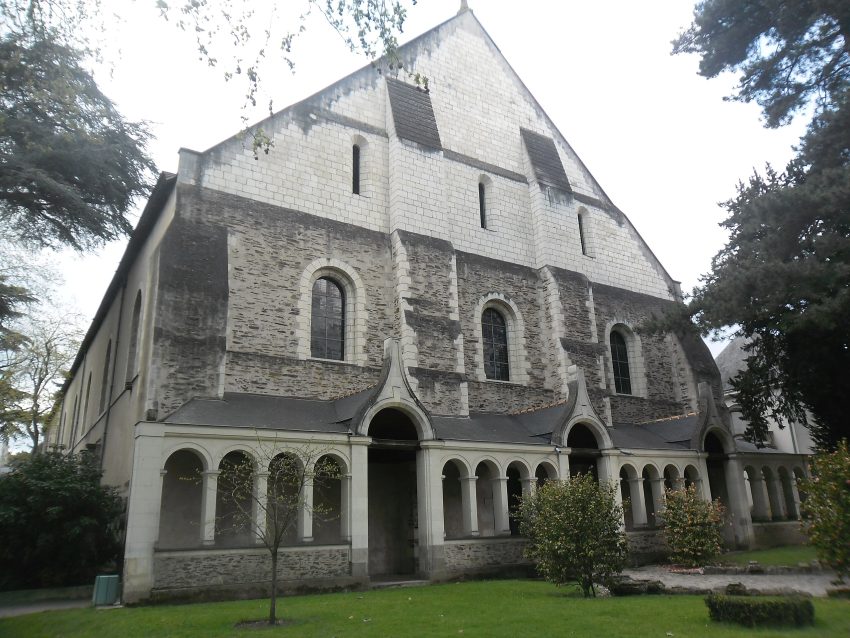
Musée Jean Lurçat et de la Tapisserie Contemporaine in Angers is an art museum devoted to modern tapestry and textile creation. It occupies the former Hôpital Saint-Jean, a medieval hospital complex whose long vaulted ward gives the museum its most memorable setting.
The main reason to visit is Jean Lurçat”s Le Chant du Monde, a large tapestry cycle created as a 20th-century response to the Apocalypse Tapestry in Angers. The experience is quiet and focused rather than crowded or theatrical, best suited to visitors who enjoy symbolic art, architecture, and slow-looking.
Table of Contents
- History and Significance
- Things to See and Do
- How to Get to the Musée Jean Lurçat et de la Tapisserie Contemporaine
- Is the Musée Jean Lurçat et de la Tapisserie Contemporaine Worth Visiting?
- Practical Tips on Visiting the Musée Jean Lurçat et de la Tapisserie Contemporaine
- Where to Stay Close
- FAQs for Visiting the Musée Jean Lurçat et de la Tapisserie Contemporaine
History and Significance
The medieval hospital
The museum”s setting is the former Hôpital Saint-Jean, a 12th-century hospital complex on the north side of central Angers. Its old ward, with stone arches and a long open volume, gives the tapestries a scale and seriousness that a standard gallery would struggle to match.
The building was originally connected with care and shelter rather than art. That past still matters during a visit, because the space feels restrained, practical, and architectural before it feels decorative.
Jean Lurçat and Le Chant du Monde
Jean Lurçat created Le Chant du Monde between 1957 and 1966. The cycle was conceived as a modern counterpoint to Angers” medieval Apocalypse Tapestry, replacing end-times imagery with 20th-century fears and hopes.
The panels deal with destruction, war, science, nature, and renewal. They are not light decorative works, but large symbolic compositions that ask visitors to read details slowly.
A museum for contemporary textile art
The museum is not limited to Lurçat”s work. A neighboring building presents textile art from the 20th century onward, showing how tapestry moved beyond courtly or religious settings into modern artistic language.
This makes the museum one of the clearest places in Angers to understand the city”s connection with tapestry as a living medium. The visit links medieval architecture, postwar art, and contemporary textile practice in a compact site.
Things to See and Do
The main event is Le Chant du Monde in the old hospital ward. Stand back first to take in the full rhythm of the panels, then move closer to pick out suns, animals, machines, figures, and repeated symbols that shift the mood between alarm and recovery.
Do not rush past the cloister and adjoining spaces. The quieter parts of the complex show a different side of the visit, with stone arcades, enclosed outdoor space, and smaller textile displays that give the main hall room to breathe.
I would treat the museum as a slow one-hour stop rather than a quick photo stop. The lighting, scale, and subject matter reward a measured pace, especially if you have already seen the Apocalypse Tapestry elsewhere in Angers.
How to Get to the Musée Jean Lurçat et de la Tapisserie Contemporaine
The nearest airport is Angers Loire Airport, though Nantes Atlantique is the more useful major airport for most scheduled flights to the region. For the best deals and a seamless booking experience, check out these flights to Angers on Booking.com.
Angers-Saint-Laud station receives TGV and regional trains, including fast links from Paris and Nantes, and the museum is reached from there by tram, bus, taxi, or a longer walk across the centre. You can use SNCF Connect to check schedules, compare routes, and purchase tickets for National (SNCF ) and regional trains (TER). For a more streamlined experience, we recommend using Omio, which allows you to easily compare prices, schedules, and book tickets for both National and Regional travel across all of Europe, all in one place.
By car, use the central Angers road network and plan to park nearby rather than directly at the museum, as the immediate streets around Boulevard Arago and the river are better suited to short access than relaxed parking. If you are looking to rent a car in France I recommend having a look at Discover Cars, first, as they compare prices and review multiple car rental agencies for you.
Is the Musée Jean Lurçat et de la Tapisserie Contemporaine Worth Visiting?
Yes, the Musée Jean Lurçat et de la Tapisserie Contemporaine is worth a short stop if you are interested in art, textile work, or the contrast between medieval architecture and modern imagery. It is best for visitors who like quiet museums and symbolic artworks that take time to read. Skip it if your Angers visit is very short and you prefer castles, outdoor viewpoints, shopping streets, or more conventional painting galleries.
What Other Travellers Say...

Musée Jean-Lurçat et de la tapisserie contemporaine, at 4 Bd Arago, Angers, is housed in a well-preserved former hospital complex and is best known for Jean Lurçat's 1960s tapestry series Le Chant du Monde; visitors praise its tranquil cloisters, calm garden and varied exhibitions, note friendly helpful staff, multilingual guides, and advise keeping your ticket to access both the tapestry and cloister (bags may need to be checked).


Practical Tips on Visiting the Musée Jean Lurçat et de la Tapisserie Contemporaine
- Best time to visit: Visit earlier in the day for a quieter look at the main tapestry hall. A rainy or cold day also works well, since most of the experience is indoors.
- How long to spend: Allow about 1 hour for the main works and cloister. Art-focused visitors may want closer to 90 minutes.
- Accessibility: The museum provides accessible routes to the collections, with adapted access points and sanitary facilities. Some circulation may still feel slower because the site is historic.
- Facilities: Expect basic museum facilities such as ticketing, restrooms, and visitor assistance. Small bags are easier, as lockers or bag checks may be required for some items.
Where to Stay Close
For a culture-heavy Angers itinerary, base yourself in the city centre between Place du Ralliement, the château, and Angers-Saint-Laud station. This keeps the Musée Jean Lurçat, the castle, the cathedral, and the main restaurants within practical walking or tram distance.
Hôtel du Mail suits travelers who want a quieter central stay with courtyard surroundings rather than a station-area feel. Continental Hôtel works well for a simple central base near shops, trams, and the historic core. If train access matters more than old-town atmosphere, Novotel Angers Centre Gare is a practical choice by Angers-Saint-Laud.
FAQs for Visiting the Musée Jean Lurçat et de la Tapisserie Contemporaine
Getting There
Tickets & Entry
Visiting Experience
Tours, Context & Itineraries
Photography
Accessibility & Facilities
Food & Breaks Nearby
Safety & Timing
The Musée Jean Lurçat et de la Tapisserie Contemporaine appears in our Complete Guide to Visiting Angers!

Moira & Andy
Hey! We're Moira & Andy. From hiking the Camino to trips around Europe in Bert our campervan — we've been traveling together since retirement in 2020!
This website uses affiliate links which may earn a commission at no additional cost to you!
Planning Your Visit
Tuesday to Sunday • 10:00-18:00
Closed May 1, Nov. 1 and 11, Dec. 25 and Jan. 1
€6
Nearby Attractions
- Tour des Anglais (0.1) km
Tower - Pincé Museum (0.8) km
Museum - Palacio del Tau (0.8) km
Palace - Cathédrale Saint-Maurice d'Angers (0.9) km
Cathedral - Grand Théâtre (0.9) km
Theatre - Maison d’Adam (0.9) km
Historic Building - Château d’Angers (0.9) km
Castle - Museum of Natural Sciences (0.9) km
Museum - Galerie David d'Angers (1) km
Museum - Jardin des Plantes (1) km
Gardens