Muralla del Revellín, Logroño
City Gate and City Walls in Logroño
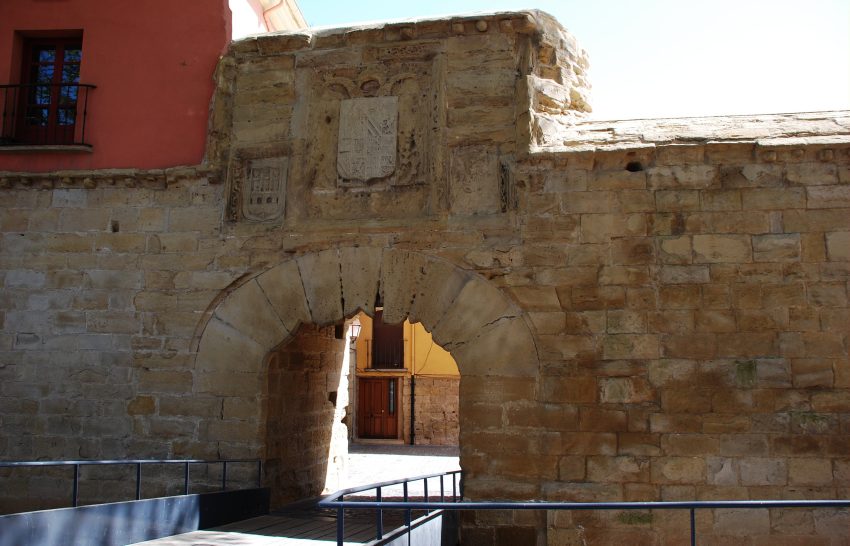
The Walls of Revellín are where Logroño's fortified past comes sharply into focus. Tucked near the western side of the Old Town, these stout stone ramparts and their preserved gate once formed part of the city's defensive ring. Between 1498 and 1540, Logroño underwent its most important fortification phase, reinforcing medieval walls to protect a growing, strategically placed town on the banks of the Ebro. What you see today is a powerful fragment of that system: a west-facing gate and adjoining walls that still feel imposing when you stand beneath them.
Their story is tied to one of Logroño's defining moments. On 25 May 1521, during the turbulent years of the comunero uprising, troops of Francis I of France under General Asparrot besieged the city. Captain Vélez de Guevara organised the defence, and Logroño held out. Just a year later, in 1522, work began on the visible section of wall and gate that survives, a stone reminder of how close the city came to being overrun. Today, the Walls of Revellín form a characterful backdrop to modern streets, with later houses leaning against them and a calm urban space where you can pause and imagine cannon fire, sentries on watch, and gates slammed shut at night. It is one of the must-see places in Logroño for travellers who like to mix architecture, storytelling, and city views, and it is often visited on walking tours of Logroño that trace the old defences and Camino route.
Table of Contents
- History and Significance of Walls of Revellín
- Things to See and Do in Walls of Revellín
- How to Get to Walls of Revellín
- Practical Tips on Visiting Walls of Revellín
- Where to Stay close to Walls of Revellín
- Is Walls of Revellín Worth Visiting?
- FAQs for Visiting Walls of Revellín
- Nearby Attractions to Walls of Revellín
History and Significance of Walls of Revellín
Logroño's position on the Ebro made it a natural crossing point and a coveted stronghold, so fortifications have existed here in some form since medieval times. The most intensive work took place between 1498 and 1540, when the old medieval wall was strengthened and extended to respond to changing warfare and regional tensions. The area now known as the Walls of Revellín belonged to this renewed defensive perimeter, guarding the western approach to the city.
The crisis of 1521 gave those walls a very real test. In the wake of the comunero uprising, French troops allied with rebel forces marched on Logroño. On 25 May, General Asparrot's men besieged the city, bombarding its walls and probing for weaknesses. Inside, Captain Vélez de Guevara coordinated the defence, and the citizens held the line until the attackers were forced to withdraw. That stubborn resistance became a key part of local memory, and it is no coincidence that the section of fortification you see today began construction just one year later, in 1522-an architectural answer to a near-disaster.
From the second half of the 16th century onwards, the strategic importance of Logroño’s fortifications gradually faded. As new military priorities and technologies emerged, the walls were less rigorously maintained. Private buildings began to lean against the ramparts, turning defences into convenient structural supports. Yet, despite encroachment and decay, the Revellín section endured. What survives is a textured slice of history: stone that has seen siege, neglect, and urban growth, now repurposed as a heritage landmark rather than a military necessity.
Things to See and Do in Walls of Revellín
When you arrive at the Walls of Revellín, start by stepping back to take in the overall structure: the thick masonry, the surviving west-facing gate, and the way the walls rise above the surrounding streets. From this angle, it's easier to picture lines of defenders behind the battlements and attackers attempting to breach the city's outer skin. Even with modern buildings pressed up against parts of the wall, the sense of mass and solidity is unmistakable.
Walk closer to explore the details of the gate and the stonework. Look for changes in masonry that hint at different construction phases, as well as traces of where the walls may once have continued further. The combination of open space in front of the gate and houses behind creates an interesting contrast: a former battlefield turned into a neighbourhood square. At certain times, the walls are used as a backdrop for local events, cultural activities, or historically themed displays, underlining their ongoing role in Logroño’s identity.
Finally, use the immediate area as a springboard to explore the surrounding Old Town. From the Revellín remains, it's a short walk to Calle Laurel and Calle San Juan for pintxos, to the cathedral and Plaza del Mercado for church façades and café terraces, and toward the river and Puente de Piedra for Ebro views. This spot is one of the best places to see in Walls of Revellín's part of the city if you want to tie together Logroño's military past, urban evolution, and modern-day charm in a single stop.
How to Get to Walls of Revellín
The Walls of Revellín are located on the western edge of Logroño's historic centre, within easy walking distance of the main Old Town sights. From the cathedral or Plaza del Mercado, you can reach them in just a few minutes by following local signs or using a map; the surviving gate and stone rampart stand out clearly amid the more recent buildings.
If you are arriving by air, you might land at Logroño-Agoncillo Airport or at larger airports such as Bilbao or Zaragoza before travelling on to Logroño by road or public transport. For the best deals and a seamless booking experience, check out these flights to Logroño on Booking.com. Once in the city centre, most hotels near the Old Town place you a short walk from the Revellín area.
Arriving by train brings you into Logroño's main railway station, which has regular connections to Madrid, Zaragoza, and other regional hubs.Train schedules and bookings can be found on Omio. From the station, it is typically a 15-20 minute walk or a brief taxi or bus ride into the historic centre; from there, you can easily navigate on foot to the Walls of Revellín.
If you are driving, major roads and motorways link Logroño with the rest of La Rioja and northern Spain.If you are looking to rent a car in Spain I recommend having a look at Discover Cars, first, as they compare prices and review multiple car rental agencies for you. Park in one of the public car parks near the centre, then explore the Old Town on foot; the walk to the walls will lead you through some of the most atmospheric streets in the city.
Practical Tips on Visiting Walls of Revellín
- Suggested tips: Combine a visit to the Walls of Revellín with a wider circuit of the Old Town-start at the fortifications, loop past the cathedral, then reward yourself with pintxos on Calle Laurel.
- Best time to visit: Late afternoon or early evening offers softer light on the stone and a pleasant atmosphere, especially if you plan to continue into a tapas crawl afterwards.
- Entrance fee: The exterior remains and surrounding space are generally free to access as part of the public street and square.
- Opening hours: The walls can be viewed at any time from outside; any interior or exhibition areas that may occasionally open will follow specific posted hours.
- Official website: https://www.spain.info/en/places-of-interest/puerta-revellin/
- How long to spend: Allow 20-40 minutes to walk around, study the gate and walls, and take photos; longer if you linger to read any on-site panels or join a guided walk.
- Accessibility: The immediate area is mostly level and paved, though some surrounding streets are cobbled; access around the base of the walls is usually straightforward for most visitors.
- Facilities: There are no dedicated facilities at the walls themselves, but cafés, bars, and restrooms can be found in nearby streets within a few minutes’ walk.
- Photography tip: Shoot from slightly lower angles to emphasise the height and thickness of the walls, and consider framing the gate against the sky or surrounding buildings to show the contrast between old and new.
- Guided tours: Some city tours include the Walls of Revellín as a key stop, providing extra detail on the 1521 siege, the fortification programme, and the later decline of the walls.
- Nearby food options: Head toward Calle Laurel, Calle San Juan, or Calle Portales for a wide range of pinchos bars, cafés, and restaurants once you've finished exploring the fortifications.
Where to Stay close to Walls of Revellín
Staying near the Walls of Revellín gives you easy access to both Logroño's historic core and its food and wine scene. For a stylish base in a restored historic building, Hotel Calle Mayor offers boutique comfort just a short walk from the walls, the cathedral, and Calle Laurel. If you prefer a modern hotel within reach of the Old Town and main avenues, NH Logroño Herencia Rioja is a practical choice, still close enough to stroll to the historic fortifications. For a central, good-value option, Hotel Condes de Haro places you within comfortable walking distance of the Walls of Revellín, Parque del Espolón, and the pintxos streets.
Is Walls of Revellín Worth Visiting?
The Walls of Revellín are definitely worth visiting, especially if you enjoy historic architecture and like to picture how a city once defended itself. While only a section of the original fortifications survives, the preserved gate and ramparts have a strong presence and a clear story: siege, reinforcement, decline, and survival. Standing here adds texture to your understanding of Logroño, turning what might otherwise seem like a gentle, food-loving city into a place that once braced itself against serious threats. As a compact but evocative site, it adds real value to any itinerary focused on the history and character of La Rioja's capital.
What Other Travellers Say...

Wall Revellín on C. Once de Junio in Logroño is the remaining section of the 16th-century city walls featuring an access gate and a cylindrical tower called the Revellín; visitors say it's compact so a quick stop of a few minutes is enough, the on-site museum explains the town's military history and entry is free, and many enjoy photographing its cinematic look and standing beside centuries-old stonework that connects you with local events such as the Saint Barnabas commemoration.


FAQs for Visiting Walls of Revellín
Nearby Attractions to Walls of Revellín
- Catedral de Santa María de la Redonda - Co-cathedral with distinctive twin towers, located in the heart of the Old Town.
- Museo de La Rioja - Regional museum in the Palacio de Espartero, tracing the history of La Rioja from prehistory to the 19th century.
- Calle Laurel - Famous pintxos street offering some of the best tapas and Rioja wine in the city.
- Parque del Espolón - Central promenade and gardens with the Monument to General Espartero, ideal for a relaxed stroll.
- Puente de Piedra - Historic stone bridge over the River Ebro, marking the traditional Camino de Santiago entrance to Logroño.
The Muralla del Revellín appears in our Complete Guide to Visiting Logroño!

Moira & Andy
Hey! We're Moira & Andy. From hiking the Camino to trips around Europe in Bert our campervan — we've been traveling together since retirement in 2020!
This website uses affiliate links which may earn a commission at no additional cost to you!
Planning Your Visit
The walls can be viewed at any time from outside; any interior or exhibition areas that may occasionally open will follow specific posted hours.
The exterior remains and surrounding space are generally free to access as part of the public street and square.
Nearby Attractions
- Fabrica de Tabacos (0.0) km
Historic Building - Museo de la Rioja (0.1) km
Museum - Calle Laurel (0.2) km
Street - Old Logroño City Hall (Plaza del Mercado) (0.3) km
Notable Building and Square - Catedral de Santa María de la Redonda (0.4) km
Cathedral - Parque del Espolón (0.5) km
Park - Puente de Hierro (0.5) km
Bridge - Iglesia de San Bartolomé (0.5) km
Church - Casa de las Ciencias (0.6) km
Museum - Puente de Piedra (0.6) km
Bridge