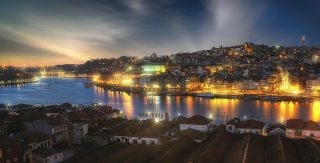
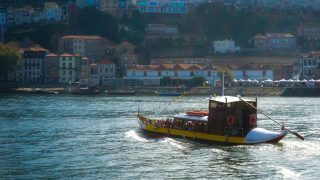
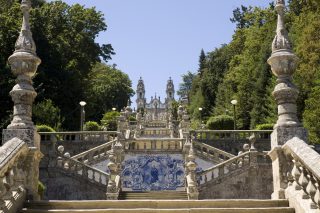
Mosteiro de Santa Maria de Salzedas, Lamego
Monastery in Lamego

The Monastery of Santa Maria de Salzedas is one of the must-see places in Tarouca, a vast and atmospheric Cistercian complex that once shaped the entire surrounding valley. Founded in the 12th century, the monastery grew into one of Portugal’s most powerful and influential religious institutions. Today, its monumental church rises dramatically beside the small village of Salzedas, creating a striking contrast that immediately captures a visitor’s attention.
Because of its scale and historical richness, the monastery is often visited on walking tours of Tarouca and the Varosa Valley. Its blend of Romanesque carvings, 16th-century painting, and 18th-century façades reflects centuries of transformation. Exploring the grounds reveals layers of monastic life, artistic expression, and architectural evolution that make the site deeply rewarding for culturally curious travelers.
Table of Contents
- History and Significance of Mosteiro de Santa Maria de Salzedas
- Things to See and Do in Mosteiro de Santa Maria de Salzedas
- How to Get to Mosteiro de Santa Maria de Salzedas
- Practical Tips on Visiting Mosteiro de Santa Maria de Salzedas
- Where to Stay close to Mosteiro de Santa Maria de Salzedas
- Is Mosteiro de Santa Maria de Salzedas Worth Visiting?
- FAQs for Visiting Mosteiro de Santa Maria de Salzedas
- Nearby Attractions to Mosteiro de Santa Maria de Salzedas
History and Significance of Mosteiro de Santa Maria de Salzedas
The origins of the monastery date to 1155, when the powerful nobleman Egas Moniz and his wife Teresa Afonso-closely tied to the early history of Portugal-donated land for the construction of a major Cistercian house. Work on the monastery advanced steadily, and by 1255 the monastic buildings were completed and consecrated. For centuries, Santa Maria de Salzedas stood as one of the largest and wealthiest Cistercian institutions in the country.
The Cistercian order was known for cultivating prosperity in rural landscapes, and Salzedas was no exception. The monastery was granted extensive lands across the region, establishing an agricultural network that helped populate and develop the valley. The monks’ strict rules also shaped the physical layout of the complex, particularly its orientation along the Torno River.
Though the monastery declined after religious reforms and the eventual extinction of monastic orders, it remains one of the top attractions in Tarouca for its architectural richness and historical resonance. Its church, cloisters, and surviving structures create a vivid picture of medieval monastic power.
Things to See and Do in Mosteiro de Santa Maria de Salzedas
The monastery church is the site’s most imposing feature. Its vast façade-entirely rebuilt in the 18th century-dominates the small surrounding village. Though unfinished, it reflects the Baroque ambition that transformed much of the complex during that era. Stepping inside reveals earlier layers of the building’s history. A chapel in the apse still displays 13th-century carved stones, complete with Romanesque columns and capitals that offer a rare glimpse into the original medieval structure.
Art lovers will appreciate the remarkable paintings attributed to Vasco Fernandes (Grão Vasco), including works depicting St. Peregrine and St. Sebastian. These pieces highlight the influence of Renaissance artistic movements within the region. The church also holds several 17th-century paintings by Bento Coelho da Silveira, one of Portugal’s great Baroque painters.
Exploring the monastery grounds allows visitors to trace the once-sprawling complex. Only two cloisters survive today. The larger cloister, built along the southern wall of the church, remains more intact, offering a sense of the monks’ daily routines. The smaller cloister to the west is much more ruined, with only a scattering of Tuscan-columned arches still standing-silent but evocative reminders of the monastery’s former grandeur. This spot is one of the best places to see in the monastery if you enjoy atmospheric ruins softened by time.
How to Get to Mosteiro de Santa Maria de Salzedas
The monastery is located in the small village of Salzedas, a short distance from Tarouca and within reach of the wider Douro and Varosa regions. The nearest major airport is Porto Airport, offering the most convenient access for international visitors. For the best deals and a seamless booking experience, check out these flights to Lamego on Booking.com.
The closest railway station is in Régua, from which local buses or taxis can take you into the Varosa Valley and towards Salzedas. Train schedules and bookings can be found on Omio.
Traveling by car is the easiest way to reach the monastery, providing flexibility for visiting nearby sites like São João de Tarouca and Ucanha. Roads are well signposted, and parking is available in the village near the monastery entrance. If you are looking to rent a car in Portugal I recommend having a look at Discover Cars, first, as they compare prices and review multiple car rental agencies for you.
Practical Tips on Visiting Mosteiro de Santa Maria de Salzedas
- Suggested tips: Wear comfortable shoes for exploring the uneven floors of the cloisters and surrounding grounds.
- Best time to visit: Spring and autumn for pleasant temperatures and golden light across the valley.
- Entrance fee: A small fee is typically charged; check onsite for current prices.
- Opening hours: Generally open during daytime museum and monument hours; confirm locally.
- Official website: https://mosteirosalzedas.pt
- How long to spend: About 1 to 1.5 hours for the church, cloisters, and grounds.
- Accessibility: Some areas, especially the ruined cloister, may be difficult for visitors with mobility challenges.
- Facilities: Basic visitor services are available in the village.
- Photography tip: Capture the contrast between the unfinished 18th-century façade and the surrounding historic houses.
- Guided tours: Guided visits are offered seasonally and provide deeper insight into the monastery’s Cistercian heritage.
- Nearby food options: Traditional restaurants in Tarouca and Salzedas serve regional dishes and local wines.
Where to Stay close to Mosteiro de Santa Maria de Salzedas
For an atmospheric stay close to the monastery, consider Douro Cister Hotel Resort, a comfortable base between Tarouca and the Varosa Valley’s major monuments. Another excellent option nearby is Quinta da Portela, offering rural charm within easy reach of Salzedas. Travelers seeking serene countryside surroundings may enjoy Quinta da Timpeira.
Is Mosteiro de Santa Maria de Salzedas Worth Visiting?
Yes, Mosteiro de Santa Maria de Salzedas is absolutely worth visiting, especially for travelers drawn to medieval monasteries, sacred art, and atmospheric ruins. Its vast church, Romanesque remains, Renaissance and Baroque paintings, and evocative cloisters offer a compelling journey through centuries of religious heritage. The site is one of the top sights in Tarouca and provides a memorable cultural experience in the Varosa Valley.
What Other Travellers Say...

Mosteiro de São João de Tarouca, 3610, Portugal, offers a striking visit where a beautifully preserved church sits alongside evocative monastery ruins; visitors praise the church’s beauty and the impressive ruins, and recommend viewing the museum video before exploring the remains. Many also suggest walking down to the nearby bridge, which can be crossed on foot, and describe the site as a worthwhile, history-rich stop even if a little off the beaten path.


FAQs for Visiting Mosteiro de Santa Maria de Salzedas
Nearby Attractions to Mosteiro de Santa Maria de Salzedas
- Mosteiro de São João de Tarouca: Portugal’s oldest Cistercian monastery with remarkable medieval architecture.
- Ucanha Tower and Bridge: A unique medieval toll complex spanning the Varosa River.
- Lamego Cathedral: A Romanesque-Manueline-Baroque masterpiece in nearby Lamego.
- Museu de Lamego: Home to Grão Vasco's panels and an outstanding collection of regional art.
- Douro Valley vineyards: Renowned wine estates offering tours and breathtaking landscapes.
The Mosteiro de Santa Maria de Salzedas appears in our Complete Guide to Visiting Lamego!

Moira & Andy
Hey! We're Moira & Andy. From hiking the Camino to trips around Europe in Bert our campervan — we've been traveling together since retirement in 2020!
This website uses affiliate links which may earn a commission at no additional cost to you!
Planning Your Visit
10am-1pm & 2-6pm Tue-Sun
adult/reduced €3/1.50
Nearby Attractions
- Capela de São Pedro de Balsemão (7.6) km
Church - Lamego Cathedral (8.3) km
Cathedral - Museu de Lamego (8.3) km
Museum - Castelo de Lamego (8.6) km
Castle - Santuário de Nossa Senhora dos Remédios (8.7) km
Church - Museu do Douro (13.1) km
Museum - Casa de Mateus (27.0) km
Palace - Castelo de Numão (36.7) km
Castle - Monte da Penha (61.8) km
Religious Building and Viewing Point - Centro Cultural Vila Flor (63.8) km
Gardens and Historic Building