Montpellier Aqueduct
Aqueduct, Historic Building and Historic Site in Montpellier
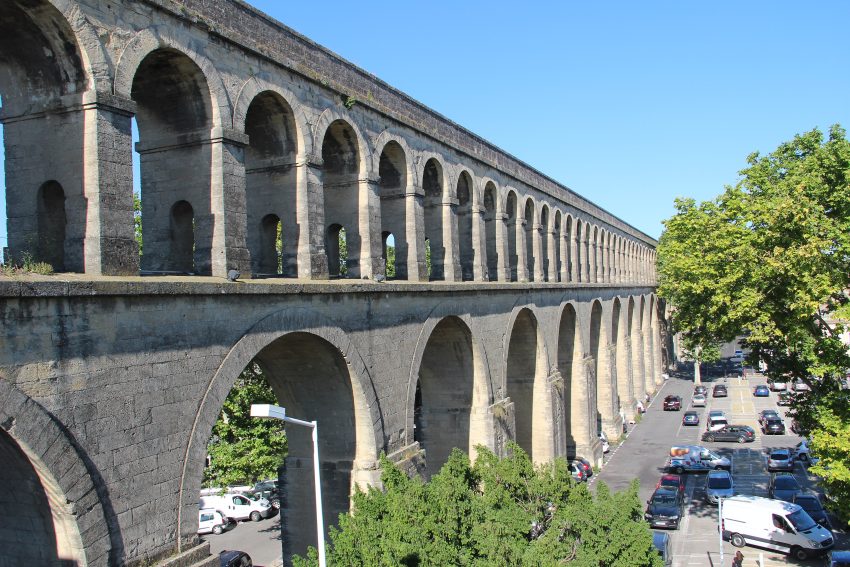
The Montpellier Aqueduct, officially the Aqueduc Saint-Clément and locally known as Les Arceaux, is a striking 18th-century stone aqueduct whose final arches sweep toward the Promenade du Peyrou in central Montpellier. It's one of those landmarks you don't just look at once and leave; it naturally becomes part of your day as you wander between neighborhoods, parks, and viewpoints.
The easiest way to experience it is on foot: stroll along the arches in the Les Arceaux area, then continue up toward the Peyrou terrace for a wider, elevated view of the structure's scale. It also fits beautifully into a self-guided walking tour that includes the Arc de Triomphe, the Peyrou water tower, and the historic streets of the Écusson.
Table of Contents
- History and Significance of the Montpellier Aqueduct
- Things to See and Do in the Montpellier Aqueduct
- How to Get to the Montpellier Aqueduct
- Practical Tips on Visiting the Montpellier Aqueduct
- Where to Stay Close to the Montpellier Aqueduct
- Is the Montpellier Aqueduct Worth Visiting?
- For Different Travelers
- FAQs for Visiting Montpellier Aqueduct
- Nearby Attractions to the Montpellier Aqueduct
History and Significance of the Montpellier Aqueduct
Built to bring reliable water to Montpellier, the Aqueduc Saint-Clément was completed in 1765 after years of planning and construction. Designed as a major feat of civil engineering for its time, it carried water from springs outside the city toward the Promenade du Peyrou, where the water would emerge near the monumental water tower.
Its most famous section is the dramatic double-tiered arcade near Les Arceaux, a design inspired by Roman aqueduct architecture. Even if you’re not a specialist, the rhythm of the arches and the careful stonework make it easy to appreciate why it’s considered one of Montpellier’s signature historic structures.
Although it no longer carries water, the aqueduct remains a powerful symbol of how the city grew and modernized. Today, it’s valued as heritage and as a scenic urban landmark that connects daily life, markets, and green spaces.
Things to See and Do in the Montpellier Aqueduct
Start at the Les Arceaux end, where the aqueduct’s arches feel close and immersive. Walking alongside (and under) the structure lets you notice details you’d miss from a distance: the proportions of the piers, the repeating shadows, and how the arches frame slices of city life.
For the best overall view, head to the Promenade du Peyrou. From the terrace, you can see the aqueduct stretching outward and understand how it once served the city's water needs. Sunset and early evening are especially atmospheric, when the stone warms in color and the long shadows sharpen the geometry.
If you're in Montpellier on a market morning, pair the aqueduct with a stop at the nearby Marché des Arceaux (under and around the arches on certain days). It's a classic local experience and an easy way to turn a quick photo stop into a fuller neighborhood visit.
How to Get to the Montpellier Aqueduct
Montpellier is served by Montpellier–Méditerranée Airport (MPL) for domestic and European flights, with additional options via larger hubs like Marseille Provence Airport (MRS) if you're combining cities in the region. For the best deals and a seamless booking experience, check out these flights to Montpellier on Booking.com.
By rail, Montpellier Saint-Roch station is the most convenient for the historic center; from there you can walk, take the tram, or grab a quick taxi ride toward Les Arceaux and the Peyrou area. You can use SNCF Connect to check schedules, compare routes, and purchase tickets for National (SNCF ) and regional trains (TER). For a more streamlined experience, we recommend using Omio, which allows you to easily compare prices, schedules, and book tickets for both National and Regional travel across all of Europe, all in one place.
If you’re driving, aim for a central parking garage and continue on foot, as streets near the historic core can be busy and navigation can be slow at peak times. If you are looking to rent a car in France I recommend having a look at Discover Cars, first, as they compare prices and review multiple car rental agencies for you.
Practical Tips on Visiting the Montpellier Aqueduct
- Official website: https://www.montpellier.fr/action/les-grands-projets/aqueduc-saint-clement
- Entrance fee: Free.
- Opening hours: 24 Hours.
- Best time to visit: Go in the morning for softer light and fewer people, or at golden hour for the most dramatic photos from the Peyrou viewpoint.
- How long to spend: Plan 30–60 minutes for a simple walk-and-photos visit, or 1.5–2 hours if you add the Peyrou terrace and nearby landmarks.
- Accessibility: The aqueduct is outdoors and best enjoyed from surrounding sidewalks and paths; surfaces vary, so expect some uneven paving in places.
- Facilities: There are no dedicated visitor facilities at the aqueduct itself, but cafés, bakeries, and public amenities are easy to find around Les Arceaux and near the Peyrou.
Where to Stay Close to the Montpellier Aqueduct
The best area to base yourself is the historic center (Écusson) near the Peyrou and Saint-Roch, so you can walk to the aqueduct and still have restaurants, sights, and transit at your doorstep.
Hôtel Richer de Belleval A standout for design and atmosphere in one of the prettiest squares in town, ideal if you want a special stay within easy walking distance of the Peyrou viewpoint.
Grand Hôtel du Midi Montpellier A classic, central option near Place de la Comédie that makes it easy to reach the aqueduct on foot while keeping you close to trams, shops, and day-trip logistics.
Hôtel Oceania Le Métropole Convenient for train arrivals and quick city breaks, with a comfortable base that’s still walkable to the aqueduct and the old town.
Pullman Montpellier Centre A reliable upscale choice near the city’s main commercial area, good for travelers who want modern comfort and easy access to both the aqueduct area and transport.
Hôtel des Arceaux The closest-feeling pick for aqueduct lovers, placing you right by the arches and making early-morning photos or market visits especially easy.
Is the Montpellier Aqueduct Worth Visiting?
Yes, it's worth visiting, especially because it's both visually impressive and effortless to fit into a day in Montpellier. You don't need a ticket, it pairs naturally with the Peyrou terrace and Arc de Triomphe, and it delivers that satisfying “only-in-this-city” sense of place.
Honest Pivot: If you’re short on time and you’re not particularly interested in architecture, you might prefer to prioritize a museum, a food-focused market crawl, or a day trip to the coast. The aqueduct is best as a scenic walk and photo stop rather than a deep, interpretive attraction.
What Other Travellers Say...

Travelers rate the Montpellier Aqueduct very highly overall, describing it as an impressive piece of historic architecture and a rewarding stop on a city walk. Common highlights include the scenic views (especially from the nearby Promenade du Peyrou), the photogenic arches, and the pleasant park-and-landmark cluster around it. A few visitors note it can feel like a quick look rather than a must-see destination on its own, and some caution that parts of the area may be poorly lit after sunset.


For Different Travelers
The Montpellier Aqueduct works well because it's flexible: you can treat it as a quick viewpoint, a longer walk, or a backdrop for a neighborhood morning. It's also easy to combine with other highlights nearby without needing strict timing.
Families with Kids
Kids often enjoy the simple “count the arches” fun and the sense of scale, especially when you view it from the Peyrou terrace. It’s also stroller-friendly in many surrounding areas, making it a low-stress outdoor stop.
To keep it engaging, combine the aqueduct with a park break at the Promenade du Peyrou and a snack stop nearby. Market mornings can also work well if your family likes browsing and trying local treats.
Couples & Romantic Getaways
For couples, the aqueduct shines at golden hour when the stone glows and the shadows sharpen the arches. A slow walk from Les Arceaux up to the Peyrou viewpoint feels naturally romantic without needing a “big attraction” plan.
Pair it with a sunset drink or a dinner reservation in the Écusson afterward. It's a great pre-dinner stroll that feels distinctly Montpellier.
Budget Travelers
This is one of the best free experiences in Montpellier: a landmark-level sight with no entry fee and no pressure to spend. You can build an entire half-day around walking, viewpoints, and people-watching.
If you want to keep costs down, visit on a market day to assemble a picnic from fresh produce and pastries, then eat it at the Peyrou. It’s a memorable, local-feeling plan on a small budget.
History Buffs
History lovers will appreciate how the aqueduct reflects Enlightenment-era engineering ambition and the city’s push for reliable water infrastructure. Seeing it in person also helps you understand Montpellier’s geography and why the Peyrou became such a symbolic endpoint.
To add context, approach it as a route: start at Les Arceaux, then finish at the Peyrou water tower and the Arc de Triomphe. The sequence makes the aqueduct feel like part of a larger civic story rather than a standalone monument.
FAQs for Visiting Montpellier Aqueduct
Getting There
Tickets & Entry
Visiting Experience
Tours, Context & Itineraries
Photography
Accessibility & Facilities
Food & Breaks Nearby
Safety & Timing
Nearby Attractions to the Montpellier Aqueduct
- Promenade du Peyrou: A grand terrace-park with panoramic views and a classic vantage point over the aqueduct.
- Arc de Triomphe (Montpellier): A monumental city gate marking the entrance to the Peyrou area and the historic center.
- Cathédrale Saint-Pierre de Montpellier: A distinctive Gothic cathedral with an imposing façade and a calm interior atmosphere.
- Musée Fabre: Montpellier's flagship art museum, ideal for pairing architecture walks with a cultural stop.
- Place de la Comédie: The city's lively central square, perfect for people-watching and an easy starting point for walks.
The Montpellier Aqueduct appears in our Complete Guide to Visiting Montpellier!

Moira & Andy
Hey! We're Moira & Andy. From hiking the Camino to trips around Europe in Bert our campervan — we've been traveling together since retirement in 2020!
This website uses affiliate links which may earn a commission at no additional cost to you!
Planning Your Visit
24 Hours.
Free.
Nearby Attractions
- Promenade du Peyrou (0.3) km
Promenade, Square and Viewing Point - Porte du Peyrou (0.3) km
Historic Building, Monument and Viewing Point - Plant Garden (0.4) km
Gardens and Park - Palace of Justice (0.4) km
Attraction, Historic Building and Historic Site - Atger Museum (0.5) km
Historic Building, Historic Room and Museum - Montpellier Cathedral (0.5) km
Cathedral, Historic Building and Religious Building - Church of Saint Anne & Carre Saint Anne Gallery (0.5) km
Arts Venue, Church and Gallery - Place de la Canourgue (0.5) km
Area, Historic Site and Square - Rue Foch (0.6) km
Area, Street and Walk - Prefecture of Hérault (0.7) km
Attraction, Historic Building and Notable Building