Mémorial de l'Abolition de l'Esclavage, Nantes
Monument in Nantes
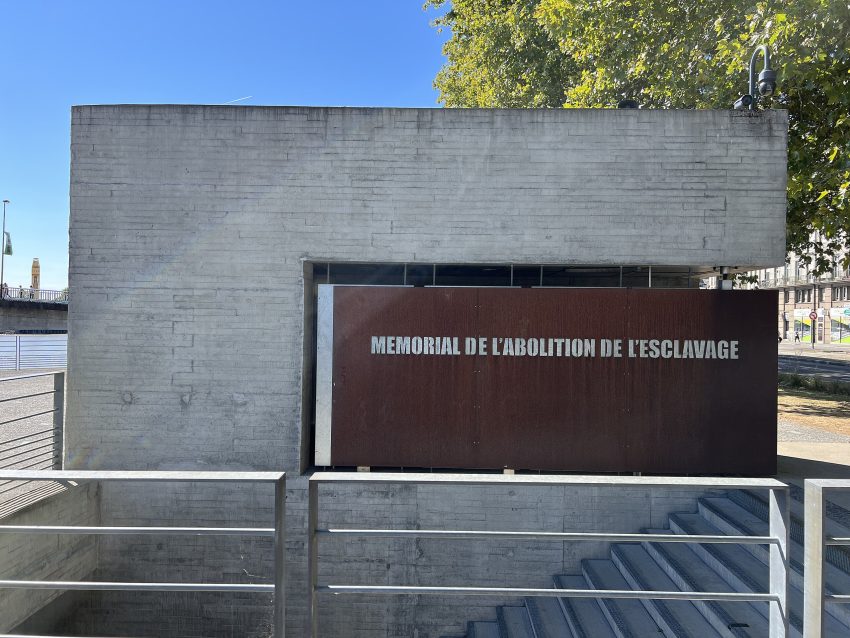
Stretching along the Quai de la Fosse where so many slave ships once departed, the Mémorial de l'Abolition de l'Esclavage is one of the must-see places in Nantes for travellers who want to understand the city beyond its castles and cathedrals. Inaugurated in 2012, this riverside memorial marks Nantes' acknowledgement of its role as France's leading slave-trading port in the 18th century and pays tribute to the millions of people who suffered under the transatlantic slave trade, as well as those who fought to end it. The result is a space that feels both stark and deeply human.
Above ground, the memorial unfolds as a large esplanade set into the quay, its surface inscribed with 2,000 glass plaques that bear the names and dates of slave ships from Nantes alongside the ports in Africa, the Caribbean, and the Americas they were linked to. Below, a long, dimly lit underground passage presents words and documents from five centuries of resistance and remembrance. Far from being a conventional museum, the memorial is often visited on walking tours of Nantes as a place to slow down, read, and reflect on the legacies of slavery that still echo today.
Table of Contents
- History and Significance of the Mémorial de l’Abolition de l’Esclavage
- Things to See and Do in the Mémorial de l’Abolition de l’Esclavage
- How to Get to the Mémorial de l’Abolition de l’Esclavage
- Practical Tips on Visiting the Mémorial de l’Abolition de l’Esclavage
- Where to Stay close to the Mémorial de l’Abolition de l’Esclavage
- Is the Mémorial de l’Abolition de l’Esclavage Worth Visiting?
- FAQs for Visiting Mémorial de l’Abolition de l’Esclavage
- Nearby Attractions to the Mémorial de l’Abolition de l’Esclavage
History and Significance of the Mémorial de l’Abolition de l’Esclavage
For much of the 18th century, Nantes was France's leading slave-trading port, its prosperity tied directly to voyages that transported enslaved Africans across the Atlantic. For a long time, this uncomfortable history remained under-discussed in public spaces, but in recent decades the city has taken visible steps to confront it. The Mémorial de l'Abolition de l'Esclavage, inaugurated in 2012, is the most powerful of these gestures, deliberately located on the Quai de la Fosse where slave ships once tied up before departing.
Designed by artist Krzysztof Wodiczko and architect Julian Bonder, the memorial is conceived as both a place of remembrance and a call to vigilance against ongoing forms of oppression. Its very layout tells a story: above, the open esplanade marks the scale of Nantes’ involvement in the trade; below, the subterranean corridor evokes holds and cellars, but also archives and spaces for meditative reading. By physically guiding visitors from open air to enclosed passage, the design mirrors a journey from surface awareness to deeper engagement.
The memorial is also significant for the way it broadens the conversation beyond Nantes and France. Texts and place names connect the city to a wider web of locations and histories-not only ports in West and Central Africa, the Caribbean, and the Americas, but also key abolitionist movements and legal milestones. Visiting the site is not just about acknowledging a specific local past; it is also about understanding the transnational impact of slavery and the ongoing global pursuit of justice and human rights.
Things to See and Do in the Mémorial de l’Abolition de l’Esclavage
Start at ground level on the Quai de la Fosse, where the memorial blends subtly into the riverbank. The 7,000-square-metre esplanade is covered with 2,000 glass plaques set flush into the surface: 1,710 bear the names and departure dates of ships that left Nantes on slave-trading voyages, while 290 are inscribed with the names of African, Caribbean, and American ports involved in the trade. Walking slowly along this path, reading names and dates, makes the scale of the traffic painfully real and transforms statistics into a series of individual journeys.
From here, you descend via a discreet entrance into the underground passage. The mood shifts instantly: concrete, glass, and low lighting create a sober, contemplative atmosphere. Along one wall, the Universal Declaration of Human Rights is displayed, accompanied by the word “Liberty” translated into 47 languages spoken in regions affected by the slave trade. This multilingual chorus underlines the universality of the struggle for freedom and dignity.
Running parallel to the river, a 90-metre glass wall presents an anthology of texts spanning five centuries and multiple continents. These include abolitionist writings, personal testimonies, legal documents, speeches, and literature, inviting you to pause and reflect rather than simply pass through. Each fragment adds a voice to the memorial, challenging visitors to consider how the history of slavery intersects with contemporary issues of racism, inequality, and human rights. This spot is one of the best places to see in Mémorial de l'Abolition de l'Esclavage if you want to feel how words themselves can become monuments.
How to Get to the Mémorial de l’Abolition de l’Esclavage
The Mémorial de l'Abolition de l'Esclavage runs along the Quai de la Fosse on the northern bank of the Loire, a short walk from central Nantes and the Île de Nantes. If you are flying in, Nantes Atlantique Airport lies southwest of the city, with shuttle buses and other public transport options connecting the terminal to the centre in around 20-30 minutes; from there, you can walk or take a tram toward the riverfront and the memorial. For the best deals and a seamless booking experience, check out these flights to Nantes on Booking.com.
Arriving by train, you will come into Nantes’ main railway station, which is well connected by TGV and regional services. You can use SNCF Connect to check schedules, compare routes, and purchase tickets for National (SNCF ) and regional trains (TER). For a more streamlined experience, we recommend using Omio, which allows you to easily compare prices, schedules, and book tickets for both National and Regional travel across all of Europe, all in one place. From the station, it is easy to reach the memorial via tram, bus, or a walk that takes you through the historic centre toward the Loire; once you reach the river, follow the quay until you see the memorial’s glass and concrete structures integrated into the embankment.
If you are travelling by car, follow signs for Nantes centre and then toward the Loire riverfront, where you can use nearby car parks or on-street parking before continuing on foot along the Quai de la Fosse to the memorial site. If you are looking to rent a car in France I recommend having a look at Discover Cars, first, as they compare prices and review multiple car rental agencies for you. Given the central location and riverside setting, many visitors find it easiest to leave the car parked and explore the area on foot, combining the memorial with other nearby sights.
Practical Tips on Visiting the Mémorial de l’Abolition de l’Esclavage
- Suggested tips: Take your time and move slowly through both the esplanade and the underground passage; this is a site that rewards quiet reflection more than quick photo stops.
- Best time to visit: Early morning or late afternoon tends to be calmer, with softer light on the river and fewer crowds, making it easier to read the plaques and texts in peace.
- Entrance fee: Free
- Opening hours: Winter: 9:00 to 18:00; Summer: 9:00 to 20:00
- Official website: https://memorial.nantes.fr/
- How long to spend: Plan at least 45-60 minutes to walk the esplanade, descend into the passage, and read some of the texts without rushing.
- Accessibility: Ramps and level paths make much of the memorial accessible for visitors with reduced mobility, though some surfaces may be wet or slippery in bad weather; check on-site signage for the most accessible routes.
- Facilities: There are no major facilities directly within the memorial, but cafés, toilets, and shops can be found within a short walk along the riverfront and in the nearby city centre.
- Photography tip: While photos are possible, consider focusing on close-ups of plaques, language fragments, and reflections on glass to capture the mood without disturbing other visitors’ contemplation.
- Guided tours: Look out for guided city walks or themed visits that include the memorial and provide additional historical context on Nantes’ role in the slave trade and its modern efforts at remembrance.
- Nearby food options: The surrounding riverfront and central streets offer plenty of cafés and restaurants where you can decompress and reflect after your visit.
Where to Stay close to the Mémorial de l’Abolition de l’Esclavage
Staying near the riverfront makes it easy to visit the memorial more than once, perhaps by day and again at dusk when the Loire takes on a different atmosphere. A central and convenient base is L'Hôtel - Face au Château, which places you close to the Château des Ducs de Bretagne and within a pleasant walk of the memorial along city streets and quays. For a more contemporary feel, Hôtel La Pérouse Nantes offers modern design and quick access to tram lines that link the historic centre, the riverfront, and the Île de Nantes. If you prefer a quieter, residential setting while staying within reach of central sights and the memorial, Hôtel Chateaubriand provides a cosy, good-value base with easy walking routes toward the Loire.
Is the Mémorial de l’Abolition de l’Esclavage Worth Visiting?
The Mémorial de l'Abolition de l'Esclavage is unquestionably worth visiting, particularly if you believe that travel should engage with difficult histories as well as beautiful façades. It offers a powerful, thoughtfully designed space where architecture, text, and location combine to confront the realities of the slave trade and honour those who resisted it. Unlike many attractions, it asks more questions than it answers, inviting you to think about how the past shapes the present and what “abolition” really means today. For anyone seeking a deeper understanding of Nantes and its place in Atlantic history, the memorial is one of the things to do in Nantes that will stay with you long after you leave.
What Other Travellers Say...

The Memorial to the Abolition of Slavery in Nantes is a free, contemplative underground monument dedicated to abolitionists and victims of the Atlantic slave trade; visitors describe it as simple but powerful, with embedded pavement works and a layout that evokes being below deck, and note its riverside, symbolic location, two entrances, and a lift for accessibility while recommending the local history museum for deeper context.


FAQs for Visiting Mémorial de l’Abolition de l’Esclavage
Nearby Attractions to the Mémorial de l’Abolition de l’Esclavage
- Les Machines de l'Île: A fantastical world of giant mechanical creatures and interactive art installations on the Île de Nantes, just across the river.
- Château des Ducs de Bretagne: A former ducal fortress turned city history museum, offering rampart walks and exhibits that explore Nantes' past, including its maritime history.
- Quartier Bouffay: The lively medieval quarter with narrow lanes, half-timbered houses, and plenty of bars and restaurants, a short stroll from the riverfront.
- Cathédrale Saint-Pierre-et-Saint-Paul de Nantes: The city's Gothic cathedral with a soaring nave and historic ducal tomb, located in the historic centre.
- Musée Dobrée: A recently restored museum showcasing Thomas Dobrée's eclectic collection of art and artefacts from across centuries and continents.
The Mémorial de l'Abolition de l'Esclavage appears in our Complete Guide to Visiting Nantes!

Moira & Andy
Hey! We're Moira & Andy. From hiking the Camino to trips around Europe in Bert our campervan — we've been traveling together since retirement in 2020!
This website uses affiliate links which may earn a commission at no additional cost to you!
Planning Your Visit
Winter: 9:00 to 18:00; Summer: 9:00 to 20:00
Free
Nearby Attractions
- Musée Thomas Dobrée (0.3) km
Museum - Les Machines de l'Île (0.4) km
Attraction - Natural History Museum of Nantes (0.4) km
Museum - Place Graslin (0.5) km
Square - Passage Pommeraye (0.7) km
Historic Building - Place Royale (0.8) km
Historic Building - Eglise Sainte-Croix (1.1) km
Church - Jungle Intérieure (1.2) km
Gardens - Musée Jules Verne (1.2) km
Museum - Nantes History Museum (1.4) km
Museum