Max-Joseph-Platz, Munich
Square in Munich
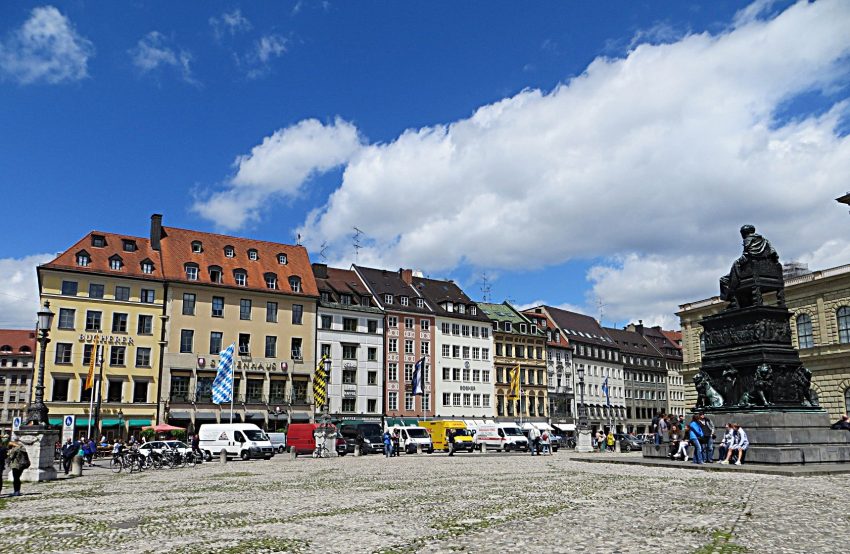
Max-Joseph-Platz sits right in Munich's historic centre, in the Altstadt-Lehel area, and it is one of those places that instantly feels “Munich”: formal, symmetrical, and wrapped in cultural prestige. The square is best known for its opera setting, with the Nationaltheater (home of the Bavarian State Opera) facing onto a space that feels like a stage set in its own right, especially when the light catches the façades in late afternoon.
For a self-guided walking tour, it's an easy, high-impact stop because you can appreciate it in 10 minutes or linger for much longer by pairing it with nearby royal courtyards, museums, or a performance night. It also works as a smart “connector” sight: you are close to Marienplatz, Odeonsplatz, and the Residenz complex, so it naturally fits into a classic old-town loop without detours.
Table of Contents
- History and Significance of the Max-Joseph-Platz
- Things to See and Do in the Max-Joseph-Platz
- How to Get to the Max-Joseph-Platz
- Practical Tips on Visiting the Max-Joseph-Platz
- Where to Stay Close to the Max-Joseph-Platz
- Is the Max-Joseph-Platz Worth Visiting?
- For Different Travelers
- FAQs for Visiting Max-Joseph-Platz
- Nearby Attractions to the Max-Joseph-Platz
History and Significance of the Max-Joseph-Platz
Max-Joseph-Platz is a product of early 19th-century Munich, created to express royal confidence and cultural ambition. The square takes its name from King Maximilian I Joseph, Bavaria's first king, and it became a formal civic stage as the city expanded its court and cultural institutions in the neoclassical era.
The square's identity is inseparable from the Nationaltheater, which opened in 1818 and anchors the eastern side. The opera house was originally built to serve the Bavarian court's cultural life and remains one of the key symbols of Munich as a music city.
Across the square, the Residenz edge reinforces the royal narrative, particularly the Königsbau (King's Building), commissioned by King Ludwig I and designed by Leo von Klenze, built from 1826 to 1835 with an Italian Renaissance-inspired façade facing the square. This pairing of opera and palace frontage is exactly what makes Max-Joseph-Platz feel like a concentrated snapshot of Munich's “court city” past.
Things to See and Do in the Max-Joseph-Platz
Start in the middle of the square with the monument to King Maximilian I Joseph. It is unusually restrained for a royal memorial because it depicts the king seated rather than triumphantly mounted or standing, and it gives you a strong focal point for understanding how the space is composed around ceremony and sightlines.
Next, face the Nationaltheater and take in the classical temple-like frontage and broad steps. Even if you do not go inside, this is one of Munich’s best “architecture moments” on foot, and it is especially atmospheric in the early evening when opera-goers arrive and the square shifts from sightseeing to nightlife-with-culture.
Finally, use the square as a springboard for a mini-loop: edge north toward the Residenz courtyards, or swing west and you are quickly back in the old town lanes leading toward Marienplatz. For photography, the cleanest compositions usually come from the corners of the square, where you can frame the monument with the opera house or the palace façade behind it.
How to Get to the Max-Joseph-Platz
Max-Joseph-Platz is in central Munich (Altstadt-Lehel), so most visitors reach it on foot as part of an old town walk. The nearest major airport is Munich Airport, and the simplest route into the centre is usually the S-Bahn to Marienplatz or the main station, then a short walk or U-Bahn onward. For the best deals and a seamless booking experience, check out these flights to Munich on Booking.com.
If you are arriving by train, start from München Hauptbahnhof and take the S-Bahn to Marienplatz or the U-Bahn toward Odeonsplatz, then walk the final minutes through the historic centre. Train schedules and bookings can be found on Omio.
Long-distance buses typically arrive at Munich’s ZOB (central bus station) near the main station, so the same S-Bahn or U-Bahn approach works well, followed by a short walk through the old town streets.
If you are driving, it is generally better to aim for a central parking garage and continue on foot, since the surrounding streets are busy and much of the old town is pedestrian-oriented; the opera area also has a nearby garage option linked to Max-Joseph-Platz. If you are looking to rent a car in Germany I recommend having a look at Discover Cars, first, as they compare prices and review multiple car rental agencies for you.
Practical Tips on Visiting the Max-Joseph-Platz
- Entrance fee: Free.
- Opening hours: 24 hours
- Best time to visit: Late afternoon into early evening for the best light and atmosphere, especially if there is a performance at the opera.
- How long to spend: 10-20 minutes as a quick square stop, or 45-90 minutes if you pair it with the Residenz edge and nearby old town lanes.
- Accessibility: Flat, open square with step-free access around the perimeter; surfaces can be busy during events and peak hours.
- Facilities: Best for nearby cafés, restaurants, and indoor facilities via the surrounding cultural venues rather than within the square itself.
Where to Stay Close to the Max-Joseph-Platz
For a culture-heavy itinerary and a walking-tour-first approach, base yourself in Altstadt-Lehel so you can reach Max-Joseph-Platz and the main old town sights on foot within minutes; if your trip prioritises transport links and day trips, stay near Hauptbahnhof and commute in quickly by S- or U-Bahn.
If you want to be as close as possible to the square and keep everything walkable, Platzl Hotel is a dependable old-town base with an easy stroll to the opera area, and Hotel Torbräu keeps you equally central for Marienplatz, the Residenz edge, and evening returns. For a more classic luxury option still firmly in the centre, Hotel Bayerischer Hof is well placed for a “walk everywhere” stay.
Is the Max-Joseph-Platz Worth Visiting?
Yes, especially if you care about Munich's royal-era architecture, opera culture, or you want a quick stop that delivers maximum “sense of place” in a short time. The square is one of the city's cleanest, most cinematic set-pieces, and it works exceptionally well as a pivot point in an old town walking route because so many major sights sit within a few minutes' walk.
The honest pivot is that if you are short on time and prefer interiors, museums, or viewpoints, the square itself can feel like a pass-through space rather than a destination. In that case, treat it as a brief photo stop and spend your longer block of time inside the Residenz, at a museum, or on a tower viewpoint elsewhere.
What Other Travellers Say...

Reviewers describe Max-Joseph-Platz as a beautiful, historic central square with impressive architecture, the National Theatre/Opera nearby, and a prominent statue, making it good for photos, strolling, and people-watching. Many appreciate its elegant atmosphere and convenient location close to other major sights, with shops, bars, and restaurants in the area. A recurring downside is that some visitors feel there isn't much to do beyond admiring the buildings and theatre surroundings.


For Different Travelers
Families with Kids
Max-Joseph-Platz is a simple, low-friction stop for families because it is open, easy to navigate, and works well as a “reset point” between more structured visits. Kids often respond best to it when you frame it as an opera “stage outside” and keep the visit short and visual.
If you need to manage energy levels, pair the square with a snack stop nearby and then move on to something more interactive, like a museum with hands-on exhibits or a park. The square is most enjoyable with a clear next stop, rather than lingering too long.
Couples & Romantic Getaways
For couples, this is one of Munich’s most elegant backdrops, especially in the evening when the square feels more theatrical and the city lights start to soften the façades. It is an ideal “dress-up” moment if you are going to a performance, or simply want a classic photo without the crowds of the main market squares.
A strong romantic approach is to time your visit just before dinner and walk onward through nearby lanes toward the old town, keeping the pace unhurried. The square’s symmetry and monument make it feel intentionally cinematic, which suits a date-night loop.
Budget Travelers
Max-Joseph-Platz is excellent value because it is completely free to experience as a historic set-piece, and it gives you proximity to multiple headline sights without paid entry. You can build a strong old-town route around it and spend your budget on one “anchor” ticket elsewhere, like a museum or a tower viewpoint.
If you are watching costs, treat opera performances as optional splurges and focus on the exterior architecture, the monument, and the nearby streets that deliver atmosphere for free. Early morning and later evening also tend to be the best times for photos without pressure to buy anything.
FAQs for Visiting Max-Joseph-Platz
Getting There
Tickets & Entry
Visiting Experience
Photography
Accessibility & Facilities
Safety & Timing
Nearby Attractions to the Max-Joseph-Platz
- Munich Residenz: The former royal palace complex, ideal for interiors, courtyards, and a deeper look at Wittelsbach Munich.
- Odeonsplatz: A grand historic square that anchors several of Munich's most important state-era landmarks.
- Hofgarten: A formal court garden that is perfect for a short, calm break between major sights.
- Marienplatz: Munich's central square, with the New Town Hall and the classic old town energy a short walk away.
- Frauenkirche: Munich's cathedral and skyline symbol, easy to add as part of a broader old-town loop.
The Max-Joseph-Platz appears in our Complete Guide to Visiting Munich!

Moira & Andy
Hey! We're Moira & Andy. From hiking the Camino to trips around Europe in Bert our campervan — we've been traveling together since retirement in 2020!
This website uses affiliate links which may earn a commission at no additional cost to you!
Planning Your Visit
24 hours
Free.
Nearby Attractions
- Bavarian State Opera (0.0) km
Arts Venue, Opera House and Theatre - Munich Residence (0.1) km
Historic Building, Museum and Palace - Alter Hof (0.1) km
Courtyard, Historic Building and Historic Site - Maximilianstraße (0.2) km
Area, Shop and Street - Allerheiligen-Hofkirche (0.2) km
Arts Venue, Church and Historic Building - Feldherrnhalle (0.2) km
Attraction, Historic Site and Monument - Odeonsplatz (0.2) km
Attraction and Square - Theatine Church (0.3) km
Church, Historic Building and Religious Building - Hofbräuhaus München (0.3) km
Attraction, Brewery and Historic Building - Neues Rathaus (0.3) km
Historic Building, Tower and Town Hall