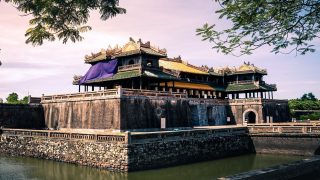
Mausoleum of Emperor Khai Dinh, Hue
Historic Site in Hue
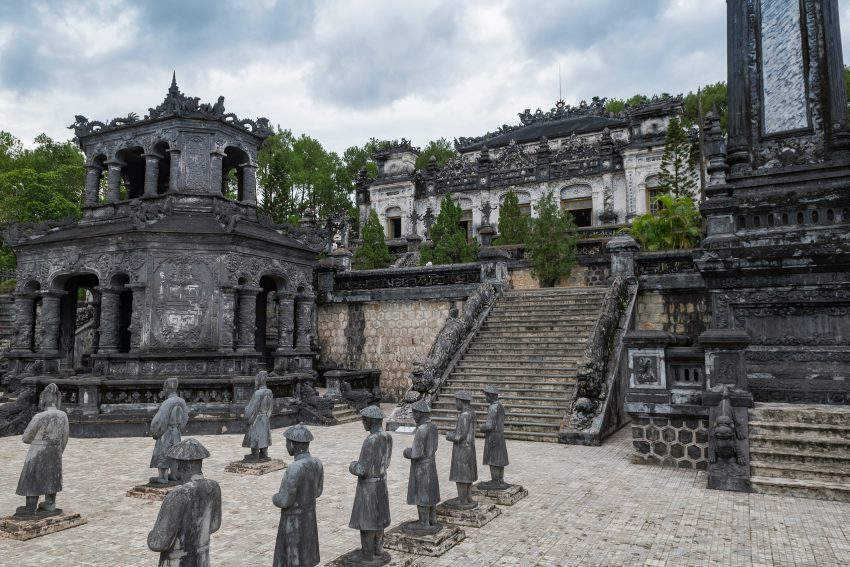
The Mausoleum of Emperor Khai Dinh rises dramatically from the forested hills outside Hue, offering one of the most visually striking experiences among Vietnam's imperial tombs. Built for the 12th emperor of the Nguyen Dynasty, who ruled from 1916 to 1925, the tomb reflects Khai Dinh's fascination with Western styles and materials encountered during his travels abroad. With its steep stairways, imposing terraces, and richly decorated interior, it stands as one of the top attractions in Hue and a great place to visit on a walking tour of Hue.
Construction began in 1920 and lasted 11 years, finishing in 1931. Unlike earlier tombs, which emphasised natural harmony and traditional Confucian symmetry, Khai Dinh’s mausoleum embraces a bold fusion of Vietnamese, French, and broader Asian influences, making it arguably the most architecturally unique royal tomb in the entire complex.
Table of Contents
History and Significance of Khai Dinh Tomb
Khai Dinh, the second-to-last emperor of Vietnam, ruled during a period marked by deepening French colonial control. His travels to Europe and exposure to new materials inspired a tomb design radically different from those of his predecessors. Rather than a serene landscape-driven complex, Khai Dinh sought a grand and opulent structure symbolising power, prestige, and modernity.
To finance the tomb’s elaborate construction, Khai Dinh raised taxes, a move that sparked widespread criticism during his reign. Yet the mausoleum’s endurance-especially its decorative artistry-demonstrates its historical significance. Completed in 1931, six years after his death, the tomb became a rare example of early 20th-century Vietnamese-European hybrid architecture.
Today, it forms an essential part of the UNESCO-listed Complex of Hue Monuments, representing both the culmination and the final evolution of Nguyen imperial burial traditions.
Things to See and Do in Khai Dinh Tomb
Approaching the tomb, visitors ascend a dramatic series of staircases flanked by dragons carved from stone. Each terrace offers sweeping views of the surrounding hills and forests, creating a sense of anticipation as you move toward the main shrine.
At the Honour Courtyard, stone mandarins, horses, and elephants stand in formation, reminiscent of earlier tombs but carved in a more compact style suited to the tight hillside terrain. From here, a further climb leads to the Thien Dinh Palace, the architectural highlight of the mausoleum.
Inside Thien Dinh Palace, visitors encounter a spectacular explosion of colour and detail. Walls and ceilings are covered with intricate mosaics made from glass, porcelain, and ceramics. Mythological motifs, dragons, and swirling patterns come together in elaborate compositions. At the centre stands a gilt bronze statue of Emperor Khai Dinh seated on a throne beneath an ornate dome-like ceiling. Below the statue lies the emperor’s actual tomb, buried deep within the palace.
How to Get to Khai Dinh Tomb
Phu Bai International Airport, located around 16 kilometres south of Hue, is the nearest airport for visitors flying into the region. For the best deals and a seamless booking experience, check out these flights to Hue on Booking.com.
Hue Railway Station provides regular train services from major Vietnamese cities including Da Nang, Hanoi, and Ho Chi Minh City, offering a convenient way to reach Hue before travelling onward to the tomb. Train schedules and bookings can be found on Omio.
Travelling by car is the most convenient way to reach Khai Dinh Tomb, located about 9 kilometres from central Hue. The site is well signposted, and parking is available at the entrance area.
Practical Tips on Visiting Khai Dinh Tomb
- Suggested tips: Wear comfortable shoes-the series of steep staircases requires a bit of effort.
- Best time to visit: Early morning or late afternoon for cooler temperatures and softer light on the hillside.
- Entrance fee: Included in multi-site combo tickets; single tickets also available.
- Opening hours: Typically 8:00-17:00; may vary seasonally.
- How long to spend: Around 45-60 minutes.
- Accessibility: Numerous stairs make full access challenging; the lower courtyards are more accessible.
- Facilities: Restrooms, drink stalls, and souvenir shops available near the entrance.
- Photography tip: Capture the steep terraces from below for a sense of scale, and don’t miss the mosaic ceiling inside Thien Dinh Palace.
- Guided tours: Many tours combine Khai Dinh Tomb with Minh Mang and Tu Duc Tombs.
- Nearby food options: Small eateries and local cafés can be found along the road to the tomb.
Where to Stay close to Khai Dinh Tomb
Most visitors choose to stay in central Hue, only a short drive from the tombs. The refined Azerai La Residence offers luxurious riverside accommodation with elegant interiors. For boutique comfort, Le Domaine de Cocodo provides a peaceful retreat within easy reach of major landmarks. Another great option is Villa Hue, ideal for exploring both the city and its surrounding historical sites.
Is Khai Dinh Tomb Worth Visiting?
Khai Dinh Tomb is absolutely worth visiting. Its bold architectural fusion, elaborate mosaics, and commanding hillside views make it one of Hue's most memorable monuments. Whether you're drawn to imperial history, art, or design, the tomb offers a unique and astonishing contrast to the more traditional mausoleums in the region.
What Other Travellers Say...

Mausoleum of Emperor Khai Dinh sits amid lush hills and offers ornate, tightly detailed architecture that blends Vietnamese and Western/French influences; visitors note striking mosaics, dragon staircases, statues and strong mountain views, though the site is compact and can feel crowded—many recommend combining it with other nearby sites for better value, be prepared for steps to reach the top, and look out for an on-site video that provides background context.


FAQs for Visiting Khai Dinh Tomb
Nearby Attractions to Khai Dinh Tomb
- Minh Mang Tomb: A harmonious and serene mausoleum surrounded by lakes and hills.
- Tu Duc Tomb: A poetic complex of lakes, pavilions, and forested pathways.
- Thien Mu Pagoda: The iconic riverside pagoda dating back to 1601.
- Imperial Citadel: The grand seat of the Nguyen Dynasty.
- Hon Chen Temple: A vibrant riverside shrine honouring the Mother Goddess.
The Mausoleum of Emperor Khai Dinh appears in our Complete Guide to Visiting Hue!

Moira & Andy
Hey! We're Moira & Andy. From hiking the Camino to trips around Europe in Bert our campervan — we've been traveling together since retirement in 2020!
This website uses affiliate links which may earn a commission at no additional cost to you!
Planning Your Visit
7 AM and 5 PM
150,000 VND Adult
Nearby Attractions
- Minh Mang Tomb (Mausoleum of Minh Mang) (2.5) km
Historic Building - Tomb of Tu Duc (4.6) km
Historic Site - Ho Quyen Arena (6.7) km
Historic Site - Perfume River (7.3) km
River - Phu Van Tower (7.5) km
Historic Building - Hien Lam Pavilion (7.7) km
Historic Building - Mieu Temple (7.7) km
Historic Building - Nine Holy Cannons (7.7) km
Historic Site - Thien Mu Pagoda (7.7) km
Historic Building - Meridian Gate (7.7) km
City Gate