Marmoutier Abbey, Tours (Loire)
Abbey near Tours (Loire)
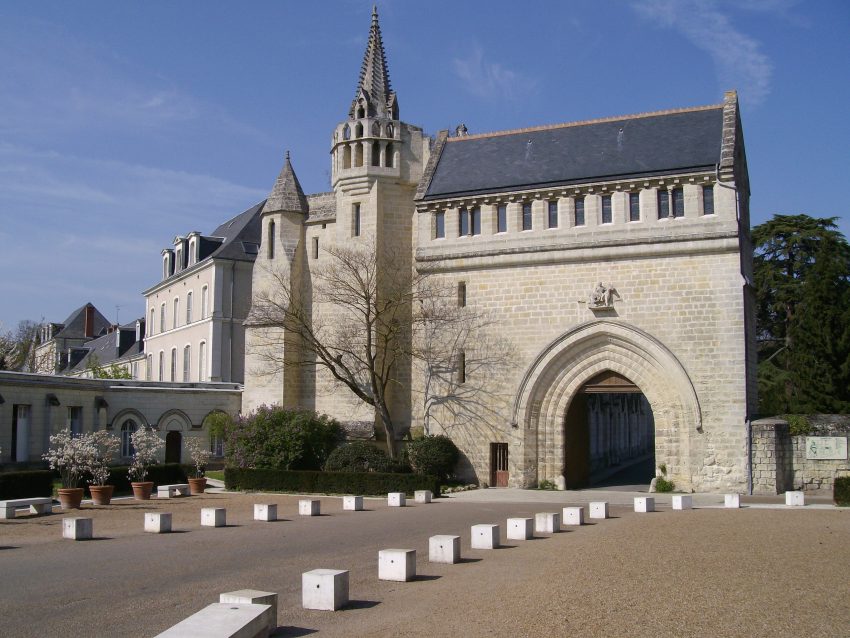
Set on the north bank of the Loire, tucked into a quiet bend of river and cliff, the Ancienne Abbaye de Marmoutier feels like a secret chapter of Tours that most visitors miss. You're not coming for polished halls or perfectly restored cloisters; you're coming for a place where stone fragments, excavated foundations, and long views over the valley do the storytelling. In a city packed with landmarks, this is one of the best places to visit in Tours when you want something calmer, more atmospheric, and a little more personal.
Marmoutier is also wonderfully easy to weave into a walking tour of Tours if you're happy to step just beyond the busiest streets. The site's appeal is the contrast: a few minutes from the city's energy, you're suddenly surrounded by birdsong, vines and footpaths, with the abbey's remains spread out like a historical puzzle. It's a place to slow down, follow the interpretive trail, and let the landscape explain why monks chose this spot in the first place.
Table of Contents
- History and Significance of the Ancienne Abbaye de Marmoutier
- Things to See and Do in the Ancienne Abbaye de Marmoutier
- How to Get to the Ancienne Abbaye de Marmoutier
- Practical Tips on Visiting the Ancienne Abbaye de Marmoutier
- Where to Stay Close to the Ancienne Abbaye de Marmoutier
- Is the Ancienne Abbaye de Marmoutier Worth Visiting?
- For Different Travelers
- FAQs for Visiting the Ancienne Abbaye de Marmoutier
- Nearby Attractions to the Ancienne Abbaye de Marmoutier
History and Significance of the Ancienne Abbaye de Marmoutier
Marmoutier's story begins in the fourth century, when Saint Martin of Tours established a monastic community here beside the Loire. What started as a modest settlement became one of the region's most influential religious centres, accumulating land, prestige, and a reputation for learning that drew both pilgrims and scholars. In the early Middle Ages, the abbey's manuscript culture and spiritual authority helped shape western Gaul's religious landscape, and the site became tightly bound to the cult of Saint Martin.
In architectural terms, Marmoutier is a layered site rather than a single “finished” monument. Over centuries, successive building campaigns reshaped the complex, leaving behind a mix of surviving elements that hint at different eras: the weight and simplicity of Romanesque work, later Gothic ambition, and the practical structures needed to support a powerful institution. Even when the walls are partial, you can still read the old plan in the spacing of foundations, the alignment of surviving sections, and the way the complex relates to the hillside.
The French Revolution was catastrophic for Marmoutier, with large parts dismantled, sold off, or demolished. Later excavations and archaeological work helped recover what could be recovered, and today the site is best understood as a carefully interpreted ruin: a place where the gaps are part of the experience, and where signage and guided visits help you reconstruct what once stood here.
Things to See and Do in the Ancienne Abbaye de Marmoutier
Begin by taking in the setting, because Marmoutier’s landscape is part of its identity. The abbey sits between cliff and river in a sheltered Loire meander, and the calm here is immediate. As you walk the paths, you’ll notice how the terrain naturally “frames” the ruins, with the hillside forming a protective backdrop that makes the site feel separate from the modern city.
The main highlights are the archaeological remains of the abbey complex itself: vestiges of successive church structures, fragments of walls and arcades, and the sense of scale you get as you trace the old footprint across the grounds. Look for surviving stone details and any carved remnants that reveal how richly the abbey was once finished, even if the grand decorative programme is now mostly gone.
Allow time for the slower pleasures, too: following the marked trail, pausing at viewpoints, and letting the site work on you as a quiet, open-air museum. Because access is often via guided visits, the experience tends to be contextual and narrative-driven, which suits Marmoutier well; this is a place where the “why it mattered” is as important as what is still standing.
How to Get to the Ancienne Abbaye de Marmoutier
The nearest airport is Tours Val de Loire Airport (TUF), with Paris Charles de Gaulle (CDG) and Paris Orly (ORY) as the most practical major international gateways if you're connecting into the Loire Valley. For the best deals and a seamless booking experience, check out these flights to Tours (Loire) on Booking.com.
By train, Tours is the key hub, with fast and frequent services to and from Paris and good onward connections within the region, making it one of the easiest Loire bases without a car. You can use SNCF Connect to check schedules, compare routes, and purchase tickets for National (SNCF ) and regional trains (TER). For a more streamlined experience, we recommend using Omio, which allows you to easily compare prices, schedules, and book tickets for both National and Regional travel across all of Europe, all in one place.
From central Tours, public transport can be a straightforward option: Fil Bleu bus line 53 serves the Marmoutier area, and it's a short ride from the city centre to the closest stops.
If you’re driving, the most common access for guided visits is via the Parking Chemin des Rochettes (signposted from the Rond-Point Jean-le-Reste), which keeps arrival simple and avoids city-centre parking stress. If you are looking to rent a car in France I recommend having a look at Discover Cars, first, as they compare prices and review multiple car rental agencies for you.
Practical Tips on Visiting the Ancienne Abbaye de Marmoutier
- Entrance fee: Adults: €12 (full); €7 (reduced); free for under 12s.
- Opening hours: Summer: Selected Saturdays only: 14:30–16:00 & 18:00–19:30. Winter: Selected Saturdays only: 14:30–16:00.
- Official website: https://www.tours-tourisme.fr/en/preparez-votre-sejour/visites-guidees/ancienne-abbaye-de-marmoutier/
- Best time to visit: Choose a late-afternoon departure when available for softer light on the stonework and a calmer feel around the paths, especially in warmer months.
- How long to spend: Plan 1.5-2.5 hours depending on whether you join a guided visit and how much time you want to spend walking the grounds and reading the interpretation panels.
- Accessibility: Expect uneven paths and a natural, outdoor terrain; sturdy shoes make a noticeable difference, and anyone with limited mobility may want to focus on the most level sections.
- Facilities: Treat this as a light-hike heritage stop rather than a full-service attraction, and plan your café break back in Tours where you'll have the best choice.
Where to Stay Close to the Ancienne Abbaye de Marmoutier
For a culture-heavy itinerary, base yourself in central Tours so you can walk to the old town, museums, and evening dining; if your trip prioritises quick transport links and easy onward day trips, staying near Tours station is the most efficient choice.
A comfortable, classic option near the station is Hôtel & SPA Oceania L'Univers Tours, which works well if you’re mixing day trips with evenings in town. For a station-adjacent base that keeps logistics simple, Best Western Plus L'Artist Hotel is a practical choice. If you want a more boutique feel right in the city centre, Les Trésorières puts you close to atmospheric streets and easy dining.
Is the Ancienne Abbaye de Marmoutier Worth Visiting?
Yes, if you enjoy places where history feels embedded in the landscape rather than presented behind ropes. Marmoutier rewards curiosity: it’s less about ticking off “rooms” and more about understanding how a major abbey once dominated this bend of the Loire, then gradually fragmented into the evocative remains you see today.
It’s also a strong choice if you want a quieter counterpoint to Tours’ headline sights. The mood here is reflective and spacious, and the experience feels more like discovering a hidden layer of the city than visiting a conventional monument.
What Other Travellers Say...

Basilique Saint-Martin de Tours at 7 Rue Baleschoux is a Neo-Byzantine church whose impressive exterior hints at an even more striking interior: visitors praise a vast domed roof and solemn, peaceful atmosphere reminiscent of Orthodox churches, with a Latin-cross layout and modest decor. The crypt beneath the altar, which houses the tomb (and relics) of St. Martin, is frequently described as somber and a highlight of the visit; entry is noted as free by visitors.


For Different Travelers
Families with Kids
Marmoutier works best for families when you treat it like a short adventure: ruins to explore, paths to follow, and a story to uncover. A guided visit can be especially helpful because it turns scattered remains into a narrative that keeps attention moving forward.
Bring snacks and make the visit time-bounded so energy stays high. Pair it with a simple reward afterwards in Tours, and it becomes a memorable “ruins and river” stop rather than a history lecture.
Couples & Romantic Getaways
For couples, Marmoutier is about atmosphere: quiet paths, old stone, and a landscape that naturally slows you down. It’s an easy place to have unhurried conversations while you wander, and it feels more intimate than the busier, more formal attractions.
Aim for a late-day visit when possible, then head back into Tours for dinner and a stroll through the illuminated old streets. The contrast between calm abbey grounds and lively city evening makes the day feel well balanced.
Budget Travelers
This can be a smart budget pick because it’s experience-heavy rather than consumption-heavy: you’re paying for context and access, then enjoying an open-air site that doesn’t demand add-ons. Keep costs down by using buses, bringing water, and planning one paid highlight for the day rather than stacking multiple ticketed visits.
If you're choosing between several stops, Marmoutier is best when you want something distinctive and low-key. Combine it with free wandering in Vieux Tours and riverside walks to build a full day without constant entry fees.
History Buffs
History lovers will appreciate Marmoutier for its long timeline, from Saint Martin’s foundation to the abbey’s medieval prominence and Revolutionary destruction. The site invites you to think about continuity and loss: how institutions rise, how landscapes preserve memory, and how archaeology reconstructs what politics and time have stripped away.
Come with a mindset of reading the ground rather than expecting a complete building. The best moments are often small ones: a foundation line that reveals a vanished wall, a viewpoint that explains the site’s strategic calm, or a detail that hints at the abbey’s former scale.
FAQs for Visiting the Ancienne Abbaye de Marmoutier
Getting There
Tickets & Entry
Visiting Experience
Tours, Context & Itineraries
Photography
Accessibility & Facilities
Nearby Attractions to the Ancienne Abbaye de Marmoutier
- Cathédrale Saint-Gatien de Tours: Tours' landmark Gothic cathedral, best for stained glass, stonework, and an easy central visit.
- Vieux Tours and Place Plumereau: The city's most atmospheric quarter for half-timbered streets, café life, and evening ambience.
- Musée des Beaux-Arts de Tours: A strong fine-arts collection in a classic setting, ideal when you want an indoor cultural stop.
- Basilique Saint-Martin de Tours: A meaningful pilgrimage-linked site connected to Saint Martin's legacy in the city's modern fabric.
- Château de Villandry: A short trip from Tours for famously structured Renaissance gardens that make an easy, high-impact day excursion.
The Marmoutier Abbey appears in our Complete Guide to Visiting Tours (Loire)!

Moira & Andy
Hey! We're Moira & Andy. From hiking the Camino to trips around Europe in Bert our campervan — we've been traveling together since retirement in 2020!
This website uses affiliate links which may earn a commission at no additional cost to you!
Planning Your Visit
Summer: Selected Saturdays only: 14:30-16:00 & 18:00-19:30.
Winter: Selected Saturdays only: 14:30-16:00.
Adults: €12 (full); €7 (reduced); free for under 12s.
Nearby Attractions
- Saint-Jean Church (28.8) km
Church and Religious Building - Museum of Modern and Contemporary Art (28.9) km
Arts Venue, Gallery and Museum - Barrage Vauban (29.0) km
Bridge, Historic Site and Viewing Point - Pont Couverts (29.0) km
Bridge, Historic Site and Viewing Point - Petite France (29.1) km
Area, Canal and Historic Site - Église protestante Saint-Pierre-le-Jeune (29.2) km
Church, Historic Building and Religious Building - Aubette Building (29.3) km
Historic Building, Historic Room and Museum - Place Kléber (29.3) km
Square - Saint-Pierre-le-Jeune Catholic Church (29.3) km
Attraction, Church and Religious Building - Rue des Grandes Arcades (29.4) km
Area, Shop and Street