Magpie Mine, Sheldon
Historic Site in Bakewell
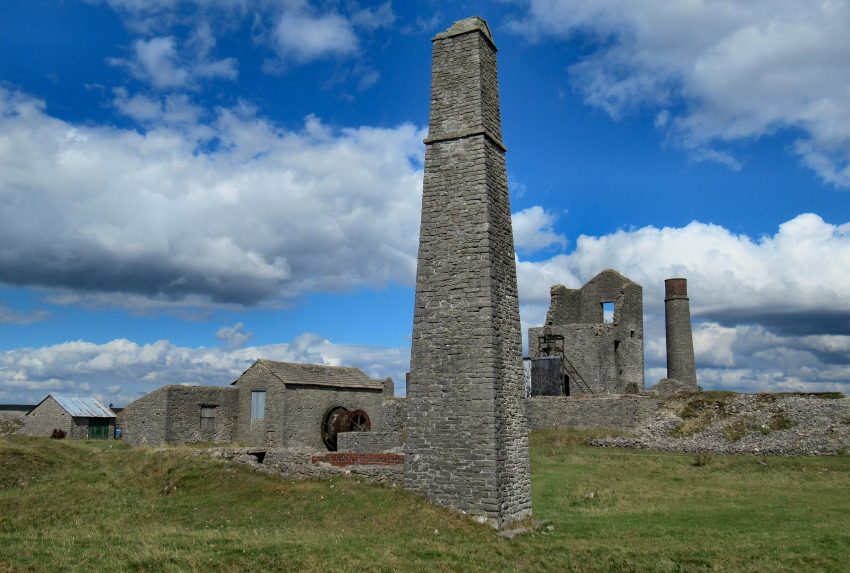
Magpie Mine is one of the most fascinating things to do in Sheldon, offering visitors a rare chance to step into the industrial past of the Peak District. Set within a walled enclosure alongside four other former mines-Dirty Red Soil, Great Red Soil, Maypit, and Horsesteps-it forms a Scheduled Monument that preserves centuries of lead mining history. The atmospheric ruins, chimneys, and engine houses stand amid rolling limestone hills, creating a striking blend of heritage and landscape.
Lead mining in Mid-Derbyshire stretches back to Roman times, but Magpie Mine’s recorded story begins in the 17th century, with major developments from the 1740s onward. After more than 200 years of operation filled with engineering innovation, bitter disputes, and periods of closure, the mine finally ceased production in 1958, marking the end of lead mining in Derbyshire. Today, the site is cared for by the Peak District Mines Historical Society, which continues to restore and protect this remarkable industrial landmark.
History and Significance of Magpie Mine
Magpie Mine’s earliest workings were tied to the Shuttlebark vein of lead ore, officially opened in 1682. The mine itself was first documented in 1740 and went on to play a major role in the region’s long and often turbulent mining history. Its operations were frequently interrupted by flooding, boundary disputes, and shifts in the price of lead.
One of the most dramatic events occurred in 1833, when an ongoing conflict with miners from the neighbouring Maypit Mine escalated into tragedy. Smoke was ignited underground, suffocating three Maypit miners. A murder trial followed, though all 24 suspects from Magpie Mine were acquitted due to provocation and uncertainty over the true culprit.
A new era began in 1839 under the management of renowned mining engineer John Taylor. He oversaw the construction of many of the limestone buildings still visible today, including the circular and square chimneys (the latter restored in 2016), the agent’s house, smithy, and the now-lost winding house. The 1840s also saw the creation of a gunpowder house and engine reservoir.
The Cornish engine house, built in 1869, housed a powerful winding engine, and its large winding drum still survives. The main shaft, sunk in 1823, plunges more than 200 metres into the earth. To combat persistent flooding, engineers constructed an impressive drainage sough between 1873 and 1881, stretching around 2 kilometres to the River Wye. This engineering feat could remove millions of litres of water per day.
Despite innovation, financial issues forced closure in 1883. Small-scale operations resumed intermittently from 1913 to 1923 and again in the 1950s. The headgear above the main shaft and the corrugated iron winding house both date to this final phase of activity. Magpie Mine ultimately closed in 1958, marking the end of an industry central to Derbyshire for nearly 2,000 years.
Things to See and Do in Magpie Mine
Magpie Mine is an open-air archaeological site filled with evocative structures. The square chimney, circular chimney, and engine house form the core of the landscape, letting visitors visualise the industrial power that once drove the mine. The Cornish engine house, with its surviving winding drum, is particularly impressive.
Across the enclosure, you can explore the remains of the agent’s house, the smithy, the reservoir, and the 1950s steel headgear above the main shaft. Interpretation boards help explain how these buildings operated and how miners lived and worked underground.
A reconstructed horse gin stands over the Red Soil mine shaft, demonstrating the horse-powered mechanism once used to raise lead ore to the surface. This feature brings the site’s early mining technology to life and is especially popular with families and heritage enthusiasts.
The surrounding footpaths also make Magpie Mine ideal for a scenic walk. Approaches from Sheldon, the west, south, and east offer easy access and rewarding views of the Peak District's limestone landscape.
How to Get There
Magpie Mine is located near the village of Sheldon in Derbyshire and is best reached on foot via local footpaths. The shortest route is a 500-metre walk from Sheldon along a clearly marked path. Parking is available in the village or along nearby lanes, though spaces are limited.
Public transport is scarce in this rural area, so visitors without a car may need to combine bus routes with longer walks.
Practical Tips on Visiting Magpie Mine
- Best time to visit Magpie Mine: Spring and autumn for pleasant walking weather and clear views.
- Entrance fee in Euros: Free; donations to the Peak District Mines Historical Society are appreciated.
- Opening hours: Open year-round during daylight hours.
- Official website: Look for “Peak District Mines Historical Society Magpie Mine” for updates.
- How long to spend: 45 minutes to 2 hours depending on how much you explore.
- Accessibility: Uneven terrain and old structures may be challenging for some visitors.
- Facilities: None on-site; amenities are available in nearby villages such as Sheldon or Bakewell.
- Photography tip: Capture the chimneys and engine house against the moody Peak District sky for atmospheric shots.
- Guided tours: The Society occasionally offers guided open days and heritage tours.
- Nearby food options: Pubs and cafés in Sheldon, Monyash, and Bakewell.
Where to Stay close to Magpie Mine
For a convenient base near the mine, The Rutland Arms Hotel offers comfort and history in nearby Bakewell. Those seeking a countryside escape may prefer The Peacock at Rowsley, set amid peaceful landscapes. Another option is East Lodge Country House Hotel, ideal for exploring the wider Peak District.
Is Magpie Mine Worth Visiting?
Yes. Magpie Mine is a captivating blend of industrial archaeology, dramatic Peak District scenery, and centuries of local history. Its chimneys, engine houses, and atmospheric ruins provide a memorable window into Derbyshire's mining past, making it an excellent stop for walkers, history lovers, and photographers.
What Other Travellers Say...

Magpie Mine, Magpie Mine Sheldon, Bakewell DE45 1QU, UK is a well-preserved former lead mine set high in the Peak District with intact industrial remains — notably a Cornish engine house and chimney, winding gear, capped shafts, a replica horse gin, a powder store and other ruined buildings — with information boards explaining the site. Visitors can wander public paths across farmland (dogs allowed on lead) and access is generally unrestricted; some buildings such as the Agent's House and smithy are open only on Heritage Open Days when volunteers often give informative tours and welcome donations. Parking is on a nearby layby, terrain is mostly level from one approach, and visitors should be aware of farm animals on the route and fenced-off drops on site.


FAQs for Visiting
Nearby Attractions to Magpie Mine
- Arbor Low: A remarkable Neolithic henge and stone circle set on a windswept plateau.
- Monyash Village: A traditional limestone village with walking routes and a historic green.
- Bakewell Town Centre: Home to shops, cafés, and the famous Bakewell pudding.
- Lathkill Dale: A tranquil and picturesque limestone valley ideal for walking.
- Haddon Hall: A beautifully preserved medieval manor house near Bakewell.
The Magpie Mine, Sheldon appears in our Complete Guide to Visiting Bakewell!

Moira & Andy
Hey! We're Moira & Andy. From hiking the Camino to trips around Europe in Bert our campervan — we've been traveling together since retirement in 2020!
This website uses affiliate links which may earn a commission at no additional cost to you!
Nearby Attractions
- Monsal Trail (3.5) km
Walk - Thornbridge Hall Gardens (3.5) km
Historic Building - Old House Museum (4.2) km
Historic Building and Museum - All Saints' Church (4.3) km
Church - Bakewell Bridge (4.7) km
Bridge - Arbor Low (4.8) km
Historic Site - Haddon Hall (6.4) km
Historic Building - Chatsworth House (9.0) km
Historic Building - Solomon’s Temple (12.3) km
Historic Building - Buxton Museum and Art Gallery (12.4) km
Museum