Luxor Temple
Historic Site in Luxor
Set on the east bank of the Nile in the heart of modern Luxor, Luxor Temple feels surprisingly intimate for a monument that once anchored Egypt's idea of kingship. Built around 1400 BCE and known to the ancient Egyptians as ipet resyt, “the southern sanctuary”, it formed the southern end of the ritual axis that ran up to Karnak. Unlike most temples in Thebes, this complex wasn't dedicated to a single cult god or a deified pharaoh in death; instead, it was all about the renewal of royal power, a place where kings were crowned in reality or in ritual, and where the bond between Amun, the pharaoh, and the cosmos was reaffirmed. It remains one of the must-see places in Luxor if you want to feel how religion and politics fused in the New Kingdom.
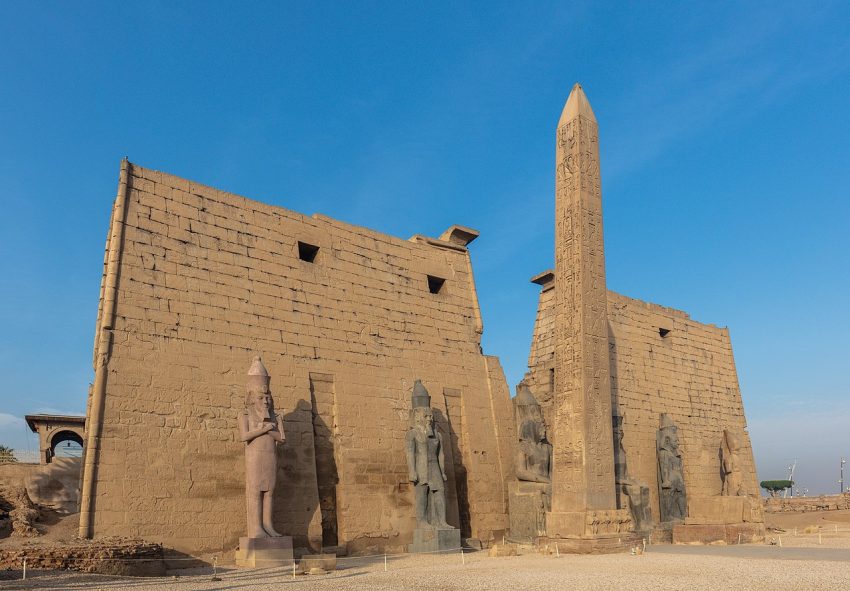
Walking into Luxor Temple today, you're stepping through layers of history. Amenhotep III's graceful colonnades and chapels, additions by Tutankhamun and Ramesses II, a shrine linked to Alexander the Great, a Roman legionary fortress, a church, and the standing Abu Haggag mosque all share the same sacred ground. Colossal seated statues of Ramesses II flank the entrance, obelisks (one now in Paris) once framed the pylon, and the Avenue of Sphinxes stretches north all the way to Karnak. With its central location and magical lighting after sunset, the complex is a highlight of any walking tour of Luxor, especially if you time your visit for the golden hour and linger into the evening.
Table of Contents
History and Significance of the Luxor Temple
Luxor Temple's origins lie in the 18th Dynasty, when Amenhotep III built much of the core structure we see today. Positioned on the east bank of the Nile within ancient Thebes, it formed the southern counterpart to Karnak, connected by a processional avenue lined with sphinxes. While Karnak was the main cult centre of the Theban Triad-Amun, Mut, and Khonsu-Luxor Temple was dedicated to the renewal of kingship itself. During major festivals such as Opet, the cult statue of Amun travelled from Karnak to Luxor, where rituals were performed that symbolically recharged the pharaoh's divine authority.
Unlike many Theban temples, Luxor was not primarily about a god's daily cult or a king's mortuary cult. Instead, it can be thought of as a royal “stage”, where coronation and renewal ceremonies unfolded, whether literally for new rulers or conceptually for the institution of kingship. Successive pharaohs recognised its importance and left their mark. Tutankhamun and Horemheb completed reliefs and decorations, while Ramesses II added the massive pylon, colossal statues, and obelisks at the entrance, dramatically reshaping the approach to the temple.
Later periods added new layers without erasing the old. Alexander the Great had a barque chapel built or adapted within the complex to present himself in pharaonic style, and under Roman rule the temple precinct became a legionary fortress and administrative centre. One chapel dedicated to Mut was transformed into a Tetrarchy cult space and later into a church, echoing wider shifts in religion and power. Today, Luxor Temple and the rest of ancient Thebes form a UNESCO World Heritage Site, recognised since 1979 for their outstanding testimony to pharaonic civilisation, and the site continues to be an anchor for both local religious life and global tourism.
Things to See and Do in the Luxor Temple
Approach the temple from the Corniche and you’ll first encounter the imposing first pylon, built by Ramesses II and decorated with scenes of his military victories. In front of it, colossal seated statues of the king guard the entrance; look closely and you’ll see smaller royal figures carved around his legs, representing queens and family members. Only one of the original pair of obelisks still stands here-the other famously stands in Paris-but even a single needle rising beside the pylons makes for an unforgettable first impression.
Inside, the temple unfolds as a sequence of carefully staged spaces. The great court of Ramesses II gives way to the elegant colonnade of Amenhotep III, where towering papyrus-bundle columns lead your eye inward. Beyond lies the peristyle court and inner chambers, including chapels that bear inscriptions of Amenhotep III and later rulers such as Tutankhamun, as well as the sanctuary area adapted by Alexander the Great. As you move deeper, look for reused blocks with earlier reliefs, traces of ancient paint, and overlays of Roman fresco and Christian iconography that testify to the temple’s changing roles.
Don’t forget to explore around the edges of the complex. On the western side, you’ll see the mosque of Abu Haggag perched atop the ancient walls, a reminder that this has been a living sacred space for thousands of years. To the north, the Avenue of Sphinxes stretches away towards Karnak, now partly restored and walkable in sections, giving you a tangible sense of how processional routes once tied the city together. Return after dark if you can: under floodlights, columns and statues cast long shadows, reliefs stand out more sharply, and the temple takes on a completely different, almost theatrical character.
How to Get to the Luxor Temple
Most international visitors reach Luxor Temple via Luxor International Airport (LXR), which lies a short drive east of the city. The airport is served by domestic flights from Cairo and other Egyptian cities, along with seasonal and charter flights from abroad; flying from Cairo takes around an hour and is the quickest way to connect with Luxor's sites. For the best deals and a seamless booking experience, check out these flights to Luxor on Booking.com.
If you're coming by train, Egyptian National Railways operates services along the Nile valley between Cairo and Luxor, including daytime trains and overnight sleepers.Train schedules and bookings can be found on Omio. Journey times are typically around 9-10 hours depending on the service, and arriving by rail drops you just a short taxi ride or even a walk away from the temple, depending on where you're staying. Many Nile cruises also start or end in Luxor and include visits to Luxor Temple as part of their standard excursion programme, often timing them for late afternoon or evening.
By road, the distance from Cairo to Luxor is roughly 630-650 kilometres, with driving times of 8-10 hours depending on route and conditions. Most travellers prefer to fly or take the train and then use taxis, ride-hailing apps where available, or organised tours to get around Luxor. Luxor Temple itself sits right in the city centre on the east bank-within walking distance of many hotels and the railway station-so once you're in town it's one of the easiest major sites to reach on foot.
Practical Tips on Visiting the Luxor Temple
- Suggested tips: Try to visit twice if your schedule allows-once in daylight to appreciate the reliefs and once after dark when the lighting transforms the atmosphere.
- Best time to visit: Early morning or late afternoon into evening are ideal; midday can be very hot and crowded, especially in peak season.
- Entrance fee: Expect to pay the equivalent of around €10–€15 for adults, with reduced rates for students—always check the latest price in Egyptian pounds before you go.
- Opening hours: Generally open daily from early morning (around 6:00) until late evening, with many visitors timing their trip for sunset and after-dark illumination.
- Official website: https://egymonuments.gov.eg
- How long to spend: Plan on at least 1.5 to 2 hours to explore comfortably, longer if you’re taking lots of photos or visiting with a guide.
- Accessibility: The main paths are relatively level, but surfaces can be uneven and sandy, and some areas involve steps; visitors with reduced mobility should focus on the main courts and colonnades and seek advice on-site about the easiest routes.
- Facilities: Toilets, small kiosks, and souvenir stalls are available near the entrance; cafés and restaurants line the nearby Corniche, just a short walk away.
- Photography tip: A wide-angle lens is great for capturing the colonnade and courts; sunset light on the pylon and statues is especially beautiful, while night shots highlight the columns and reliefs against the dark sky.
- Guided tours: Hiring a licensed guide, either privately or as part of a small group, can deepen your understanding of the temple’s role in kingship and its multi-layered history through Pharaonic, Greek, and Roman times.
- Nearby food options: You'll find plenty of restaurants and cafés along the Corniche and in central Luxor, making it easy to combine your visit with a riverside drink or dinner.
Where to Stay close to the Luxor Temple
If you want to be within easy walking distance of Luxor Temple, Steigenberger Nile Palace makes an excellent base. Set right on the Corniche with Nile views, it offers comfortable rooms, several restaurants, and a straightforward stroll or short taxi ride to the temple entrance, as well as easy connections to ferries and West Bank tours.
For a more boutique feel on the West Bank with a quieter, village-like atmosphere, Al Moudira Hotel offers beautifully designed rooms around shady courtyards. From here, you can reach Luxor Temple via a short taxi ride and river crossing, and in return you get peaceful evenings under the stars after busy days exploring both banks of the Nile.
Travellers who like a resort-style stay close to both Karnak and Luxor Temple might choose Hilton Luxor Resort & Spa. Overlooking the river just north of town, it’s a short drive from the major East Bank temples and pairs well with sunrise or sunset visits, spa time, and leisurely hours by the pool.
Is the Luxor Temple Worth Visiting?
Luxor Temple is absolutely worth visiting and, for many travellers, becomes one of their favourite sites in Egypt. Its compact size and riverside location make it less overwhelming than Karnak, while its focus on kingship and renewal adds a distinct flavour to the usual god-centred temple visits. The combination of colossal statuary, elegant colonnades, multi-layered history, and the chance to see everything beautifully lit after dark makes it both atmospheric and accessible. Seen together with Karnak, the Valley of the Kings, and the surrounding Theban landscape, Luxor Temple helps complete the picture of how ancient Egypt's religious and political worlds intertwined.
What Other Travellers Say...

Luxor Temple in Luxor city is an ancient temple complex built mainly under Amenhotep III and Ramesses II with later additions; visitors praise its grand columns, carved stone details and dramatic night lighting that make it especially atmospheric and photogenic, recommend visiting at sunset or after dark, note it's easy to walk around for an hour or two, advise booking tickets in advance during peak times and keeping an eye on belongings, and mention that opening hours can vary so plan accordingly.


FAQs for Visiting Luxor Temple
Nearby Attractions to the Luxor Temple
- Karnak Temple Complex - Vast temple city of Amun and the Theban Triad, connected to Luxor Temple by the Avenue of Sphinxes.
- Avenue of Sphinxes - Restored processional route lined with sphinx statues linking Karnak and Luxor, now walkable in sections.
- Luxor Museum - An excellent, compact museum showcasing statues, reliefs, and artefacts from Thebes and the surrounding region.
- Mummification Museum - A small but fascinating museum explaining ancient Egyptian embalming techniques and beliefs about the afterlife.
- Corniche and Nile Promenade - The riverside walkway in front of Luxor Temple, perfect for evening strolls, felucca rides, and people-watching.
The Luxor Temple appears in our Complete Guide to Visiting Luxor!

Moira & Andy
Hey! We're Moira & Andy. From hiking the Camino to trips around Europe in Bert our campervan — we've been traveling together since retirement in 2020!
This website uses affiliate links which may earn a commission at no additional cost to you!
Planning Your Visit
Generally open daily from early morning (around 6:00) until late evening, with many visitors timing their trip for sunset and after-dark illumination.
Expect to pay the equivalent of around €10-€15 for adults, with reduced rates for students-always check the latest price in Egyptian pounds before you go.
Nearby Attractions
- Karnak Temple Complex (2.8) km
Historic Site - Valley of the Kings (5.9) km
Historic Site - Philae - Temple of Isis (187.8) km
Historic Site - Abu Simbel Temples (387.7) km
Historic Site - Dahshūr (476.1) km
Historic Site - Memphis (481.0) km
Historic Site - Saqqara (484.2) km
Historic Site - Pyramids of Giza (498.3) km
Historic Site - Cairo Tower (502.9) km
Tower - The Egyptian Museum (502.9) km
Museum