Logis de Malet, Saint-Émilion
Historic Building in Saint-Émilion
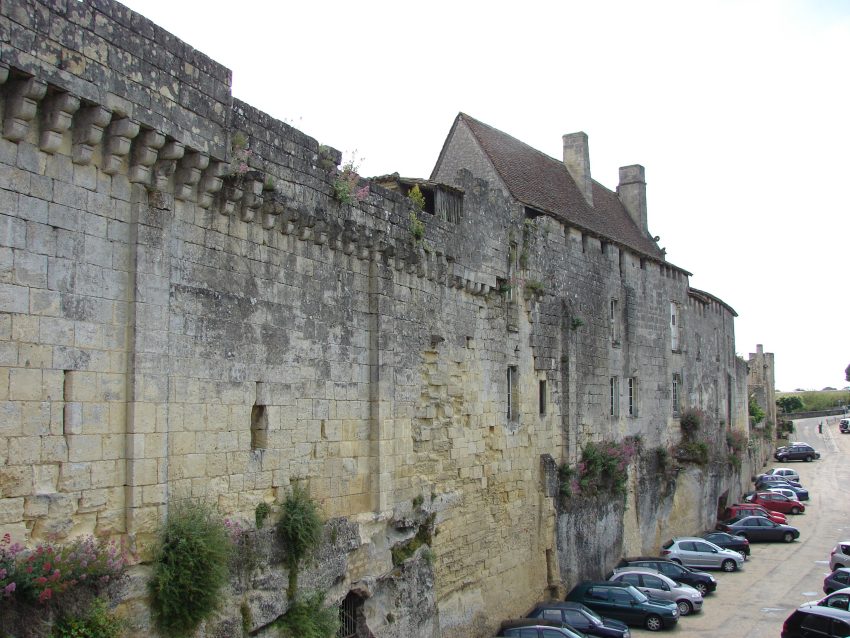
The Logis de Malet is one of Saint-Émilion's quieter historical finds, the kind of place you appreciate most once you've already absorbed the headline monuments. Dating from the 16th century and built against the town's earlier perimeter wall, it sits right where Saint-Émilion's domestic story meets its defensive one-Renaissance living stitched onto medieval protection. If you like reading a town through its architecture, this spot is one of the best places to visit in Saint-Émilion because it shows how buildings here weren't static “heritage objects,” but evolving structures that adapted to conflict, prosperity, and everyday needs.
It also fits naturally into a walking tour of Saint-Émilion because it rewards slow wandering rather than planning. You don't need a ticket or a timed visit; you simply arrive, look closely, and let the details do the work-stonework that hints at an older wall line, later additions that soften the building's character, and the sense that the town's edges once mattered as much as its central squares.
Table of Contents
- History and Significance of the Logis de Malet
- Things to See and Do in the Logis de Malet
- How to Get to the Logis de Malet
- Practical Tips on Visiting the Logis de Malet
- Where to Stay Close to the Logis de Malet
- Is the Logis de Malet Worth Visiting?
- For Different Travelers
- FAQs for Visiting Logis de Malet
- Nearby Attractions to the Logis de Malet
History and Significance of the Logis de Malet
The Logis de Malet took shape in the 16th century, anchored to a perimeter wall that had already been evolving since the 1200s. That earlier wall wasn't just a standalone barrier; it was effectively built from the backs of Romanesque houses, which tells you a lot about medieval urban logic in Saint-Émilion-defence and daily life often shared the same stone.
Over time, periods of unrest pushed the building toward a more defensive character. Features such as machicolations were added to deter attackers, reflecting how the town’s architecture responded directly to the realities of siege and street-level conflict during turbulent centuries.
In the 18th century, the Logis gained a more classical, refined identity when the Malet de Roquefort family expanded it, including a more formal façade and a gallery facing the garden side. Later, civic ownership reshaped the site again, and changes to roads and public space around it altered the relationship between the building and the town wall-one more reminder that Saint-Émilion’s “historic fabric” has always been a working, changing environment.
Things to See and Do in the Logis de Malet
Start by reading the building as a timeline. Look for the way it “leans” into the old perimeter line, and try to spot where older masonry and later Renaissance or classical interventions meet-those junctions are often the most revealing parts of Saint-Émilion’s architecture.
Next, pay attention to defensive cues. Even if you’re not an architectural specialist, you can usually pick out elements that feel more martial than domestic, and it’s satisfying to imagine how a residence could be adjusted to respond to danger without becoming a full fortress.
Finally, use the Logis de Malet as a connector stop. It's best enjoyed as part of a loop that traces the town's edges, where you can move from walls and gates to viewpoints and then back into the dense medieval lanes with a clearer sense of how Saint-Émilion once protected itself.
How to Get to the Logis de Malet
Most visitors arrive via Bordeaux-Mérignac Airport (BOD), which is the main international gateway for Saint-Émilion. For the best deals and a seamless booking experience, check out these flights to Saint-Émilion on Booking.com. From Bordeaux, the simplest plan is to reach the Saint-Émilion area and then explore the historic centre on foot.
By train, travel via Bordeaux Saint-Jean to Saint-Émilion station, then walk uphill into town or take a short taxi ride if you want to save energy for exploring. You can use SNCF Connect to check schedules, compare routes, and purchase tickets for National (SNCF ) and regional trains (TER). For a more streamlined experience, we recommend using Omio, which allows you to easily compare prices, schedules, and book tickets for both National and Regional travel across all of Europe, all in one place. Once you're in the medieval core, the Logis de Malet is easiest to reach as part of an unhurried walk along the town's outer lanes.
Local buses can be useful for regional connections, but they’re less convenient for fine-grained sightseeing within the old town, where walking is typically fastest and most enjoyable.
If you’re driving, plan to park outside the tight medieval centre and do the rest on foot, since the lanes and viewpoints are better experienced without a car. If you are looking to rent a car in France I recommend having a look at Discover Cars, first, as they compare prices and review multiple car rental agencies for you.
Practical Tips on Visiting the Logis de Malet
- Entrance fee: Free
- Opening hours: Always accessible from the street (exterior viewing; best visited in daylight)
- Best time to visit: Late morning or late afternoon is ideal for softer light on the stonework and a calmer feel along the town’s edges.
- How long to spend: 10-20 minutes is enough for a close look and photos, or longer if you’re using it as part of a perimeter walk linking gates and viewpoints.
- Accessibility: Expect uneven surfaces and occasional slopes nearby, typical of Saint-Émilion’s historic streets, so take your time if you’re doing a longer loop.
- Facilities: There are no dedicated facilities at the building itself, so plan restrooms and longer breaks around cafés in the central lanes.
Where to Stay Close to the Logis de Malet
For a culture-heavy itinerary, the best base is inside Saint-Émilion’s medieval centre so you can walk to monuments and dinner easily; if your priority is vineyard touring and day trips, staying just outside the core is often better for parking, calm nights, and quick access to estates.
If you want a central base with an easy walk to the main lanes and historic edges, Hôtel Palais Cardinal is well placed for a walk-everywhere stay. For a characterful option in the heart of the village atmosphere, Logis de la Cadène suits travellers who want to step straight into Saint-Émilion’s medieval rhythm. If you prefer a quiet hotel that still keeps the centre close, Hotel Porte Brunet works well for early starts and relaxed evenings.
Is the Logis de Malet Worth Visiting?
Yes, if you enjoy the quieter, “read the town” kind of sightseeing. The Logis de Malet isn't a big-ticket attraction, but it delivers something more subtle and rewarding: a layered building that shows how Saint-Émilion's homes, walls, and public space evolved together over centuries.
It’s particularly worthwhile if you’ve already visited the major churches and underground sites. This is the kind of stop that adds depth to your understanding of the town without demanding time, money, or planning.
What Other Travellers Say...

Logis de Malet, located at 463 Rue des Écoles in Saint-Émilion, is a guesthouse praised by visitors for providing a pleasant stay; a recent guest noted a positive experience during a July visit.
For Different Travelers
Families with Kids
This is a good low-pressure stop for families because it’s outdoors and flexible. You can keep it brief, turn it into a quick “spot the old wall” game, and move on before attention spans fade.
If you're doing a longer perimeter loop, plan a snack break nearby so the walk doesn't feel like “all history, no reward.” Saint-Émilion works best for kids when you alternate short sights with easy treats.
Couples & Romantic Getaways
For couples, the Logis de Malet is a lovely detour that feels slightly off the main circuit, which makes it more intimate. It's the kind of place where you slow down, take a photo, and enjoy the atmosphere without feeling swept along by crowds.
Pair it with a gentle edge-of-town stroll and then drift back into the centre for a glass of wine or dinner. That contrast-quiet outer lanes to lively medieval streets-often becomes the most memorable rhythm of the day.
Budget Travelers
This is a strong budget-friendly stop because it's free and still adds real historical texture. It's also a reminder that Saint-Émilion rewards walking well: some of the best moments come from streetscapes, walls, and small architectural surprises.
Use it as part of a self-guided route that mixes free landmarks and viewpoints with one paid experience you genuinely care about, such as a single cellar tour or a château tasting.
History Buffs
History-minded travellers will appreciate how clearly this site shows adaptation over time-medieval wall logic, Renaissance residential ambition, defensive modifications during conflict, and later civic repurposing. It’s a compact case study of how Saint-Émilion’s built environment absorbed pressure from war, wealth, and changing public needs.
If you enjoy details, linger on the “in-between” parts of the structure, where later additions meet older stonework. Those transitions are often where the most interesting clues hide.
FAQs for Visiting Logis de Malet
Getting There
Tickets & Entry
Visiting Experience
Tours, Context & Itineraries
Photography
Accessibility & Facilities
Food & Breaks Nearby
Safety & Timing
Nearby Attractions to the Logis de Malet
- Tour du Roy: A medieval keep with a rooftop panorama that gives you the best overview of town and vineyards.
- Collegiate Church of Saint-Émilion and Cloister: A major church complex with a peaceful courtyard and layered Romanesque-to-Gothic character.
- Monolithic Church of Saint-Émilion: A dramatic underground monument carved from limestone, full of atmosphere and scale.
- Porte Brunet: A surviving medieval gate that doubles as a scenic threshold with open views beyond the walls.
- Cloître des Cordeliers: A picturesque cloister and cellar site where history meets a distinctly Saint-Émilion wine experience.
The Logis de Malet appears in our Complete Guide to Visiting Saint-Émilion!

Moira & Andy
Hey! We're Moira & Andy. From hiking the Camino to trips around Europe in Bert our campervan — we've been traveling together since retirement in 2020!
This website uses affiliate links which may earn a commission at no additional cost to you!
Planning Your Visit
Always accessible from the street (exterior viewing; best visited in daylight)
Free
Nearby Attractions
- Collegiate Church of Saint-Émilion (0.1) km
Church - Bell Tower of the Monolithic Church (0.1) km
Tower - Monolithic Church of Saint-Émilion (0.1) km
Church - Chapelle de la Trinité (0.1) km
Church - Hermitage of Saint Emilion (0.1) km
Religious Building - Place de l’Église Monolithe (0.1) km
Square - Mairie de Saint-Émilion (0.2) km
Town Hall - Porte de la Cadène (0.2) km
City Gate - Washhouses of Saint-Émilion (0.2) km
Historic Site - Tour du Roy (0.2) km
Castle and Tower