Logge di Banchi, Pisa
Historic Building in Pisa
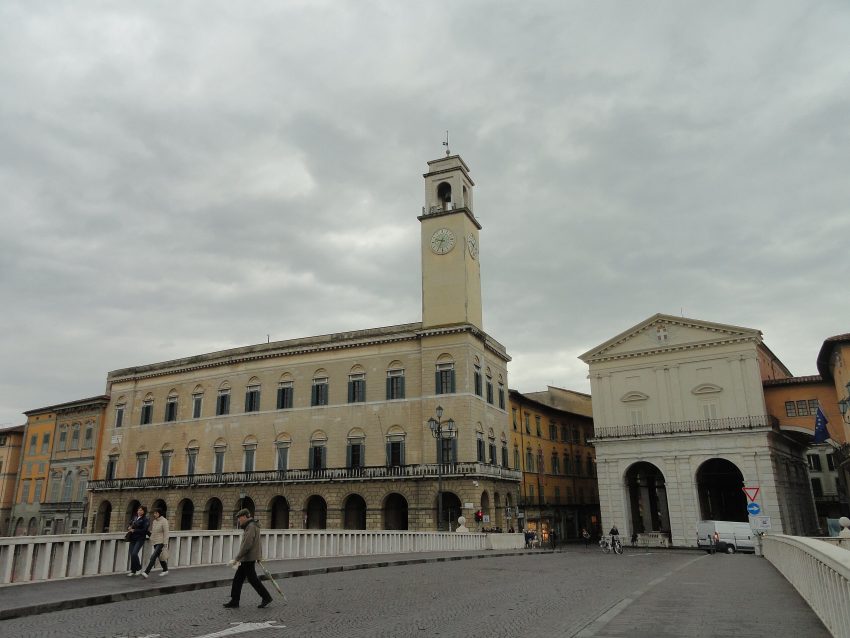
Just steps from the Arno and the busiest shopping streets of central Pisa, the Logge di Banchi is an elegant reminder that this was once a serious mercantile powerhouse, not just the city of the Leaning Tower. Commissioned by Grand Duke Ferdinando I de' Medici and designed by Bernardo Buontalenti, the loggia was built between 1603 and 1605 by Cosimo Pugliani as a covered market space for wool, silk, currency exchange and cereals. Its broad arches created a prestigious setting for business, while also providing shelter from sun and rain for traders, citizens and visitors. Today, the arches frame small markets, events and everyday life, making it one of the top attractions in Pisa if you want to feel how commerce shaped the city's streets.
The cost of creating this airy landmark was high, and not just in money. To make space for the Logge di Banchi, part of the medieval quarter with tower houses and narrow streets belonging to some of Pisa's wealthiest families was demolished, a change still hinted at in inscriptions beneath the Medici coat of arms and confirmed by archaeological excavations nearby. The result is an open, ordered space that contrasts with the tighter medieval fabric behind it. When you stand beneath the arches and look towards the river, it is easy to imagine the buzz of early modern merchants trading cloth and coin under the same stone vaults, a great place to visit on a walking tour of Pisa that links the Lungarni with the historic centre.
Table of Contents
- History and Significance of the Logge di Banchi
- Things to See and Do in the Logge di Banchi
- How to Get to the Logge di Banchi
- Practical Tips on Visiting the Logge di Banchi
- Where to Stay close to the Logge di Banchi
- Is the Logge di Banchi Worth Visiting
- FAQs for Visiting Logge di Banchi
- Nearby Attractions to the Logge di Banchi
History and Significance of the Logge di Banchi
The Logge di Banchi was born out of Medici ambition at the start of the 17th century. Ferdinando I wanted a prestigious framework for Pisa's financial and commercial activity, something that would both protect traders and proclaim the Grand Duchy's power. Buontalenti, one of the leading architects of his time, drew up the design, and between 1603 and 1605 Cosimo Pugliani oversaw construction. The chosen location was strategic: close to the Arno, at the junction between river traffic and the streets leading into the heart of Pisa's markets and civic buildings.
Building the loggia required a radical reshaping of the area. A chunk of the medieval quarter, including tower houses and lanes where wealthy families had lived for generations, was deliberately demolished to clear the site. A scroll beneath the Grand Duke’s coat of arms on the building and later archaeological digs in the adjacent alley confirm this transformation, showing how older domestic structures gave way to a new, unified market architecture. The lower storey of the original 17th century loggia featured a rhythm of arches supported by 12 massive rusticated marble pilasters sitting on solid plinths, with a low relief banderole running above them: a classical, robust language befitting its commercial role.
The upper floor has changed more over time. Initially decorated with two banderoles facing the Arno, it was reworked in 1865 when the Rivers and Ditches office gave way to the State Archives and a gabled pediment was added, lending the façade a more institutional, 19th century look. Even the basement saw reinvention: in 1925 it became a fashionable daytime “hotel” in Liberty style, offering showers, bathrooms, grooming services and more. During the excavations for this transformation, an exceptional hoard of 13th century gold coins was discovered and later moved to the Museo di San Matteo. The “hotel” faded and closed for many years, but a renovation in 2000 reopened these spaces to the public. Today, the Logge di Banchi stands as a layered monument to trade, urban change and everyday life in Pisa.
Things to See and Do in the Logge di Banchi
Start by standing at the edge of the Arno and looking back at the Logge di Banchi: the regular rhythm of its arches and heavy pilasters forms a dignified backdrop to the riverfront, framing the entrances to Corso Italia and nearby streets. Walking under the arches, you can still feel the building's original purpose as a place of exchange and shelter. Depending on when you visit, you may find stalls, small markets or cultural events set up under the vaults, echoing centuries of commercial activity.
Take time to examine the structural details: the massive rusticated pilasters, the banderole above them, and the way the upper storey sits above the open loggia. Try to imagine the earlier version of the upper floor decorated with banderoles, then picture the 19th century reworking that added the gabled pediment when the State Archives moved in. This layering of styles tells you a lot about how the building’s function changed from pure market to administrative centre and, now, to civic and cultural space.
If you are interested in urban history, wander down the alleyways around the loggia and think about the medieval quarter that once stood here. The demolition of those tower houses in the early 1600s cleared the way for this open loggia, but archaeological traces beneath the surface still record their presence. For a fuller picture of Pisa's commercial and artistic life, you can link a visit here with a stop at the Museo di San Matteo, where the gold coin hoard discovered during the 1925 basement works is kept along with other treasures. Afterwards, continue across the bridge or along Corso Italia to connect this Medici-era trading hub with the city's other landmarks.
How to Get to the Logge di Banchi
If you arrive by air, you will land at Pisa International Airport Galileo Galilei; from there, take the people-mover or a taxi to Pisa Centrale railway station, then walk up Corso Italia towards the Arno and you will find the Logge di Banchi near the river at the top of the street. For the best deals and a seamless booking experience, check out these flights to Pisa on Booking.com.
By train, get off at Pisa Centrale, which is the city's main station; from the station square, follow Corso Italia straight towards the river for about 10-15 minutes on foot until you reach the Logge di Banchi at the northern end of the street, just before the bridge. Use Omnio to easily compare schedules, book train tickets, and find the best prices all in one place for a hassle-free journey across Italy.
If you are travelling by car, follow signs into Pisa and look for parking around the station area or on streets just outside the restricted traffic zone; once parked, it is an easy walk via Corso Italia or nearby lanes to the Logge di Banchi by the Arno. If you are looking to rent a car in Italy I recommend having a look at Discover Cars, first, as they compare prices and review multiple car rental agencies for you.
Practical Tips on Visiting the Logge di Banchi
- Suggested tips: Treat the Logge di Banchi as both a photo stop and a transition point between the riverfront and the shopping streets, pausing under its arches to watch daily life go by.
- Best time to visit: Late afternoon or early evening often brings softer light on the façades and more local activity as people shop, meet and stroll along the Lungarni.
- Entrance fee: There is no fee to walk under the arches or enjoy the square; costs apply only for any events or exhibitions hosted in the spaces above or below.
- Opening hours: As an open loggia on a public street, it is accessible at all times, though interior spaces and any exhibitions follow their own schedules.
- How long to spend: Allow 15-30 minutes to explore the loggia itself, take photos and connect your visit with a stroll along the river or through Corso Italia.
- Accessibility: The area around the Logge di Banchi is mostly flat and paved, making it accessible for wheelchairs and strollers, though occasional steps or uneven paving stones may require some care.
- Facilities: While the loggia itself does not offer facilities, nearby streets are full of cafés, bars, shops and services, and the station district is within walking distance.
- Photography tip: Stand across the street or near the river to capture the full sweep of the arches; at dusk, car lights and shop windows add extra atmosphere to your shots.
- Guided tours: Many guided walks through Pisa's historic centre include a stop at the Logge di Banchi, using it to illustrate the city's commercial history and 17th century urban changes.
- Nearby food options: Corso Italia and the small side streets around the loggia are packed with cafés, bakeries and gelaterie, ideal for a quick snack or coffee before heading to other sights.
Where to Stay close to the Logge di Banchi
Staying near the Logge di Banchi puts you right between the Arno riverfront and Pisa's main shopping spine, with easy access to both the station and the historic monuments. A comfortable option within walking distance is Hotel Bologna Pisa, which sits just a short stroll from Corso Italia and the river. For those who want quick access to trains as well as the loggia, NH Pisa near Pisa Centrale makes a practical base, from which you can walk up to the Logge di Banchi in around 10-15 minutes. If you would rather be closer to the Leaning Tower while still keeping the loggia within walking reach along the Lungarni, Grand Hotel Duomo gives you a classic central location.
Is the Logge di Banchi Worth Visiting
The Logge di Banchi is absolutely worth including in your Pisa itinerary, especially if you are interested in how the city's commercial and political life has shaped its streets. It may not be as famous as the Campo dei Miracoli, but standing under its arches and looking towards the Arno, you get a real sense of Pisa as a working, trading city across the centuries. The story of demolished medieval houses, Medici patronage, later administrative use and even the Liberty style “day hotel” in the basement adds human texture to the stone. As a compact, atmospheric stop that links the river, the shopping streets and the wider history of Pisa, it rewards even a short visit.
What Other Travellers Say...

Logge dei Banchi on Via di Banchi in Pisa is a covered loggia that historically hosted stalls for wool, silk, money changers and cereals; visitors note its attractive architecture for photos, occasional local food markets on weekends where producers sell cheese, bread and beer, and that the space was renovated and is open to the public.


FAQs for Visiting Logge di Banchi
Nearby Attractions to the Logge di Banchi
- Lungarni of Pisa: The scenic river embankments along the Arno, perfect for a relaxed walk linking the loggia with bridges and other quarters of the city.
- Corso Italia: Pisa's main shopping street leading from Piazza Vittorio Emanuele II to the river, lined with cafés, boutiques and everyday local life.
- Piazza Vittorio Emanuele II: The modern square by the station with its monument to Vittorio Emanuele II and surrounding civic buildings.
- Palazzo Blu: A riverside palace and cultural centre hosting art exhibitions and a permanent collection just a short walk along the Arno.
- Campo dei Miracoli: The famous square with the Leaning Tower, cathedral, baptistery and Camposanto, reachable on foot from the Logge di Banchi via the Lungarni and historic streets.
The Logge di Banchi appears in our Complete Guide to Visiting Pisa!

Moira & Andy
Hey! We're Moira & Andy. From hiking the Camino to trips around Europe in Bert our campervan — we've been traveling together since retirement in 2020!
This website uses affiliate links which may earn a commission at no additional cost to you!
Planning Your Visit
As an open loggia on a public street, it is accessible at all times, though interior spaces and any exhibitions follow their own schedules.
There is no fee to walk under the arches or enjoy the square; costs apply only for any events or exhibitions hosted in the spaces above or below.
Nearby Attractions
- Palazzo Blu (0.1) km
Gallery and Palace - Church of Santa Maria della Spina (0.2) km
Church - Borgo Stretto (0.2) km
Street - Corso Italia (0.4) km
Street - Santa Maria della Spina (0.4) km
Church - Santo Stefano dei Cavalieri (0.4) km
Church - Palazzo Vecchio de Palazzo Medici (0.5) km
Historic Building and Palace - Museo Nazionale di San Matteo (0.5) km
Museum - Palazzo dei Cavalieri (0.5) km
Palace - Lungarni of Pisa (0.5) km