Leonardo da Vinci Museum, Venice
Museum in Venice
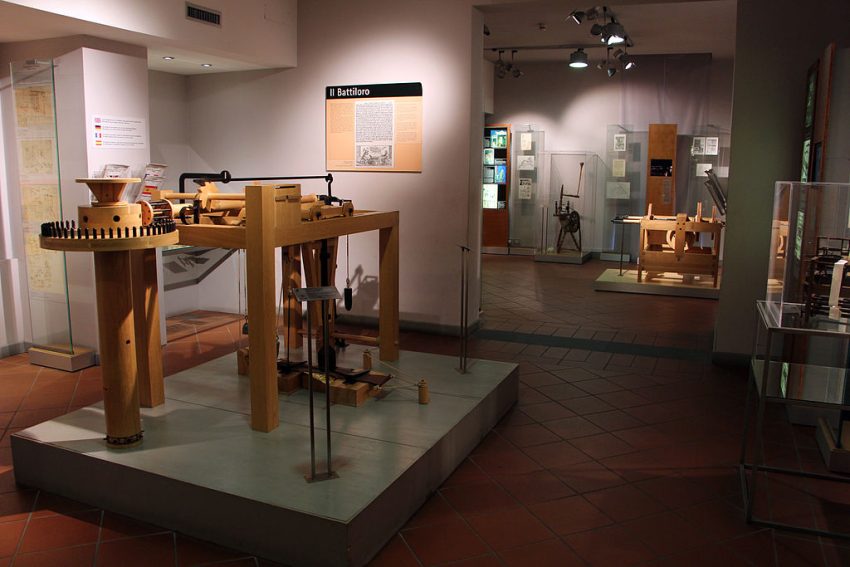
Tucked into the San Polo area near the Basilica dei Frari, the Leonardo da Vinci Museum is a compact, curiosity-packed stop where you can get hands-on with the ideas that made Leonardo famous. It sits by Campo San Rocco, right beside the Scuola Grande di San Rocco complex, which makes it an easy add-on when you're already exploring this quieter, more local-feeling side of central Venice.
Inside, the visit is designed to feel like a playful deep-dive rather than a traditional museum circuit: you move through themed spaces (often framed around the elements of earth, water, fire, and air) and switch between art-focused interpretation and mechanical experimentation. If you enjoy interactive exhibits and bite-sized learning, it's one of the things to do in Venice that fits neatly into a broader walking tour of Venice without taking over your whole day.
Table of Contents
- History and Significance of the Leonardo da Vinci Museum
- Things to See and Do in the Leonardo da Vinci Museum
- How to Get to the Leonardo da Vinci Museum
- Practical Tips on Visiting the Leonardo da Vinci Museum
- Where to Stay Close to the Leonardo da Vinci Museum
- Is the Leonardo da Vinci Museum Worth Visiting?
- For Different Travelers
- FAQs for Visiting Leonardo da Vinci Museum
- Nearby Attractions to the Leonardo da Vinci Museum
History and Significance of the Leonardo da Vinci Museum
Leonardo was born in Vinci near Florence, but his impact belongs to all of Italy: painter, engineer, anatomist, inventor, and relentless note-taker who treated the world like a problem set to be solved. Museums like this one matter because they translate that wide-ranging genius into something you can actually see and test, bridging the gap between the famous masterpieces and the notebooks full of mechanisms, measurements, and sketches.
In Venice, the setting also makes sense. This city has always been a place of practical ingenuity-shipbuilding, trade, navigation, and craftsmanship-so an exhibition built around motion, lift, gears, and water feels right at home. With the museum located by Campo San Rocco and the Frari area, it pairs naturally with nearby art-heavy landmarks, giving you an engaging contrast between sacred painting and Renaissance engineering.
Things to See and Do in the Leonardo da Vinci Museum
Start with the artistic side of the story: displays that unpack Leonardo’s best-known paintings and the sketch work behind them, helping you notice details you might otherwise miss (composition, anatomy, perspective, and the way he “built” realism with observation). Even if you’ve seen the Mona Lisa a hundred times online, the value here is understanding the mindset-how he moved from looking to drawing to testing.
Upstairs (and throughout, depending on the layout on the day), the replicas of inventions are the highlight. The most enjoyable approach is to treat it like a hands-on workshop: try the mechanisms, then step back and ask what problem he was solving-moving people, moving water, lifting loads, or creating motion more efficiently. It’s especially good for families and for travelers who like museums that feel active rather than hushed.
How to Get to the Leonardo da Vinci Museum
If you're already in central Venice, walking is simplest: aim for Campo San Rocco near the Scuola Grande di San Rocco and the Basilica dei Frari, and you'll be within a few minutes of the entrance.
Arriving by train, you can walk from Venezia Santa Lucia in roughly 15 minutes, heading over Ponte degli Scalzi and continuing into San Polo toward San Rocco. Use Omnio to easily compare schedules, book train tickets, and find the best prices all in one place for a hassle-free journey across Italy..
By vaporetto, lines that stop at (or near) San Tomà are convenient, followed by a short walk through San Polo’s lanes.
The nearest airports are Venice Marco Polo (VCE) and Treviso (TSF), with airport buses and shuttles typically taking you to Piazzale Roma before you continue on foot or by vaporetto into the historic centre. For the best deals and a seamless booking experience, check out these flights to Venice on Booking.com.
If you’re coming by car, plan to park at Piazzale Roma or Tronchetto and continue on foot or by vaporetto, since you can’t drive into the historic centre. If you are looking to rent a car in Italy I recommend having a look at Discover Cars, first, as they compare prices and review multiple car rental agencies for you.
Practical Tips on Visiting the Leonardo da Vinci Museum
- Entrance fee: Adults €8.90; Reduced €6.90.
- Opening hours: Daily: 09:30–18:00.
- Official website: https://interactivedavincimuseum.com/
- Best time to visit: Late morning or mid-afternoon tends to feel less rushed than the first opening hour, and interactive exhibits are more enjoyable when you’re not queueing behind school groups.
- How long to spend: Plan 45-90 minutes for a satisfying visit, or up to 2 hours if you like reading every panel and testing each machine.
- Accessibility: Access can be challenging in Venice’s historic buildings; check the latest on steps, narrow passages, and any lift availability before you go.
- Facilities: Expect a small-scale setup; it’s smart to use cafés and facilities around the Frari/San Polo area before or after your visit.
Where to Stay Close to the Leonardo da Vinci Museum
For a culture-heavy itinerary, base yourself in San Polo or Dorsoduro so you can walk to major sights and still have easy vaporetto connections.
Staying nearby keeps this museum feeling like a relaxed stop rather than a timed mission between bridges. Hotel Tivoli is a practical, well-located option for walking to San Polo and Dorsoduro sights, while Hotel Palazzo Barbarigo Sul Canal Grande puts you right in San Polo with a classic canal-side feel. If you prefer a slightly quieter base with a boutique, design-forward atmosphere, Ca' Pisani Hotel is a strong Dorsoduro pick within easy reach of the museum area.
Is the Leonardo da Vinci Museum Worth Visiting?
Yes-especially if you want a short, engaging museum that breaks up Venice's more traditional art-and-church rhythm. It's not a huge collection, but the interactive focus makes it memorable, and the location near the Frari and San Rocco area means it layers easily into a day you're already spending in central Venice.
What Other Travellers Say...

Leonardo da Vinci: The Exhibition in Venice is housed in a neoclassical former Catholic church in Sestiere Dorsoduro and presents a compact museum dedicated to Da Vinci's inventions and reproductions of his paintings; visitors say it's small but engaging, with many hands-on displays and informative panels that can be seen in about an hour for the modest admission fee, though facilities such as toilets are not available on-site.


For Different Travelers
Families with Kids
This is one of the easiest museums in Venice for keeping kids engaged because the exhibits reward curiosity and hands-on tinkering. Go in with a “try first, read after” mindset, and let them move between machines-then circle back to the explanations once their attention is hooked.
Couples & Romantic Getaways
For couples, it works best as a light, conversation-starting stop between more atmospheric Venice moments. Pair it with a slow wander around the Frari area afterward, or a canal-side drink in San Polo, and it becomes a fun contrast to the city's grand, romantic set pieces.
Budget Travelers
Because the visit is relatively short, it’s a good value when you want something structured without committing to a half-day museum marathon. Keep costs predictable by walking there from central neighborhoods and combining it with nearby free-to-enter squares and church exteriors.
History Buffs
Treat it as a “how ideas become real” museum: focus on the engineering logic, the materials problems, and the way Renaissance experimentation fed into later science. It’s also a nice companion to Venice’s own innovation story-shipyards, navigation, and trade infrastructure-visible across the city once you start looking.
FAQs for Visiting Leonardo da Vinci Museum
Getting There
Tickets & Entry
Visiting Experience
Tours, Context & Itineraries
Photography
Accessibility & Facilities
Food & Breaks Nearby
Safety & Timing
Nearby Attractions to the Leonardo da Vinci Museum
- Scuola Grande di San Rocco - A masterpiece-filled confraternity building known for dramatic Tintoretto cycles and richly decorated rooms.
- Basilica di Santa Maria Gloriosa dei Frari - A landmark Gothic church with major Venetian art and a peaceful, monumental interior.
- Campo Santa Margherita - A lively local square for cafés, aperitivo, and people-watching away from the heaviest tourist flow.
- Rialto Bridge - Venice's iconic crossing and market area, ideal for a classic canal-view walk after San Polo sights.
- Ca' Rezzonico - A Grand Canal palace museum that dives into Venetian life and art from the 18th century.
The Leonardo da Vinci Museum appears in our Complete Guide to Visiting Venice!

Moira & Andy
Hey! We're Moira & Andy. From hiking the Camino to trips around Europe in Bert our campervan — we've been traveling together since retirement in 2020!
This website uses affiliate links which may earn a commission at no additional cost to you!
Planning Your Visit
Daily: 09:30-18:00.
Adults €8.90; Reduced €6.90.
Nearby Attractions
- Scuola Grande di San Rocco (0.0) km
Arts Venue and Historic Building - Basilica S.Maria Gloriosa dei Frari (0.1) km
Church - Ca' Rezzonico (0.4) km
Gallery and Historic Building - San Giacomo dall'Orio (0.4) km
Church - Museo Fortuny (0.5) km
Museum - Museo di Storia Naturale di Venezia (0.6) km
Museum - Ponte dell'Accademia (0.6) km
Bridge - Chiesa dei Santi Geremia e Lucia (0.6) km
Church - Gallerie dell'Accademia (0.7) km
Gallery and Museum - Mercato di Rialto (Rialto Market) (0.7) km
Market


