La Specola, Padova
Historic Building and Museum in Padova
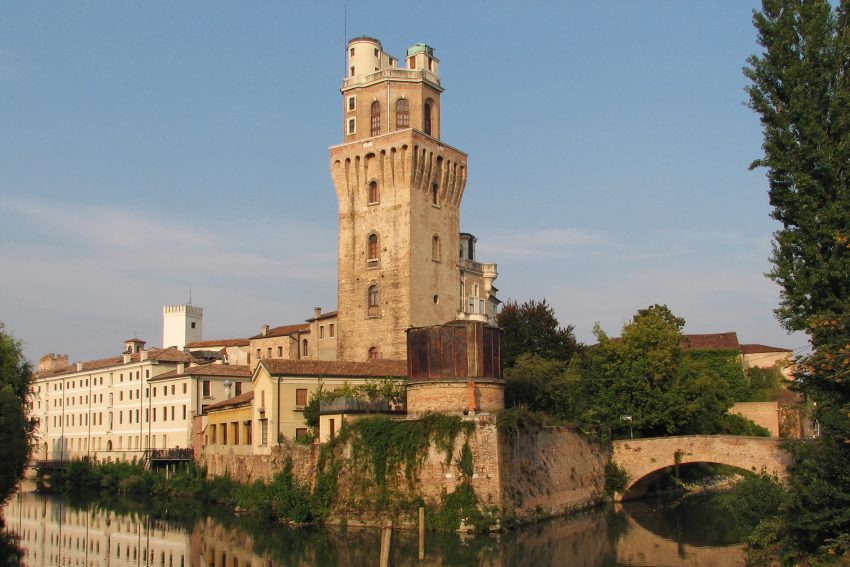
La Specola is one of the top sights in Padua if you love places where history layers up on itself. Originally a grim dungeon tower within Ezzelino III da Romano's medieval castle, it was later raised under the Carraresi lords and, in the 18th century, transformed into an astronomical observatory perched above the city and canals. Today, the 14th-century tower still dominates this corner of Padua's skyline, offering a mix of architecture, science and beautiful views along the Bacchiglione River.
Inside, you step into the world of Enlightenment astronomy. In 1767 the tower was adapted into an observatory, and by 1777 it housed two distinct observing platforms: the lower “Sala Meridiana” at 16 metres, where noon was precisely measured along a meridian line set into the floor, and an upper observatory at 35 metres, with thick walls and tall windows designed for observing the sky. Although serious research moved to the Asiago Astrophysical Observatory in the 1930s, La Specola remains a fascinating museum space, often visited on walking tours of Padua for its frescoes of famous astronomers and its collection of historic instruments.
History and Significance of La Specola
The story of La Specola begins long before telescopes. In the 13th century, Ezzelino III da Romano, the feared ruler of Padua, built a castle on this strategic riverside site, and the tower that now houses the observatory originally served as a dungeon. In the 14th century, during reconstruction overseen by Francesco I da Carrara, the tower was raised further, reinforcing its defensive function and making it an even more imposing landmark above the city and waterways.
Centuries later, as the scientific spirit of the Enlightenment took hold, Padua - already renowned for its university - found a new use for this old military structure. Around 1767 the tower was converted into an astronomical observatory, taking advantage of its height and clear sightlines. By 1777, La Specola had both its lower Sala Meridiana, where astronomers tracked the sun's transit at noon along a meridian line in the floor, and its upper observatory at 35 metres, with eight-metre-high walls pierced by nearly six-metre windows to give wide views of the sky. The once-feared dungeon had become a place of measurement, calculation and discovery.
La Specola remained in active scientific use until the early 20th century, when technological needs outgrew the constraints of a medieval tower and the University of Padua turned to the darker skies of the Asiago plateau, commissioning the Asiago Astrophysical Observatory in 1942. Today, La Specola functions as a museum that tells the story of both Padua's scientific heritage and the evolution of observational astronomy. Its frescoes depicting great astronomers and its displays of period instruments make it a compelling stop for visitors interested in how medieval fortifications were repurposed into centres of knowledge.
Things to See and Do in La Specola
A visit to La Specola begins with the tower itself. From the outside, you can appreciate its layered history: the heavy stone base from its castle days, the later heightening under the Carraresi, and the upper sections adapted to serve as an observatory. As you step inside and climb, keep an eye out for architectural traces of its different uses - narrow passages, thick walls and changes in masonry that mark each phase of construction.
The Sala Meridiana on the lower observatory level is one of the most intriguing spaces. Here, the meridian line set into the floor was used to mark the exact moment of local noon, when the sun reached its highest point in the sky. This room gives a tangible sense of how astronomy once relied on careful observation of light and shadow rather than electronic instruments. It is a good place to pause and imagine astronomers tracking the sun’s path season after season, refining calendars and local timekeeping.
Higher up, the upper observatory level showcases how the tower was adapted for night-time observing. The thick walls and large windows created stable conditions and wide, controllable openings to the sky, critical for telescopic work in an era before modern domes and rotating roofs. Today, La Specola's museum displays historic telescopes, measuring devices and other astronomical instruments, alongside frescoes that pay tribute to famous astronomers connected to Padua and beyond. From vantage points within or near the tower, you can also enjoy impressive views over the river and the rooftops of Padua, making La Specola both a cultural and scenic stop.
How to Get to La Specola
La Specola stands in central Padua, along the riverside where the old castle once dominated the defensive landscape. For international visitors, the nearest major airport is Venice Marco Polo, with Treviso Airport also serving many flights into the region; from either airport you can continue by shuttle, bus or train via Mestre or Venice to Padua, then reach La Specola by local transport or on foot. For the best deals and a seamless booking experience, check out these flights to Padova on Booking.com.
By train, travel to Padova railway station, a key stop on the Venice-Milan and Venice-Bologna lines with frequent regional and high-speed services. Use Omnio to easily compare schedules, book train tickets, and find the best prices all in one place for a hassle-free journey across Italy. From the station, you can walk into the historic centre and follow the river or city streets towards the old castle area, or use the tram and city buses to get closer before walking the final stretch. Many visitors combine La Specola with other central sights in a single walking route.
Bus services from surrounding towns and villages in the Veneto region typically terminate near the station or central hubs, from which La Specola is reachable on foot. If you are travelling by car, Padua is conveniently located near the A4 and A13 motorways; once you exit for the city, follow signs toward the historic centre and look for parking on the edges of the old town or near riverside car parks, then continue on foot to the tower. If you are looking to rent a car in Italy I recommend having a look at Discover Cars, first, as they compare prices and review multiple car rental agencies for you. Driving right up to La Specola is not usually necessary, as the surrounding streets are easily navigated on foot and are part of the experience of exploring Padua.
Practical Tips on Visiting the La Specola
- Suggested tips: Combine La Specola with other university-related sights in Padua to build a themed day around science and learning; check in advance if guided tours or special visits are required to access certain parts of the tower.
- Best time to visit: Late morning or mid-afternoon generally offer a good balance of light for city views and fewer crowds; weekdays can be quieter than weekends.
- Entrance fee: Adults €7.00
- Opening hours: Saturday & Sunday 4:00 – 5:00 PM
- Official website: https://www.beniculturali.inaf.it/
- How long to spend: Plan for 45-90 minutes to explore the tower, museum displays and views comfortably, depending on how deeply you engage with the astronomical and historical exhibits.
- Accessibility: Access involves climbing within a historic tower, so there may be stairs and narrow passages; visitors with limited mobility should check accessibility details and possible restrictions in advance.
- Facilities: Basic visitor facilities such as restrooms and information points are usually available; cafés, restaurants and shops can be found within a short walk in the surrounding streets.
- Photography tip: Capture the tower from across the river for a striking exterior shot, then focus on interior details like the meridian line, instrument displays and views from upper levels; be mindful of any photography rules.
- Guided tours: Joining a guided tour can greatly enhance your understanding of the observatory’s scientific role and architectural adaptations, especially regarding the Sala Meridiana and the upper observing rooms.
- Nearby food options: After your visit, head towards the main squares or nearby streets for cafés and trattorie where you can sit and reflect on Padua’s long relationship with science and astronomy.
Where to Stay close to the La Specola
Staying near La Specola places you within easy reach of both the riverside area and the broader historic centre of Padua. A comfortable, centrally located option is Hotel Majestic Toscanelli, which offers quick access on foot to many key sights, including the university quarter and riverside walks. For travellers who want to be close to the station while still within walking distance of La Specola, Hotel Europa Padova works well as a practical base. Another good choice is Hotel Milano, which offers straightforward routes into the historic heart of Padua, making it easy to include La Specola in your daily explorations.
Is the La Specola Worth Visiting
La Specola is definitely worth visiting if you are interested in the intersection of history, architecture and science. Few places let you stand inside a former medieval dungeon that later became an 18th-century observatory, tracing a journey from fortress to research station in a single building. The meridian room, upper observation spaces, frescoes of astronomers and historic instruments all bring to life the era when careful observation of the sky was transforming our understanding of the universe.
Because it is relatively compact and centrally located, La Specola fits easily into a wider itinerary that includes Padua's churches, piazzas and university buildings. For many visitors, it rounds out their sense of the city: Padua is not only about Giotto and grand squares, but also about precise measurements, star charts and the slow, methodical work of astronomers perched in a tower high above the streets. This spot is one of the best places to see in La Specola if you want a deeper appreciation of how the city helped shape scientific thought.
What Other Travellers Say...

Museo La Specola, il museo dell'Osservatorio Astronomico di Padova sits on Vicolo dell'Osservatorio and offers a tall tower and historic astronomy exhibits; visitors praise the views from the top and find it an interesting stop in Padova, though tours are typically conducted in Italian and some visitors wished for clearer multilingual information and smoother ticketing (advance online/phone registration and specific payment arrangements were mentioned), while summer openings and occasional guided evening sessions draw crowds so arrive early for limited spots.


FAQs for Visiting La Specola
Nearby Attractions to the La Specola
- Palazzo del Bo: Historic seat of the University of Padua, home to Galileo's lectern and the world's oldest anatomical theatre.
- Caffè Pedrocchi: Iconic central café where writers, students and revolutionaries once gathered, ideal for a coffee break after visiting the tower.
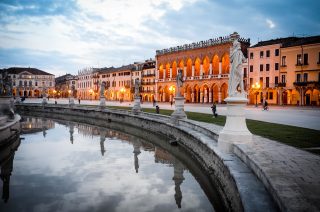
- Prato della Valle: One of Europe's largest squares, with an island, statues and a surrounding canal, perfect for a stroll.
- Padua Cathedral and Baptistery: The city's cathedral complex on Piazza Duomo, with a baptistery famous for its 14th-century frescoes.
- Giardini dell'Arena and Scrovegni Chapel: A peaceful park with Roman ruins and the nearby chapel housing Giotto's celebrated fresco cycle.
The La Specola appears in our Complete Guide to Visiting Padova!

Moira & Andy
Hey! We're Moira & Andy. From hiking the Camino to trips around Europe in Bert our campervan — we've been traveling together since retirement in 2020!
This website uses affiliate links which may earn a commission at no additional cost to you!
Planning Your Visit
Saturday & Sunday 4:00 - 5:00 PM
Adults €7.00
Nearby Attractions
- Duomo di Padova (0.5) km
Cathedral - Torre dell'Orologio (0.7) km
Tower - Piazza dei Signori (0.7) km
Square - Prato della Valle (0.8) km
Square - Palazzo della Ragione (0.8) km
Historic Building and Market - Palazzo Bo (0.9) km
Historic Building and Palace - Piazza del Santo (0.9) km
Square - Cafe Pedrocchi (0.9) km
Historic Building - Orto Botanico (0.9) km
Gardens - Basilica di Sant'Antonio (1.0) km
Basilica