Joan Miró Museum, Palma de Mallorca
Museum in Palma de Mallorca

On the hillside above Cala Mayor, the Joan Miró Museum in Palma de Mallorca feels less like a formal gallery and more like entering the artist's own creative world. Born in Barcelona in 1893, Miró initially followed his father's wishes and worked as an accountant, but quickly realised that led nowhere near his true calling. While still working, he took art classes and then studied at the Francisco Galí School of Art from 1912 to 1915, before going on to become an internationally acclaimed painter and sculptor known for his surrealist and abstract language. Today, visiting the museum where he spent his later life is one of the best places to visit in Palma de Mallorca if you care about art and the stories behind it.
Miró's roots in Mallorca ran deep: his mother was from the island, he married a Mallorcan woman, and he returned again and again, drawn by the Mediterranean light. In 1956, at the age of 63, he finally settled in Cala Mayor and built his home, Son Abrines, living and working there until his death in 1983. Together with his wife Pilar, he created the Fundació Pilar i Joan Miró a Mallorca, donating their house, workshops and a substantial body of work so that the space would remain a living centre of creativity. Today the museum complex, designed in part by architect Rafael Moneo and opened in 1992, links Miró's original studio at Son Boter, his later Taller Sert and a contemporary museum building surrounded by sculpture-filled gardens, and is a great place to visit on a walking tour of Palma de Mallorca that explores the city's artistic side.
Table of Contents
- History and Significance of the Joan Miró Museum
- Things to See and Do in the Joan Miró Museum
- How to Get to the Joan Miró Museum
- Practical Tips on Visiting the Joan Miró Museum
- Where to Stay close to the Joan Miró Museum
- Is the Joan Miró Museum Worth Visiting?
- FAQs for Visiting Joan Miró Museum
- Nearby Attractions to the Joan Miró Museum
History and Significance of the Joan Miró Museum
Joan Miró's path to Mallorca starts long before he moved to Cala Mayor. Born in Barcelona in 1893, he showed a strong talent for drawing as a child and always wanted to be an artist. Family expectations pushed him into high school and then a job as an accountant, but the mismatch was obvious; after a few years he left that life behind. During his time in the office he had already begun taking art classes, eventually studying at the Francisco Galí School of Art between 1912 and 1915, a period that sharpened his technique and opened him up to new ideas. From there, his career accelerated quickly, and he became one of the key figures of modern and surrealist art.
Miró's connection to Mallorca is rooted in family and light. With a Mallorcan mother and a wife from the island, he visited often and found in its landscapes, colours and clarity of air a source of inspiration quite different from that of Barcelona or Paris. By 1956, seeking a stable base for his mature work, he moved permanently to Cala Mayor and built Son Abrines as his home. Nearby, he maintained studios-first in the traditional building known as Son Boter and later in the purpose-built Taller Sert-where he painted, drew and experimented for nearly three decades.
Before his death in 1983, Miró and his wife Pilar decided to secure the future of these spaces and their contents. They created the Fundació Pilar i Joan Miró a Mallorca, donating the house, studios and a large collection of artworks to Palma’s authorities so that the public could experience the environment in which Miró worked. In 1992, the current museum building, designed by Rafael Moneo, opened as an extension of this original core. Together, Son Boter, Taller Sert and the new museum form a unique ensemble where you can trace not only Miró’s artistic evolution but also his daily life in his adopted island home.
Things to See and Do in the Joan Miró Museum
A visit usually begins in the main museum building, where light-filled galleries showcase Miró’s paintings, drawings, sculptures and graphic works. Here you see the vocabulary that made him famous: constellations of signs, playful shapes, intense blocks of colour and an apparent simplicity that hides complex thought and careful composition. Works from different phases of his career give you a sense of how his language evolved while staying recognisably his.
From the main galleries, make your way to the historic studios. Son Boter, an older, traditional Mallorcan building, preserves the feel of an artist’s workshop: paint marks on the walls, sketches, notes and the sense that Miró might walk back in at any moment. Taller Sert, a modern studio space, reflects the later phase of his career, with larger volumes and more controlled light. Moving between the two, you can imagine how his working day might have shifted with the seasons and the changing demands of different projects.
Outside, the gardens are an integral part of the experience. Sculptures by Miró are placed among trees, paths and terraces, their forms interacting with the sky and the sea views beyond. It is a space where art and landscape blend, and it is easy to spend time here simply wandering, sitting, or thinking about how the surroundings fed into Miró’s work. The museum also hosts rotating exhibitions of other artists, so even if you have visited before, there is often something new to discover. When you need a pause, the garden café offers a quiet spot to rest, and the museum shop provides plenty of opportunities to pick up Miró-themed books, prints and souvenirs.
How to Get to the Joan Miró Museum
Most visitors arrive in Mallorca via Palma de Mallorca Airport, the island's main international gateway with regular flights from across Spain and Europe. For the best deals and a seamless booking experience, check out these flights to Palma de Mallorca on Booking.com. From the airport, you can take a taxi directly to Cala Mayor or travel into central Palma first and then continue by bus or taxi to the museum.
If you are elsewhere on the island and using public transport, regional trains will bring you into Palma's Estació Intermodal near Plaça d'Espanya.Train schedules and bookings can be found on Omio. From there, city buses serving the Cala Mayor area can drop you within walking distance of the museum entrance, or you can take a taxi for a faster, more direct connection.
Travelling by car, follow the main roads into Palma and then out towards Cala Mayor, where clear signs point to the Fundació Pilar i Joan Miró a Mallorca.If you are looking to rent a car in Spain I recommend having a look at Discover Cars, first, as they compare prices and review multiple car rental agencies for you. There is usually parking available nearby; once parked, it is a short walk to the museum buildings and gardens.
Practical Tips on Visiting the Joan Miró Museum
- Suggested tips: Start with the studios (Son Boter and Taller Sert) before exploring the main galleries; seeing where Miró worked adds depth to the artworks you will see later.
- Best time to visit: Late morning or mid-afternoon offers a good balance of light in the studios and gardens; in summer, visiting during the hotter hours provides a cool, calm indoor break.
- Entrance fee: Adults: €18.00
- Opening hours: Winter ( 16-09 / 15-05 ): Tuesday, Wednesday, Thursday, Friday and Saturday from 10:00 to 18:00; Sunday and holidays from 10 to 15h; Monday closed Summer ( 16-05 / 15-09 ): Tuesday, Wednesday, Thursday, Friday and Saturday from 10:00 to 19:00; Sunday and holidays from 10 to 15h; Monday closed
- Official website: https://www.fmirobcn.org/en/visit-us/plan-your-visit/
- How long to spend: Allow 1.5-3 hours to visit the studios, museum galleries, gardens, café and shop without rushing.
- Accessibility: The modern museum building has lifts and ramped access; some areas of the older studios and gardens may have steps or uneven surfaces, so check on-site for the most accessible routes.
- Facilities: Expect a ticket office, toilets, a garden café and a well-stocked shop selling books, prints and Miró-themed gifts.
- Photography tip: Capture contrasts between Miró’s bold colours and the soft Mediterranean light; in the gardens, look for angles where sculptures are silhouetted against the sea or sky.
- Guided tours: Audio guides or guided visits, when available, are very helpful for understanding Miró’s life in Mallorca, the meaning behind specific works and the history of the foundation.
- Nearby food options: Besides the café, Cala Mayor and the nearby coastal stretch offer plenty of bars and restaurants where you can combine your museum visit with a meal or drink.
Where to Stay close to the Joan Miró Museum
Staying in or around Cala Mayor makes it easy to visit the Joan Miró Museum at a relaxed pace and even return for a second look if you wish. A convenient choice close to the sea and within a short walk or bus ride of the museum is BQ Belvedere Hotel, which offers resort-style comforts and good access into central Palma. For a smaller, more boutique atmosphere near the coast, Hotel Joan Miró Museum is thematically linked to the artist and located very close to the foundation itself. If you prefer to stay in central Palma and travel out to the museum, Hotel Almudaina provides an easy base with good bus and taxi connections to Cala Mayor and the rest of the city.
Is the Joan Miró Museum Worth Visiting?
For anyone with even a passing interest in modern art, the Joan Miró Museum is absolutely worth visiting. It offers something you cannot get from a standard city gallery: direct access to the spaces where Miró actually lived and worked, plus a collection that spans his career and surrounds you with his visual language. The combination of studios, museum building, gardens and sea views creates a layered experience that feels intimate rather than overwhelming, and the mix of permanent works and temporary exhibitions means there is always more to discover.
What Other Travellers Say...

Fundació Miró Mallorca on C/ de Saridakis, 29 offers workshops-turned-exhibition spaces where Miró painted and sculpted from the 1950s to the 1980s, with both permanent and temporary displays; visitors highlight the preserved studio that feels as he left it and praise the calm, light-filled building and surrounding houses, while noting modest exhibitions, limited souvenirs, occasional staff issues, ticket checks at each building, and that only the main building has elevator access.


FAQs for Visiting Joan Miró Museum
Nearby Attractions to the Joan Miró Museum
- Cala Mayor Beach: A sandy urban beach below the museum area, ideal for a swim or sunbathing before or after your visit.
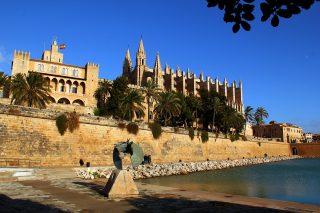
- Palma city centre: A short bus or taxi ride away, with the cathedral, royal palace and old town streets offering a very different side of the city.
- Es Baluard Centre: Palma's major modern and contemporary art museum in the old city walls, a perfect complement to the Miró-focused collection.
- Castell de Bellver: A circular hilltop castle overlooking Palma, with panoramic views and a small history museum.
- Passeig Marítim: The waterfront promenade linking Palma’s harbour and coastal neighbourhoods, great for an evening walk or bike ride after a day of art and sea.
The Joan Miró Museum appears in our Complete Guide to Visiting Palma de Mallorca!

Moira & Andy
Hey! We're Moira & Andy. From hiking the Camino to trips around Europe in Bert our campervan — we've been traveling together since retirement in 2020!
This website uses affiliate links which may earn a commission at no additional cost to you!
Planning Your Visit
Winter ( 16-09 / 15-05 ): Tuesday, Wednesday, Thursday, Friday and Saturday from 10:00 to 18:00; Sunday and holidays from 10 to 15h; Monday closed
Summer ( 16-05 / 15-09 ): Tuesday, Wednesday, Thursday, Friday and Saturday from 10:00 to 19:00; Sunday and holidays from 10 to 15h; Monday closed
Adults: €18.00
Nearby Attractions
- Castell de Bellver (Bellver Castle) (1.3) km
Castle - Pueblo Español (2.6) km
Museum - Es Baluard Centre (3.2) km
Museum - La Llotja (3.3) km
Historic Building - Royal Gardens of La Almudaina (3.5) km
Gardens - Royal Palace of La Almudaina (3.5) km
Palace - Passeig del Born (3.6) km
Street - La Seu: the Cathedral of Palma (3.6) km
Cathedral - Palau March Museum (3.6) km
Historic Building and Museum - Museu Diocesa de Mallorca (3.6) km
Museum