Iglesia De San Nicolas, Pamplona
Church in Pamplona
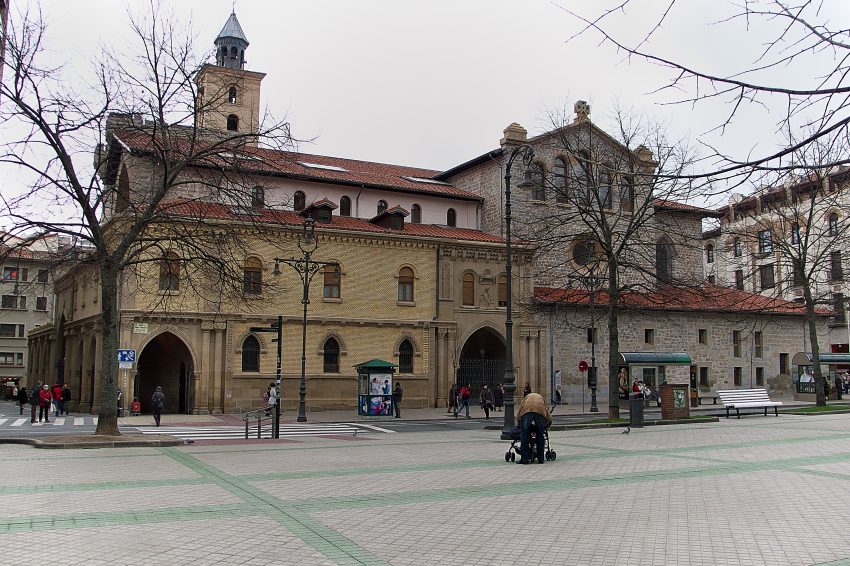
In the Old Quarter of Pamplona, Iglesia de San Nicolás stands as both a place of worship and a reminder that this was once a city divided into rival medieval boroughs. Originally built in the 12th century, the church served not only religious needs but also as a defensive bastion for its neighbourhood during conflicts with nearby San Saturnino and Navarrería. With its robust exterior, traces of Gothic portals and strong position in the historic centre, it is one of the best places to visit in Pamplona if you want to understand just how turbulent the city's past could be.
Step inside and the mood changes from fortress to faith. The interior is Gothic, shaped across different phases of construction, with soaring spaces and chapels that invite you to slow down as the city's noise fades away at the door. In the choir you will find a fine Baroque organ from 1769, still an important feature of the church's musical life, while outside you can see surviving Gothic portals, the apse and the later corner portico designed by Ángel Goicoechea in the 1880s. This is often visited on walking tours of Pamplona that link the three historic borough churches and trace the evolution of the Old Quarter.
Table of Contents
- History and Significance of the Iglesia de San Nicolás
- Things to See and Do in the Iglesia de San Nicolás
- How to Get to the Iglesia de San Nicolás
- Practical Tips on Visiting the Iglesia de San Nicolás
- Where to Stay close to the Iglesia de San Nicolás
- Is the Iglesia de San Nicolás Worth Visiting?
- FAQs for Visiting Iglesia de San Nicolás
- Nearby Attractions to the Iglesia de San Nicolás
History and Significance of the Iglesia de San Nicolás
Iglesia de San Nicolás dates back to the 12th century, when Pamplona was still a patchwork of separate communities rather than a single unified town. Each borough had its own walls, identity and main church, and San Nicolás was the spiritual and social centre for its quarter. At the same time, tensions with neighbouring boroughs, particularly San Saturnino and Navarrería, meant that this was never just a parish church; it was also constructed as a stronghold, ready to be defended in times of internal strife.
That dual role explains some of the building’s character. Thick walls, a compact massing and limited external openings gave it a fortress-like presence that complemented the borough’s own defences. From the outside, only two Gothic portals and the apse clearly show its medieval origins, but archaeological and historical work confirm that the structure has stood here for centuries, adapting to changes in both architecture and urban politics.
Over time, San Nicolás evolved along with Pamplona itself. As the separate boroughs were unified and internal conflict faded, the church's defensive role became symbolic rather than practical, but its historical significance remained. The addition of the Baroque organ in 1769 and the 19th century corner portico by Ángel Goicoechea show how each era left its mark, turning the building into a layered record of changing tastes and needs. Today, it stands as a quiet witness to the city's journey from walled medieval quarters to modern regional capital.
Things to See and Do in the Iglesia de San Nicolás
Start by walking around the exterior, paying attention to the surviving Gothic portals and the apse. These elements hint at the church’s medieval core, even though later works have altered parts of the façade. The corner portico, designed by Ángel Goicoechea and built by local contractor Blas Morte in the 1880s, adds a distinctly 19th century touch, creating a sheltered entrance that softens the transition from busy street to sacred space.
Inside, the Gothic character of the church becomes more visible. The interior reflects different construction phases, but pointed arches, vaults and the general vertical rhythm clearly belong to the Gothic tradition. Take a moment to stand in the nave and look towards the choir, noting how light enters and how the proportions draw your eye forward. Chapels and side altars add smaller focal points where parish life has played out over generations.
Do not miss the Baroque organ, built in 1769 and now installed in the choir. Even when it is silent, its carved case and pipes are a highlight, speaking to the importance of music in the church's liturgy and celebrations. If you happen to visit during an organ recital or service, the sound filling the Gothic space adds a memorable dimension to your experience. After exploring the interior, step back outside and wander through the surrounding streets to get a sense of how San Nicolás fit within its own borough, and how close it lies to the other key churches of Old Pamplona.
How to Get to the Iglesia de San Nicolás
Most visitors arrive in Pamplona via Pamplona Airport or larger regional airports such as Bilbao or San Sebastián, then connect into the city by bus, taxi or hire car. For the best deals and a seamless booking experience, check out these flights to Pamplona on Booking.com. Once in central Pamplona, head towards the Old Quarter, where Iglesia de San Nicolás is within easy walking distance of Plaza del Castillo and other main sights.
If you are travelling by train, Pamplona's main station links the city with Madrid, Barcelona and other Spanish hubs.Train schedules and bookings can be found on Omio. From the station you can take a local bus or taxi into the historic centre; from there, follow signs or a city map through the narrow streets to reach San Nicolás as part of a short walking circuit that also includes San Saturnino and the cathedral.
Arriving by car, follow the main routes into Pamplona and use one of the central car parks near the edge of the Old Quarter.If you are looking to rent a car in Spain I recommend having a look at Discover Cars, first, as they compare prices and review multiple car rental agencies for you. From your parking spot it is only a few minutes' walk through pedestrian-friendly streets to Iglesia de San Nicolás, and exploring on foot lets you better appreciate the medieval layout of the quarter.
Practical Tips on Visiting the Iglesia de San Nicolás
- Suggested tips: Combine your visit to San Nicolás with stops at San Saturnino and the cathedral to trace the three historic borough churches in one loop.
- Best time to visit: Late morning or mid-afternoon is ideal, when the Old Quarter is lively but not overcrowded and you can step inside between services.
- Entrance fee: Generally free entry
- Opening hours: Opening times vary by day and season, and are often centred around mass schedules; check times posted at the entrance.
- Official website: https://parroquiasannicolas.es/
- How long to spend: Allow 30-45 minutes to see the exterior portals and portico, explore the interior and spend a little time appreciating the organ and chapels.
- Accessibility: Narrow, sometimes uneven streets lead to the church and there may be steps at the entrance; visitors with reduced mobility should verify the most accessible route in advance.
- Facilities: Facilities are limited inside; for toilets, cafés and shops, use the nearby streets of the Old Quarter and plazas such as Plaza del Castillo.
- Photography tip: Capture the church from different angles along the surrounding streets to show its solid, defensive massing; inside, focus on the organ and Gothic arches, respecting any restrictions on photography.
- Guided tours: Consider a guided walking tour that includes San Nicolás to gain more insight into its defensive role and relationship with the neighbouring boroughs.
- Nearby food options: The Old Quarter around San Nicolás is full of pintxos bars, cafés and restaurants, making it easy to combine a church visit with a drink or meal.
Where to Stay close to the Iglesia de San Nicolás
Staying in Pamplona's Old Quarter places Iglesia de San Nicolás within easy reach and lets you enjoy the historic streets at quieter times of day. A long-established option on the main square is Gran Hotel La Perla, which offers classic comfort just a short walk from San Nicolás and other key landmarks. For a more secluded feel near the cathedral and old walls, Pamplona Catedral Hotel provides a characterful base still within a few minutes of the church on foot. If you prefer to be near parks as well as the Old Quarter, Hotel Tres Reyes Pamplona combines green surroundings with easy access to San Nicolás, La Taconera and the citadel.
Is the Iglesia de San Nicolás Worth Visiting?
Iglesia de San Nicolás is definitely worth visiting, especially if you are interested in how religion and defence came together in medieval cities. Its origins as both parish church and bastion during conflicts with San Saturnino and Navarrería give it a story that goes well beyond architecture, and its Gothic interior, Baroque organ and layered exterior elements make it visually rewarding too. Seen as part of a wider walk through the Old Quarter, San Nicolás helps you piece together how Pamplona's separate boroughs once functioned before they merged into the city you see today.
What Other Travellers Say...

Saint Nicholas Church on Calle de San Miguel is a historic Catholic church whose origins date to the 12th century, notable for its Gothic façade and bell tower and for having served both as a place of worship and a fortified tower protecting a city borough; visitors praise its stained-glass windows, Romanesque roots with later Gothic and Baroque elements, and its location in Pamplona’s historic centre surrounded by cafés where you can relax after exploring.


FAQs for Visiting Iglesia de San Nicolás
Nearby Attractions to the Iglesia de San Nicolás
- Church of San Saturnino San Cernin: Another fortress-like medieval church that served its own borough, with iconic twin towers and close ties to San Fermín.
- Pamplona Cathedral: The main Gothic cathedral of the city, with a Neoclassical façade, royal tombs, cloister and museum spaces.
- Plaza del Castillo: Pamplona's main square and social hub, lined with cafés and arcades, just a short walk away.
- Museum of Navarra: The regional museum in a former pilgrims' hospital, with collections ranging from prehistory to Goya and 20th century works.
- Ciudadela de Pamplona: A 16th century star-shaped fortress turned public park, ideal for a relaxed walk after exploring the Old Quarter's churches.
The Iglesia De San Nicolas appears in our Complete Guide to Visiting Pamplona!

Moira & Andy
Hey! We're Moira & Andy. From hiking the Camino to trips around Europe in Bert our campervan — we've been traveling together since retirement in 2020!
This website uses affiliate links which may earn a commission at no additional cost to you!
Planning Your Visit
Opening times vary by day and season, and are often centred around mass schedules; check times posted at the entrance.
Generally free entry
Nearby Attractions
- Plaza del Castillo (0.2) km
Square - Palacio de Navarra (0.3) km
Palace - Iglesia de San Saturnino (San Cernin) (0.3) km
Church - Calle Estafeta (0.3) km
Street - Ayuntamiento de Pamplona (0.3) km
Town Hall - Running of the Bulls Monument (0.3) km
Statue - Parroquia San Lorenzo (0.4) km
Church - Plaza de Toros de Pamplona (0.4) km
Bullring - Museo Universidad de Navarra (0.4) km
Museum - Museum of Navarre (0.4) km
Museum