Iglesia de San Bartolomé, Logroño
Church in Logroño
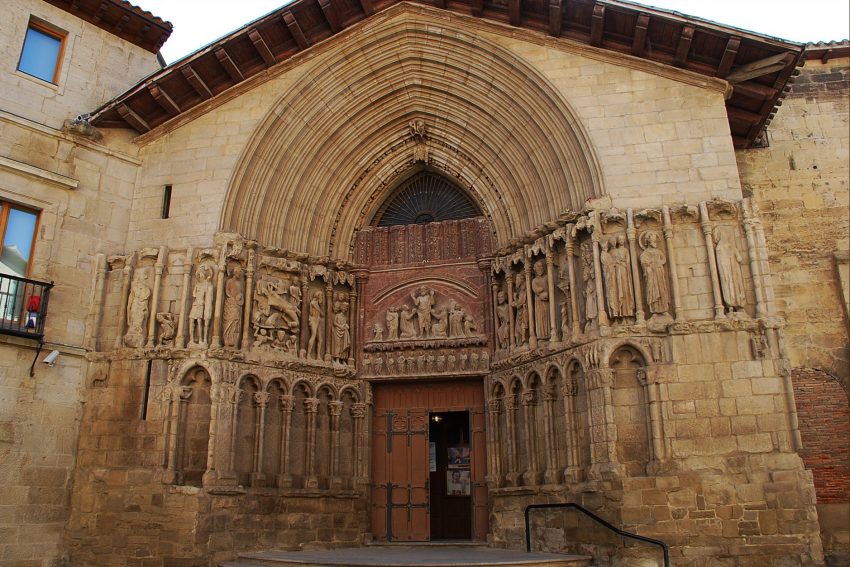
The Church of San Bartolomé is where Logroño’s medieval past feels closest to the surface. Built in the 12th century, it is the oldest church in the city and still anchors a quiet corner of the historic centre. Its façade is a masterpiece of stone carving, with 19 narrative vignettes crowded with figures and scenes that reward a slow, curious look. Standing in front of the porch, you get that classic Spanish Romanesque-Gothic mix: sturdy stone, expressive sculpture, and a sense that the building has seen just about everything the city has lived through.
Its most striking feature is the bell tower, which was originally part of the old city wall. For centuries it served double duty as both a defensive structure and a lookout, watching over the approaches to Logroño. Damaged in 1521, it was later rebuilt in brick with Mudéjar influences from Aragón, giving it a distinctive profile that contrasts with the stone below. Today, you can climb to the top for some of the best views of the city, making the Church of San Bartolomé one of the best places to visit in Logroño if you like your history with a side of rooftop panoramas.
Table of Contents
- History and Significance of Church of San Bartolomé
- Things to See and Do in Church of San Bartolomé
- How to Get to Church of San Bartolomé
- Practical Tips on Visiting Church of San Bartolomé
- Where to Stay close to Church of San Bartolomé
- Is Church of San Bartolomé Worth Visiting?
- FAQs for Visiting Church of San Bartolomé
- Nearby Attractions to Church of San Bartolomé
History and Significance of Church of San Bartolomé
Construction of the Church of San Bartolomé began in the 12th century, when Logroño was growing as a strategic settlement on the Ebro and along routes that would later be folded into the Camino de Santiago. As the town expanded and fortified itself, churches like San Bartolomé served not only as places of worship but also as markers of community and power. The architecture reflects this blend of spiritual and practical needs: heavy stone walls, a sturdy plan, and a tower integrated into the defensive perimeter.
The tower’s story highlights the church’s role in the city’s protection. Built as part of the old wall, it functioned as both a bell tower and a lookout point, giving early warning of threats and anchoring the line of defences. In 1521 it suffered serious damage during conflict, and when it was rebuilt, the choice of brick and the adoption of Mudéjar-style influences from Aragón added a new layer of character. That mix of martial origin and decorative detail makes the tower one of the most distinctive silhouettes in Logroño’s skyline.
Over the centuries, San Bartolomé has witnessed the ebb and flow of pilgrims, merchants, and local families. While other churches in the city grew more flamboyant, this one kept its older, more intimate feel, centred on the richly carved façade and robust tower. Today, it stands as a tangible link back to medieval Logroño and is one of the must-see places in Logroño for travellers who enjoy architecture that tells its story in stone.
Things to See and Do in Church of San Bartolomé
Start with the façade: this is where the church really shows off. The porch is covered in intricate stone carvings, arranged into 19 vignettes that depict religious scenes and figures. You do not need to decode every detail to appreciate the craftsmanship-just let your eye travel across the arches and panels, noticing how the sculptors layered story after story into a relatively small space. The weathering of the stone adds to the charm, giving everything a softened, timeworn texture.
Step inside and the mood shifts to something quieter and more contemplative. The interior is simpler than some of Logroño’s larger churches, but that simplicity is part of its appeal. Stone pillars, side chapels, and subdued light create an intimate atmosphere that feels closer to the building’s medieval origins. It is easy to imagine generations of local families passing through here for baptisms, weddings, and everyday worship while the city slowly grew around them.
If you can manage stairs and confined spaces, the climb up the tower is a highlight. The route takes you up through the structure that once formed part of the city wall, emerging at the top with broad views over the old town, the cathedral towers, and the wider urban landscape. From here, the Ebro, Puente de Piedra, and the grid of streets below all line up in new ways, making it clear how the church sat within Logroño's defences. It is often visited on walking tours of Logroño, but even on a self-guided wander the tower climb turns San Bartolomé into a memorable stop rather than just a quick photo.
How to Get to Church of San Bartolomé
The Church of San Bartolomé is located in Logroño's historic centre, within easy walking distance of the Concatedral de Santa María de la Redonda, Puente de Piedra, and the main pinchos streets. Once you are in the Old Town, simply follow local signs or a map toward San Bartolomé; its tower and stone façade stand out among the surrounding buildings.
If you are arriving by air, you may fly into Logroño-Agoncillo Airport or larger hubs such as Bilbao or Zaragoza, then continue by road or public transport to Logroño. For the best deals and a seamless booking experience, check out these flights to Logroño on Booking.com. From central Logroño, the church is a short walk from most hotels in and around the Old Town.
Logroño's main railway station connects the city with Madrid, Zaragoza, and other regional centres by regular trains.Train schedules and bookings can be found on Omio. From the station, it is about a 15-20 minute walk or a brief bus or taxi ride into the historic heart, where you can easily navigate on foot to San Bartolomé.
If you are driving, major roads and motorways link Logroño with the rest of La Rioja and northern Spain.If you are looking to rent a car in Spain I recommend having a look at Discover Cars, first, as they compare prices and review multiple car rental agencies for you. Park in one of the public car parks near the centre, then explore the Old Town on foot; the walk to the Church of San Bartolomé will lead you through some of the most atmospheric streets in the city.
Practical Tips on Visiting Church of San Bartolomé
- Suggested tips: Take time to study the porch carvings before or after going inside; the 19 vignettes are easy to overlook if you rush, but they are some of the most characterful details in the city.
- Best time to visit: Late morning or late afternoon provide good light on the façade and often quieter moments inside; evenings can be especially atmospheric when the streets around the church are softly lit.
- Entrance fee: Free
- Official website: https://sanbartolomeysanesteban.org/
- How long to spend: Plan on 30-45 minutes to admire the façade, explore the interior, and, if available, climb the tower for city views.
- Accessibility: The area around the church is mostly level but includes cobbled streets; the tower climb involves steep, narrow stairs and is not suitable for visitors with limited mobility or balance issues.
- Facilities: There are no major visitor facilities inside the church, but cafés, bars, and restrooms are available in the surrounding Old Town streets.
- Photography tip: Step back into the adjacent street or small square to capture the entire façade and tower; for details, focus on individual carved scenes around the porch.
- Guided tours: Some city tours include San Bartolomé as a key stop, offering extra context on the carvings, the tower’s defensive role, and the church’s place in Logroño’s medieval layout.
- Nearby food options: Within a few minutes' walk you will find plenty of pinchos bars and restaurants, especially toward Calle Laurel and nearby streets, perfect for a drink or snack after your visit.
Where to Stay close to Church of San Bartolomé
Staying near the Church of San Bartolomé puts you right in the historic centre, with Logroño’s main sights and food streets on your doorstep. For a stylish base in a beautifully restored building, Hotel Calle Mayor offers boutique comfort just a short stroll from the church and cathedral. Travellers wanting a modern hotel within easy reach of both the Old Town and the commercial areas might opt for NH Logroño Herencia Rioja, which is still walkable from San Bartolomé. For a practical, central stay close to many of Logroño’s main attractions, Hotel Condes de Haro makes it easy to reach the church, the cathedral, Puente de Piedra, and Calle Laurel on foot.
Is Church of San Bartolomé Worth Visiting?
The Church of San Bartolomé is absolutely worth visiting, especially if you are interested in medieval architecture and quieter corners of the city. Its 12th-century origins, intricately carved façade, and unique tower-born from the old city wall and later reshaped in Mudéjar-influenced brick-make it stand out even in a region rich with historic churches. Add in the chance to climb the tower for wide views over Logroño, and it becomes a compact but memorable stop that adds real depth to your understanding of the city's past. This spot is one of the best places to see in Church of San Bartolomé's part of the Old Town if you want both history and atmosphere.
What Other Travellers Say...

Church of San Bartolomé on C. San Bartolomé, 2 in Logroño is a Romanesque–early Gothic church begun in the 12th century; visitors praise its striking entrance and inspiring interior, note two ornate 14th‑century tombs of local counts with funeral shields, appreciate free admission (donations welcomed) and permissive non‑commercial photography without flash, and describe it as a peaceful stop for pilgrims—though some have reported unfriendly staff and occasional closures during city festivals.


FAQs for Visiting Church of San Bartolomé
Nearby Attractions to Church of San Bartolomé
- Catedral de Santa María de la Redonda - Logroño's co-cathedral with its iconic twin Baroque towers, a short walk away in the heart of the Old Town.
- Puente de Piedra - Historic stone bridge over the River Ebro and symbolic Camino de Santiago entrance to the city.
- Museo de La Rioja - Regional museum housed in the Palacio de Espartero, tracing La Rioja's history from prehistory to the 19th century.
- Calle Laurel - Famous pinchos street packed with tapas bars and Rioja wine, ideal for sampling local flavours after sightseeing.
- Plaza del Mercado - Central square beside the cathedral, perfect for sitting at a terrace, people-watching, and soaking up Logroño's atmosphere.
The Iglesia de San Bartolomé appears in our Complete Guide to Visiting Logroño!

Moira & Andy
Hey! We're Moira & Andy. From hiking the Camino to trips around Europe in Bert our campervan — we've been traveling together since retirement in 2020!
This website uses affiliate links which may earn a commission at no additional cost to you!
Nearby Attractions
- Catedral de Santa María de la Redonda (0.2) km
Cathedral - Old Logroño City Hall (Plaza del Mercado) (0.2) km
Notable Building and Square - Puente de Piedra (0.3) km
Bridge - New Logroño City Hall (0.4) km
Notable Building - Parque del Espolón (0.4) km
Park - Calle Laurel (0.4) km
Street - Museo de la Rioja (0.4) km
Museum - Puente de Hierro (0.4) km
Bridge - Casa de las Ciencias (0.5) km
Museum - Fabrica de Tabacos (0.5) km
Historic Building